Toss the radish cubes with 1 tbsp rice vinegar, half the sugar, a pinch of salt and half the ginger. Let it sit at room temperature at least 30 minutes, stirring once, while you do everything else.
Cook the rice with 10% less water than usual, then fold in the sesame oil and salt while it's still warm.
Score the squid rings lightly and pat them dry — dry squid sears instead of steaming.
Heat the neutral oil in a pan over high heat and sear the squid for 90 seconds, until just opaque, then remove it from the pan.
In the same pan, combine the gochugaru, gochujang, soy sauce, remaining sugar, garlic and 2 tbsp water and simmer 1 minute until it thickens slightly.
Return the squid to the pan, toss to coat for 30 seconds, then stir in the scallions and take it off the heat immediately — overcooked squid turns rubbery fast.
Cut each seaweed sheet into quarters lengthwise so you end up with 16 narrow strips.
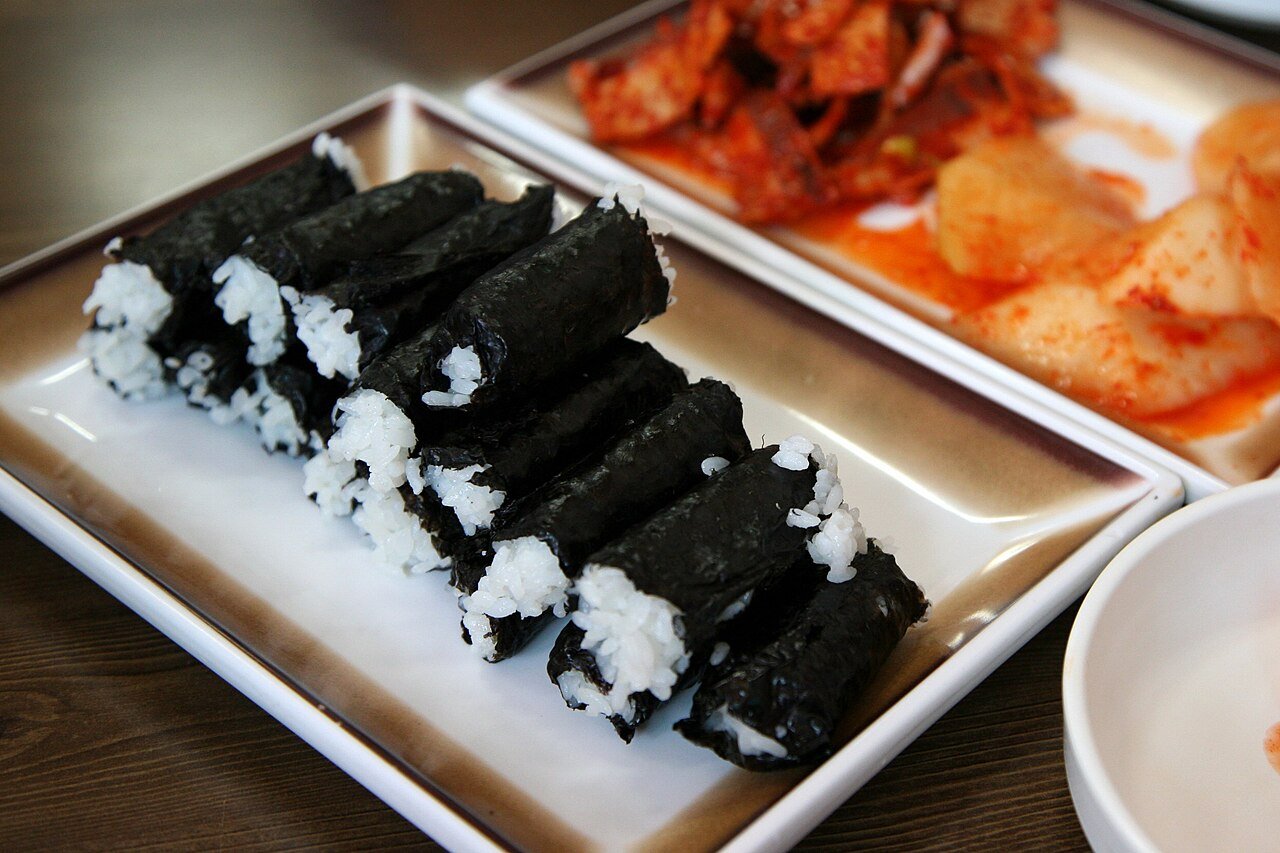
Lay a strip rough side up, spread a thin line of rice along the near edge only, about a third of the width of the strip, and roll it into a tight, thin cylinder with no filling inside.
Repeat with the remaining strips, sealing each with a few grains of rice, then rest the rolls seam-side down for a minute.
Brush the rolls with sesame oil, scatter sesame seeds, and cut into short 2 to 3 cm pieces if you like, or leave them whole to eat by hand.
Serve the rolls with the spicy squid and the radish alongside, not inside — the two are meant to be eaten in the same bite, not rolled together.