Bring a large pot of unsalted water to a boil for the noodles and leave it at a low simmer while you make the sauce.
Cut the pork, onion, cabbage, potato and zucchini into even 1 cm / ½ inch dice, keeping them in separate piles.
Heat the 3 tbsp oil in a wok or wide skillet over medium-low heat, add the chunjang and 1 tsp of the sugar, and fry for 2 to 3 minutes, stirring constantly.
Watch for the paste to loosen, darken slightly and smell toasted and nutty rather than sharp and raw, then scrape it into a small bowl and set aside.
Return the pan to medium-high heat and cook the diced pork for 4 to 5 minutes until the edges are browned and fat has rendered out.
Add the grated ginger and cook for 30 seconds until fragrant.
Add the onion and the remaining 2 tsp sugar, and cook for 3 minutes until the onion turns translucent and starts to look glossy at the edges.
Add the potato, cabbage and zucchini and cook for 4 to 5 minutes, stirring, until the potato edges are just starting to soften.
Stir the reserved fried chunjang back into the pan and toss for 1 minute so every piece of vegetable is coated black.
Pour in the stock or water and the soy sauce, bring to a simmer, then cook uncovered for 6 to 8 minutes until the potato is tender to a fork.
Bring the noodle water back to a rolling boil and cook the noodles according to the package, usually 3 to 5 minutes for fresh.
Stir the cornstarch slurry to loosen it, then pour it into the simmering sauce in a thin stream while stirring.
Cook for 1 minute more until the sauce turns glossy and thickly coats the back of a spoon, then stir in the sesame oil and turn off the heat.
Drain the noodles well and divide between two deep bowls.
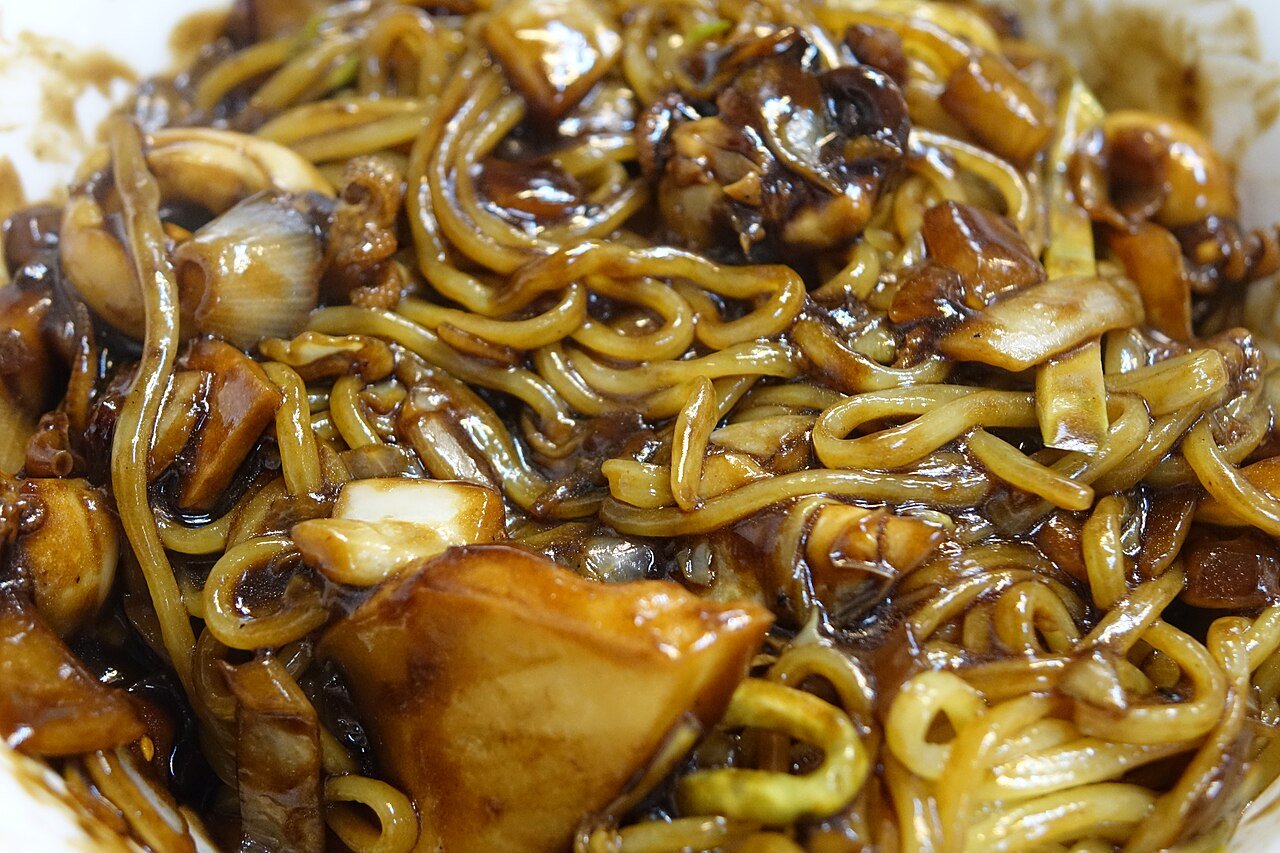
Ladle the sauce over the noodles, top with cucumber matchsticks, and mix everything together at the table before eating.