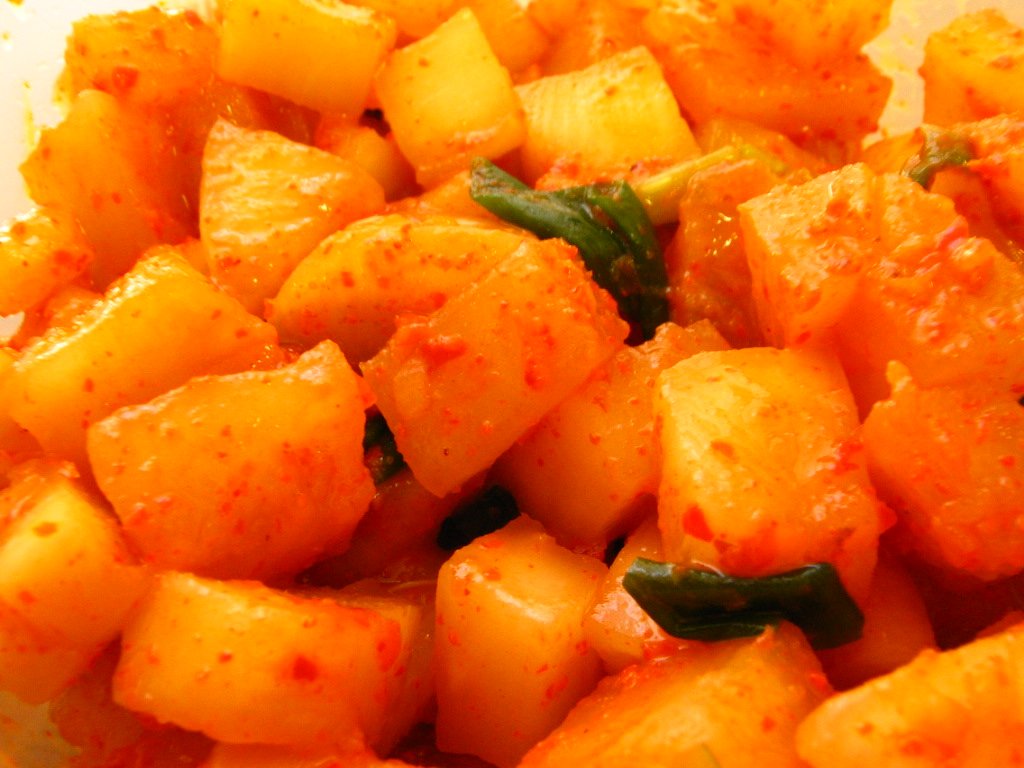
Peel the radish and cut it into even 2 cm / 3/4 in cubes. Even cubes matter here more than in most kimchi — uneven pieces salt and ferment at different rates.
Toss the cubes with 3 tbsp salt and 1 tbsp sugar in a large bowl. Let them sit 45 to 60 minutes, tossing once halfway, until the edges look slightly translucent and a pool of liquid has collected at the bottom.
Drain the radish in a colander set over a bowl, and keep that drained liquid. Do not rinse the cubes and do not discard the liquid — both go back in later.
Whisk the gochugaru into 3 tbsp of the reserved radish liquid and let it sit 10 minutes to bloom into a deep red paste.
Stir the fish sauce, salted shrimp, garlic, ginger, and the second tsp of sugar into the bloomed gochugaru paste.
Add the drained radish cubes and scallions to the paste. Toss by hand, gloved if you'd rather not smell like chili, until every cube is coated red.
Pack the kimchi into a clean container, pressing down so the liquid it releases rises close to the top of the solids.
Leave it at room temperature for 1 day, then move it to the refrigerator. It's edible right away, but better after 3 to 4 days.