Cut the pork into strips about 1.5 cm x 5 cm (1/2 in x 2 in), trimming off silverskin.
Toss the pork with soy sauce, rice wine, grated ginger, and black pepper. Let it sit 20 minutes at room temperature.
Stir the potato starch into the cold water in a bowl until it looks like thin cream. Leave it undisturbed for 30 to 60 minutes.
Pour off the clear water that has risen to the top, leaving the thick white paste settled at the bottom.
Add the egg white, if using, and the 1 tbsp oil to the starch paste and stir until it falls off a spoon in a slow, heavy ribbon. Add the poured-off water back a teaspoon at a time if it is too stiff.
Drain any liquid from the pork and fold the strips into the batter, coating each piece completely.
Heat the frying oil to 160°C (320°F) in a deep pot, filling it no more than halfway.
Lower the pork in one piece at a time, frying in two or three batches so the oil temperature does not drop. Fry 3 to 4 minutes, until pale gold and cooked through.
Lift the pork onto a rack and rest it 5 minutes. Steam will escape and the surface will look dry and matte.
Raise the oil to 190°C (375°F). Fry the pork again in batches for 1 to 2 minutes, until deep gold and audibly crackly. Drain on the rack.
For the sauce, combine the water or stock, sugar, rice vinegar, soy sauce, ketchup, salt, and pineapple juice in a saucepan and bring to a boil.
Add the onion, carrot, wood ear mushrooms, and pineapple. Simmer 2 minutes until the carrot is just tender.
Stir the cornstarch slurry again, then pour it into the simmering sauce while stirring. Cook 30 to 60 seconds until the sauce turns glossy and coats a spoon.
Turn off the heat and stir in the cucumber or bell pepper so it keeps its crunch.
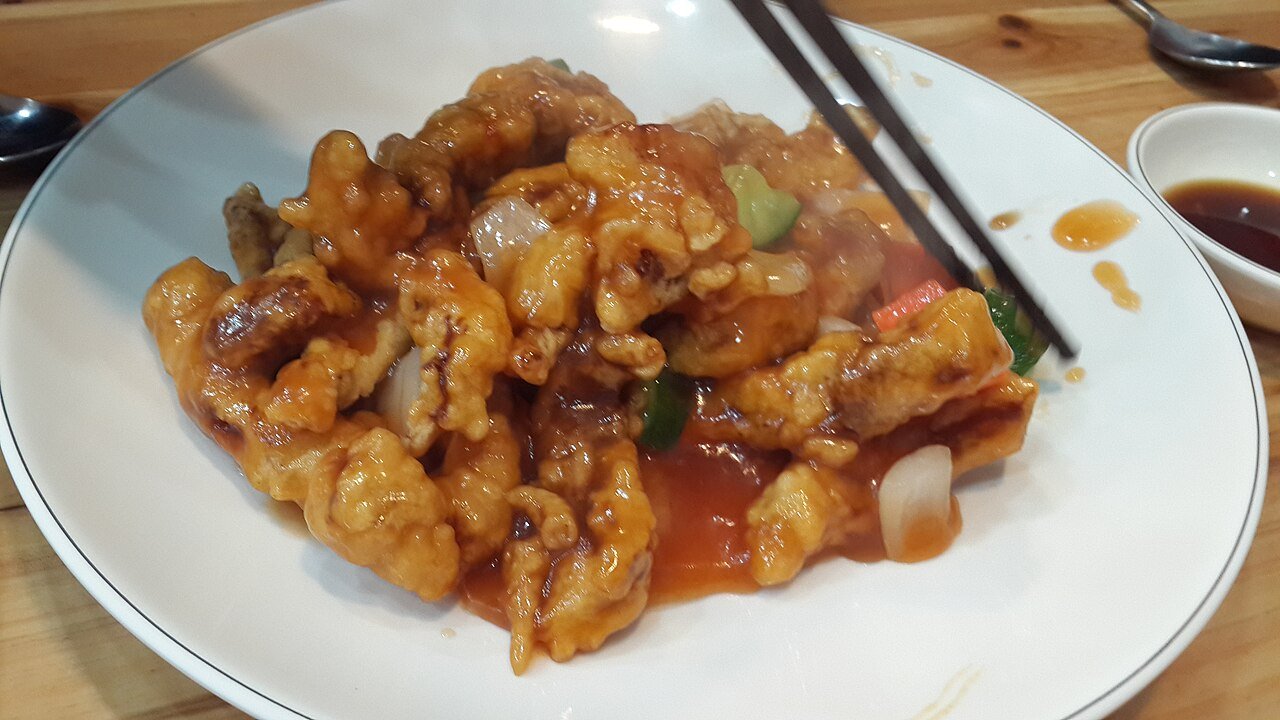
Pile the pork on a platter and serve the sauce in a separate bowl for dipping (jjikmeok). To serve bumeok-style, pour the hot sauce over the pork at the table and eat right away.