Ask a barista in Seoul for “ttalgi uyu” and what shows up is almost never syrup stirred into milk. It’s real fruit, cooked down just enough to hold together, layered under cold milk so the two sit in stripes until you stir them. The first time I ordered one I assumed it would taste like a Starburst. It tasted like strawberries and milk, which sounds obvious but somehow isn’t a given with a drink this pink.
This is the cafe version, built at home. No food coloring, no bottled syrup, no juicer. Ten minutes of actual work, most of it just chopping and waiting.
Why the cooked version beats blending it raw
You could throw raw strawberries and milk in a blender and get something drinkable in thirty seconds. I’ve done it. It’s fine. It’s also thin, a little foamy, and the color fades to a washed-out beige-pink almost immediately because raw strawberry juice separates from milk fast.
Cooking the berries down first does two things. It concentrates the flavor — five minutes of gentle heat pulls more strawberry taste out of a middling supermarket berry than you’d expect. And the light jamminess that results actually holds its shape at the bottom of a glass, which is what gives you that clean layered look rather than a uniformly pink milkshake. If you’ve seen photos of this drink with a distinct color gradient from red to pink to white, that’s a cooked syrup sitting under milk, not a blended mixture that’s started to settle.
Picking strawberries for this
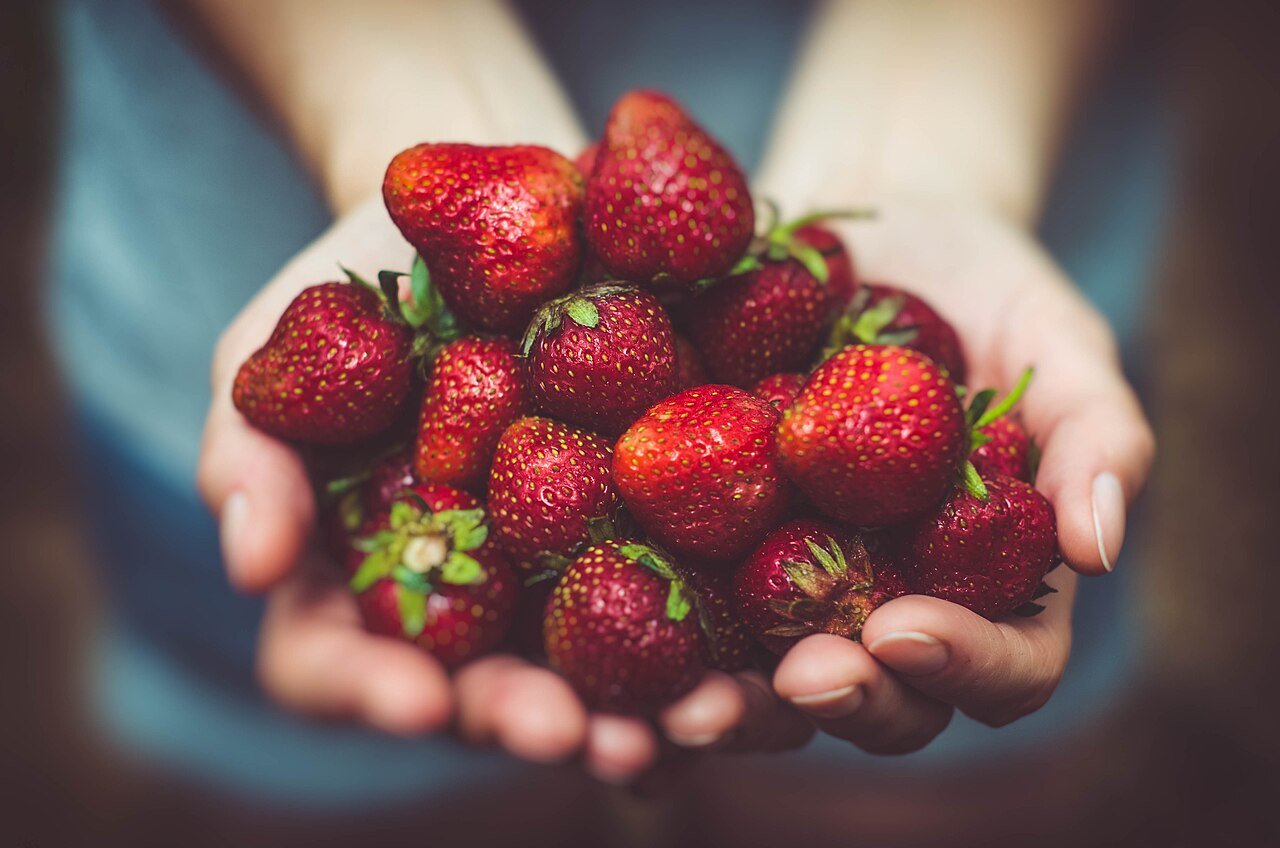
Korean strawberries, especially the winter varieties grown in greenhouses and sold from December through April, run sweeter and less acidic than a lot of what’s available elsewhere most of the year. If your berries taste more tart than sweet, add sugar a tablespoon at a time until the syrup tastes good on its own, off a spoon, before it ever meets the milk — under-sweetened syrup gets lost once it’s diluted by a full glass of milk. If they’re very sweet already, you can cut the sugar back and lean on the lemon juice a little more to keep the flavor from going flat.
Frozen strawberries work when fresh ones are expensive or out of season. They release more water as they thaw and cook, so the syrup takes slightly longer to thicken — give it that extra minute rather than pulling it early and ending up with something too loose to layer.
The milk matters more than you’d think
Whole milk gives you the richest result and the cleanest layering, because the fat content helps it stay visually distinct from the syrup for longer before you stir. Low-fat milk works but the drink feels thinner and the layers blend into each other faster once poured. Oat milk is the sub I get asked about most for anyone avoiding dairy — it works, though the color comes out more dusty rose than the bright pink you get with dairy milk, and there’s a mild oat flavor underneath that dairy milk doesn’t have. Almond milk tends to separate a little oddly against the syrup and isn’t my first choice here.
Korean Strawberry Milk Recipe
Ingredients
Method
- Chop the strawberries roughly and put them in a small saucepan with the sugar and lemon juice. Let them sit for 5 minutes — they’ll start releasing juice on their own.
- Set the pan over medium-low heat. Cook, mashing the berries lightly with a fork as they soften, until the mixture turns into a loose, jammy syrup, about 4 to 5 minutes. It should still have some texture, not be fully smooth.
- Take it off the heat and let it cool to room temperature, then refrigerate for at least 20 minutes. It needs to be genuinely cold or it’ll melt your ice and water down the milk layer.
- Divide the cooled strawberry mixture between two tall glasses, about 3 tbsp each, keeping it at the bottom.
- Fill each glass most of the way with ice.
- Pour the cold milk slowly over the ice, aiming at the ice rather than the strawberry layer, so it settles on top instead of mixing straight through.
- Garnish with a strawberry slice on the rim and serve with a long spoon so whoever’s drinking it can stir the layers together themselves.
Getting the pour right
This is the one technical trick worth doing properly. Fill the glass with ice before you add milk — the ice both chills the drink instantly and acts as a buffer, breaking the fall of the milk so it doesn’t crash straight down into the strawberry layer and muddy everything on contact. Pour slowly, down the side of the glass or directly onto the ice rather than into open space above the syrup.
Even with careful pouring, some blending at the boundary is normal and fine — that gradient of dark red to pale pink is part of what the drink is supposed to look like. What you’re avoiding is a full-glass swirl of uniform pink before anyone’s had a chance to stir it themselves.
Make it a float instead
If you want a heavier, more dessert-like version, swap half the milk for a scoop of vanilla ice cream dropped in after pouring. It turns the drink into something closer to a strawberry milkshake with texture, and it’s a good move on a hot day when you want something that eats more than it drinks.
Other fruit, same method
Once you’ve made this a couple of times, the method is really the whole recipe — cooked fruit syrup, cold milk, ice, a slow pour. Peaches work well in late summer when Korean cafes swap the same drink over to boksungah uyu, using the same ratio of fruit to sugar to lemon juice. Mango is another common variation and needs almost no added sugar if the fruit is properly ripe. What doesn’t translate as well are fruits with a lot of seeds or fiber, like raspberries or kiwi, which turn the syrup gritty rather than smooth unless you strain it through a fine sieve after cooking, which adds a step but fixes the texture completely.
Storage and make-ahead
The strawberry syrup is the part worth making in batches. It keeps in a sealed jar in the fridge for about a week, which means you can make a double or triple batch on a Sunday and have this drink ready in under two minutes for the rest of the week — just spoon the cold syrup into a glass, add ice, pour milk over it. The syrup also freezes well in small portions if you want to stretch a batch of good strawberries across a longer stretch of time, particularly useful toward the end of strawberry season when prices climb and quality drops.
What doesn’t keep is the assembled drink. Once the milk goes in, the layers start blending within twenty or thirty minutes as the ice melts and dilutes things, and the visual effect — the whole reason to make it this way rather than just blending everything together — fades along with it. Build it to order, right before serving.
Questions people ask
Can I use strawberry jam instead of cooking fresh berries?
You can in a pinch, thinned with a splash of water so it pours rather than clumps, but the flavor is noticeably sweeter and less fresh, and most jams don’t have the loose, jammy texture that settles properly at the bottom of the glass. Fresh or frozen berries cooked briefly get you much closer to the cafe version.
Why did my drink turn out more orange-pink than the bright pink I’ve seen in photos?
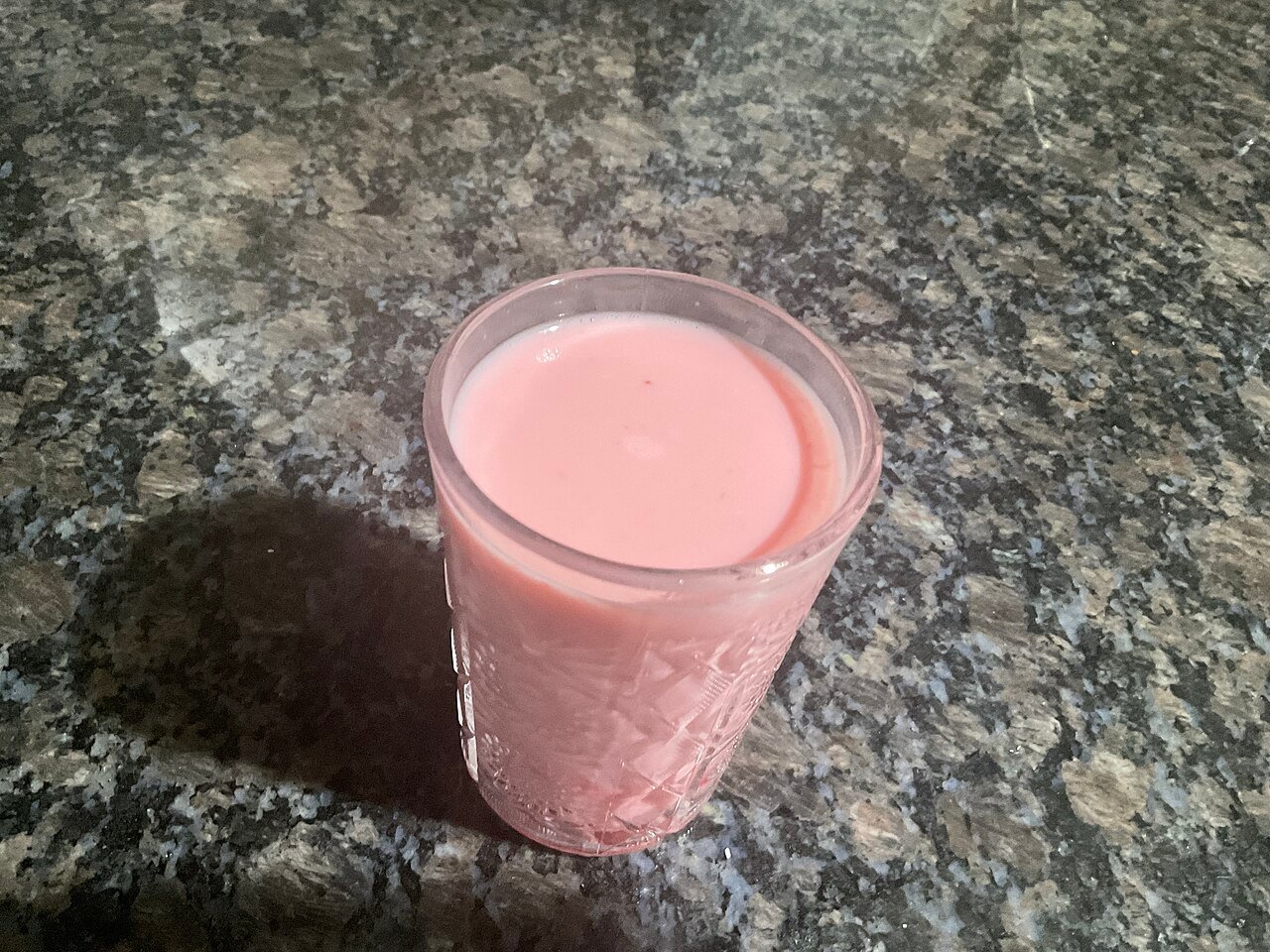
Two likely culprits. Some cafe versions do use a drop of food coloring to hit that saturated magenta look, which this recipe deliberately skips. And strawberry color varies a lot by ripeness and variety — very ripe, dark red berries give you a more vivid syrup than pale or slightly underripe ones.
Is this the same as strawberry-flavored milk from a carton?
No. Bottled Korean flavored milks are a different category entirely — shelf-stable, syrup-based, sold at every convenience store. This is the fresh, made-to-order cafe version, closer in spirit to a milkshake than a packaged drink.
What to make alongside it
This drink and injeolmi toast have become the two dishes that show up together constantly on Korean cafe menus and Instagram feeds, and they take roughly the same amount of counter time, so they pair well if you’re building a small at-home cafe moment. For something less sweet to balance them out, hotteok leans savory-adjacent with its brown sugar filling wrapped in fried dough, and if you’re stocking a Korean pantry from scratch for the first time, our starter kit guide is a good place to figure out what’s actually worth buying.