Starter lists of twenty-odd “essential” Korean ingredients tend to send a beginner home with a bag of jars that stay sealed until they expire. Korea’s own Food Code sorts the entire soy-and-chili aisle into fourteen types of jang, from meju blocks to the black paste for jajangmyeon and a catch-all type for the rest, yet a weeknight cook leans on only three families of them: soy sauce, soybean paste and chili paste.
This guide ranks the ingredients by when to buy them, says what each one does that nothing else can, names an honest stand-in where one exists and decodes the Korean printed on the jars, which is where most first shopping trips go astray. It also explains where the numbers on a gochujang tub come from, and it ends with the calendar behind a bottle of soy sauce.
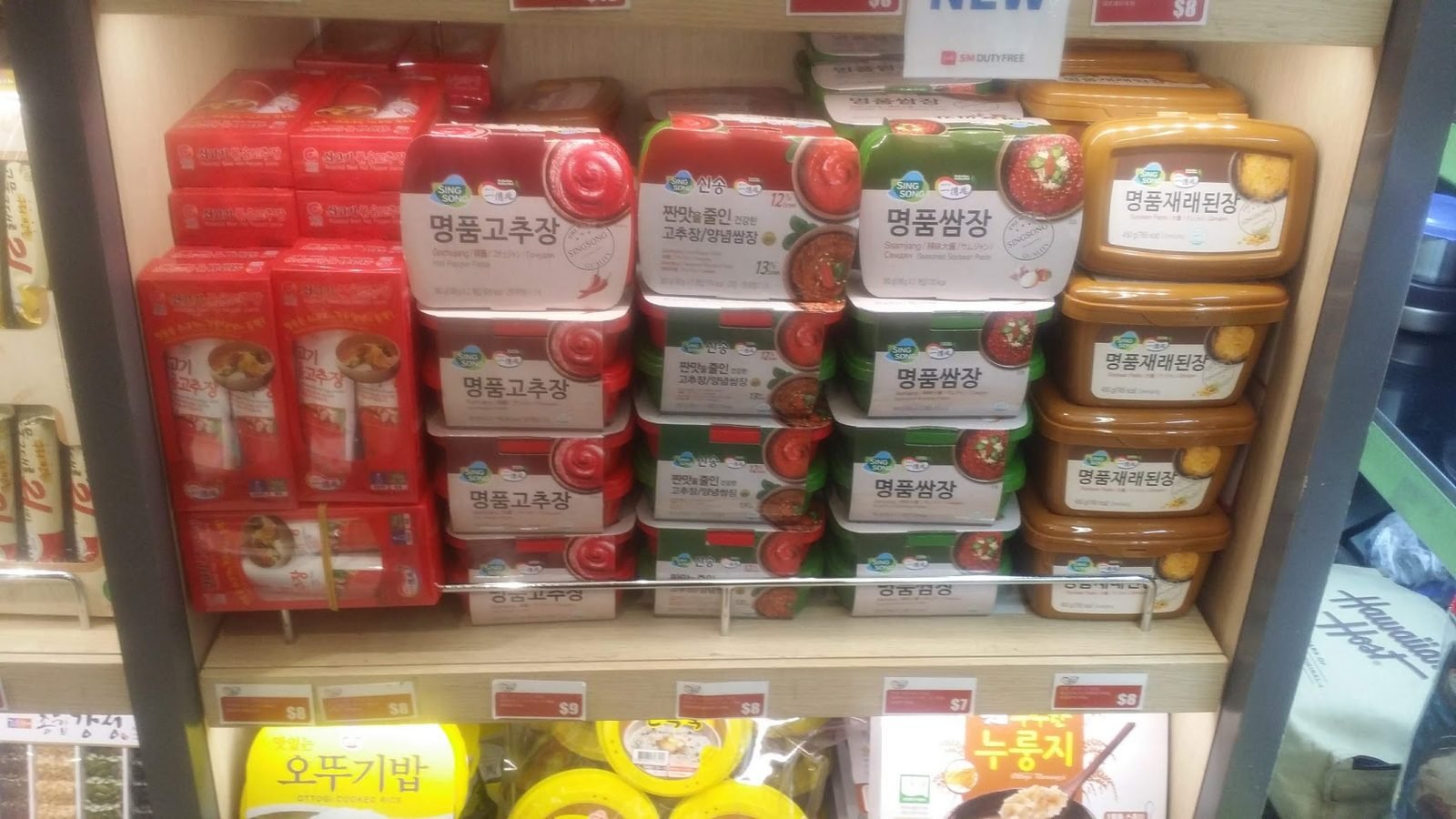

Fourteen types of jang, three families
The Food Code, the rulebook of Korea’s Ministry of Food and Drug Safety, defines jang as a food fermented and aged from plant or animal materials cultured with koji mould, or built on meju blocks, and mixed with salt. Its definition names thirteen types: Korean-style meju, improved meju, Korean-style soy sauce, brewed soy sauce, acid-hydrolysed soy sauce, enzyme-hydrolysed soy sauce, blended soy sauce, Korean-style doenjang, doenjang, gochujang, chunjang, cheonggukjang and blended jang. The numbered list of types that follows adds a fourteenth, “other jang”, for any soy sauce, doenjang or gochujang that fits none of the main types.
Read as a shopper, that list collapses. Meju is the starting block, chunjang belongs to jajangmyeon and cheonggukjang is a pungent stew base of its own, which leaves soy sauce, doenjang and gochujang as the families that season everything else. The Folk Encyclopedia adds a practical note about the first of them: most commercial brewed soy sauce is the improved kind, made from soybeans mixed with starch, and the cheapest bottles are mostly blended soy sauce, which includes protein broken down with hydrochloric acid. So the first label habit to learn is to look for 양조간장, brewed soy sauce, and to treat 혼합간장, blended, as the budget tier.
The four jars that earn their place in week one
Each of these four has a job that nothing else on the list can do, which is why they come before everything else.
Gochugaru (고춧가루), Korean chili flakes
Chili is a surprisingly recent arrival. The Encyclopedia of Korean Culture’s entry on chili says it came to Korea in the early 17th century, while its entry on gochujang reads the same 1614 line in Jibong yuseol, which says chilies came from Japan, as a sign of the late 16th century. This guide follows the overlap, the late 16th or early 17th century, with Jibong yuseol as the first written record. The chili entry adds that salted seafood entered kimchi only after chilies did, from the late 1700s, apparently because capsaicin keeps the fishy smell down.
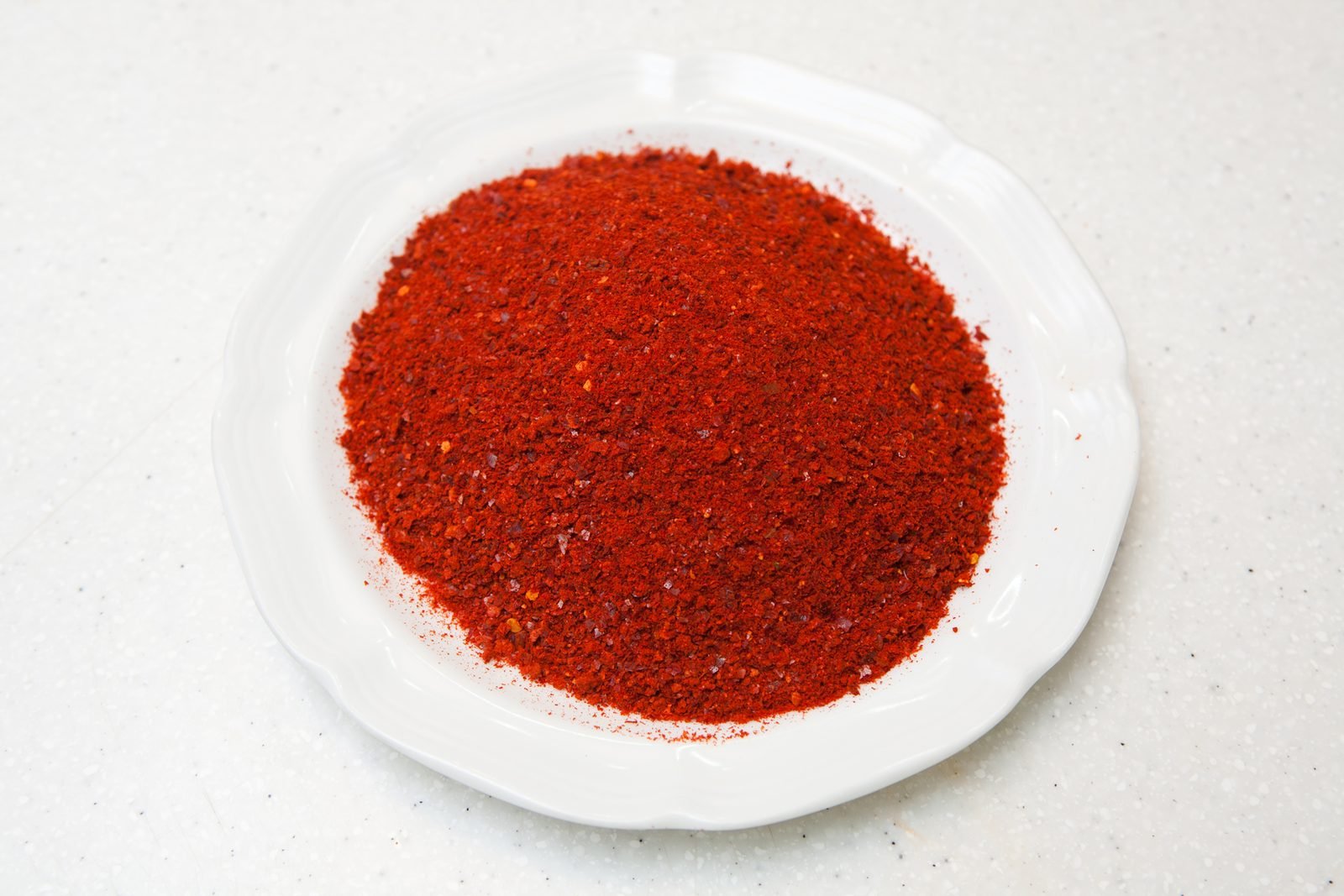
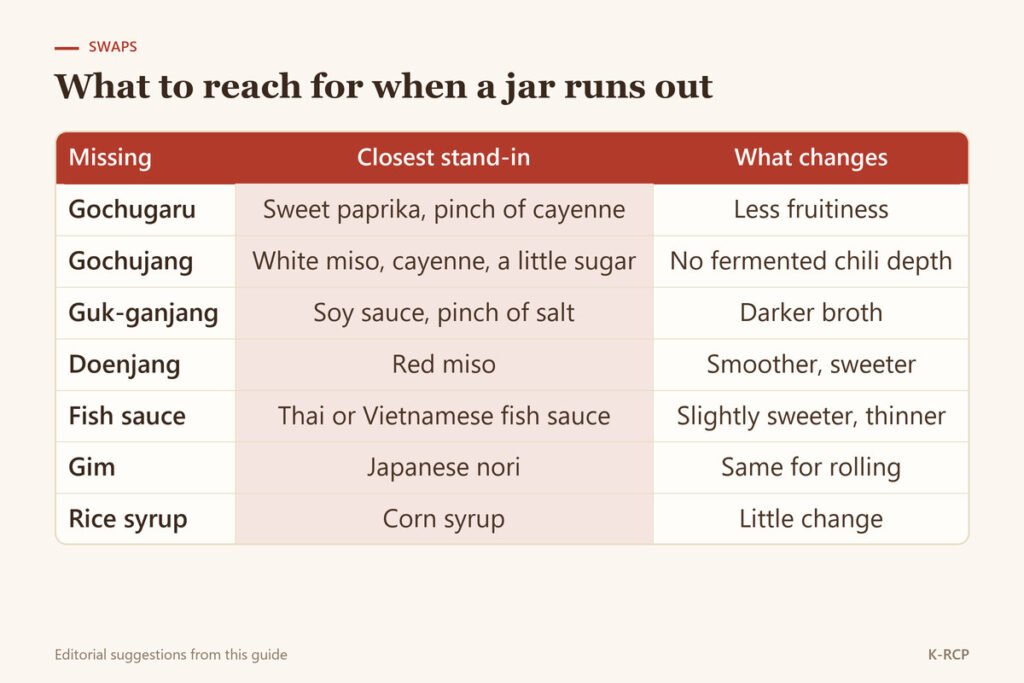
The same entry says the chili grown for kimjang carries about a third of the capsaicin of Tabasco-type varieties and about twice the sugar, which matches gochugaru’s character: fruity before it is fiery. Shops label two grinds, 굵은 (coarse), the all-purpose and kimchi grind, and 고운 (fine), which dissolves into smooth sauces. A bag marked 태양초 is sun-dried and worth the premium when the price gap is small, and a bright red bag beats a dull brown one. If a bag runs out, sweet paprika with a pinch of cayenne keeps the colour and some heat but loses the fruitiness, while American chili powder, usually blended with cumin and oregano, takes the dish somewhere else.

Gochujang (고추장), fermented chili paste
Gochujang is younger than soy sauce and doenjang, because it had to wait for the chili. The encyclopedia dates the first written recipe to around 1760, in the Jeungbo sallim gyeongje, and describes it as dominated by meju powder, with far less chili powder than today and the grain in a smaller role, closer to a coarse soybean paste than to the red paste of today.
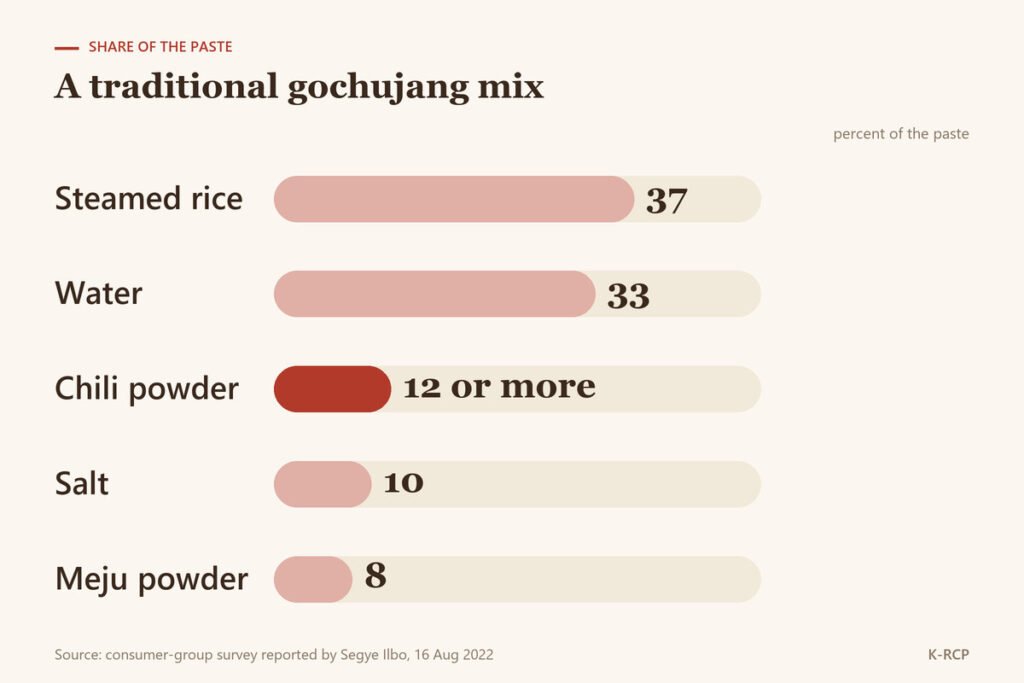
Today the Food Code sets a floor: gochujang has to contain at least 6 percent chili powder. A consumer group’s 2022 survey, reported by Segye Ilbo, gave the traditional mix as chili powder at 12 percent or more, steamed rice 37 percent, meju powder 8 percent, salt 10 percent and water 33 percent, matured for three to four months. It reported only 6 to 11 percent chili content in the shop tubs it surveyed, short of that traditional mix, with the legal floor sitting at the low end of that range. That is a reason to compare ingredient lists, not to avoid the tub: a supermarket gochujang is a normal purchase, not a compromise.
White miso with cayenne and a little sugar reaches sweet, salty and hot but never the depth of fermented chili, and sriracha is too thin and vinegary, turning tteokbokki sauce into something closer to hot ketchup. For the full account of what goes into the paste, the longer story of gochujang covers it.
Toasted sesame oil (참기름)
This is a finishing oil, added by the teaspoon off the heat, and its smell is what many people recognise as Korean without being able to name it. Buy the dark, toasted kind: the pale, untoasted oil is mild and rarely used in Korean cooking. There is no honest substitute. A neutral oil with toasted sesame paste gets partway, but kimbap and bibimbap lose their defining aroma without the real thing, so start with a small bottle and finish it while the aroma is fresh.
Soy sauce (간장), and the soup version
According to the Folk Encyclopedia, soy sauce comes from steeping meju in brine for 30 to 40 days and drawing off the liquid. A light, clear soy sauce, cheongjang, the one sold as guk-ganjang, goes into soups and seasoned vegetables to keep their colour and a clean taste, while soy sauce aged for years goes into grilled and braised dishes for its sweetness and dark colour.
For marinades, stir-fries and dipping, one bottle of brewed soy sauce does the work. Guk-ganjang earns a place once you cook soups every week; until then regular soy sauce with a pinch of salt works at the price of a darker broth. Seasoned vegetables show the difference best, as in blanched spinach dressed with a spoon of soy sauce, where the pale colour stays in view.
Doenjang, broth and fish sauce, as the first jars run low
Doenjang (된장) is coarser and funkier than Japanese miso. The Food Code separates two kinds: Korean-style doenjang, the paste left when meju is fermented in brine and the liquid is drawn off, and ordinary doenjang, made by culturing soybeans, rice, barley or wheat with koji and mixing in salt. It seasons the stew of the same name and many braises, and it combines with gochujang, garlic and sesame oil to make ssamjang, the wrap paste for grilled meat. For the dipping sauces that share the table with it, a bowl of seasoned soy dip is the place to start. Red miso is the usual stand-in; it is smoother and sweeter, so a stew tastes cleaner and less earthy.

Sesame seeds (깨) are cheap and finish nearly everything. Buy them toasted, or toast raw ones in a dry pan until they begin to jump, and crush them lightly between the fingers as you scatter them, because whole seeds mostly pass through unnoticed.
A broth pack (다시팩) is the item beginner lists leave out, though it explains why homemade soup can taste like restaurant soup. Korean grocers sell tea-bag sachets of dried anchovy, kelp and dried vegetables: simmer one in water and lift it out. Water with a teaspoon of fish sauce recovers some of the depth, and vegetarians can simmer a small square of dried kelp with a few dried shiitake. Fish sauce (액젓), the Korean anchovy kind, seasons kimchi and vegetable side dishes; it smells alarming in the bottle and disappears into the food. Thai or Vietnamese fish sauce can stand in, slightly sweeter and thinner.
Kimchi, rice, gim and syrup can wait a few weeks
Kimchi is hardly a pantry item, yet little works without it. Buy it from the refrigerated case, because a stew wants kimchi that is still souring. Korean rice is short-grain and slightly sticky, and in many Western shops it is sold as sushi rice; long-grain rice under a stew does not hold the sauce in the same way, so rinse the short-grain well and cook it a little firmer than the package suggests.
Gim (김), roasted seaweed, comes in two kinds that matter: small salted, oiled squares for eating with rice and large plain sheets for kimbap. If you buy only one, buy the large plain sheets and season them yourself; Japanese nori is functionally identical for rolling. Rice syrup (물엿) or oligosaccharide syrup (올리고당) is a neutral sweetener that gives glazes their lacquered shine. Corn syrup works as a substitute, while honey brings a flavour of its own that shows in a delicate braise and vanishes under chili.
Perilla oil (들기름) has one main job, finishing certain vegetable dishes, so it can wait too, and salted shrimp (새우젓) only matters if you plan to make kimchi from scratch. Rice cakes for tteokbokki are best bought fresh on the day. No stone bowl, special pot or kimchi fridge is needed: a heavy saucepan covers every stew in this guide.
Reading the Korean on the label
Packages in a Korean grocery carry little English, so a short vocabulary pays for itself. The table below is built from the terms used in this guide.
| On the label | What it means | When to pick it |
|---|---|---|
| 굵은 고춧가루 | Coarse chili flakes | Kimchi, stews, general seasoning |
| 고운 고춧가루 | Fine chili powder | Smooth sauces and marinades |
| 태양초 | Sun-dried chili | Worth it for gochugaru if the price gap is small |
| 양조간장 | Brewed soy sauce | The default bottle for marinades and dipping |
| 혼합간장 | Blended soy sauce | The budget tier, part of it chemically hydrolysed protein |
| 한식간장 | Korean-style soy sauce | Made mainly from meju and brine, according to the Food Code |
| 국간장 | Soup soy sauce | Clear soups and seasoned vegetables; skip for stir-fries |
| 참기름 / 들기름 | Sesame oil / perilla oil | Sesame first; perilla later |
| 쌈장 | Ready-mixed wrap paste | Convenient, though doenjang, gochujang, garlic and sesame oil make the same thing |
A first week of cooking from the jars
With only the first four items plus garlic and whatever vegetables are in the house, three small dishes teach most of the logic. A pot of kimchi jjigae made with sour kimchi shows how a Korean stew is built from chili flakes, soy sauce and kimchi. A bowl of rice with a sheet of gim and a few drops of sesame oil shows what the oil is for. And a spoon of gochujang loosened with water, a little sugar and sesame oil, spooned over rice, is the quickest way to learn what the tub in the fridge does. Add doenjang and a broth pack when the first jars run low, and the repertoire widens without a second shopping trip.
How long a bottle of soy sauce takes to make
Making soy sauce the old way follows a calendar, and the Folk Encyclopedia lays it out step by step.
- October. New soybeans are boiled until soft, pounded while hot and pressed into firm blocks of meju.
- The next ten weeks. The blocks are tied in straw and hung in a warm room to dry. They then come down and are left to ferment in a warm room.
- Brining. The washed blocks are packed into a sterilised crock and covered with brine, with chilies, jujubes and charcoal added. The lid stays shut for three days, then the crock goes into the sun.
- Forty days later. The charcoal, chilies and jujubes are lifted out and the liquid is drawn off through a sieve: that is the soy sauce. A longer schedule from the Jeungbo sallim gyeongje, also recorded by the encyclopedia, draws the clear soy sauce off after 60 to 100 days.
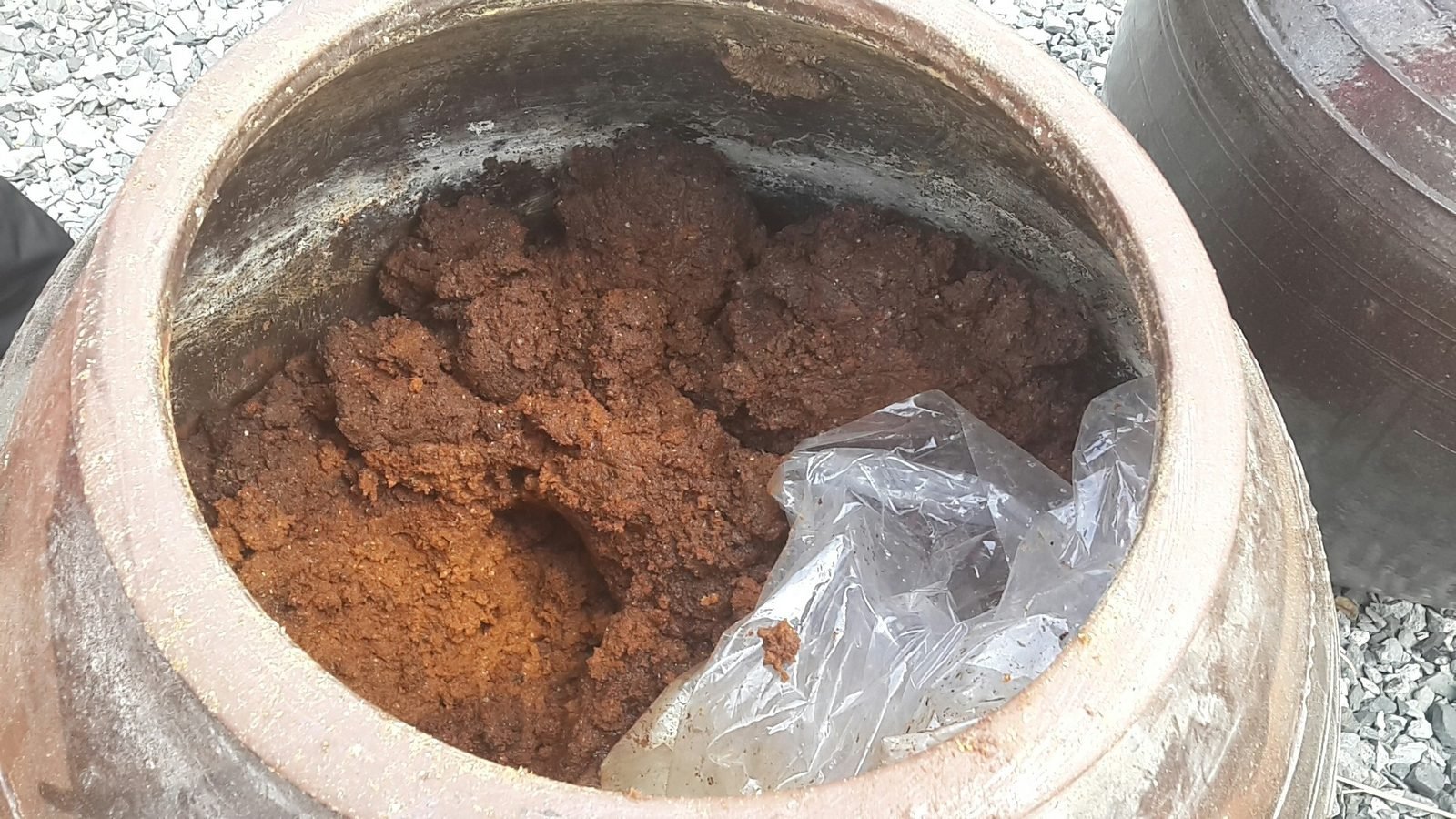
- What stays behind. In the Food Code’s terms, Korean-style doenjang is the paste left once the liquid has been separated from the fermented meju.
None of the sources used for this guide publishes official storage times for an opened jar, so it gives none. The after-opening note printed on each label, and an opening date written on the lid in marker, are the figures to follow.