Here’s the short version, before anything else: if your galbijjim came out tough, the marinade is not the problem, and neither is the cut of meat. It’s time. Short ribs are full of connective tissue that only breaks down into that soft, gelatinous, falls-off-the-bone texture after a genuinely long, low simmer — somewhere around two hours, not the forty-five minutes a lot of shortcut recipes promise. Everything else in this recipe, the pear, the soy sauce, the order you add the vegetables, matters. None of it substitutes for the clock.
Quick Facts
| Time | 40 min prep (plus 1–2 hr soak), about 2 hr cook |
| Serves | 5, as a shared main |
| Difficulty | Medium — long but mostly hands-off |
| Spice level | 0/5, not spicy |
| Vegan? | No — the dish is built around beef short ribs and there’s no substitute that reproduces the texture |
What Galbijjim Actually Is
Galbijjim (갈비찜) is beef short ribs braised in a soy-based sauce with root vegetables until the meat is soft enough to pull apart with chopsticks and the sauce has reduced into something between a glaze and a gravy. It’s a special-occasion dish more often than an everyday one — the kind of thing that shows up at Korean New Year, Chuseok, birthdays and family gatherings, partly because good short ribs aren’t cheap and partly because it takes real time to make properly. It’s a different animal from Andong jjimdak, which uses the same soy-and-sugar braising logic but with chicken and glass noodles instead of beef, and cooks in roughly half the time because chicken doesn’t need nearly as long to tenderize.
Ingredients, and What to Use Instead
| Ingredient | Where to get it, or what to use instead |
|---|---|
| Beef short ribs, 1.5 kg / 3 lb, English-cut | Ask a butcher for English-cut short ribs if the meat counter doesn’t have them labeled. Flanken-cut, sliced across the bone, works too and is common at Korean and some Latin grocers — it cooks slightly faster. |
| Asian pear, 1, grated | Sold at most Asian grocers and increasingly at regular supermarkets. Kiwi is a stronger substitute enzyme-for-enzyme — use half as much and marinate for a shorter window, or the surface of the meat turns unpleasantly soft and mealy. Apple is the gentle, forgiving option. |
| Korean radish (mu), 1 | Daikon is essentially interchangeable. Regular white turnip works too, with a slightly sharper, more peppery bite. |
| Dried jujubes, 6, optional | Sold dried in the same aisle as other Korean pantry staples. Dried apricot, halved, gives a similar chewy sweetness if jujube isn’t available locally. |
| Chestnuts, 6, optional | Peeled, vacuum-packed chestnuts are sold at Korean grocers around the fall. Skip them if you can’t find them — they add texture, not core flavor. |
| Soy sauce, sugar, rice wine, garlic, ginger | Standard pantry items, no substitution notes needed. |
The One Variable: How Long It Actually Needs
Short ribs are held together by a dense network of collagen, and collagen doesn’t soften on a fast timeline — it needs sustained heat, roughly 85–95°C / 185–200°F, for an extended stretch before it breaks down into gelatin and the meat stops fighting your fork. Recipes that promise galbijjim in 45 minutes to an hour are usually working with a thinner cut or accepting meat that’s cooked through but still a little chewy at the center, which isn’t the same thing as properly braised. Give it the full two hours at a bare simmer, covered for most of that time so the pot doesn’t dry out, and you’ll notice the texture change happens almost all at once near the end — meat that seemed stubborn at ninety minutes will often be falling off the bone by the two-hour mark. If you’re not sure it’s ready, the test is simple: a fork should slide in and separate the fibers with almost no resistance. If there’s any pull-back, it needs more time, not a hotter flame.
Why the Vegetables Go in Staggered, Not All at Once
The second common mistake is dumping every vegetable in at the start alongside the meat. Radish and carrot can handle close to an hour of simmering and still hold their shape, but potato falls apart well before that if it’s in the pot from the beginning — and by the time the beef is properly tender, an early-added potato has usually disintegrated into the sauce, thickening it in a way that reads as starchy rather than rich. Stagger them: the hardest, slowest vegetables go in partway through the braise, softer ones later, and anything delicate — onion especially — goes in only during the final uncovered reduction. That staggering is also what keeps the sauce from turning cloudy; a potato that’s cooked whole and just barely tender contributes almost nothing to the liquid, while one that’s been simmering for ninety minutes breaks down and clouds it.
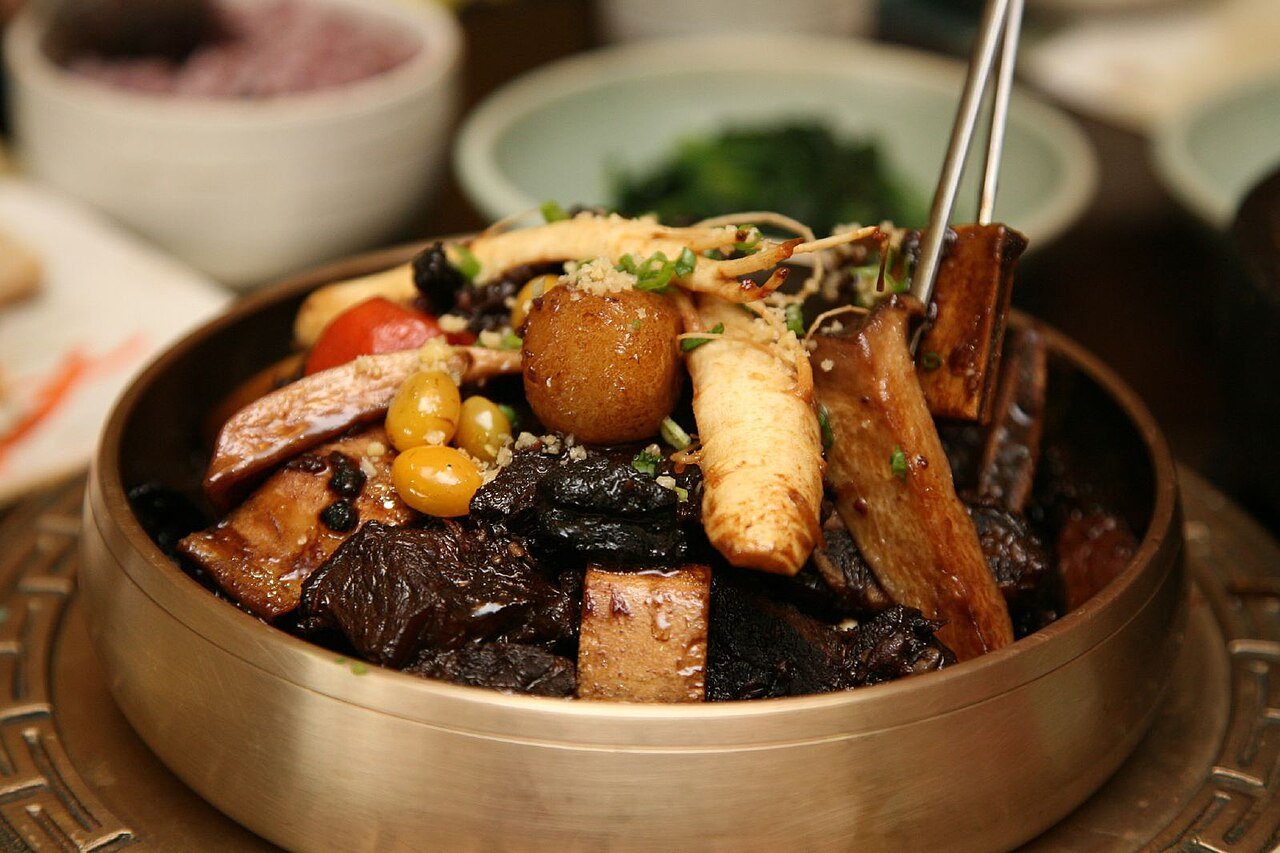
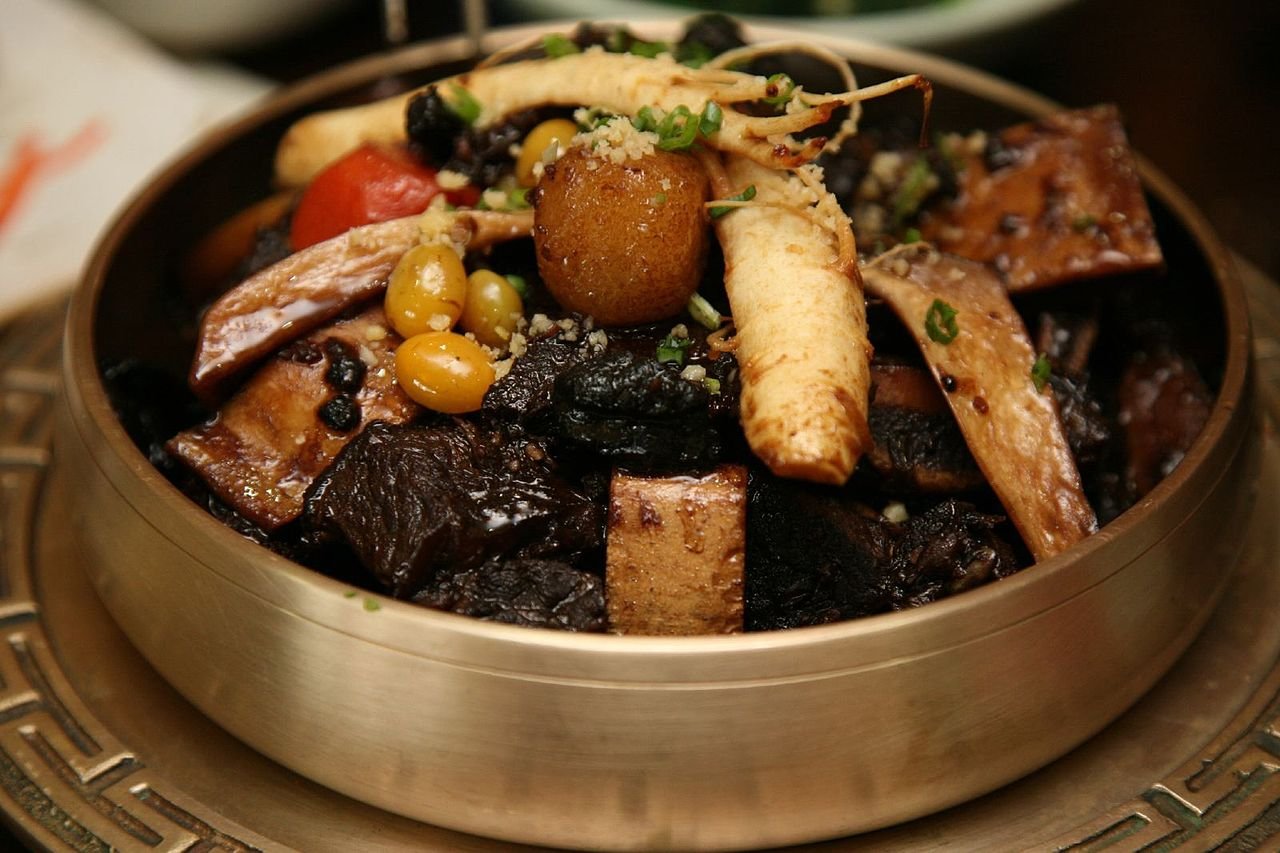
Galbijjim Recipe
Ingredients
Method
- Soak the short ribs in cold water for 1 to 2 hours, changing the water once or twice, to draw out surface blood.
- Bring a pot of water to a boil and parboil the ribs for 5 minutes. Drain, rinse under cold water, and trim any large surface fat.
- Whisk the grated pear, soy sauce, sugar, rice wine, garlic, ginger and black pepper into a marinade. Toss the ribs in it and let them sit 30 minutes (only 15 if using kiwi).
- Transfer the ribs and marinade to a heavy pot, add the water or stock, and bring to a boil. Skim off any foam that rises.
- Reduce to a low simmer, cover, and cook 45 minutes, skimming fat from the surface occasionally.
- Add the radish and carrot. Cover and continue simmering 30 more minutes.
- Add the potato, jujubes and chestnuts (if using). Cover and simmer 20 to 25 more minutes, until a fork slides through the meat with almost no resistance.
- Add the onion, then uncover the pot for the final 15 to 20 minutes, stirring occasionally, letting the sauce reduce to a thick, glossy coating rather than a pool.
- Drizzle with sesame oil and scatter scallions and pine nuts over the top before serving.
How to Make It
- Soak the ribs in cold water 1 to 2 hours, changing the water once or twice, to pull out surface blood. Skipping this step is the most common reason galbijjim tastes faintly metallic or overly gamey.
- Parboil for 5 minutes, then drain, rinse, and trim visible surface fat.
- Marinate. Whisk grated pear, soy sauce, sugar, rice wine, garlic, ginger and pepper, toss with the ribs, and let sit 30 minutes (15 if you’re using kiwi instead of pear).
- Bring to a boil in a heavy pot with the water or stock, skimming any foam that rises to the surface.
- Drop to a low simmer, cover, and give it 45 minutes, skimming fat occasionally.
- Add radish and carrot, cover, and continue 30 more minutes.
- Add potato, jujube and chestnuts, cover, and simmer 20 to 25 more minutes until the meat is genuinely fork-tender.
- Add the onion, uncover, and reduce 15 to 20 minutes, stirring now and then, until the sauce thickens into a glaze rather than a pool.
- Finish with sesame oil, scallions and pine nuts.
Common Mistakes
Tough meat after an hour: it just needs more time. Cover the pot again and keep it at a bare simmer rather than raising the heat, which won’t speed up collagen breakdown and will just evaporate the liquid you need.
Mushy, disintegrated potatoes: they went in with the meat at the start instead of partway through. Stagger the vegetables by how long they can hold their shape.
A greasy-tasting sauce: short ribs render a fair amount of fat as they cook. Skim it off the surface periodically through the simmer rather than trying to deal with it all at the very end, when it’s emulsified into the sauce and harder to remove cleanly.
Storage
Galbijjim keeps 4 days refrigerated and actually improves overnight, once the flavors settle. It freezes well too, better than most braises, since the sauce is dense enough not to separate badly on thawing — freeze in a sealed container up to 2 months and reheat gently in a covered pot with a splash of water.
Common Questions
Why is my galbijjim tough even after an hour of cooking?
Short ribs need roughly two hours at a low simmer to fully break down their connective tissue; an hour is often not enough regardless of the marinade. Keep it covered at a bare simmer rather than boiling harder, and test with a fork rather than a clock — some ribs need slightly more or less time depending on thickness.
Can I make galbijjim without an Asian pear?
Yes. Grated apple is the gentlest substitute and safe to leave in the marinade a little longer than the recipe calls for. Kiwi is stronger and works faster, but use less of it and don’t let the meat sit in it more than 15 minutes, or the surface texture turns unpleasantly soft.
What’s the difference between galbijjim and galbitang?
Galbijjim is a thick, reduced braise meant to be eaten as a main dish with rice; galbitang is a clear short rib soup, thinner and served in a bowl with broth. They start from the same cut of meat but end up as genuinely different dishes.
Related
The staggered-vegetable technique here works just as well in Andong jjimdak, which braises chicken the same way, just on a shorter clock. If you’re building out a full spread for a holiday table, japchae is the standard glass-noodle side that shows up next to galbijjim at most Korean celebrations. And for the pantry items behind both, the Korean pantry starter kit covers which soy sauce and rice syrup are worth keeping stocked.