Why is Korean fried chicken crunchier than the American kind? It’s the question every korean fried chicken recipe should start with, because the answer isn’t a secret spice blend or a special breed of chicken. It’s mechanics. Bite into a wing from a Seoul chicken shop and the shell shatters instead of giving way, and it’s still doing that twenty minutes after it left the fryer. Two decisions get you there: how many times the chicken goes into the oil, and what starch is doing the coating. Get those right and the rest, including the sweet-spicy yangnyeom glaze most people assume is the whole story, comes together fast.
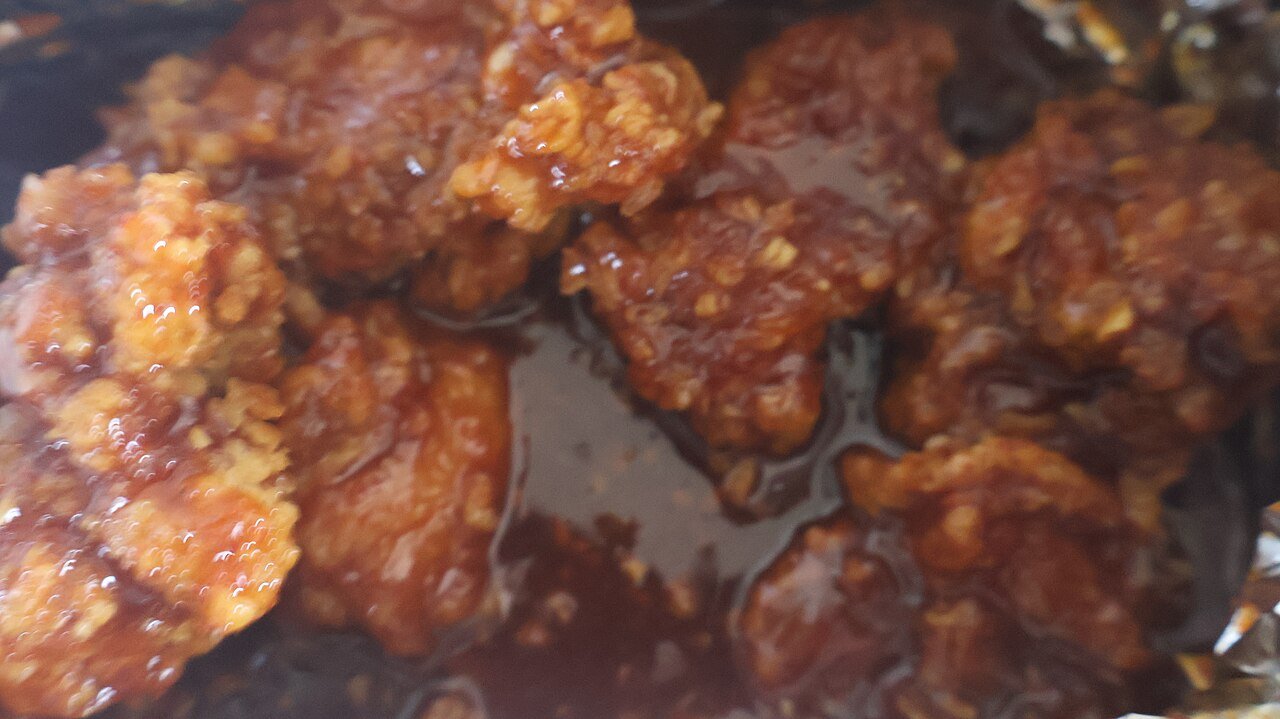
Quick facts
- Total time: about 55 minutes active, plus 20-30 minutes marinating
- Serves: 3-4 as a main, more as shared anju (drinking food)
- Difficulty: medium
- Spice level: 2 out of 5 (adjustable up to 4)
- Vegan-friendly: no
What is Korean fried chicken, or yangnyeom chicken?
Yangnyeom Chicken (양념치킨, roughly yang-nyum chee-ken) means “seasoned chicken,” and it’s the specific style most people outside Korea picture when they hear “Korean fried chicken.” The plain, unsauced chicken underneath is called huraideu-chikin (후라이드치킨) — a Korean transliteration of the English word “fried.” Korean fried chicken as a whole took off in the 1970s and 80s around university neighborhoods and has stayed a delivery-and-drinking-culture staple ever since; ordering a whole chicken to a shared table with beer is common enough to have earned its own name, chimaek (치맥) — chicken plus maekju, beer. Yangnyeom is the sauced half of that world: sweet, sticky, and built on gochujang.
Why is it crunchier? The double-fry mechanics
Here’s the physics. Chicken skin and meat are both mostly water, and a coated piece dropped into hot oil is really a fight between two things happening on its surface at once: starch dehydrating into a crust, and water underneath trying to escape as steam. Fry it once, pull it out at 165°F / 74°C internal, and you’ve only won half that fight. The crust has set, but it’s still damp — from meat juices working outward and from the humid air trapped right against the surface the moment it comes out. Damp starch goes soft within minutes, which is why chicken from a single fry turns chewy so fast sitting on a plate.
The double fry splits that fight into two separate rounds instead of asking one fry to do both jobs.
The first fry, at a moderate 325°F / 163°C, is entirely about the meat. It’s slower and gentler, cooking the chicken through to a safe temperature without pushing the surface hard enough to over-brown or blister the coating. Pull the pieces out and let them rest — five to ten minutes, uncovered, on a wire rack rather than paper towels, which trap steam against the bottom of the piece and undo the whole point of resting. During that rest, residual heat keeps cooking from the outside in, and surface moisture that got trapped during the first fry finally has somewhere to go besides back under the crust.
The second fry, hotter at 350 to 375°F / 175 to 190°C, is short: 90 seconds to 2 minutes. It’s entirely about the crust. The chicken is already cooked, so this pass exists only to blast off whatever surface water is left and drive the starch coating into a hard, dehydrated, glassy structure — the kind that shatters instead of chews. It’s the same fry-rest-fry logic behind twice-fried French fries and Japanese karaage: separate “cook it” from “crisp it” instead of compromising on both in one long fry.
Skip the rest between fries and you lose most of the benefit. The second fry just reheats a crust that’s still damp underneath, and it goes soft again within minutes of coming out of the oil. The rest is doing nearly as much work as the second fry itself.
The other lever: starch choice
The second decision is what’s coating the chicken, and this is where a lot of home versions quietly go wrong by reaching for all-purpose wheat flour out of habit.
Wheat flour contains gluten-forming proteins. Once it’s wet — from the egg wash, from marinade clinging to the chicken — those proteins link up into a stretchy network, and a stretchy network is the opposite of what a fried crust wants. It fries into something closer to a savory doughnut skin: fine, a little chewy, and quick to go leathery as it cools instead of shattering.
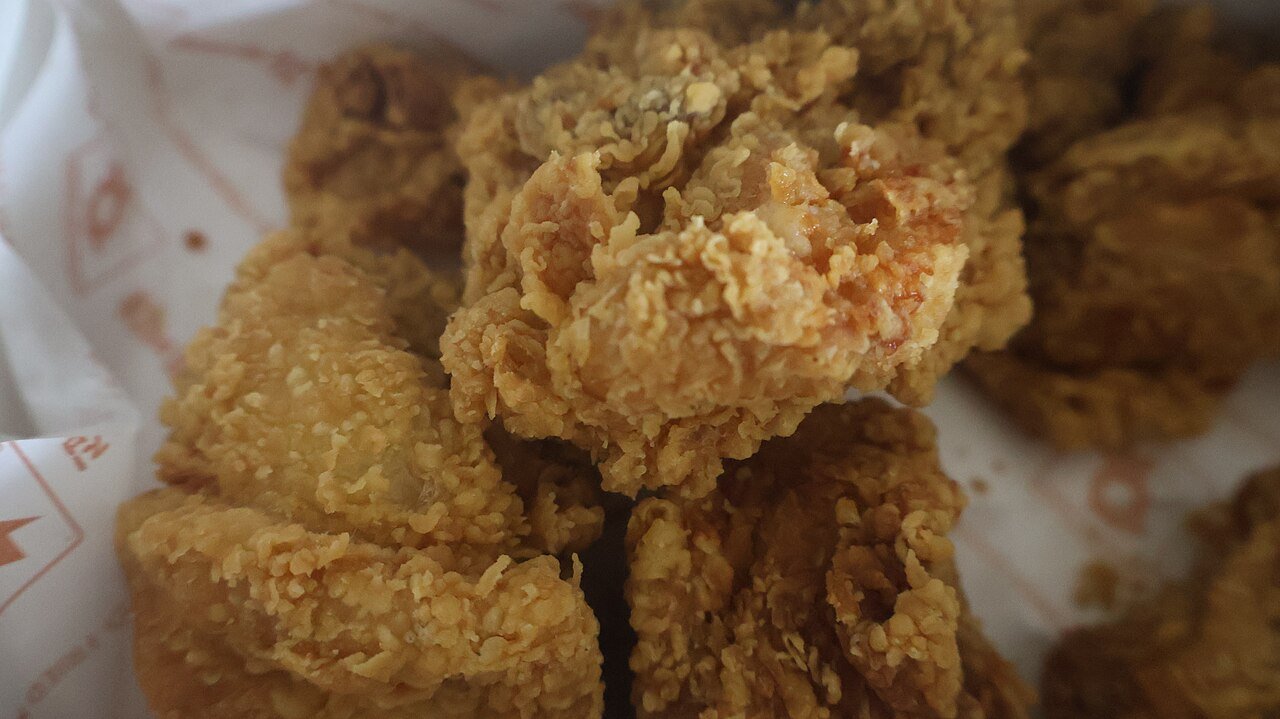
Potato starch (gamja-jeonbun, 감자전분, at a Korean grocer) has no gluten at all. It’s pure starch granules, and when they hit hot oil they gelatinize and then dehydrate into a coarse, craggy, almost blistered surface — more texture per bite, and a genuinely audible crack when you bite in. This is what most Korean fried chicken shops actually coat with, and it’s what this recipe is built around.
Rice flour sits in between. No gluten either, so it still crisps hard, but the granules are finer than potato starch’s, so the crust comes out thinner and more delicate — closer to a light Southern-style batter shell than to the thick, craggy armor of a chicken-shop wing. Some Korean kitchens cut potato starch with a little rice flour for exactly that lighter texture.
If potato starch isn’t in your pantry, cornstarch is the easiest stand-in. Same gluten-free logic, same general effect, but the crust comes out a shade smoother and less coarse, since cornstarch granules are finer than potato starch’s. That’s a small difference, not a dealbreaker. What actually breaks the dish is reaching for plain flour and expecting the same crackle. It won’t happen, no matter how carefully you fry it.
Ingredients, and what to use instead
The right column is the point of this site. If half of this isn’t sitting in your kitchen, you can still make it tonight.
| Ingredient (for 3-4) | Where to get it, or what to use instead |
|---|---|
| Chicken wings and drumettes, 900 g / 2 lb | Any grocery store. Bone-in thigh, cut into chunks, works too — give it 2 extra minutes in the first fry. |
| Potato starch (gamja-jeonbun), 150 g / 1 1/4 cups | Korean grocer, sometimes the baking aisle of a large supermarket. Substitute: cornstarch — same crackle, a touch smoother and less coarse. |
| Soju or mirin, 1 tbsp | Korean grocer or liquor store. Substitute: dry sherry, or skip it and add 1/2 tsp extra salt — the marinade loses a bit of clean, faint sweetness. |
| Gochujang, 3 tbsp | Stocked in many mainstream supermarkets now. Substitute: 2 tbsp white miso plus 1 tbsp tomato paste and 1/2 tsp cayenne — less fermented depth, more straightforward sweet-tomato heat. |
| Mullyeot (rice syrup or corn syrup), 2 tbsp | Korean grocer. Substitute: honey — sets stickier and browns faster, so pull the glaze off the heat a little sooner. |
| Gochugaru, 1 tsp, optional | Korean chili flakes. Substitute: 1/4 tsp cayenne. |
| Ginger, garlic, soy sauce, brown sugar, sesame oil | Standard grocery items. |
Korean Fried Chicken Recipe
Ingredients
Method
- Cut the chicken into even pieces if needed, then toss with soju, ginger, garlic, salt, and pepper. Let it sit 20 to 30 minutes at room temperature, or up to overnight in the fridge.
- Beat the egg into the marinated chicken so every piece is coated, then dredge each piece in potato starch, pressing gently so it sticks in a rough, even layer. Shake off the excess.
- Heat the oil in a heavy, deep pot to 325°F / 163°C. Fry the chicken in batches of 5 to 6 pieces, without crowding the pot, for 8 to 9 minutes, until just cooked through (165°F / 74°C internal).
- Lift the chicken onto a wire rack, not paper towels, and let it rest 8 to 10 minutes while you fry the remaining batches.
- While the chicken rests, combine the gochujang, ketchup, rice syrup, soy sauce, brown sugar, garlic, ginger, and gochugaru in a small pan. Simmer over low heat 5 minutes, stirring, until it coats a spoon and holds a line when you drag a finger through it. Take it off the heat and stir in the sesame oil.
- Raise the oil to 350-375°F / 175-190°C. Fry each batch again for 90 seconds to 2 minutes, until deep golden and audibly crackling when tapped with tongs.
- Drain briefly on the rack, then toss the hot chicken in the warm glaze for no more than 20 to 30 seconds — fold rather than stir, just enough to coat every piece.
- Scatter with sesame seeds and serve immediately, while the crust is still at its crispest.
How to make it
- Marinate. Cut the chicken into even pieces if needed, then toss with soju, ginger, garlic, salt, and pepper. Let it sit 20 to 30 minutes at room temperature, or up to overnight in the fridge.
- Coat. Beat the egg into the marinated chicken so every piece is glossy, then dredge each piece in potato starch, pressing gently so it sticks in a rough, uneven layer — uneven is good here, it’s what gives the finished crust texture. Shake off anything loose.
- First fry. Heat the oil in a heavy, deep pot to 325°F / 163°C. Fry the chicken in batches of 5 to 6 pieces, never crowding the pot, for 8 to 9 minutes, until just cooked through (165°F / 74°C internal). The color should be pale gold, not brown yet.
- Rest. Lift the chicken onto a wire rack set over a tray, not paper towels, and let it rest 8 to 10 minutes while the next batch fries. This is not a pause — it’s the step that lets trapped surface moisture escape.
- Build the glaze. While the chicken rests, combine the gochujang, ketchup, mullyeot, soy sauce, brown sugar, garlic, ginger, and gochugaru in a small pan. Simmer over low heat 5 minutes, stirring, until it coats the back of a spoon and holds a line when you drag a finger through it. Off the heat, stir in the sesame oil.
- Second fry. Raise the oil to 350-375°F / 175-190°C. Fry each batch again for 90 seconds to 2 minutes, until deep golden-brown and audibly crackling when you tap a piece with tongs.
- Sauce it. Drain briefly on the rack, then tip the hot chicken into the warm glaze and toss for no more than 20 to 30 seconds — fold rather than stir, just enough to coat every piece evenly.
- Serve immediately. Scatter with sesame seeds and get it to the table now, while the crust is still at its crispest. It only goes downhill from here.
Building the yangnyeom glaze
The glaze is simple chemistry too, just sweeter chemistry. Yangnyeom sauce is built on four things doing four separate jobs: gochujang for fermented savory heat, ketchup and mullyeot (or corn syrup) for glossy sweetness and the shine you see in photos, soy sauce for a salt backbone underneath the sweet, and garlic, ginger, and a finish of sesame oil so it doesn’t read as one-note sticky.
Cook the glaze in a separate pan while the chicken rests between fries, not after. It needs about 5 minutes of low simmering to thicken to a consistency that coats a spoon and holds a line when you drag a finger through it. Thinner than that, it slides right off the fried crust instead of clinging to it. Pull it off the heat once it gets there — it keeps thickening as it cools, much like the sauce in our tteokbokki recipe does, and cooking it past that point turns it grainy as the sugars start to crystallize.
The part that actually decides whether this dish reads as “crispy chicken with sauce” or “soggy chicken drowning in sauce” is timing, not the recipe itself. Toss the just-fried chicken in the warm glaze for no more than 20 to 30 seconds, off the heat, in a wide bowl, folding rather than stirring — the goal is to coat, not marinate. Sauce sitting against a fried crust for even a few minutes starts pulling moisture back into it, which is exactly the problem the double fry just solved. Chicken shops in Korea sauce every order right before it goes into the delivery bag for this reason, and it’s the biggest reason homemade yangnyeom chicken that sat around for photos tastes worse than the same batch eaten the moment it’s tossed.
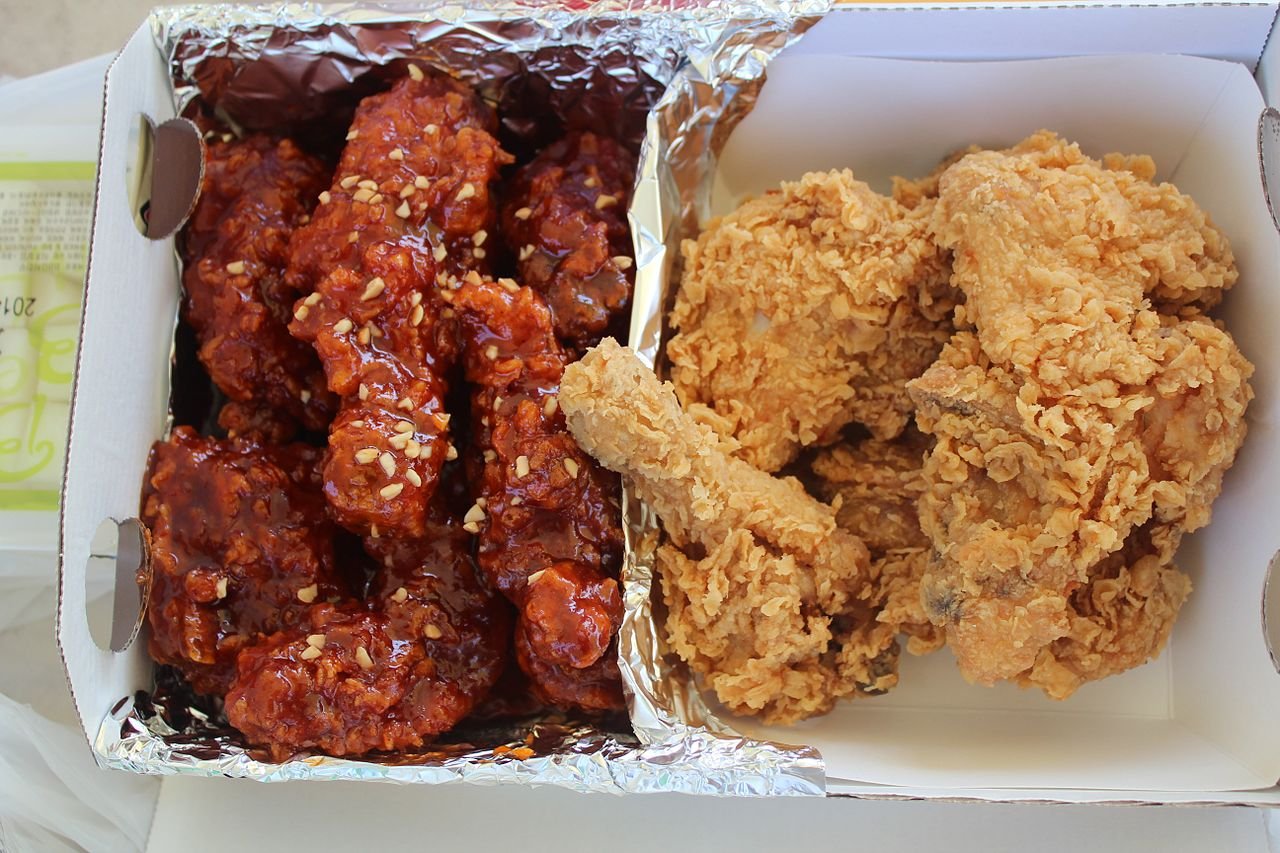
If you’d rather taste the crust on its own, serve the sauce on the side instead of tossing everything. This is standard practice at plenty of Korean chicken restaurants, sold as banban (반반) — literally “half and half,” one half plain, one half sauced.
Tips and storage
Don’t crowd the pot in either fry. A heavy pot with more than five or six pieces dropped in at once cools the oil fast enough that the chicken steams instead of fries, which undoes everything above. Fry in batches and let the oil recover to temperature between them — a clip-on candy thermometer is worth the money if you fry more than once a year. Keep a lid within reach in case the oil spatters, never leave a pot of hot oil unattended, and lower pieces in away from you rather than dropping them straight down.
Plain fried chicken, unsauced, keeps its crunch surprisingly well. Reheat leftovers in a hot oven or air fryer at 200°C / 400°F for 6 to 8 minutes — never a microwave, which steams the crust soft again. Once it’s glazed, though, it doesn’t bounce back the same way. The sauce has already softened the crust for good, so day-two yangnyeom chicken is best eaten cold or gently warmed rather than re-crisped.
Frequently asked questions
Can I make Korean fried chicken without deep frying?
An air fryer gets you closer than baking does, but it’s not the same dish. Spray the starch-coated chicken with oil, air-fry at 375°F / 190°C for 12 minutes, rest 5 minutes, then air-fry again at 400°F / 200°C for 4 to 5 minutes. You’ll get a genuinely crisp exterior using the same fry-rest-fry logic, just with far less oil, but it won’t have the thick, blistered crust that comes from actually submerging the chicken in fat.
Do I really need potato starch, or will cornstarch work?
Cornstarch works and most people won’t notice the difference in a blind bite. The crust is a shade smoother and slightly less craggy than one made with potato starch, since the granules are finer, but it still shatters instead of chewing. Plain wheat flour is the one substitution that changes the dish, not just the texture around the edges.
How spicy is yangnyeom chicken, and can I make it milder?
As written here, it lands around 2 out of 5 — noticeably sweet-and-spicy but not aggressive. Drop the gochugaru entirely and cut the gochujang to 2 tablespoons for a nearly kid-friendly version, or push both up and add a diced fresh chili for something closer to the spicier end of what Korean chicken chains call “hot” on their menus.
What to eat it with, and where it comes from
If gochujang, gochugaru, or mullyeot are new names to you, the Korean pantry starter kit breaks down which of these are worth keeping stocked versus buying once just for this recipe.
Yangnyeom chicken’s other real home, besides the frying pan, is next to a table with a few cold beers. That pairing is common enough in Korea to have its own name, and our guide to building a chimaek night at home covers the side dishes and drinks this post doesn’t get into.
Ordering fried chicken for delivery is close to a national pastime in Korea, down to apps built around little else. If you’re traveling there and want to order one yourself instead of pointing at a photo on a menu, k-trips has a plain-language walkthrough of how to order food in Korea.