Most buldak recipes online give you exactly one setting: incinerate. You either follow the recipe as written and get something that makes you cry into your rice, or you quietly halve the chili and end up with a pan of chicken in red sauce that isn’t really buldak anymore, just sweet and a little sad. Neither of those is how the dish actually works in Korea. Buldak translates to “fire chicken,” and the fire is supposed to be adjustable — the same way a good curry house asks how many chilies you want. This recipe treats heat as a dial with three separate controls, not an all-or-nothing switch, so you can build a version that’s actually yours.
Quick Facts
| Time | 20 min prep (plus a 20–30 min marinate), 15 min cook |
| Serves | 3, or 2 with rice and a side |
| Difficulty | Medium — the technique is simple, the timing is where people slip |
| Spice level | Adjustable 2–5 out of 5, by design |
| Vegan? | Not really — firm tofu works for texture, but the char and the fond in the pan are part of the flavor |
What Buldak Actually Is
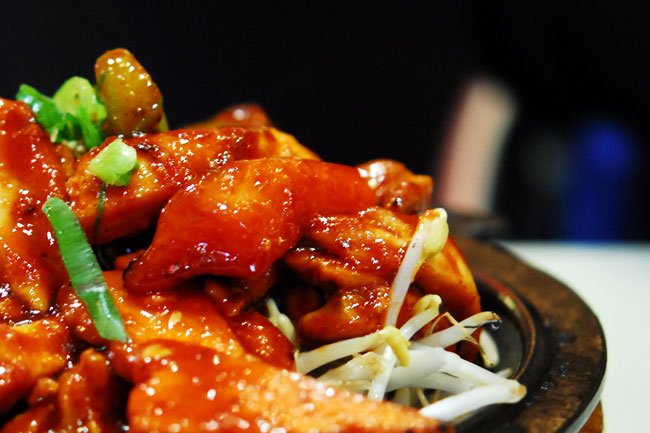
Buldak (불닭) is bite-sized chicken, usually thigh, seared hard and then finished in a thick chili glaze built from gochugaru, gochujang, garlic and a little sugar for shine and stick. It’s a relatively young dish. Restaurants in the Sindang-dong area of Seoul started serving an extra-hot version of stir-fried chicken in the mid-2000s, and it caught on as a kind of endurance food — the kind of thing groups of friends order to see who taps out first.
That’s a different lineage from dak-galbi, the Chuncheon dish of chicken, cabbage and rice cakes stir-fried on a flat griddle at the table, which is milder and built to be a shared meal rather than a heat test. Buldak is smaller-format, glossier, and hotter on purpose. It’s also different from Korean fried chicken, which is battered and deep-fried before it ever meets a sauce. Buldak never sees batter. The chicken goes straight into the pan.
The Noodle That Made It Famous Outside Korea
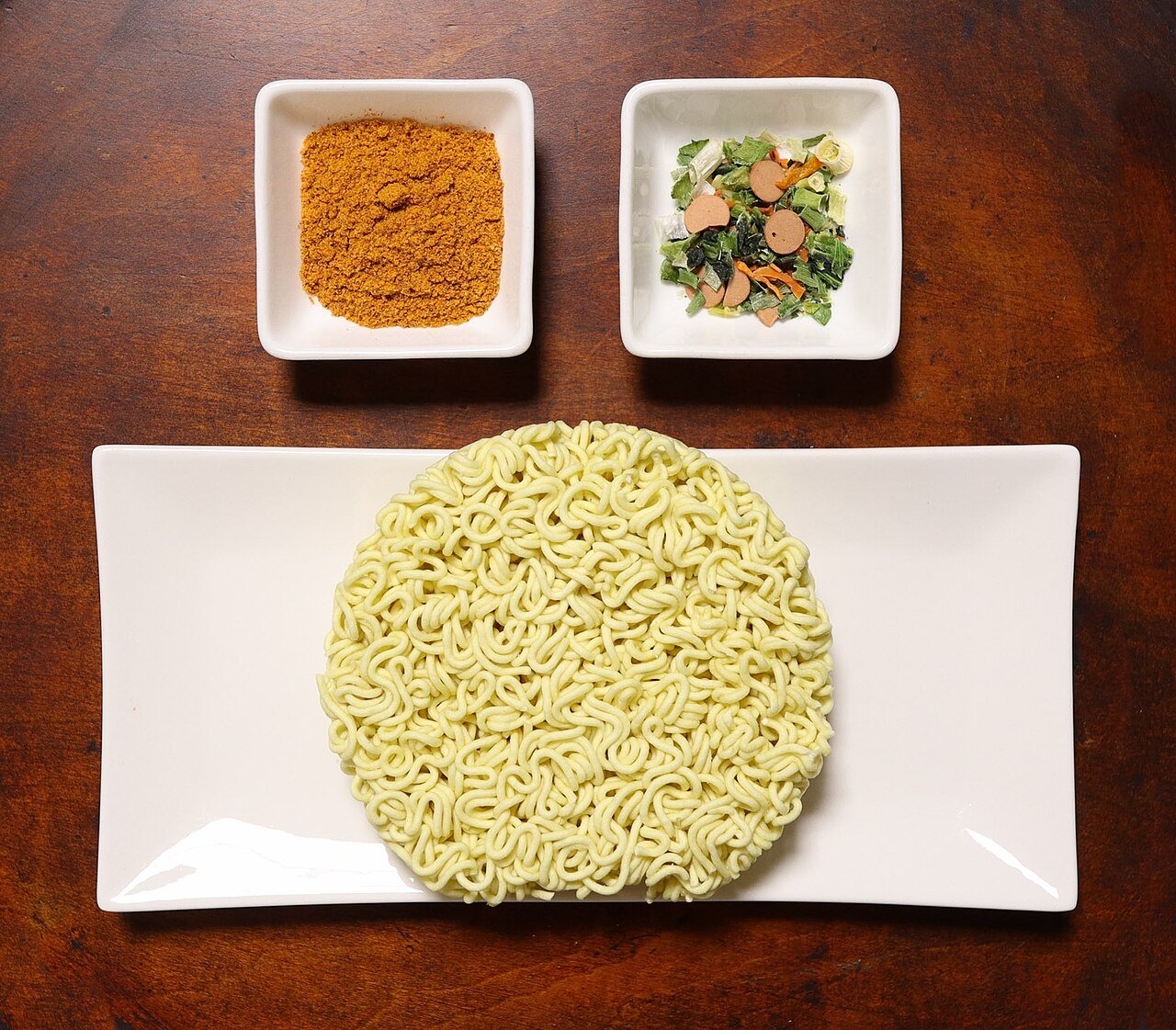
If you’ve heard of buldak at all before opening this page, there’s a decent chance it was through a snack aisle rather than a restaurant. In 2012, Samyang Foods launched buldak-bokkeummyeon, an instant noodle built around the same flavor profile, and it became the centerpiece of online spice challenge videos through the 2010s — people filming themselves eating it, coughing, and posting the result. The noodles are a real product with a real fanbase, sold in dozens of flavor spinoffs now including cheese and carbonara versions, but they’re a different food from the dish this recipe makes. The noodles chase pure, blunt heat with almost no other complexity; the original stir-fried chicken has garlic, ginger and gochujang’s fermented depth working underneath the chili, which is a rounder, less one-note kind of hot. If instant noodles were your entry point, this recipe is a good next step — it shows you what the flavor is doing when it isn’t just trying to set a record.
Ingredients, and Where the Heat Comes From
| Ingredient | Where to get it, or what to use instead |
|---|---|
| 700 g / 1.5 lb chicken thigh, bite-sized | Boneless, skin-on or skinless both work. Chicken breast is the common swap — leaner, but it dries out fast, so cut it a little smaller and pull it the moment it’s opaque through. |
| Gochugaru, 3 tbsp | Coarse Korean chili flakes, sold in every Asian grocer and most large supermarkets now. Without it: 2 tbsp sweet paprika plus 1 tsp cayenne gets you the color and a comparable heat, minus the dried-fruit undertone gochugaru has. |
| Gochujang, 2 tbsp | The fermented chili paste carries most of the savory depth. A miso-and-extra-gochugaru mix is the honest substitute — thinner, saltier, less sticky-sweet, but it won’t derail the dish. |
| Fresh cheongyang or serrano chili, 1–2 | This is your fine-tuning knob, added at the very end. Jalapeño with the seeds left in is milder; scrape the seeds out for milder still. |
| Rice syrup or corn syrup, 2 tbsp | Gives the glaze its shine and cling. Honey works but burns faster in a hot pan — pull it a minute early. |
| Garlic, ginger, soy sauce, rice wine | Standard aromatics. Soju stands in for rice wine at a 1:1 ratio if that’s what’s in the cabinet. |
| Mozzarella, 100 g, optional | For cheese buldak. Skip it for a lighter, sharper-tasting dish — nothing else needs to change. |
The Three Dials: How to Actually Control the Heat
Most people who find buldak too hot, or too flat, made the mistake of treating chili as one ingredient instead of three separate decisions.
Dial one: the gochugaru-to-gochujang ratio, decided before anything hits heat. Gochugaru brings sharp, dry heat. Gochujang brings a rounder, sweeter, more fermented kind of spice that reads as milder even at the same actual capsaicin level. Taste the raw sauce on a spoon before it goes anywhere near the chicken. If it already tastes too sharp, add another half-tablespoon of gochujang rather than more sugar — sugar masks heat temporarily and then it comes roaring back once it caramelizes.
Dial two: fresh chili, added last, not first. This is the one almost every recipe gets backward. Cooking fresh chili for the full eight minutes mellows it into the background; the capsaicin diffuses into the oil and sauce and stops registering as a sharp, immediate hit. Stir the minced fresh chili in during the final minute, off or barely on heat, and you get a brighter, more forward burn that sits right on the tongue instead of a general low warmth across the whole dish. Want it milder tomorrow? Just use less fresh chili at that final step — everything else in the recipe stays the same.
Dial three: the sear, which is flavor, not heat, but changes how hot it tastes. A hard, dry sear before the sauce goes in builds bitter, charred compounds at the edges of the chicken that read as “intense” to your brain even when they’re not spicy at all. Skip the sear and simmer the chicken straight in sauce, and the same amount of actual chili will taste flatter and, oddly, milder. If you want buldak to feel aggressive without cranking the pepper count, the sear is doing more work than you’d expect.
Buldak Recipe
Ingredients
Method
- Pat the chicken pieces dry and season lightly with black pepper. Dry surfaces char; wet ones steam.
- Whisk together the gochugaru, gochujang, soy sauce, rice syrup, brown sugar, garlic, ginger and rice wine. Taste this raw sauce on the tip of a spoon and adjust the chili ratio now — it’s the last easy moment to change the heat level.
- Toss the chicken in about two-thirds of the sauce and let it sit 20 to 30 minutes at room temperature. Don’t go longer than an hour; the sugar starts breaking the texture down.
- Heat 1 tablespoon of oil in a wide pan or cast-iron skillet over high heat until it’s shimmering, close to smoking.
- Sear the chicken in a single layer, sauce and all, without stirring for the first 2 minutes. Let it catch color and char at the edges before you touch it.
- Turn the pieces, reduce heat to medium, and add the remaining reserved sauce. Cook, stirring every minute or so, until the chicken is cooked through and the sauce has reduced to a glaze that coats the back of a spoon, about 6 to 8 minutes.
- Stir in the minced fresh chili in the last minute of cooking, not before. Adding it late keeps the heat bright and sharp instead of letting it flatten into the background.
- Take the pan off the heat, drizzle with sesame oil, and scatter sesame seeds and scallions over the top.
- For cheese buldak: transfer the finished chicken to an oven-safe dish, cover with mozzarella, and broil 3 to 4 minutes until bubbling and browned in spots.
How to Make It
- Dry the chicken. Pat it with paper towels and season with black pepper. A wet surface steams instead of searing.
- Build the sauce and taste it raw. Whisk gochugaru, gochujang, soy sauce, syrup, sugar, garlic, ginger and rice wine. Adjust the chili ratio here, before anything else happens.
- Marinate 20 to 30 minutes, using about two-thirds of the sauce. Longer than an hour and the sugar starts turning the chicken’s texture mushy at the surface.
- Get the pan properly hot. A wide skillet or cast-iron pan, oil until it shimmers, close to smoking.
- Sear without touching it for 2 minutes. This builds the char that carries most of the “this tastes intense” signal.
- Turn, add the rest of the sauce, drop to medium heat. Stir occasionally, cook 6 to 8 minutes, until the chicken is done and the glaze coats a spoon rather than pooling around it.
- Stir in fresh chili in the last minute. This is where your final heat level actually gets set.
- Finish off the heat with sesame oil, sesame seeds and scallions.
- Optional cheese version: move everything to an oven dish, blanket with mozzarella, broil 3 to 4 minutes until it’s bubbling and starting to brown.
Common Mistakes
The chicken cooks through but the sauce never thickens: the pan wasn’t hot enough at the sear stage, so there’s too much liquid released from the meat diluting the glaze. Fix it by giving the sauce another 2 to 3 minutes uncovered at the end rather than adding more sugar.
The dish tastes bitter rather than hot: the char went too far, usually because the sugar in the sauce caught before the chicken finished cooking. Medium, not medium-high, once the sauce is in the pan.
Everyone at the table has a different tolerance and you cooked one pot: hold back a spoonful of minced fresh chili and a squeeze of gochujang on the side, and let people finish their own plate rather than trying to average everyone’s heat preference into the pan.
Storage
Buldak keeps 3 days refrigerated in a sealed container. Reheat it in a pan with a splash of water over medium heat rather than the microwave — the glaze separates and turns oily when microwaved, and a few minutes in a pan brings it back together. It doesn’t freeze well; the sauce breaks and the chicken turns stringy once thawed.
Ordering It the Real Way
If you’re planning to eat this in Korea rather than cook it, most buldak restaurants will ask how spicy you want it, sometimes on a numbered scale, sometimes just “very spicy or extremely spicy.” Knowing a few words for this ahead of time saves you from ending up with a level you can’t finish, or one so mild it defeats the point of ordering the dish at all. K-trips has a rundown of how to actually order food in Korea that covers this kind of on-the-spot customization, along with the basics of reading a Korean menu.
Common Questions
Is buldak the same as the instant ramen challenge noodles?
No, though they share a name and a flavor direction. Samyang’s buldak-bokkeummyeon noodles are built for maximum, uncomplicated heat and are a completely different product from the stir-fried chicken dish. The chicken version has gochujang’s fermented depth and real aromatics under the heat, which makes it taste rounder and less like a dare.
Can I make buldak less spicy without losing the flavor?
Yes — cut the fresh chili added at the end to almost nothing, and shift the gochugaru-to-gochujang ratio slightly toward gochujang, which reads milder at the same objective heat level. Keep the sear; it’s doing flavor work, not heat work, and it’s the part that makes a mild version still taste like buldak rather than sweet chicken.
What cut of chicken works best?
Thigh, by a wide margin. It has enough fat to survive the hard sear without drying out, and it stays tender through the full glaze-reduction step. Breast works if that’s what you have, but treat it gently — smaller pieces, shorter time in the pan, and pull it the second it’s opaque.
Related
If the Samyang noodles are what brought you here, seven ways Koreans upgrade instant ramyeon is worth a look next — several of those tricks apply directly to a pack of buldak-bokkeummyeon. And if you liked the stir-and-glaze technique here, dak-galbi uses a related method at a gentler heat level, built to share rather than to test anyone’s limits. For the pantry basics behind both, the Korean pantry starter kit covers which gochugaru and gochujang are worth buying first.