If your gyeranmari falls apart the second the knife touches it, the fix almost never involves buying anything or changing the recipe. It’s heat. Lower it, and give each layer an extra ten seconds to set before you start rolling. That’s the whole trick, and it took me two ruined batches to actually believe it.
Quick facts
- Total time: 25 minutes (10 prep, 15 cooking)
- Serves: 3 as a side dish, or 2 as a lunchbox main with rice
- Difficulty: easy, once you slow the heat down
- Spice level: 0 out of 5
- Vegan-friendly: no (it’s an egg dish by definition), but see the FAQ for what to do instead
What is gyeranmari?
Gyeranmari (계란말이, roughly gyeh-ran-mah-ree) means “rolled egg.” It’s a banchan — one of the small side dishes that fill out a Korean table — made by cooking thin layers of seasoned egg in a pan and rolling them into a single log as you go, so a cross-section shows a tight spiral instead of a flat sheet. It shows up everywhere: home dinner tables, school and office lunchboxes (dosirak), army-base-style cafeterias, and convenience store meal kits. Kids tend to like it more than any other banchan on the table, which is part of why it’s the first thing Korean parents teach themselves to make well.
It isn’t spicy, isn’t fermented, and doesn’t need a single ingredient you can’t find at a regular supermarket. That’s rare for this site, and worth saying plainly.
Why it falls apart (and why more egg doesn’t fix it)
Two things go wrong, and both come from rushing. First, rolling a layer before it’s actually set — still glossy and wet in the middle — means the roll doesn’t grip the next layer; it just slides against it, and the whole thing unravels the moment you slice it. Second, high heat cooks the outside of each layer before the inside catches up, trapping tiny air pockets that weaken the bond between layers, the same way an over-whisked cake batter turns out crumbly instead of dense.
The fix for both is the same: medium-low heat, patience measured in single-digit seconds, and pressing the finished roll while it’s still warm so it holds its shape as it cools. A bamboo sushi mat does this well, but a sheet of foil rolled tight works just as well and costs nothing.
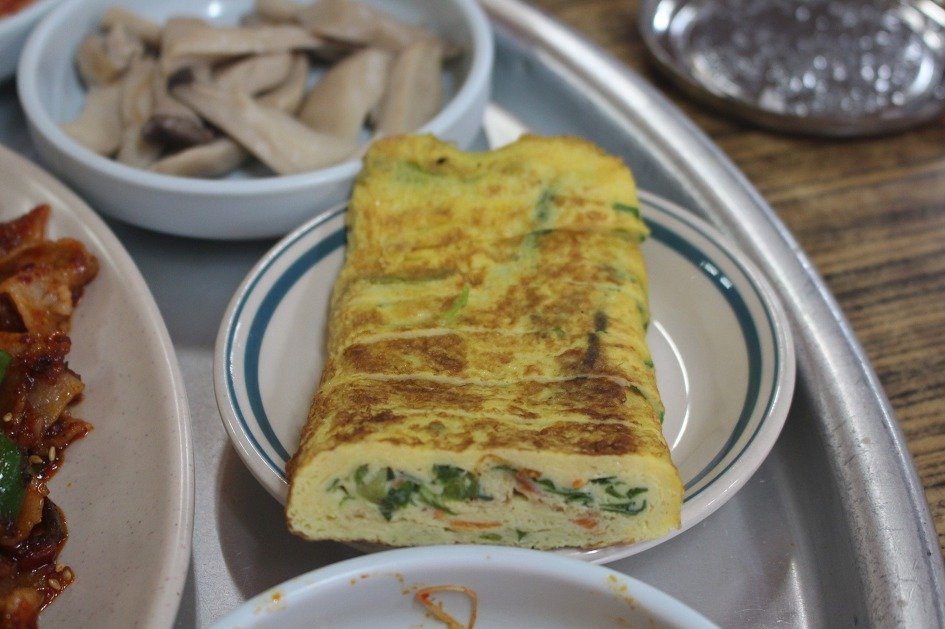
Ingredients, and what to use instead
| Ingredient (for 3 as a side) | Where to get it, or what to use instead |
|---|---|
| 4 large eggs | Any supermarket. For a lighter, less rubbery texture, use 3 eggs plus 2 tbsp water |
| 2 tbsp water or milk, whisked in | This is what keeps the texture soft instead of tough. Don’t skip it even if the recipe looks fine without |
| 2 scallions, finely chopped | Standard. Chives work as a milder substitute |
| 2 tbsp carrot, finely diced | Any supermarket. Red bell pepper is a fine substitute — similar color, slightly sweeter |
| 2 tbsp onion, finely diced | Optional. The dish is complete without it if you’d rather skip the chopping |
| Salt, 1/4 tsp | To taste |
| Optional: cheese, diced ham, or squeezed-dry kimchi | Pick one, not all three — the roll gets heavy and won’t hold its spiral if you overload it |
The ingredient table on this dish is short on purpose. Gyeranmari is one of the few Korean recipes where the technique matters more than sourcing anything unusual, which makes it a good first project if you’re new to Korean cooking and want a win.
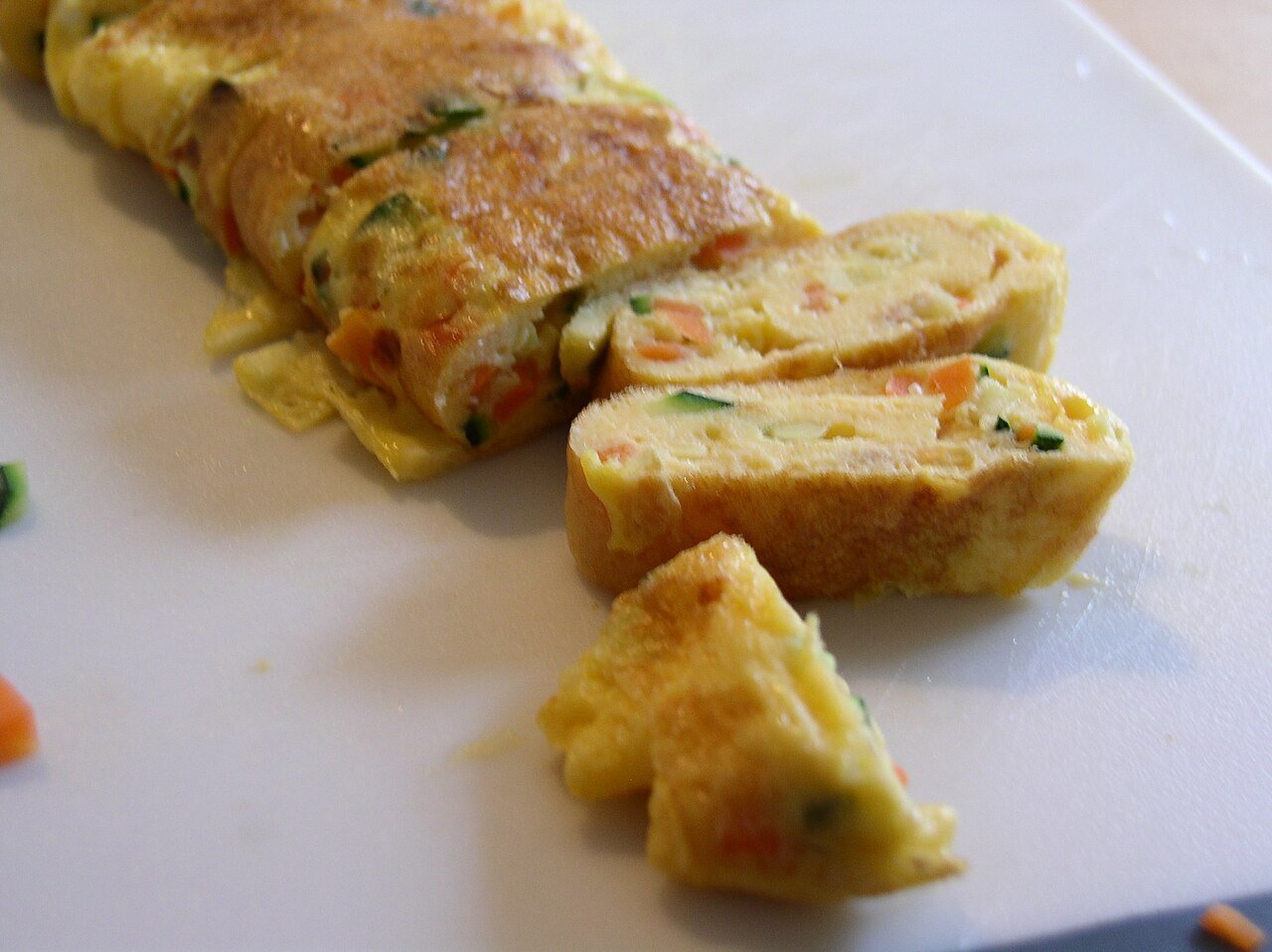
Gyeranmari Recipe
Ingredients
Method
- Crack the eggs into a bowl, add the salt and water, and whisk well. Strain through a fine sieve if you want restaurant-smooth layers (optional, but it removes the stringy bits).
- Heat a lightly oiled 20 cm nonstick or square tamagoyaki-style pan over medium-low heat. Wipe out excess oil with a paper towel — too much oil keeps the layers from sticking to each other.
- Pour in a thin layer of egg, about 1/4 cup, tilting the pan to cover the surface.
- Scatter a little scallion, carrot, and onion over one half while the egg is still mostly wet.
- Once the egg is set but not browned, start rolling from the edge closest to you, using a spatula or chopsticks, pushing the roll to the far side of the pan.
- Oil the empty area of the pan, pour in the next thin layer, and tilt so it flows underneath the existing roll.
- Once that layer sets, roll again, this time incorporating the first roll, so it grows thicker with each pass.
- Repeat until the egg is used up — usually 3 to 4 layers total.
- While the roll is still warm, press it firmly with the spatula, or wrap it tightly in a bamboo sushi mat or a sheet of foil, to set the round shape. Rest 2 minutes before unwrapping.
- Slice into rounds about 1.5 cm thick with a sharp knife.
How to make it
- Crack the eggs into a bowl with the salt and the water or milk. Whisk thoroughly. Strain through a fine sieve if you want the smoothest possible texture — this catches the chalazae (the stringy white bits) that can show up as flecks in the finished roll. It’s optional; plenty of home cooks skip it.
- Heat a lightly oiled nonstick pan, ideally a rectangular tamagoyaki pan but a regular 20 cm skillet works fine, over medium-low heat. Wipe out any pooled oil with a paper towel.
- Pour in a thin layer of egg, about 1/4 cup, and tilt the pan so it spreads evenly.
- Scatter a little scallion, carrot, and onion over one half of the egg while it’s still mostly wet.
- Wait until the surface just sets — no more glossy wet patches — then start rolling from the near edge with a spatula or chopsticks, pushing the finished roll to the far side of the pan.
- Oil the newly empty part of the pan, pour in the next thin layer, and tilt it to flow underneath the existing roll.
- Once that layer sets, roll again, folding in the first roll so the log grows thicker.
- Repeat until the egg is gone, usually three or four layers.
- While it’s still warm, press the roll firmly with the spatula, or wrap it tightly in a bamboo mat or foil, and let it rest 2 minutes. This is the step that actually locks the round shape in.
- Unwrap and slice into rounds about 1.5 cm thick with a sharp, clean knife — a dull blade drags and tears the layers apart.
Tips and storage
The most common mistake, again, is heat. If your pan is hissing when the egg hits it, it’s too hot — egg batter should spread and set calmly, not sizzle.
Second most common: not pressing the roll while it’s warm. Egg holds a shape while hot far better than once it cools, so this is a small window, not an optional flourish.
Gyeranmari keeps well, which is exactly why it’s a lunchbox staple. Refrigerate in a sealed container for up to 4 days. It’s genuinely good cold, straight from the fridge, which is unusual for an egg dish — most omelettes turn rubbery cold, but the multiple thin layers here stay tender. To reheat, a few seconds in a pan or 20 seconds in the microwave is enough; don’t overheat, or the layers dry out and separate.
Frequently asked questions
Why does my gyeranmari fall apart when I slice it?
Almost always one of two things: you rolled a layer before it fully set, so it didn’t bond to the next one, or the heat was high enough to create air pockets that weaken the layers. Turn the heat down, wait a few extra seconds before each roll, and press the finished log while it’s still warm.
Can I make gyeranmari ahead for lunchboxes?
Yes — it’s one of the few Korean dishes that’s built for exactly this. Make it the night before, press it well while warm so the shape holds overnight, then slice cold in the morning. It keeps 3 to 4 days refrigerated and doesn’t need reheating; plenty of people eat it straight from the fridge.
Is gyeranmari the same as Japanese tamagoyaki?
They’re cousins, not twins. Both use the rolled, layered technique, but tamagoyaki is usually seasoned with sugar, soy sauce, and sometimes dashi, giving it a sweet-savory flavor. Gyeranmari is plainer and saltier, and it’s built around finely diced vegetables rather than a sweetened egg base. If you make one expecting the other, it’ll taste off to you — they’re meant to be different.
What to cook and eat next
If you’re building out a lunchbox or a full Korean table, kimbap is the other rolled dish worth learning next — different technique, same “make-ahead and it still tastes good cold” logic. For more banchan that come together in under 20 minutes, five easy banchan every beginner should learn rounds out a proper spread. And if this is your first time cooking Korean food and you’re wondering what’s actually worth buying for your pantry, our Korean pantry starter kit tells you what to get first and what can wait.