The first kimbap I rolled by myself came apart in my hands before it reached the cutting board. The second one held, then flattened into a lozenge under the knife. If that sounds familiar, the problem almost certainly isn’t your ingredients — a kimbap recipe is a short list of cooked vegetables and seasoned rice, and almost nobody gets that part wrong. The problem is technique, and it lives in about five specific places: which side of the seaweed you use, how warm the rice is, how much you put in, how you apply pressure on the first turn, and what you do with the knife. Fix those five and the rolls hold. I’ll flag each one as we reach it.
Quick Facts
| Time | 40 min prep, 20 min cook (plus rice) |
| Makes | 4 rolls, 2–3 servings |
| Difficulty | Medium — easy ingredients, real technique |
| Spice level | 1 / 5, not spicy |
| Vegan? | Yes, easily — see the substitutes |
What Kimbap Actually Is
Kimbap (김밥, gim-bap) is a compound of two words: gim, the sheet of dried, roasted laver, and bap, cooked rice. Seasoned rice and cooked fillings, rolled in a seaweed sheet and cut into rounds.
It is not sushi. The rice carries no vinegar and no sugar — it’s seasoned with toasted sesame oil and salt, which pulls the whole dish in a nutty, savory direction rather than a sharp one. Everything inside is cooked, pickled, or otherwise ready to eat; there’s no raw fish anywhere near it. And it occupies a different place in the day. Kimbap is picnic food, hiking food, train food, the thing a Korean parent makes at six in the morning on a school field trip day. It’s built to be portable and to taste right at room temperature three hours after it was made.
The Roll You Saw on Screen
If you got here from Extraordinary Attorney Woo, you already know Woo Young-woo eats kimbap almost every day, and that her stated reason is that every ingredient is visible in the cross-section — nothing hidden, nothing surprising. That happens to double as a good test of a well-made roll. Clean, distinct stripes of yellow, orange, green and white mean your rice layer was thin enough and your pressure was even. A blurry, smeared cross-section is the roll telling you exactly what you did wrong.
What Goes Inside
Makes 4 rolls.
| Ingredient | Where to get it, or what to use instead |
|---|---|
| 4 full-size sheets gim (roasted seaweed) | Sold as “sushi nori” in every supermarket — same product. Don’t use the small salted snack sheets; they’re pre-oiled, too thin, and they tear on the first turn. |
| 600 g / 3 cups cooked short-grain rice | Japanese sushi rice or Calrose both work. Basmati and jasmine will not — the grains don’t cling and the roll simply won’t hold together. |
| 1 tbsp toasted sesame oil + 1 tsp fine salt, for the rice | Toasted (dark) sesame oil, not the pale cooking kind. Untoasted has almost no aroma and the rice ends up tasting like nothing. |
| 4 strips danmuji (yellow pickled radish) | Dill pickle spears, patted very dry — sourer and less sweet, but they do the same job of cutting the richness. Or cucumber batons salted 10 minutes and squeezed: fresher, milder, less funk. |
| 1 large carrot, julienned | Any firm sweet vegetable in matchsticks: red bell pepper, or parsnip. Both are softer and sweeter than carrot. |
| 150 g / 5 oz spinach | Any leafy green you can blanch and wring out — chard, watercress, or bagged baby spinach wilted in a dry pan. |
| 3 eggs, as a thin omelet sheet | Vegan: firm tofu, pressed, cut into batons and pan-fried in soy sauce until golden. Similar bite, less richness. |
| 4 imitation crab sticks | Ham strips, or drained canned tuna mixed with 1 tbsp mayo — that one is much wetter, so squeeze it out or the roll goes soggy from the inside. |
| 4 strips seasoned burdock root (ueong) | Skip it. If you want that sweet-soy note, simmer extra carrot matchsticks in 1 tbsp soy sauce and 1 tsp sugar for 2 minutes. |
| Sesame oil and toasted sesame seeds, to finish | — |
Three Things to Fix Before You Roll
The seaweed has a right side and a wrong side
Every sheet of gim has a rough, matte face and a smooth, glossy one. Rice goes on the rough side, because it grips there. The glossy side finishes on the outside, where it looks good and resists tearing while you handle the roll. Put the rice on the glossy side and the whole layer slides as you turn it.
There’s a second, subtler thing. Hold a sheet by two edges and flex it gently. It gives more willingly along one axis than the other — that’s the grain. Lay the sheet so it curves the easy way as it wraps, long edge running left to right in front of you, and it won’t split down the middle when you tighten the roll.
Rice temperature is a technique, not a detail
Straight out of the cooker, the rice is too hot. Steam gets trapped against the seaweed, the sheet goes limp and translucent inside a minute, and it tears the instant you apply pressure. Fully cold rice is the opposite failure: the starch has set, the grains have stopped being sticky, and no amount of squeezing will make them bind.
What you want is warm — roughly body temperature. Spread the hot rice on a wide tray, pour over the sesame oil and salt, and fold it through with a spatula while fanning it. Two or three minutes. You’ll feel it move from “too hot to touch” to “pleasantly warm,” and that’s your window. Season it now, not later; warm rice takes seasoning and cold rice doesn’t.
Use less filling than feels right
Nobody believes this one until they’ve done it. A full sheet of gim wraps about 150 g of cooked rice and a bundle of fillings no thicker than your thumb. Most people use half again as much of both, and then the roll can’t close — the seaweed runs out of circumference before the seam meets the rice, and it splits along the seam within a minute of resting.
Spread the rice thin enough that you can still see dark seaweed through it in patches. Leave the far 3 cm completely bare. That bare strip is the seal, and it’s the only thing holding the roll shut.
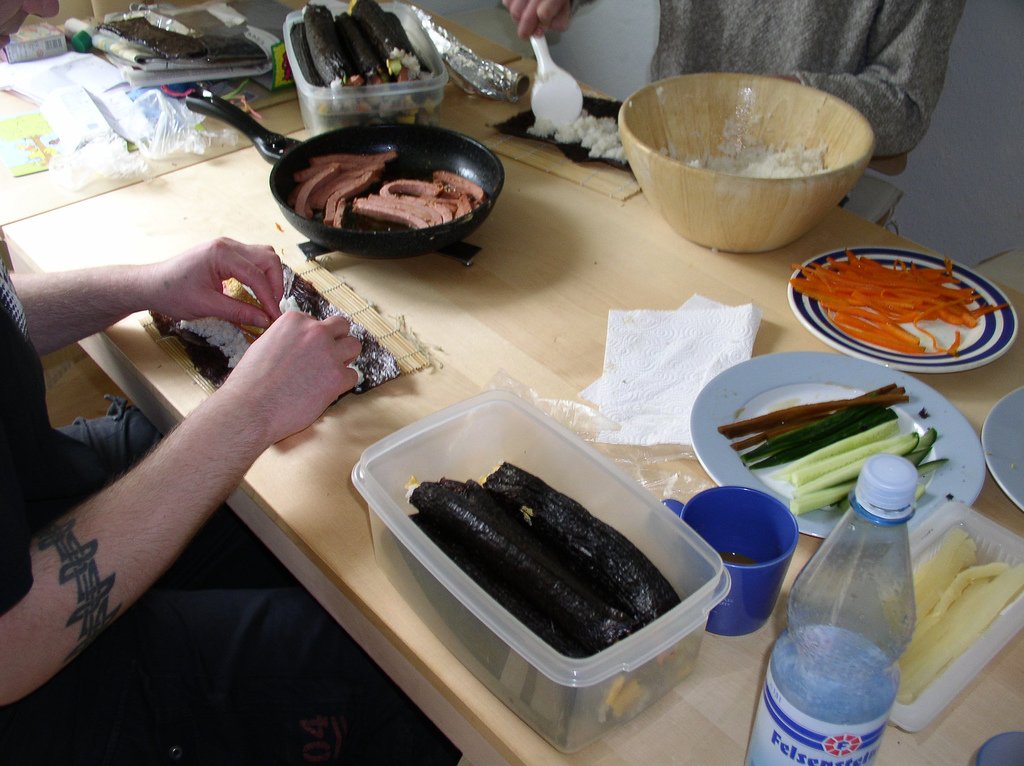
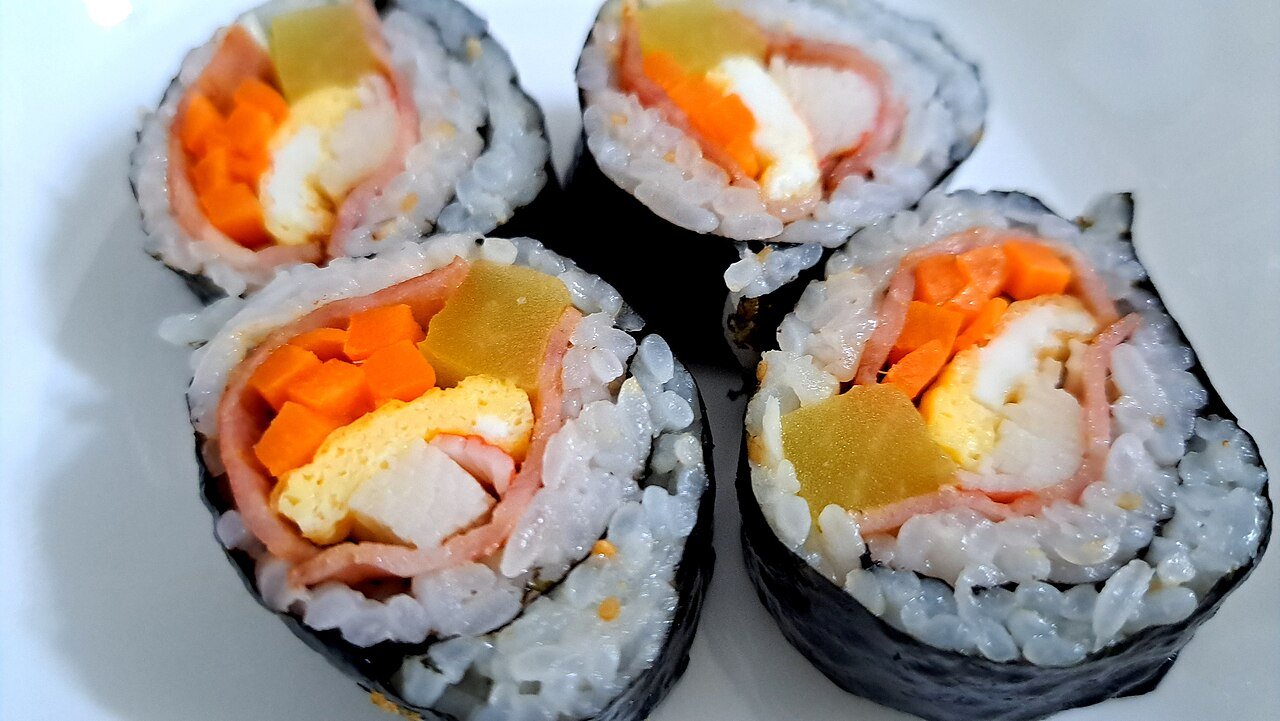
Kimbap Recipe: Why Your Rolls Fall Apart, and the Fix
Ingredients
Method
- Cook the rice with 10% less water than usual, spread it on a wide tray, fold in the sesame oil and salt, and fan it until it is warm rather than hot.
- Blanch the spinach 30 seconds, cool it under running water, then squeeze it in your fist until it stops dripping. Season with salt, sesame oil and grated garlic.
- Stir-fry the julienned carrot with a pinch of salt over medium-high heat for 2 minutes, until flexible but still snapping.
- Beat the eggs with a pinch of salt and cook undisturbed in an oiled nonstick pan over low heat for 3 minutes, until just set. Cool, then cut into 1 cm strips.
- Cut every filling to the same length as the width of the seaweed sheet.
- Lay a sheet of gim on a bamboo mat, rough side up, long edge running left to right.
- Spread 150 g of rice in a thin, even layer, leaving the far 3 cm of the sheet completely bare.
- Lay the fillings in one tight bundle a third of the way up from the near edge.
- Lift the near edge of the mat over the fillings, then pull the mat back toward you while pressing down to compress the core.
- Roll forward in two or three short pushes, squeezing with the whole hand across the full length each time.
- Seal on the bare strip, rest the roll seam-side down for 2 minutes.
- Brush with sesame oil, scatter sesame seeds, and cut into 1.5–2 cm rounds, wiping the blade with a damp cloth between every cut.
How to Roll Kimbap, Step by Step
- Cook the rice slightly dry. Use about 10 percent less water than usual — the fillings bring their own moisture and wet rice will not hold a shape. While it’s hot, spread it on a tray, fold in the sesame oil and salt, and fan it down to warm.
- Blanch the spinach. Thirty seconds in boiling salted water, until it collapses and goes dark. Drain, cool under running water, then squeeze it in your fist until it stops dripping. Failure point: wet spinach is the single most common cause of a sliding, soggy roll. Squeeze it twice. Then season with a pinch of salt, half a teaspoon of sesame oil, and a scraped clove of garlic.
- Cook the carrot. Julienne it thin and stir-fry over medium-high heat with a pinch of salt for 2 minutes, until it’s flexible but still snaps. Raw carrot levers the fillings apart when you cut; overcooked carrot vanishes into the roll.
- Make the egg sheet. Beat the eggs with a pinch of salt, pour into a lightly oiled nonstick pan over low heat, and leave it alone until just set on top, about 3 minutes. Slide it out, cool, and cut into strips 1 cm wide. Low heat is the whole point — high heat browns and puffs it, and puffed egg won’t lie flat.
- Cut everything to length. Every filling should be as long as the seaweed sheet is wide, so the stripes run the full length of the roll. Short pieces leave gaps, and gaps are where a roll folds and collapses under the knife.
- Set up. Bamboo mat down, gim sheet on top, rough side up, long edge running left to right. Keep a small bowl of water nearby and wet your fingertips — but shake them off. Dripping hands wet the seaweed.
- Spread the rice. Cover the sheet in a thin, even layer, leaving the far 3 cm bare. Press it out with your fingertips rather than pushing it around with a spoon; you’re after even, not compacted.
- Lay the fillings in a line about a third of the way up from the near edge, held together in one tight bundle rather than scattered. Spread-out fillings make an oval roll, and oval rolls unravel at the seam.
- Make the first turn — this is the one that matters. Lift the near edge of the mat with both thumbs, bring it up and over the fillings, then pull the mat back toward you while pressing down. You’re tucking the fillings into a tight cylinder and squeezing the air out. Failure point: if you fold and simply keep rolling without that backward pull, the core stays loose and the roll pulls apart on the board. You should feel the fillings compact under your hands.
- Roll the rest in two or three short pushes, squeezing with your whole hand — all four fingers and the heel of your palm — across the entire length each time. Squeezing only in the middle is why rolls burst at the center and spill at the ends.
- Seal and rest. The bare strip should stick to the rice on its own; if it won’t, smear two or three grains of rice along the edge as glue. Set the roll seam-side down and leave it 2 minutes. It’s still relaxing into shape, and cutting now undoes the work you just did.
- Oil, then cut. Brush the outside with sesame oil and scatter toasted sesame seeds. Then cut, carefully — see below, because this is where most rolls die.
Cutting: Where Good Rolls Die
Use the longest, sharpest knife you own. Wipe the blade with a damp cloth before every single cut — not every third cut, every cut. Rice starch builds on the steel within one slice, and a sticky blade drags the roll sideways instead of parting it. That drag is what flattens a round into a lozenge and smears the cross-section into mush.
Cut with a drawing motion. Set the heel of the blade on the roll and pull the knife toward you through it in one long stroke. Don’t press straight down; pressing compresses, drawing separates. Aim for slices 1.5 to 2 cm thick, about the width of a finger. Any thinner and they fall over on the plate.
If the slices still smear after all that, the cause is upstream. Too much rice, or rice that had gone cold before it was rolled.
Storage, and What to Do With Leftovers
Kimbap does not go in the refrigerator. Cold makes cooked rice retrograde — the starch recrystallizes, the grains turn hard and chalky, and the roll becomes something you’ll throw away. This is the most common mistake people make after doing everything else right.
Made in the morning, kimbap is good at room temperature for four to six hours, which is exactly the window it was designed around. Wrap the uncut roll in foil or plastic and cut it when you arrive wherever you’re going; cut ends dry out fast.
If you do end up with day-old kimbap, don’t eat it cold. Dip the slices in beaten egg and pan-fry them in a little oil over medium heat until golden on both cut faces, about 2 minutes a side. That’s gyeran-kimbap, and plenty of households roll an extra one specifically so it can happen.
Variations Worth Trying
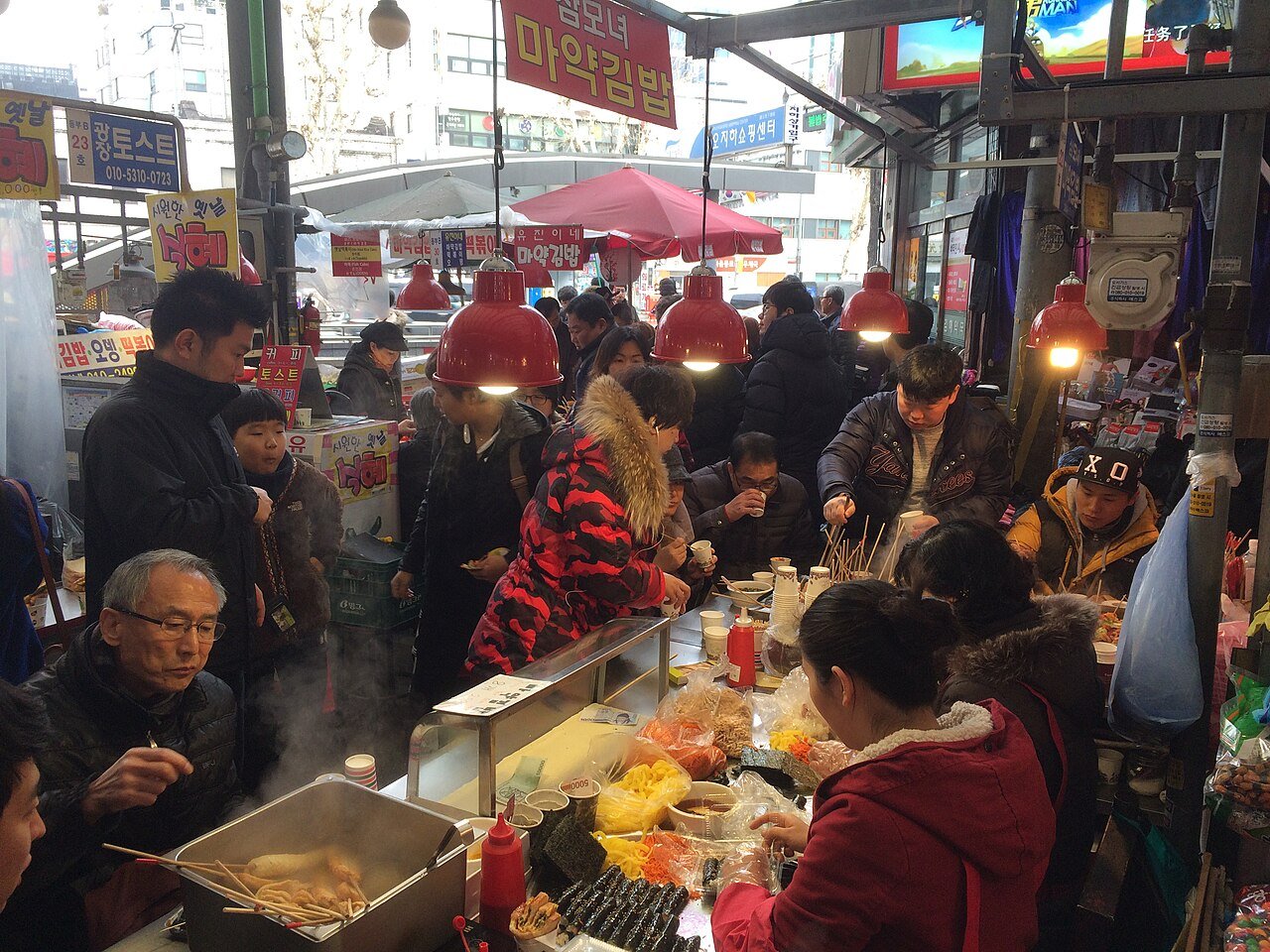
Mayak kimbap are thin, finger-sized rolls containing only carrot, pickled radish and a little spinach, served with a mustard-soy dipping sauce. They are the easiest version to make well, precisely because there’s almost nothing inside to fight you — good practice if your full-size rolls keep bursting. The stalls at Gwangjang Market in Seoul built their reputation on them, and if a trip is in your future, k-trips has a walkthrough of what’s actually worth eating at Gwangjang Market.
Chungmu kimbap goes further in the same direction: rice and seaweed only, no fillings at all, with spicy squid and radish kimchi served alongside. Rolled bare like that, there’s nothing to hide sloppy pressure, which makes it an unforgiving but fast way to learn the first turn.
And if you have leftover seasoned vegetables from something else — the namul from a bibimbap, for instance — they’re already exactly what kimbap wants. Squeeze them dry and roll them.
Common Questions
Is kimbap the same as sushi?
No, though they look alike at a glance. Sushi rice is seasoned with rice vinegar, sugar and salt, and the dish is often built around raw fish. Kimbap rice is seasoned with toasted sesame oil and salt, and every filling is cooked or pickled. The two taste genuinely different — one sharp and clean, the other nutty and savory. They also sit in different places in daily life: sushi is something you order, kimbap is something you pack.
Why does my kimbap fall apart when I cut it?
Almost always one of three things. The core was never compressed, because the first turn was a fold instead of a fold-and-pull. The rice had gone too cold to bind. Or the knife was coated in starch and dragged the roll apart rather than slicing it. Work backward through those three in that order and you’ll find it.
Can I make kimbap without danmuji?
Yes. Danmuji is there for crunch and acidity against sesame-oiled rice, so replace the function rather than hunting the exact ingredient. A dill pickle spear patted very dry is the closest easy swap — sourer, less sweet, same job. Cucumber batons salted for ten minutes and wrung out are milder and fresher. What you shouldn’t do is leave the slot empty; with nothing acidic in it, the roll tastes heavy by the second slice.
Related
Once the rolling is working, a plate of kimbap next to tteokbokki is the standard Korean snack-bar order, and the slices are meant to be dipped straight into the sauce. If you’re still assembling your shelf of Korean staples, the Korean pantry starter kit covers which sesame oil and which seaweed are actually worth paying for.
Kimbap Recipe: Why Your Rolls Fall Apart, and the Fix
Ingredients
Method
- Cook the rice with 10% less water than usual, spread it on a wide tray, fold in the sesame oil and salt, and fan it until it is warm rather than hot.
- Blanch the spinach 30 seconds, cool it under running water, then squeeze it in your fist until it stops dripping. Season with salt, sesame oil and grated garlic.
- Stir-fry the julienned carrot with a pinch of salt over medium-high heat for 2 minutes, until flexible but still snapping.
- Beat the eggs with a pinch of salt and cook undisturbed in an oiled nonstick pan over low heat for 3 minutes, until just set. Cool, then cut into 1 cm strips.
- Cut every filling to the same length as the width of the seaweed sheet.
- Lay a sheet of gim on a bamboo mat, rough side up, long edge running left to right.
- Spread 150 g of rice in a thin, even layer, leaving the far 3 cm of the sheet completely bare.
- Lay the fillings in one tight bundle a third of the way up from the near edge.
- Lift the near edge of the mat over the fillings, then pull the mat back toward you while pressing down to compress the core.
- Roll forward in two or three short pushes, squeezing with the whole hand across the full length each time.
- Seal on the bare strip, rest the roll seam-side down for 2 minutes.
- Brush with sesame oil, scatter sesame seeds, and cut into 1.5–2 cm rounds, wiping the blade with a damp cloth between every cut.