What do you actually put on a Korean table besides rice and one main dish? This. Five small dishes, none of them taking more than 20 minutes, that between them cover the four techniques almost every banchan is built on: blanch-and-season, braise-in-soy, stir-fry-with-sauce, and quick pickle. Learn these five and you can improvise most of the rest.
Quick facts
- Total time per dish: 10 to 20 minutes each
- Serves: each recipe makes enough for 3 to 4 people as one of several side dishes
- Difficulty: easy across all five
- Spice level: 0 to 2 out of 5, dish by dish (noted below)
- Vegan-friendly: four of the five as written; one needs a simple swap
What is banchan?
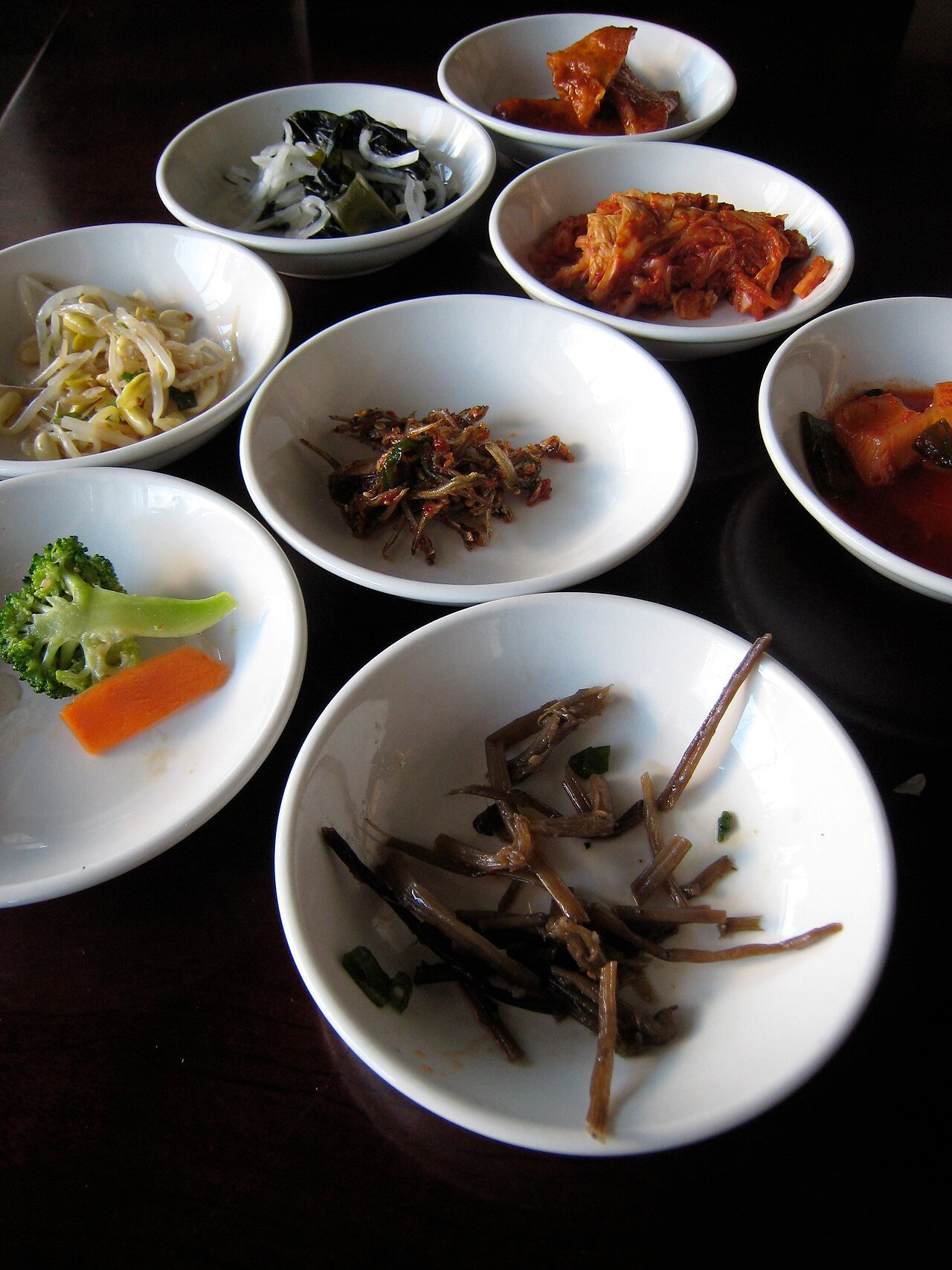
Banchan (반찬) is the umbrella term for the small side dishes served alongside rice at a Korean meal, set out together in the middle of the table rather than plated individually. A casual home dinner might have three or four; a more formal spread can run to a dozen or more. Historically, banchan grew out of a mostly vegetable-based diet shaped by periods of Buddhist influence and by Korea’s need to preserve food through harsh winters, which is also where the country’s deep fermentation tradition comes from. In practice, banchan is less a category of specific dishes and more a way of eating — small, varied, shared, and refilled without much ceremony.
The five below are the ones that show up on the most tables, cost the least, and take the least skill to get right on the first try.
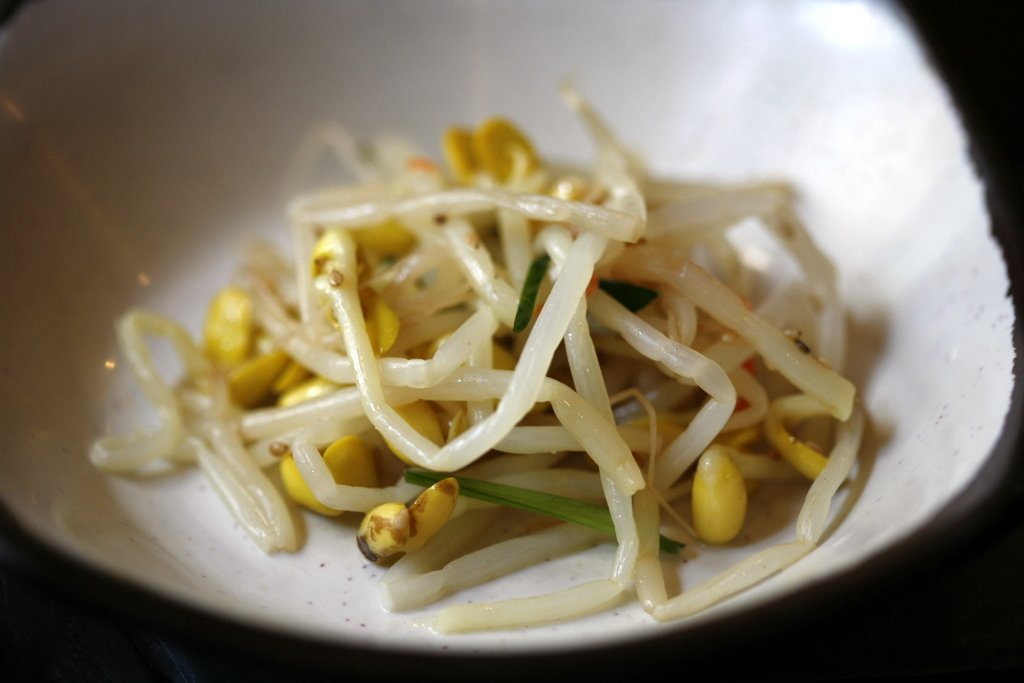
1. Kongnamul muchim (콩나물무침) — seasoned bean sprout salad
The fastest one here, and probably the most common banchan in the entire country.
Ingredients: 200 g soybean sprouts, 1 clove garlic (minced), 1 scallion (chopped), 1 tsp toasted sesame oil, 1/2 tsp salt, 1 tsp toasted sesame seeds. Optional: 1/2 tsp gochugaru for a light red tint and mild heat.
How to make it: Bring a pot of water to a boil, add the bean sprouts, and cover — this matters, an uncovered pot can give the sprouts a slightly grassy smell. Boil for 4 to 5 minutes until the raw crunch is gone but they still have bite. Drain and rinse under cold water immediately to stop the cooking. Toss with the garlic, scallion, sesame oil, salt, and sesame seeds while still slightly warm, so the seasoning absorbs better. Taste and adjust salt.
Substitute: No soybean sprouts nearby? Regular mung bean sprouts (the kind sold everywhere for stir-fries) work with the same method, though they’re a touch thinner and cook a minute faster.
Keeps: 3 days refrigerated, and it’s usually better on day two once the seasoning settles in.
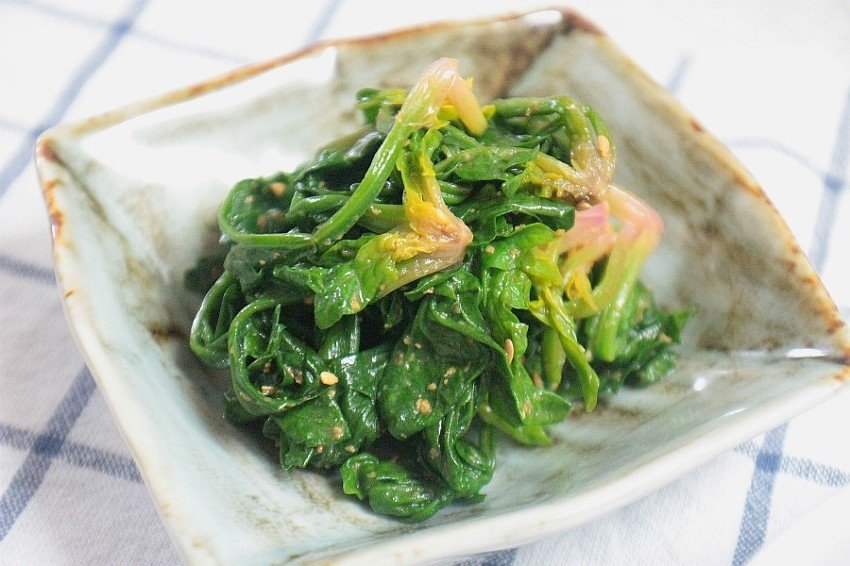
2. Sigeumchi namul (시금치나물) — seasoned spinach
Same blanch-and-season technique as the bean sprouts, applied to spinach, and just as fast.
Ingredients: 1 bunch spinach (about 250 g), 1 clove garlic (minced), 1 tsp soy sauce, 1 tsp toasted sesame oil, 1/2 tsp sugar, 1 tsp toasted sesame seeds, pinch of salt.
How to make it: Blanch the spinach in boiling water for just 30 to 45 seconds — it wilts almost instantly, and overcooking turns it slimy. Drain and plunge into cold water right away. Squeeze the spinach firmly with your hands to remove excess water; this is the step people skip, and it’s the one that keeps the final dish from turning watery. Roughly chop, then toss with the garlic, soy sauce, sesame oil, sugar, and salt.
Substitute: Baby spinach works and needs even less blanching time, closer to 20 seconds.
Keeps: 2 to 3 days refrigerated. It releases a little water as it sits, so drain it again before serving leftovers.
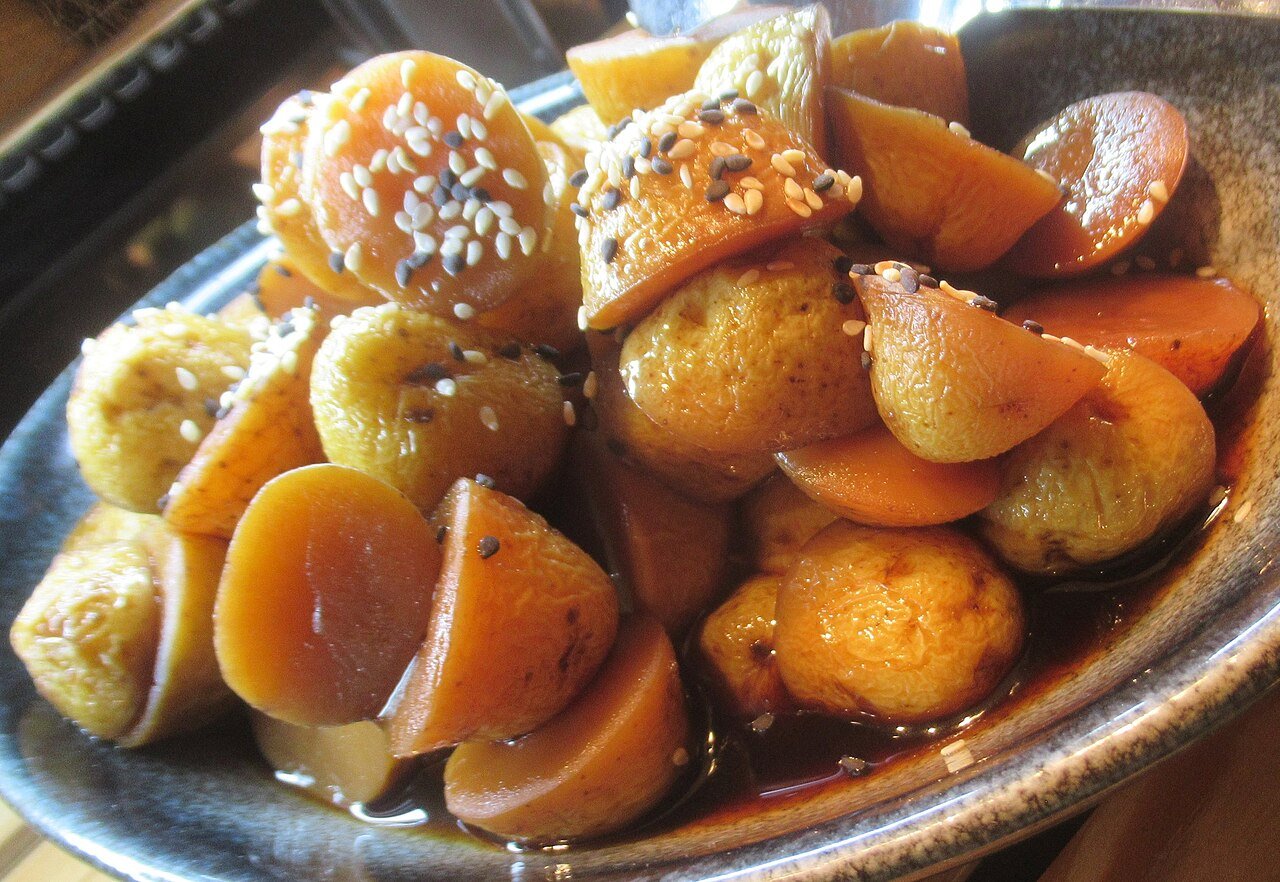
3. Gamja jorim (감자조림) — soy-braised potatoes
This is the braise-in-soy technique, and it’s the closest banchan on this list to a small side of candied potatoes — sweet, salty, and glossy.
Ingredients: 2 medium potatoes, peeled and cut into 2 cm chunks, 2 tbsp soy sauce, 1 tbsp sugar, 1 tsp corn syrup or honey (for shine), 1 clove garlic (minced), 1 tsp toasted sesame oil, 1/2 cup water, 1 tsp toasted sesame seeds.
How to make it: Combine the potatoes, soy sauce, sugar, garlic, and water in a small pot. Bring to a simmer and cook uncovered for about 12 to 15 minutes, stirring occasionally, until the potatoes are fork-tender and the liquid has reduced to a thick glaze. Stir in the corn syrup or honey and sesame oil in the last minute so the glaze turns glossy rather than sticky-dull. Finish with sesame seeds.
Substitute: No corn syrup on hand? A little extra sugar dissolved into the glaze gets you most of the shine, just less lacquered.
Keeps: Up to 5 days refrigerated — this is one of the sturdier banchan and reheats well in a pan with a splash of water.
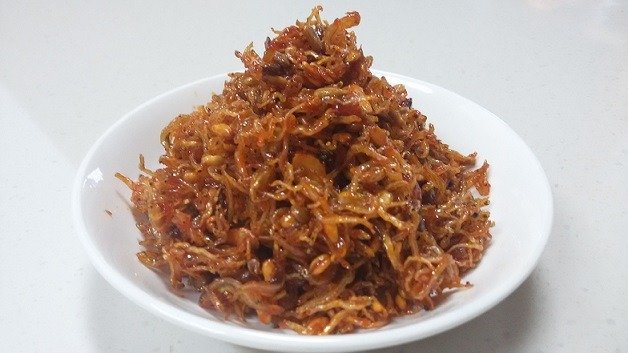
4. Myeolchi bokkeum (멸치볶음) — stir-fried dried anchovies
The stir-fry-with-sauce technique, and the banchan most likely to be unfamiliar to a first-time Korean cook — small dried fish aren’t a common Western pantry item, but they keep for months and this dish takes minutes.
Ingredients: 1 cup small dried anchovies (the smallest size available, not the larger stock-making kind), 1 tbsp neutral oil, 1 tbsp soy sauce, 1 tbsp sugar, 1 tsp corn syrup or honey, 1 clove garlic (minced), 1 tsp toasted sesame oil, 1 tsp toasted sesame seeds.
How to make it: Dry-toast the anchovies in a pan over medium heat for 2 minutes to remove any raw smell, then remove from the pan. Add the oil to the same pan, then the garlic, soy sauce, and sugar, and let it bubble for about 30 seconds. Return the anchovies to the pan and toss quickly to coat — this whole step should take under a minute, since overcooking makes them tough and bitter rather than crisp. Off the heat, stir in the corn syrup and sesame oil, then top with sesame seeds.
Substitute: If dried anchovies aren’t sold anywhere near you, this is genuinely one of the few banchan without a good substitute — small dried shrimp (also sold at Korean or Southeast Asian grocers) can stand in with the same method, though the flavor is sweeter and less oceanic.
Keeps: Up to 2 weeks refrigerated in a sealed container — this is a pantry banchan, meant to be made in a batch and eaten over time.
5. Eomuk bokkeum (어묵볶음) — stir-fried fish cake
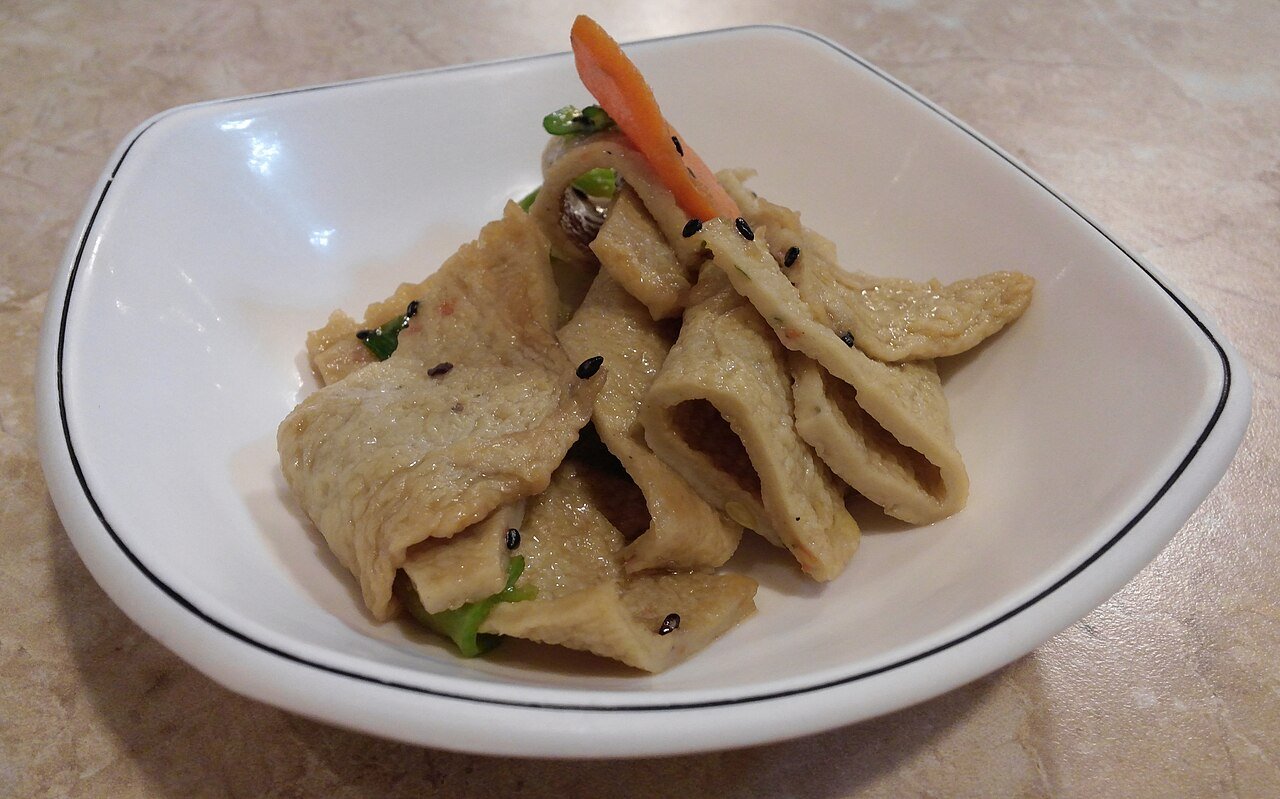
The easiest one to make vegetarian-friendly, and usually the first banchan Korean kids learn to like, since it tastes closer to a savory noodle than anything obviously fishy.
Ingredients: 200 g Korean fish cake sheets, sliced into strips, 1/2 onion (sliced), 1/2 carrot (julienned), 1 tbsp neutral oil, 1 tbsp soy sauce, 1 tsp sugar, 1/2 tsp gochujang (optional, for a mild red color and kick), 1 clove garlic (minced), 1 tsp toasted sesame oil, 1 scallion (chopped).
How to make it: Heat the oil in a pan over medium-high heat and stir-fry the onion and carrot for 1 minute. Add the fish cake strips and stir-fry another 2 minutes. Stir in the soy sauce, sugar, gochujang if using, and garlic, and cook another 2 minutes until everything is glazed and slightly caramelized at the edges. Finish with sesame oil and scallion.
Substitute: Korean fish cake (eomuk or odeng) is sold at Korean and most pan-Asian grocers, usually frozen or refrigerated in sheet form. If you can’t find it, imitation crab stick, sliced into strips, gives a similar chew and mild sweetness, though it’s a different texture underneath.
Keeps: 3 days refrigerated; reheats well in a pan, less well in a microwave, which tends to make the fish cake rubbery.
Putting a table together
A realistic weeknight spread is one main dish, rice, and two of these five — not all five at once, which is more work than most home cooks want on a Tuesday. A good beginner combination is kongnamul muchim and gamja jorim: one takes five minutes of hands-on work, the other simmers mostly unattended, and together they cover a cool, crunchy dish and a warm, glazed one.
The 2023 Korean drama Crash Course in Romance leans on this exact idea for its whole premise — the main character runs a small banchan shop, selling exactly this kind of side dish to neighborhood regulars before her story tangles with a private math tutor. It’s a small detail, but it’s an accurate one: banchan shops like hers are a real, common fixture in Korean neighborhoods, selling ready-made versions of dishes like these five to people who want the table filled out without cooking everything from scratch.
Frequently asked questions
Which of these keeps the longest?
Myeolchi bokkeum, by a wide margin — up to two weeks refrigerated, since it’s a dry stir-fry with almost no water content. Gamja jorim comes next at about 5 days. The two leafy ones, kongnamul muchim and sigeumchi namul, are best within 3 days since they release moisture as they sit.
Can I make all five vegan?
Four of the five are vegan as written or with a trivial swap — kongnamul muchim, sigeumchi namul, and gamja jorim need no changes at all, and eomuk bokkeum can use a vegetarian fish cake substitute (some Korean grocers stock one; otherwise thinly sliced tofu, pan-fried until firm, is a reasonable stand-in). Myeolchi bokkeum is the one exception, since dried anchovies are the entire dish — there isn’t a good plant-based substitute that keeps the same character.
Do I need special equipment for any of these?
No. A pot for blanching, a wide pan for stir-frying, and a small saucepan for the potatoes covers all five. None of them need a rice cooker, a stone bowl, or anything else specific to Korean cooking.
What to cook and eat next
If you liked the quick-pickle side of Korean cooking, easy mak kimchi is the fastest route into fresh kimchi without a multi-day fermentation project. For a sixth banchan that’s just as quick as anything on this list, gyeranmari, the rolled egg omelette, rounds out a table nicely alongside these five. And if terms like gochugaru or gochujang are still new to you, our Korean pantry starter kit breaks down exactly what to buy first.