Janchi guksu is the noodle dish Koreans eat to mark an occasion, not to avoid cooking. That’s the one thing worth understanding before anything else here: this bowl of thin wheat noodles in a light anchovy broth shows up at weddings, first birthdays, and 60th birthday celebrations, because the noodle itself is a stand-in for a long life. The dish is simple enough to make on a Tuesday, but it’s built for a Saturday.
Quick Facts
| Total time | 30 minutes |
| Serves | 2 |
| Difficulty | Easy |
| Spice level | 0 — no chili at all in the standard version |
| Vegan? | Yes, with swaps noted below |
What Is Janchi Guksu?
Janchi guksu (잔치국수) translates roughly to “banquet noodles” or “feast noodles.” Janchi means feast or celebration, and the name comes directly from what the dish was traditionally reserved for — weddings especially, back when noodles themselves were a bit of a luxury item rather than a pantry staple. The long, unbroken strands of noodle are meant to symbolize a long, unbroken life, the same symbolism you’ll find behind long noodles in a handful of other food cultures.
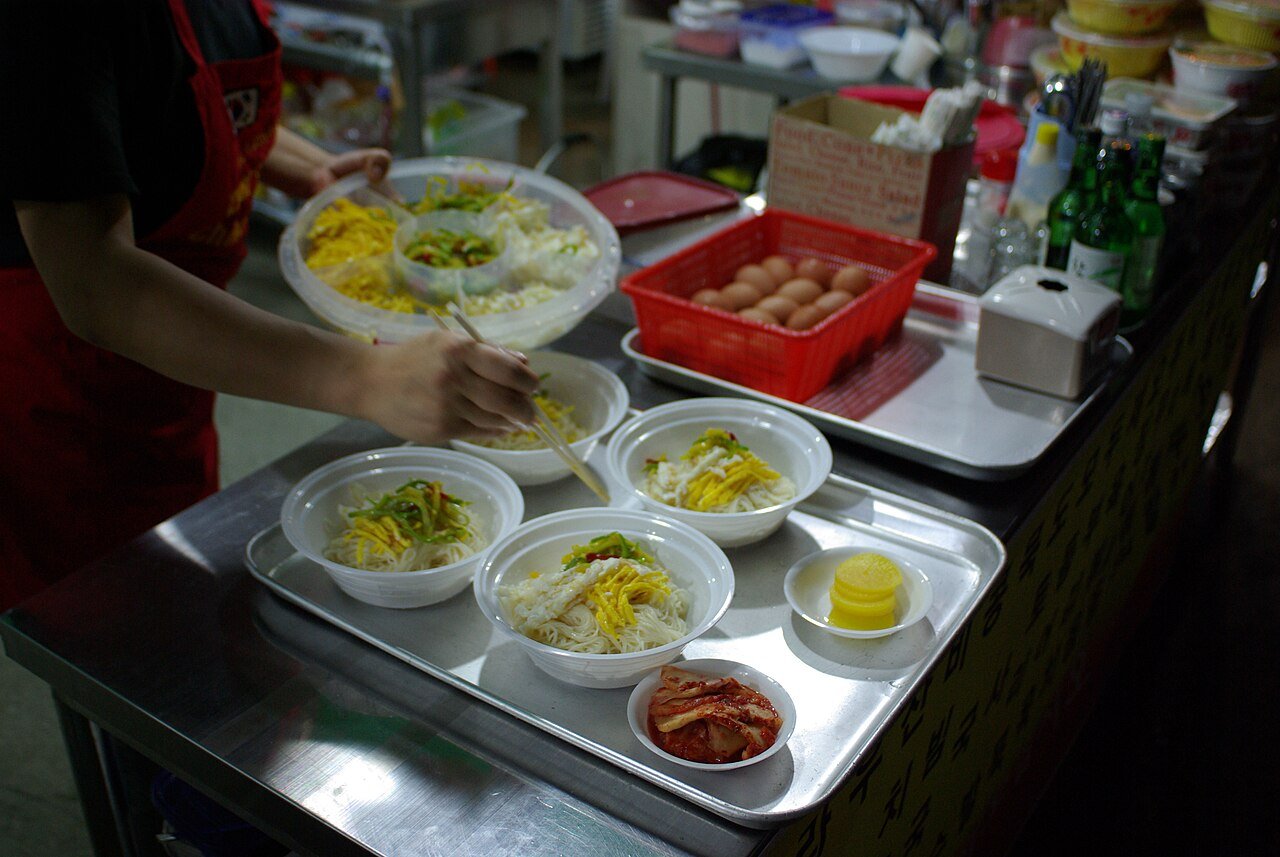
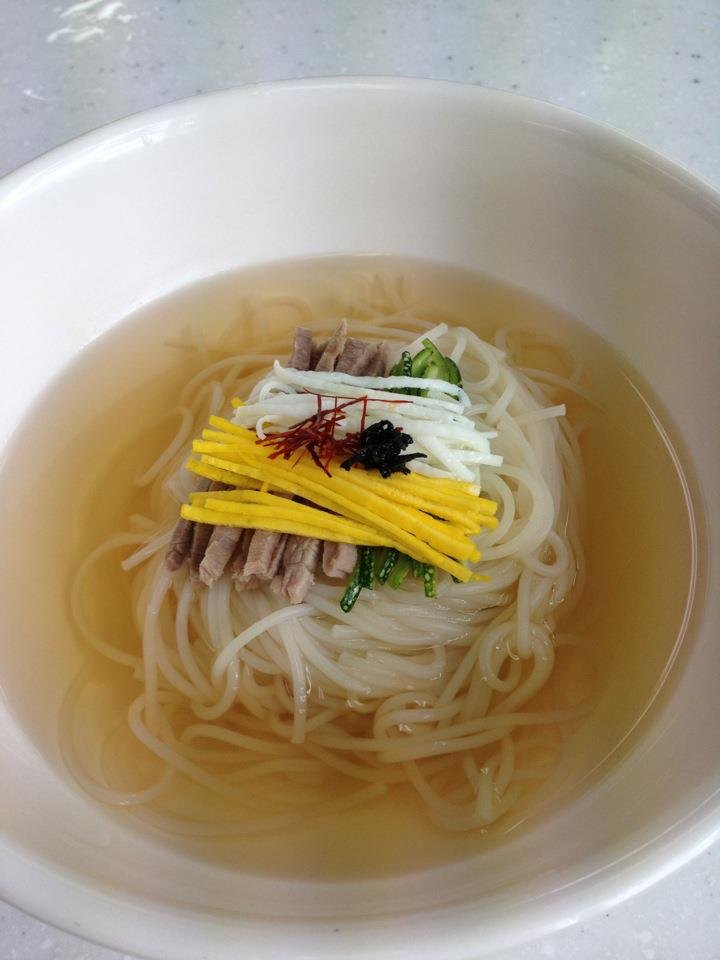
The noodles are somyeon, very thin dried wheat noodles, cooked briefly and then rinsed under cold water to wash off surface starch before they go into a hot anchovy-and-kelp broth. On top: thin strips of fried egg, usually the white and yolk done separately so you get two colors, plus julienned zucchini and shredded gim. It’s a mild dish. There’s no chili in a classic bowl, which makes it one of the gentler entries in Korean noodle cooking.
Fans of The Uncanny Counter will know the dish from its setting: the show’s demon-hunting team, the Counters, work their cover job at a noodle shop called Eonni’s Noodles, a kalguksu-style restaurant where janchi guksu is the specialty on the menu. It’s a nice piece of writing, really — a warm, humble, celebration-linked dish serving as the front for a much darker supernatural job.
Ingredients
| Ingredient (for 2) | Where to get it, or what to use instead |
|---|---|
| Somyeon, 200 g / 7 oz | Thin, straight, dried wheat noodles, usually bundled and tied. Any Korean or Japanese grocery carries them. Angel hair pasta is the closest non-Korean substitute — the cook time is almost identical, though you lose the faint alkaline snap somyeon has. |
| Dried anchovies + kelp | The standard broth base for a huge share of Korean soups. Keep a bag of each in the freezer once you buy them; they hold for months. |
| Egg | For the julienned garnish. Frying the white and yolk separately gives the classic two-tone look, but scrambling them together and slicing into strips works fine if you’re not fussed about presentation. |
| Zucchini, gim | Standard produce-aisle and Korean-grocery items. |
| Soup soy sauce | A light, salty soy sauce made for seasoning broths without darkening them. Regular soy sauce plus a pinch of extra salt is an acceptable stand-in. |
Janchi Guksu Recipe
Ingredients
Method
- Simmer the anchovies and kelp in the water for 12 to 15 minutes over medium heat, removing the kelp after 5 minutes so it doesn’t turn bitter.
- Strain out the anchovies. Season the clear stock with soup soy sauce and minced garlic, then keep it warm over low heat.
- Separate the egg. Fry the white in a lightly oiled pan over low heat until just set, in one thin sheet, then do the same with the yolk in a separate thin sheet. Let both cool slightly, then slice into fine strips.
- Sauté the julienned zucchini in the same pan with a pinch of salt for 1 to 2 minutes, just until it softens slightly. Set aside.
- Bring a separate pot of water to a boil and cook the somyeon for 2 to 3 minutes, until just tender. Somyeon overcooks fast, so start checking early.
- Drain the noodles and rinse immediately under cold running water, rubbing the strands gently between your hands. This step removes surface starch and stops the noodles from turning gummy or over-softening in the hot broth.
- Divide the rinsed noodles between two bowls. Ladle the hot broth over top.
- Garnish with the julienned egg, sautéed zucchini, and gim. Finish with a few drops of sesame oil and serve right away.
How to Make It
- Build the stock first. Anchovies and kelp, simmered 12 to 15 minutes, kelp pulled at the 5-minute mark. Strain, season with soup soy sauce and garlic, keep warm.
- Fry the egg into thin sheets. Separate the white from the yolk, cook each on its own over low heat until just set — no browning — then slice into fine strips once cooled slightly.
- Sauté the zucchini briefly with a pinch of salt, just until it loses its raw edge.
- Boil the noodles separately, 2 to 3 minutes. Somyeon goes from perfect to mushy fast, so don’t walk away.
- Rinse the noodles under cold water immediately, rubbing gently. This is the step a lot of home cooks skip, and it’s the one that keeps the noodles from turning gummy once hot broth hits them. The starch on the surface has to go.
- Portion the noodles into bowls, then pour the hot broth over. Pouring hot broth over cold-rinsed noodles is standard technique here — it reheats them gently without overcooking.
- Top with egg, zucchini, and gim. A few drops of sesame oil at the very end round it out.
A Note on Serving It Cold
Janchi guksu is a hot noodle soup by default, but on a genuinely hot day it’s not unusual to see a cold version — noodles rinsed in ice water, topped the same way, with the broth chilled rather than hot. If you want to try it, just make sure the stock is fully cold before it touches the noodles; lukewarm broth over noodles gets an unpleasant, tepid texture fast.
Tips and Storage
Cook the noodles last, right before serving. Somyeon doesn’t hold well once cooked — it keeps absorbing water and softening, even after rinsing. Don’t cook it ahead of time and let it sit.
Make the broth and toppings ahead if you want to save time. Both keep in the fridge for a day or two; it’s only the noodles that need to happen at the last minute.
Don’t over-salt the broth on its own. Taste it against the noodles, not by itself — soup soy sauce reads much saltier in an empty spoon than it does once it’s diluted by a bowl of plain noodles.
Leftover broth keeps 2 days refrigerated and reheats well. Leftover cooked noodles, on the other hand, don’t hold up — make a fresh batch each time rather than storing them.
FAQ
Why do you rinse the noodles after boiling?
It washes off the surface starch that somyeon releases as it cooks. Skip this step and the noodles turn gluey once hot broth is poured over them, and the broth itself gets cloudy and starchy.
Can I make the broth ahead of time?
Yes, and it’s a good idea if you’re serving several people — anchovy-kelp stock reheats perfectly well. Keep it separate from the noodles until just before serving.
Is janchi guksu always served hot?
Usually, yes — that’s the traditional, everyday version. A cold variation exists for hot weather, using chilled broth over ice-rinsed noodles, but it’s less common than the hot bowl.
Related Recipes and Where to Try It in Korea
If you’re building out a Korean noodle repertoire, kimbap makes a natural side to a light noodle soup like this one — both show up at the same kind of casual, celebratory spreads. For another dish tied to a specific, meaningful day rather than everyday eating, there’s miyeok guk, the soup every Korean eats on their birthday. Dried anchovies, kelp, and soup soy sauce all show up in our Korean pantry starter kit if you’re stocking a Korean pantry for the first time.
If you’re in Seoul, Gwangjang Market has a cluster of stalls known for handmade noodles, kalguksu most famously, with vendors rolling and cutting dough right at the counter — our sister site’s guide to Gwangjang Market’s street food covers what else is worth eating there.