Every Korean kid has some version of the same memory. Mine is a bunsik shop two blocks from my middle school, a steel tray of red rice cakes bubbling in the window, and the arithmetic of whether 1,000 won bought enough to share with a friend. It usually didn’t. That’s the whole story — no grandmother, no secret family pot.
What I want to hand you here is the tteokbokki recipe I actually cook now, in my own kitchen in Seoul, when I want that specific taste back. It isn’t complicated. But three things decide whether it comes out like the shop version or like a sad pot of glue: which rice cakes you buy, what’s under the sauce, and how long you let it reduce. Most recipes rush past all three.
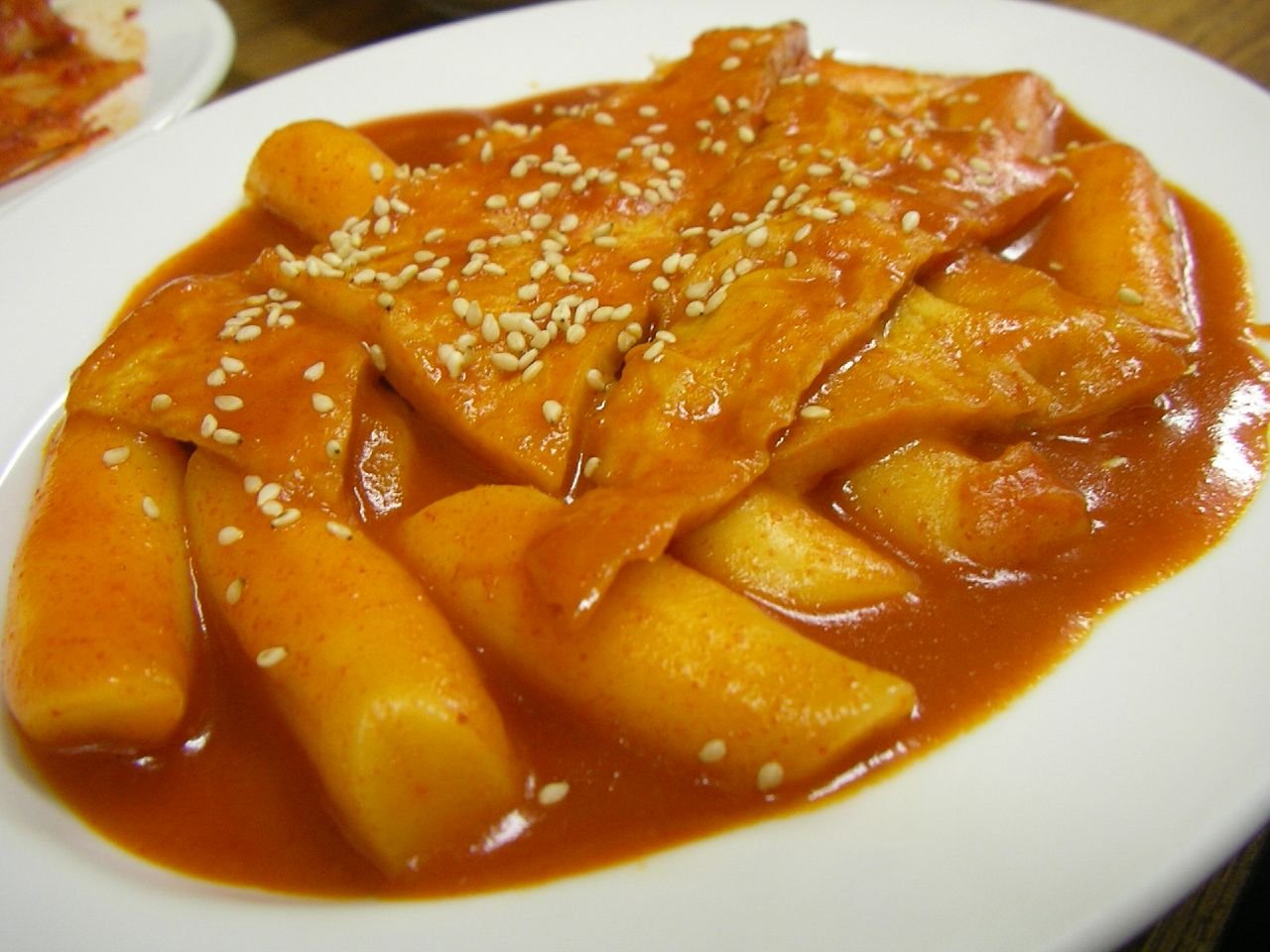
| Time | 30 minutes, plus 20 minutes soaking |
| Serves | 2 as a meal, 4 as a snack |
| Difficulty | Easy |
| Heat | 3 out of 5 |
| Vegan? | Yes, with two swaps (see the ingredient notes) |
What tteokbokki actually is
Tteokbokki (떡볶이) is pronounced roughly tuhk-BOK-kee. The name just means stir-fried rice cake: tteok for the rice cake, bokki from the verb for stir-frying. Which is slightly misleading, because the version everyone knows is simmered, not stir-fried.
There was an older palace dish called gungjung-tteokbokki, seasoned with soy sauce and sesame oil and no chili at all. The red one is much younger. It grew out of Seoul street stalls in the mid-twentieth century, got cheaper as wheat flour got cheaper, and became the default after-school food for about four generations of Korean students. It’s still mostly a snack here, not a dinner. Nobody is precious about it.
The rice cake question, which is the whole argument
Korean rice cakes for this dish come in two shapes and two doughs, and the combination you pick changes the dish more than the chili paste does.
The shapes are easy. Garae-tteok are the finger-length cylinders you see in most photos, and they’re the standard. Tteokguk-tteok are the same dough sliced into thin ovals for rice cake soup — they work fine, cook in about half the time, and hold less sauce per piece because there’s less body to them.
The dough is where Koreans genuinely disagree. Ssal-tteok is made from rice flour. It’s springy and it chews back, it keeps its shape even if you leave the pot on a minute too long, and it’s what almost every Korean grocery abroad stocks in the refrigerated case. Mil-tteok is made from wheat flour. It’s softer, more porous, and it drinks up the sauce instead of wearing it — but it goes limp and shapeless if you overcook it by even three minutes.
The old shops in Sindang-dong, the neighborhood that made this dish famous, use mil-tteok. So a lot of Koreans over forty will tell you flatly that rice-flour tteokbokki isn’t the real thing. Younger people mostly grew up on ssal-tteok and find mil-tteok mushy. Both camps are describing something true. If you’re outside Korea you’ll almost certainly be cooking with ssal-tteok, which is the more forgiving of the two, so this is a fight you get to skip.
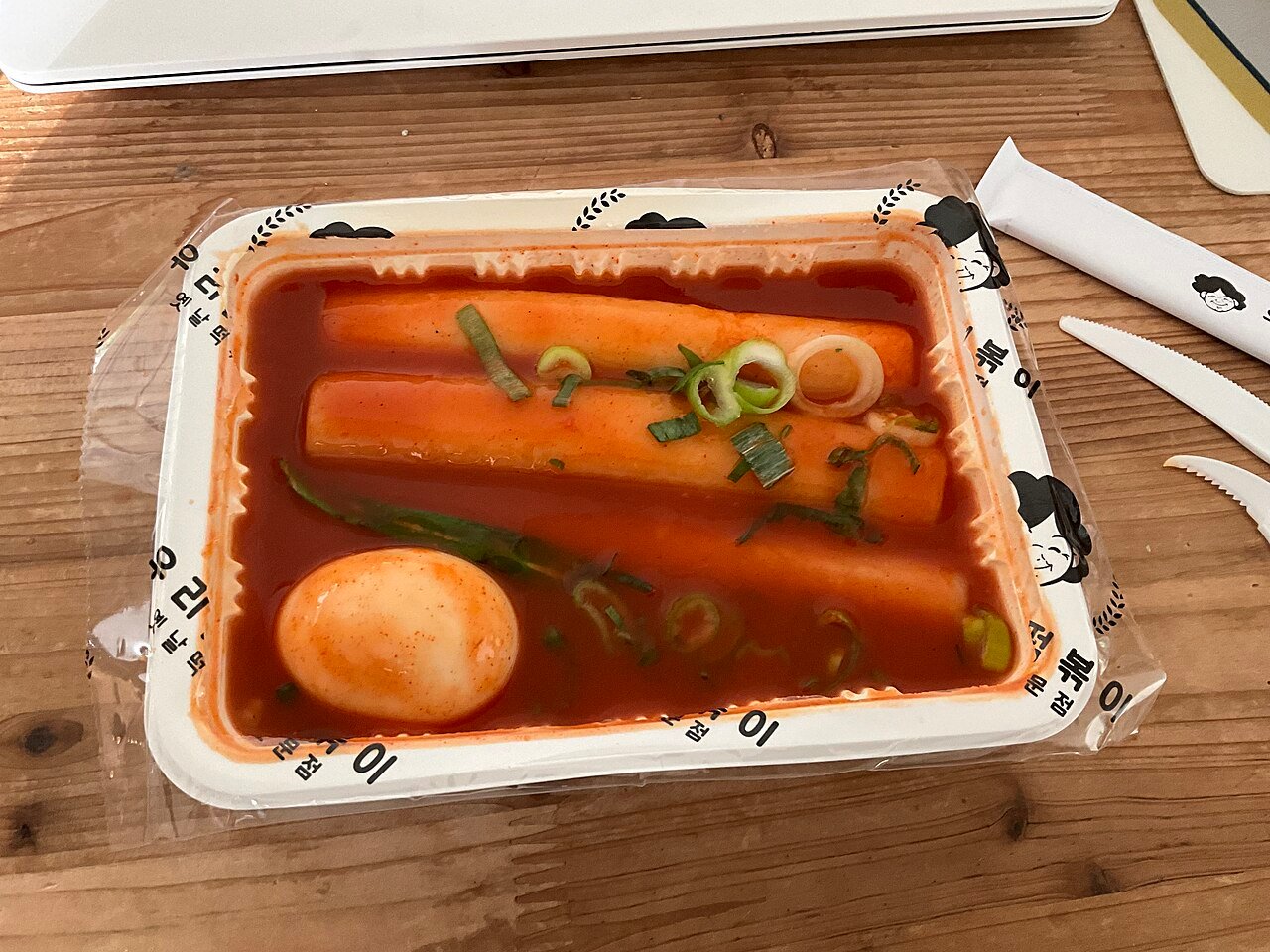
If you can’t get Korean rice cakes at all, the two things people reach for are Japanese kirimochi cut into batons, which puffs up and turns gummy and sticky rather than springy, and potato gnocchi, which technically survives the simmer but goes soft and faintly floury after about five minutes. Gnocchi will not chew back at you. It’s a substitute for the sauce experience, not for the rice cake.
Ingredients, and what to use instead
| Ingredient | Where to get it, or what to use instead |
|---|---|
| Garae-tteok, 500 g / 1 lb | Refrigerated or frozen aisle of any Korean grocer, often labeled “rice cake for tteokbokki.” Tteokguk slices work; halve the simmer time. |
| Anchovy-and-kelp broth, 700 ml / 3 cups | Six dried anchovies plus a 10 cm / 4 in square of dried kelp, simmered 10 minutes. No anchovies? Use 700 ml water plus 1 tsp anchovy paste — cleaner, saltier, less smoky. Vegan: soak two dried shiitake with the kelp for a rounder, earthier broth. |
| Gochujang, 3 tbsp | Sold in tubs almost everywhere now. Without it: 2 tbsp white miso plus 1 tbsp gochugaru plus 1 tsp sugar — savory instead of sweet-fermented, and noticeably thinner. |
| Gochugaru, 1 tbsp | Korean chili flakes, coarse grind. Substitute 2 tsp sweet paprika plus 1/2 tsp cayenne — you get the color and the heat, but not the fruitiness. |
| Sugar, 1 tbsp | Korean shops use corn syrup (mullyeot) for shine. Honey works and reads slightly floral. |
| Eomuk fish cake, 100 g / 2 sheets | Frozen at Korean grocers. Japanese satsuma-age is the closest thing. Firm tofu batons make it vegan but give the sauce no sweetness back, so add another teaspoon of sugar. |
| Scallions, 2 | Any. Go in at the end. |
| Soy sauce 1 tbsp, garlic 1 tsp, eggs 2 | Standard. The eggs are optional and very common. |
Tteokbokki Recipe: Spicy Korean Rice Cakes at Home
Ingredients
Method
- Soak the rice cakes in cold water for 20 minutes if they came refrigerated or frozen. Fresh, soft ones can go straight in.
- Simmer 700 ml / 3 cups water with 6 dried anchovies and one 10 cm / 4 in square of dried kelp for 10 minutes, then strain out the solids.
- Whisk the gochujang, gochugaru, soy sauce, sugar and garlic into the hot broth until no lumps of paste are left.
- Add the drained rice cakes. Simmer over medium heat for 8 minutes, stirring every minute or so to keep them off the bottom.
- Add the fish cake and the hard-boiled eggs. Simmer 4 more minutes.
- Keep cooking until the sauce coats a rice cake and drips off slowly, about 2 to 3 minutes more.
- Stir in the scallions, take the pan off the heat, and let it sit for 2 minutes before serving.
How to make it
- Soak the rice cakes. Cold water, 20 minutes, if they came out of the fridge or freezer. Fresh soft ones skip this. Drain them right before they go in the pot.
- Build the broth. Simmer the water, dried anchovies and kelp for 10 minutes, then strain. Pull the kelp out early if it starts going slippery — it turns the broth slick.
- Melt the sauce into the broth. Whisk in the gochujang, gochugaru, soy sauce, sugar and garlic while the broth is hot, until you can’t see any lumps of paste. Taste it now. It should be a little too salty on its own, because the rice cakes are bland and will pull that saltiness out.
- Add the rice cakes. Medium heat, 8 minutes, stirring about once a minute. They stick to the bottom the moment you stop paying attention.
- Add the fish cake and the boiled eggs. Four more minutes. The fish cake softens and gives up a quiet sweetness that’s a bigger part of the flavor than people expect.
- Reduce it. Two or three minutes more, until the sauce clings to a lifted rice cake and drips off slowly.
- Scallions in, heat off, wait two minutes. The sauce keeps thickening off the burner and the rice cakes finish softening in the residual heat.
How thick is right
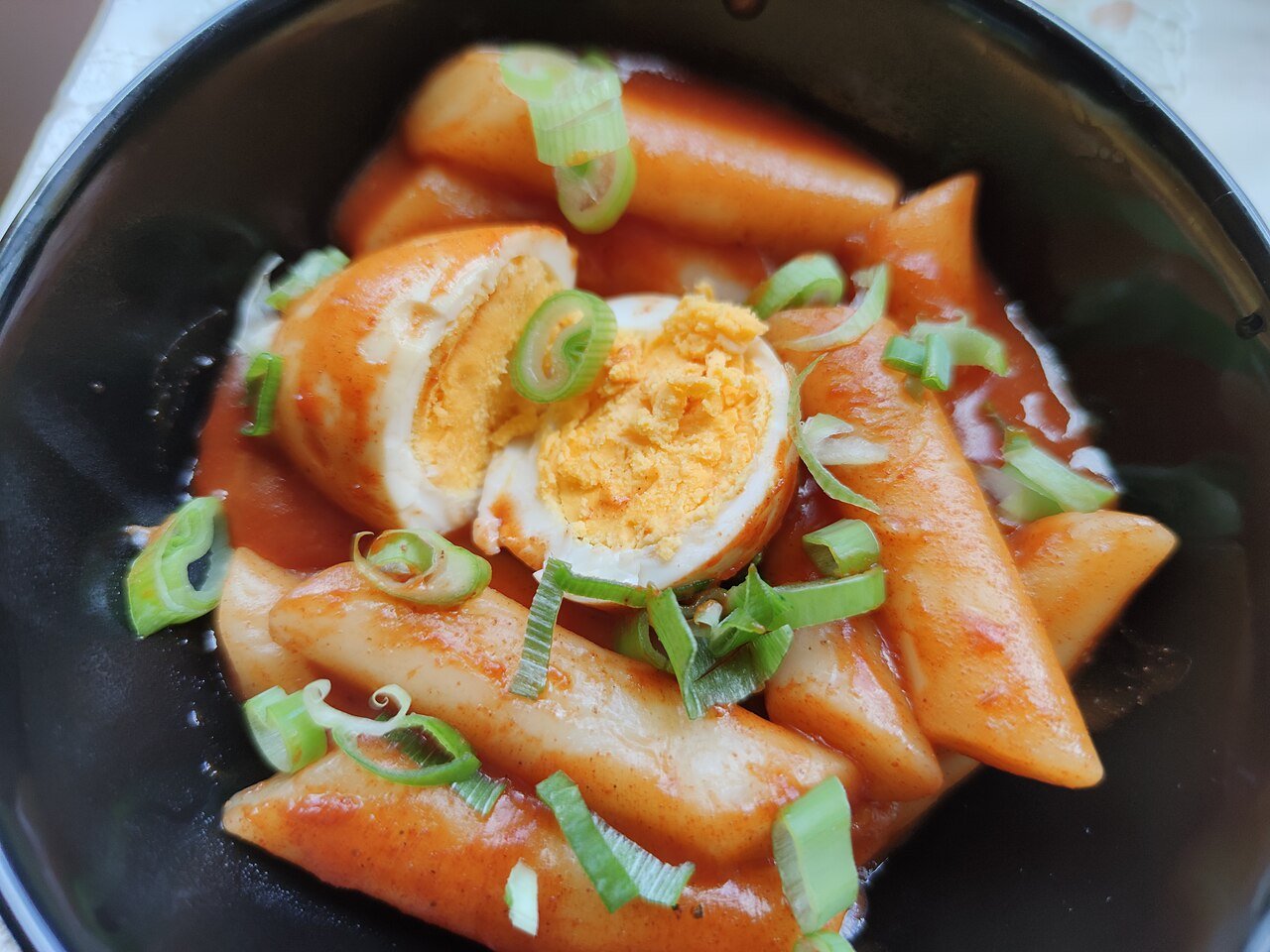
This is the part I’d underline if I could. Tteokbokki is not a soup and it is not a glaze. Lift one rice cake out on a chopstick: the sauce should coat it evenly and then release in a thick, slow drop. If it sheets off like tomato juice, keep simmering. If it sits on the rice cake like paste and won’t move, splash in 2 to 3 tablespoons of water and stir.
The starch coming out of the rice cakes is doing most of the thickening, which is why the pot keeps getting thicker after you turn off the heat, and why it will be almost solid tomorrow. Stop reducing a touch earlier than looks right. It catches up.
Tips and storage
Three failure points, in the order people hit them. Rice cakes stuck to the pan: you stopped stirring, or the heat was too high for the amount of liquid left. Hard, chalky centers: the rice cakes were frozen and didn’t soak long enough, so give them 30 minutes next time. Flat, one-note sauce: you used plain water instead of a broth. The chili paste alone doesn’t have enough savory depth to carry a whole pot.
Leftovers keep three days covered in the fridge, though the texture is honestly best the day you make it. To reheat, put it in a pan with a few tablespoons of water and warm it slowly, stirring, until the sauce loosens back up. Don’t microwave it dry — the rice cakes turn to rubber. Freezing cooked tteokbokki doesn’t work; the rice cakes go grainy.
If you want the classic add-ins, boiled ramyeon noodles turn it into rasokbokki, and a slice of cheese melted over the top is completely standard now.
Common questions
Can I make tteokbokki without gochujang?
Yes, and the result is still good, just different. Use 2 tablespoons of white miso for the fermented backbone, 1 tablespoon of gochugaru for the heat and color, and an extra teaspoon of sugar. You’ll get a sauce that’s saltier and more savory, with less of the sticky sweetness gochujang brings. It also stays thinner, so plan on an extra minute or two of reducing.
What kind of rice cakes do I need for tteokbokki?
Look for a bag labeled “tteokbokki-tteok” or “garae-tteok” in the refrigerated or frozen section. Rice-flour ones are the easiest to cook with. Soup slices work in a pinch. Avoid the sweet filled rice cakes sold as dessert — different dough entirely.
Why did my tteokbokki turn out hard?
Almost always the soak. Refrigerated and frozen rice cakes are dried out at the center, and dropping them straight into hot sauce sets the outside before the middle rehydrates. Twenty minutes in cold water for refrigerated, thirty for frozen. If they’re already in the pot and still hard, add half a cup of water and give them another five minutes at a low simmer.
What to eat with it
Tteokbokki is a sharing dish and it wants something plain next to it. A roll of kimbap cut into rounds is the standard bunsik-shop pairing, and dipping the ends into the leftover sauce is the entire point. If you’re already boiling water, the ways Koreans upgrade instant ramyeon has a few tricks that apply directly to the leftover pot. And if half these ingredients are new to you, the Korean pantry starter kit covers what’s worth buying first.
If you make it to Seoul, the honest advice is not to hunt for one famous shop but to eat it standing up somewhere busy. Gwangjang Market’s street food alley over on k-trips is a good place to start, mostly because you can eat three other things in the same twenty minutes.
Tteokbokki Recipe: Spicy Korean Rice Cakes at Home
Ingredients
Method
- Soak the rice cakes in cold water for 20 minutes if they came refrigerated or frozen. Fresh, soft ones can go straight in.
- Simmer 700 ml / 3 cups water with 6 dried anchovies and one 10 cm / 4 in square of dried kelp for 10 minutes, then strain out the solids.
- Whisk the gochujang, gochugaru, soy sauce, sugar and garlic into the hot broth until no lumps of paste are left.
- Add the drained rice cakes. Simmer over medium heat for 8 minutes, stirring every minute or so to keep them off the bottom.
- Add the fish cake and the hard-boiled eggs. Simmer 4 more minutes.
- Keep cooking until the sauce coats a rice cake and drips off slowly, about 2 to 3 minutes more.
- Stir in the scallions, take the pan off the heat, and let it sit for 2 minutes before serving.