Every few months my Instagram explore page decides I need to see the same 15 seconds of a Seoul cafe cutting into a toasted sandwich, and the filling pulls apart in long, dusty-beige strings like mozzarella that’s been rolled in flour. That’s injeolmi toast. It looks like a stunt. It is not a stunt.
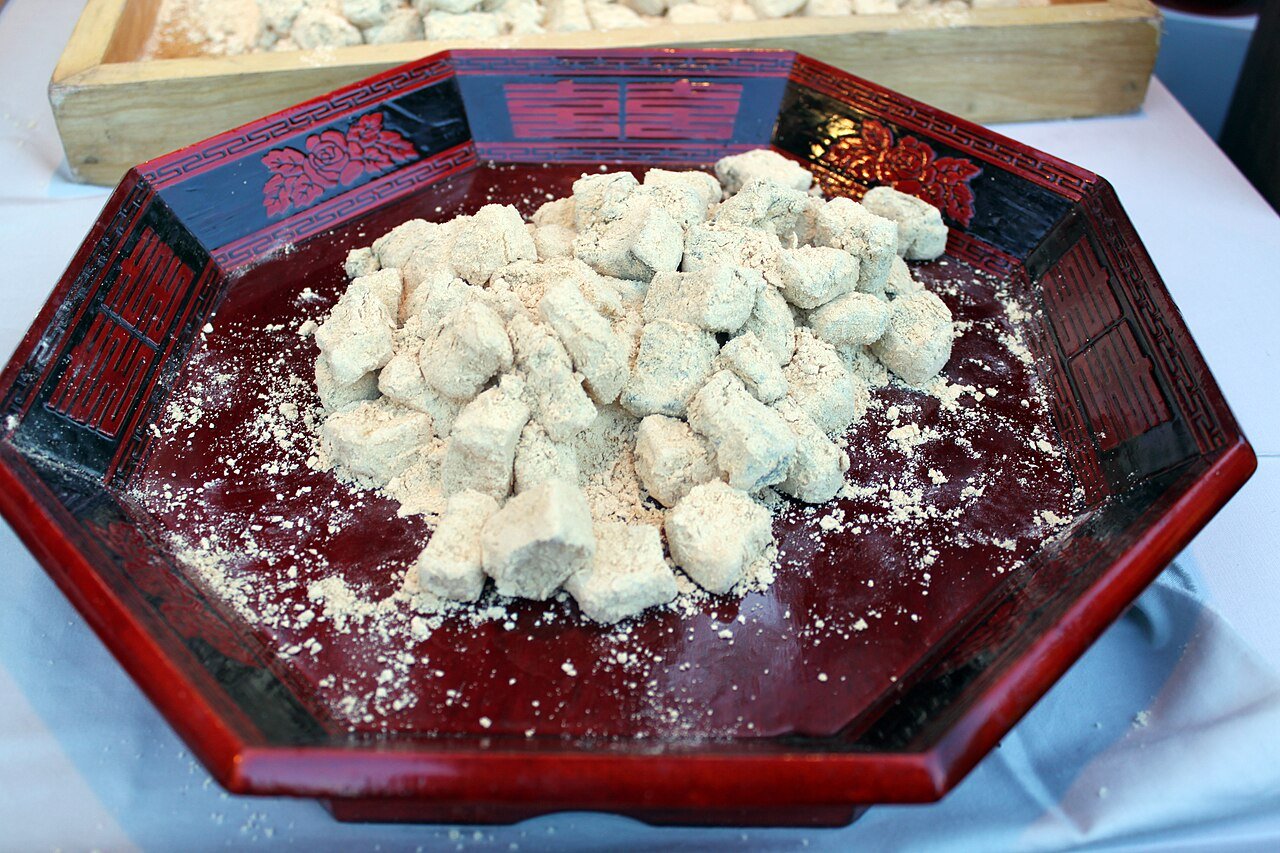
Injeolmi is one of the oldest rice cakes in the Korean pantry — pounded glutinous rice, cut into pieces, tossed in roasted soybean powder. Somebody at a cafe, at some point, worked out that if you fry it first and stuff it into hot buttered bread with cream cheese and honey, you get dessert and breakfast wearing the same outfit. I’ve made this at home maybe a dozen times now, mostly because the ingredient list is short enough that I actually keep everything on hand.
What you’re actually making
This isn’t a from-scratch rice cake project. You’re buying injeolmi — sold refrigerated or frozen in Korean grocery stores, usually pre-cut into little rectangles already dusted in soybean powder — and building a toasted sandwich around it. The soybean powder (konggaru, 콩가루) is what gives injeolmi its dry, nutty, faintly sweet coating, and it’s also what makes this different from just melting mochi into bread, which is a related but blander idea.
If your rice cake didn’t come pre-dusted, or you’re using plain garaetteok cut into strips, you toast your own soybean powder in a dry pan for a minute until it smells like popcorn, then toss the fried rice cake in it. It’s an extra five minutes and it’s worth doing — pre-ground konggaru that’s been sitting in a bag for a year tastes flat compared to a fresh toss.
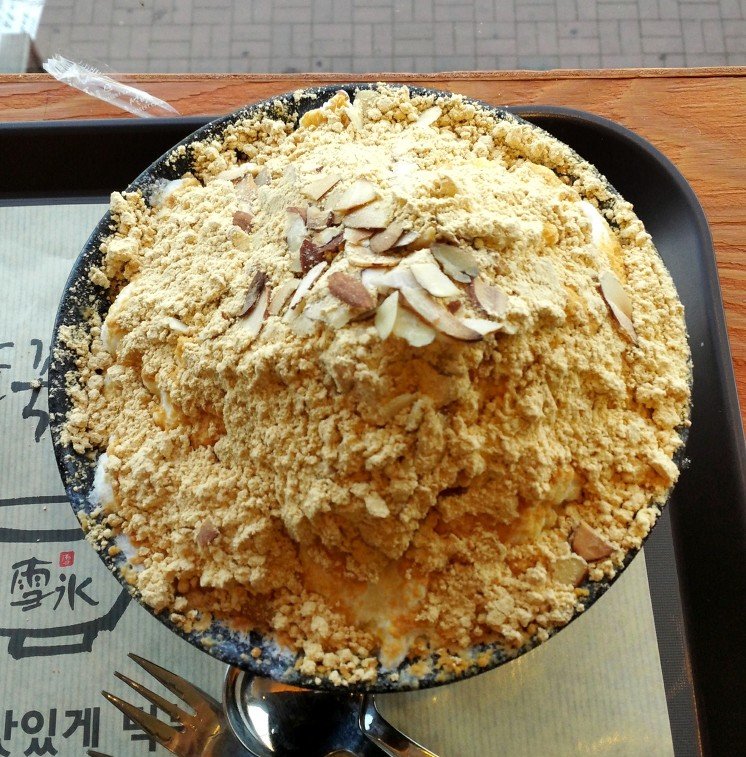
You’ll notice injeolmi shows up all over Korean cafe menus this way — not just toast, but bingsu, lattes, even soft serve. It’s the coating, not the rice cake itself, that cafes are chasing. Once you understand that, the toast makes total sense: it’s a delivery vehicle for konggaru.
The substitution that actually matters
Real injeolmi and its soybean powder aren’t hard to find if you live near a Korean or larger Asian grocery store, but I know not everyone does. Two workarounds, ranked by how close they get you.
The rice cake itself: plain garaetteok (the same chewy white rice cake used in tteokbokki) works if you toss it in soybean powder yourself after frying — you lose nothing, since that’s what injeolmi is anyway. What doesn’t work well is subbing in mochi from a Japanese grocery store; it’s a softer, wetter dough that tends to collapse rather than crisp at the edges in the pan.
The soybean powder: roasted chickpea flour gets you into the right neighborhood — dry, faintly nutty, pale tan — but it’s missing the specific toasted-soybean smell that makes konggaru so recognizable. Peanut flour is a second option and skews sweeter and more one-note. Neither is a disaster. Both are better than skipping the coating, which leaves you with a plain fried rice cake sandwich that tastes like not much.
Injeolmi Toast Recipe
Ingredients
Method
- Slice the injeolmi into finger-width strips if it isn’t pre-cut. If it’s been in the fridge, it will be firm — that’s fine, it softens the moment it hits heat.
- Melt 1 tbsp butter in a nonstick pan over medium-low heat. Lay the rice cake strips in a single layer and fry, turning every minute or so, until each side is lightly browned and the strips have gone soft and glossy, about 4 to 5 minutes total.
- While the strips are still hot, toss them in a bowl with the 2 tbsp soybean powder until every side is coated. Set aside.
- Wipe out the pan. Beat the cream cheese with 1 tbsp honey and the pinch of salt until smooth.
- Butter one side of each bread slice. Spread the cream cheese mixture on the unbuttered side of two slices.
- Pile the coated rice cake onto the cream cheese, drizzle with a little more honey, and close each sandwich with the second slice, buttered side out.
- Toast in the same pan over medium-low heat, pressing gently with a spatula, until both sides are deep golden and the rice cake inside has gone soft and stretchy again, 2 to 3 minutes per side.
- Slice in half while it’s hot — this is when the rice cake pulls in long strings, which is the entire point of eating it warm.
Getting the fry right
The one place people mess this up is heat. Rice cake wants medium-low, not medium — go hotter and the outside blisters and toughens before the inside has gone properly soft and stretchy. You’re looking for pieces that give when you press them with a spatula, almost like a marshmallow, with just a little color on the surface. If they’re still firm in the middle after five minutes, turn the heat down further and give it more time rather than cranking things up.
The same logic applies to the final toasting step. You want the bread to get deeply golden slowly, which gives the rice cake filling time to soften all the way through and start pulling into strands when you cut it. A too-hot pan burns the bread while the center stays cool and firm — the opposite of what you’re after.
Serving it
Cut the sandwich while it’s still hot, ideally within a minute of coming off the pan. This is a texture that seizes up as it cools, and a sandwich that pulled beautifully at the two-minute mark can be a stiff, chewy brick by the time you photograph it. Eat it standing at the counter if you have to. A short dusting of extra konggaru over the cut edges makes it look more like the cafe version and adds a last hit of that roasted flavor that fades once things cool.
If you want to go a step further toward the cafe experience, a scoop of vanilla ice cream on the side does the same job the honey does inside — cutting the richness of the cream cheese — while giving you something cold to contrast the hot filling.
Make-ahead and storage
This is not a dish that waits around well, and I’d plan to eat it within a few minutes of finishing it rather than prepping it for later. That said, you can get a head start on the individual pieces. The rice cake can be fried and coated in soybean powder up to an hour ahead and left covered at room temperature — it’ll firm up slightly as it cools, but a minute back in a warm pan brings the softness right back before you build the sandwich. The cream cheese mixture keeps in the fridge for several days, which is genuinely useful if you’re making this for one person now and want the option again tomorrow without measuring everything out twice.
What doesn’t keep is the assembled, toasted sandwich itself. Once it’s built and grilled, the clock starts — the rice cake firms up as it cools, the bread goes from crisp to slightly damp where the filling has been sitting against it, and reheating a finished sandwich in a pan tends to dry out the bread before the center has warmed through properly. If you’re serving more than one person, it’s worth staggering the final toasting step rather than building all the sandwiches at once and letting some sit while you finish the others.
Questions people ask
Can I make injeolmi toast without soybean powder?
You can, but you’re making a fried rice cake and honey sandwich at that point, not injeolmi toast — the soybean powder is what makes it taste like the cafe version rather than a plain mochi melt. Roasted chickpea flour is the closest workaround if you can’t find konggaru; peanut flour is a second option, sweeter and less nutty.
My rice cake filling went hard and chewy instead of stretchy. What happened?
Almost always the pan was too hot, too early, or both. Rice cake needs slow, gentle heat to soften all the way through — a quick hard sear crisps the outside and leaves the center dense. Slower and lower fixes it every time, and reheating the finished sandwich in a low oven for a minute or two can sometimes bring back some stretch if it’s already cooled.
Is injeolmi toast the same as hotteok?
No, though they get compared a lot as Korean street sweets. Hotteok is a yeasted dough pancake filled with brown sugar and nuts before frying — the filling is baked into the dough from the start. Injeolmi toast is closer to a stuffed grilled cheese, with the sweet filling packed between two slices of regular bread after the fact.
Building this out
If injeolmi toast is your gateway into Korean rice cake, our pantry starter kit covers where to actually buy garaetteok, gochugaru and the rest of the shelf without wandering a grocery store lost for twenty minutes. And if the cafe-trend angle is what you’re chasing rather than the rice cake itself, Korean strawberry milk is the other drink-and-dessert hybrid currently dominating the same Instagram feeds, and it takes about as long to make.
Seongsu-dong in Seoul is where a lot of these rice-cake-and-cream cafe trends seem to start before spreading citywide — if you’re planning a trip, our sister site’s guide to eating like a local in Seongsu is worth a look before you go hunting for the original version in person.