There’s a specific kind of Seoul winter evening this porridge belongs to — the heating just kicked on, it got dark at five, and nobody in the house has much appetite for anything heavy. Hobakjuk is what gets made instead of dinner on those nights. It’s a bowl of pureed sweet pumpkin, thick enough to eat with a spoon standing straight up in it, dotted with soft little rice dumplings, and it asks almost nothing of you in terms of seasoning or technique.
I make this most often when someone in the house is feeling under the weather, which is the traditional context for it in Korea — soft, warm, easy on a tired stomach, the kind of food an older relative hands you without asking if you’re hungry. That’s a cultural association worth knowing rather than a claim I’m making about what it does for you.
The squash is doing most of the work
Kabocha squash — labeled danhobak in Korean grocery stores, meaning “sweet pumpkin” — is naturally denser and sweeter than the carving pumpkins most people picture when they hear the word. That sweetness is the whole foundation of this dish; a good kabocha needs relatively little added sugar because it’s already doing the job.
Butternut squash is the easiest substitute if kabocha isn’t sold near you, and it’s a genuinely fine one — just expect a slightly less rich, more watery result, with a stringier texture that benefits from extra time in the blender to fully smooth out. You’ll likely want an extra spoonful of sugar to match the sweetness kabocha brings on its own. Regular pie pumpkin works in a pinch too, though it leans more vegetal and less sweet than either option.
Two thickeners, working together
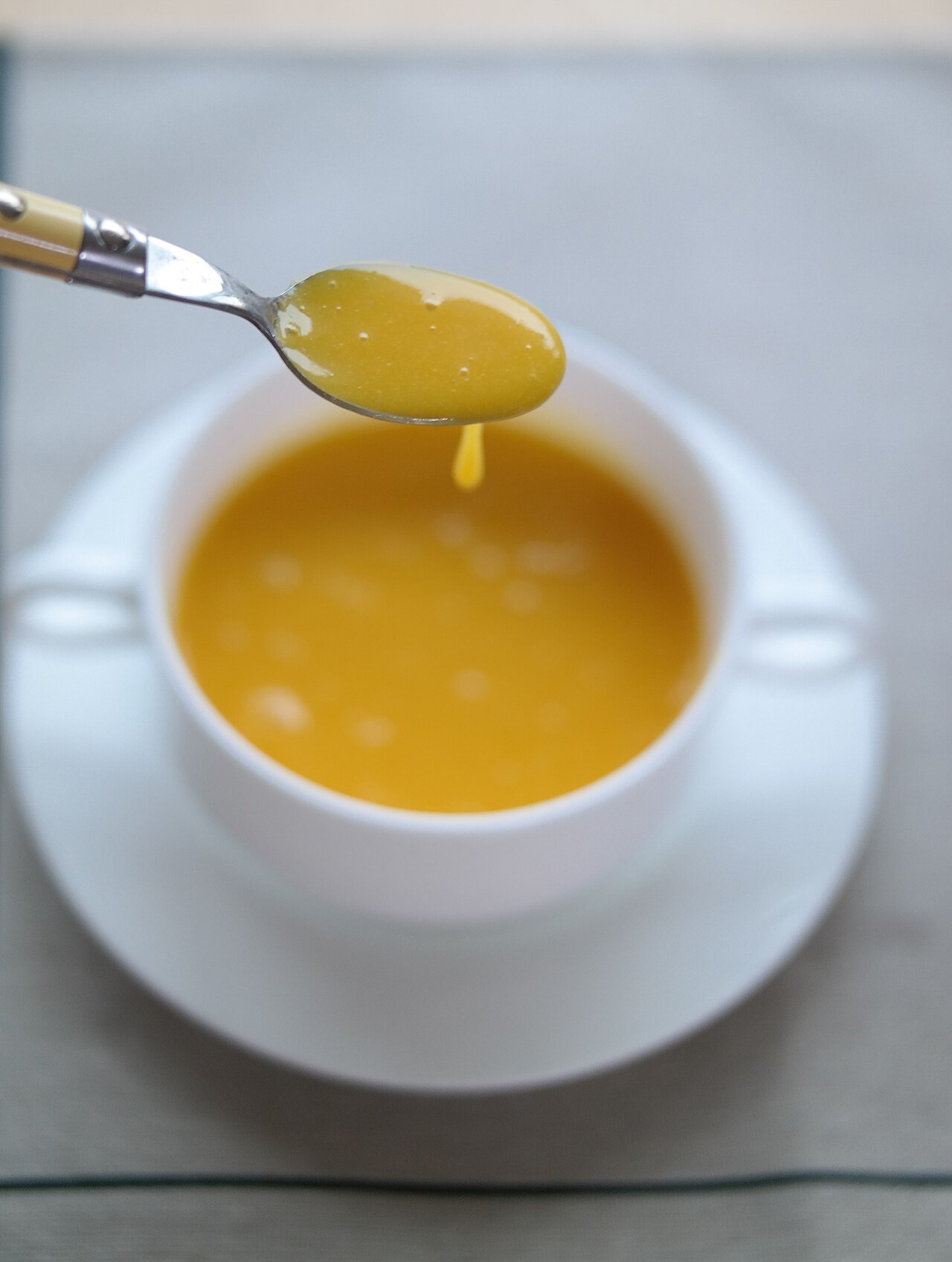
Hobakjuk gets its body from two starches, not one — the rice cooked down into the base, and the squash puree itself, which is already fairly starchy. Some households add a slurry of rice flour instead of cooking whole rice, which is faster but gives you a slightly flatter flavor, since simmered rice contributes more than just thickness; it rounds out the sweetness with something closer to a savory backbone.
If you’re short on time, the rice flour slurry shortcut is genuinely fine — mix 3 tablespoons into a paste with a little cold water, then whisk it into the simmering squash puree until it thickens, which takes maybe five minutes total instead of the fifteen needed to cook rice from scratch. You lose a little depth. You gain half an hour.
The dumplings are optional, but do them anyway
Saealsimi, the little rice flour dumplings that float in a finished bowl of hobakjuk, take about five minutes to shape and cook. They’re not decoration — they give the porridge some textural contrast against all that smoothness, a soft chewy bite in an otherwise spoon-soft dish. The dough is just glutinous rice flour and warm water, no egg, no leavening, rolled into balls slightly smaller than a marble.
Don’t roll them too large. Big dumplings take longer to cook through, and an undercooked center is dense and gummy rather than soft. Small and quick-cooking is the better call here, and if a few break apart while simmering, that’s completely normal and doesn’t affect the finished bowl.
Hobakjuk Recipe
Ingredients
Method
- Put the cubed squash in a pot with 2 cups of the water. Bring to a boil, then simmer, covered, until completely fork-tender, about 15 minutes.
- While the squash cooks, make the dumplings: mix the glutinous rice flour with the warm water until it forms a soft, workable dough, adding a few more drops of water if it’s too dry to hold together. Roll into marble-sized balls — you should get 16 to 20.
- Separately, cook the rinsed rice in the remaining 2 cups water until it’s fully soft and starting to break down, about 15 minutes. This becomes the base that thickens the whole porridge, so don’t rush it.
- Blend the cooked squash (with its cooking liquid) until smooth. A stick blender in the pot is easiest; a stand blender works in batches.
- Combine the blended squash and the cooked rice in one pot. Stir well — you can blend this together too for a completely smooth porridge, or leave the rice slightly textured if you like more bite.
- Bring the combined mixture to a gentle simmer over medium-low heat, stirring often so it doesn’t catch on the bottom. It will be quite thick — thin it with a splash of water if it’s closer to paste than porridge.
- Drop in the rice dumplings and simmer for 4 to 5 minutes, until they float and turn slightly translucent.
- Stir in sugar and salt, tasting as you go. Simmer another 2 minutes to let the sweetness settle in, then serve hot.
Getting the consistency right
Hobakjuk should be thick — spoonable, not pourable, closer to a loose mashed potato than a soup. If yours comes out too thin, keep simmering uncovered; the water will reduce and the starch will keep working. If it’s gone too thick, closer to paste, thin it with hot water a splash at a time rather than dumping in a cup at once, stirring well between additions so you don’t overshoot.
Salt is easy to forget in a dish this sweet, but a small pinch sharpens the pumpkin flavor rather than making the porridge taste savory. Add it at the end and taste before deciding whether it needs more.
Where hobakjuk fits among Korean porridges
Juk (죽) is a whole category of Korean rice porridges, most of them savory — chicken juk, abalone juk, mushroom juk — built around the idea of something soft and easy to eat, traditionally given to people who are unwell, very young, or very old, and rarely eaten as a main event the way rice or noodles are. Hobakjuk sits slightly apart from most of that category because it’s sweet rather than savory, closer in spirit to a dessert porridge like patjuk (red bean) than to something like dakjuk (chicken porridge). It still gets served in the same gentle, low-effort context — a bowl handed to someone who doesn’t feel like a full meal, rather than something you’d order as the centerpiece of a big dinner.
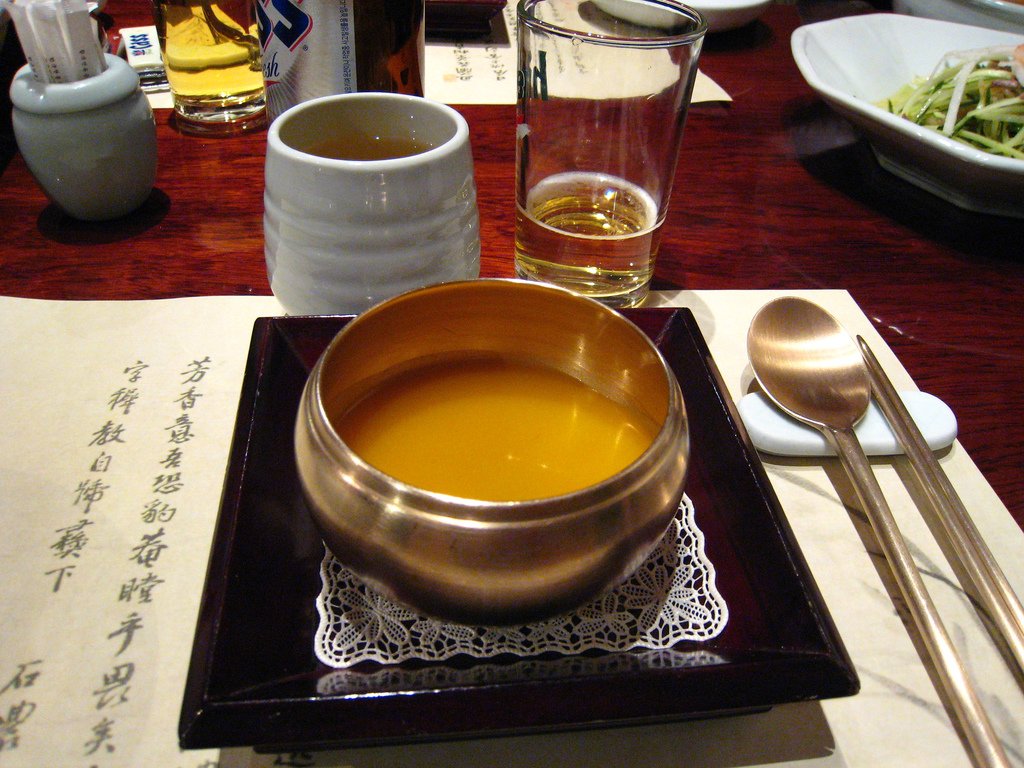
That said, plenty of Korean households eat it as an afternoon snack or light dessert with no connection to being unwell at all, particularly in autumn and winter when squash is in season and cheap. It shows up on traditional restaurant banchan spreads sometimes too, in small cups, as a palate-cleansing bite between courses.
Serving it beyond a plain bowl
A few simple additions change how the finished bowl reads without complicating the recipe. A drizzle of a little extra sugar syrup or honey over the top just before serving pushes it closer to dessert territory, good for an after-dinner bowl rather than a savory-adjacent snack. A small pinch of toasted pine nuts or a scatter of toasted sesame seeds on top adds crunch against all that softness, the same instinct that puts dumplings in the porridge in the first place. Neither addition is traditional in every household — this is closer to a home cook’s habit than a fixed rule, so treat it as optional dressing-up rather than a required step.
Questions people ask
Is hobakjuk supposed to be very sweet, like dessert?
It’s gently sweet, not dessert-sweet — closer to the natural sugar of a roasted vegetable than anything resembling pudding. If your finished porridge tastes more like candy than squash, you’ve likely added too much sugar relative to how sweet the kabocha already was; taste and adjust gradually rather than following a fixed amount.
Can I make this ahead and reheat it?
Yes, and it holds up well in the fridge for two to three days. It thickens further as it sits, so reheat gently with a splash of water stirred in to loosen it back to a spoonable consistency, rather than microwaving it dry and risking scorched spots.
What’s the difference between hobakjuk and patjuk?
Patjuk is a different porridge made from red beans, often eaten around the winter solstice, and it’s savory-leaning with a much deeper, earthier flavor than hobakjuk’s bright sweetness. They’re both in the juk (porridge) family but taste quite different — hobakjuk is the gentler, sweeter introduction of the two.
Other comfort bowls worth knowing
If hobakjuk is your entry point into Korean porridges and soft, easy foods, samgyetang, the ginseng chicken soup, occupies similar territory as restorative cooking, just savory rather than sweet. Sundubu jjigae is the spicier, more assertive end of the same comfort-food spectrum if you’re in the mood for heat instead. And if you’re stocking a Korean pantry for the first time and wondering what glutinous rice flour actually is or where to find it, our starter kit guide walks through the basics.