Here’s the whole recipe in one sentence: blanch spinach for well under a minute, then squeeze it harder than feels reasonable, and everything else is seasoning. That’s it. That’s sigeumchi namul (시금치나물). If you remember nothing else from this page, remember the squeeze — it’s the one step that separates a banchan that tastes like something from a bowl of warm, wilted, watery greens with sesame oil floating on top.
I’m starting with the punchline because sigeumchi namul is a five-minute dish dressed up as a recipe, and most of what goes wrong with it happens at the same single point. This is the first of three namul side dishes we’re covering together — spinach here, soybean sprouts next, and cucumber after that — because they share a family of techniques that’s worth learning once and reusing forever. Spinach teaches the squeeze. The other two teach its variations.
Quick facts
| Time | 10 min prep, 5 min cook |
| Makes | 4 small side-dish portions |
| Difficulty | Easy |
| Spice level | 0 / 5 |
| Vegan? | Yes |
What sigeumchi namul actually is
Sigeumchi namul is blanched spinach seasoned with garlic, sesame oil, and a little soy sauce or salt, served cold or at room temperature as one of the small dishes that fill out a Korean table. It belongs to a broader family called namul (나물) — vegetables that are cooked briefly, seasoned individually, and eaten as their own dish rather than as a garnish on something bigger. If you’ve made bibimbap, you’ve already made a version of this exact spinach, since it’s one of the standard namul piled onto the bowl before mixing.
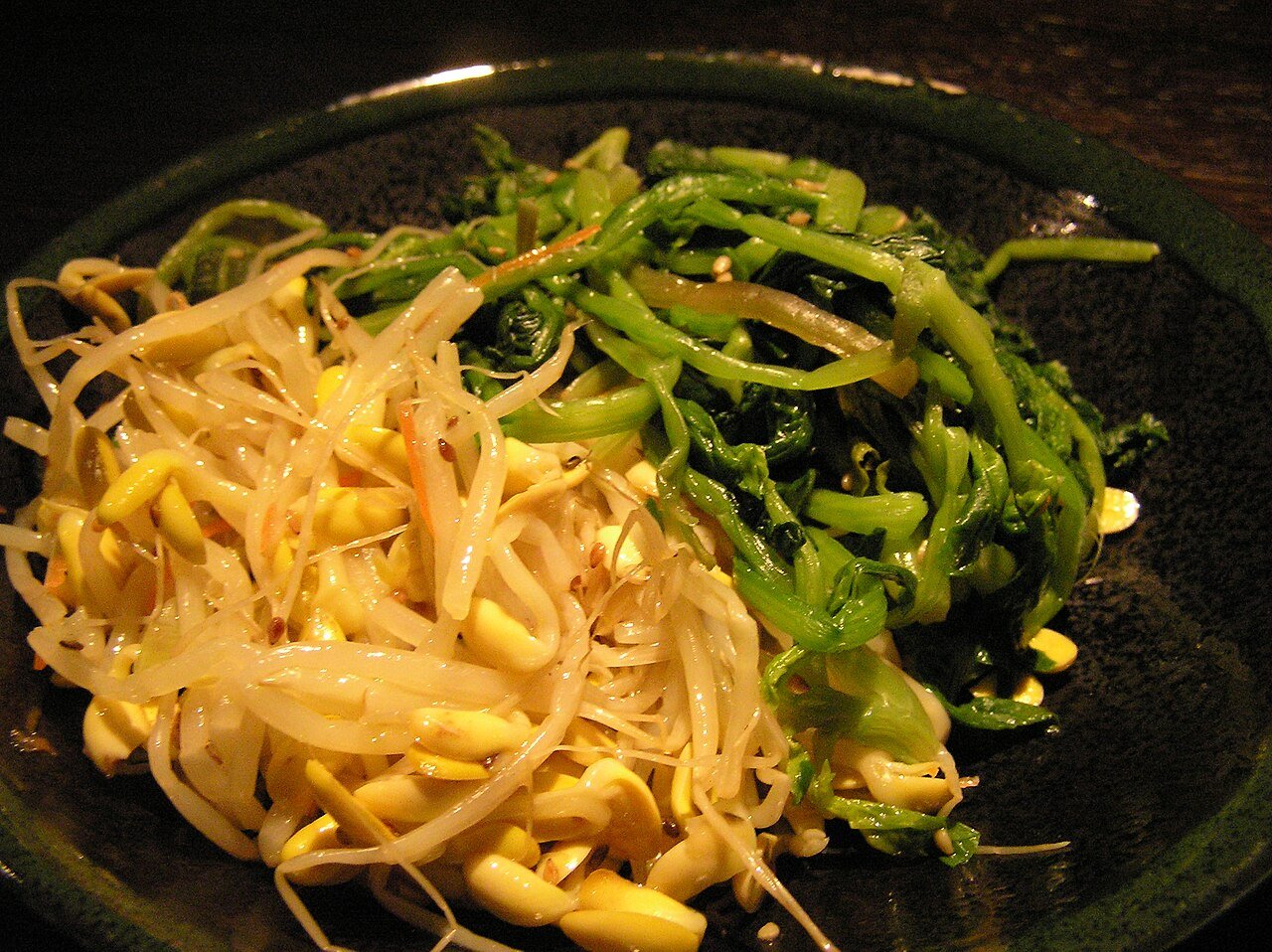
The reason it shows up on so many tables isn’t tradition for its own sake. It’s practical: a batch keeps for days, it costs almost nothing, and it’s the fastest way to get a vegetable onto the table that isn’t raw and isn’t fried.
Why the squeeze matters more than the seasoning
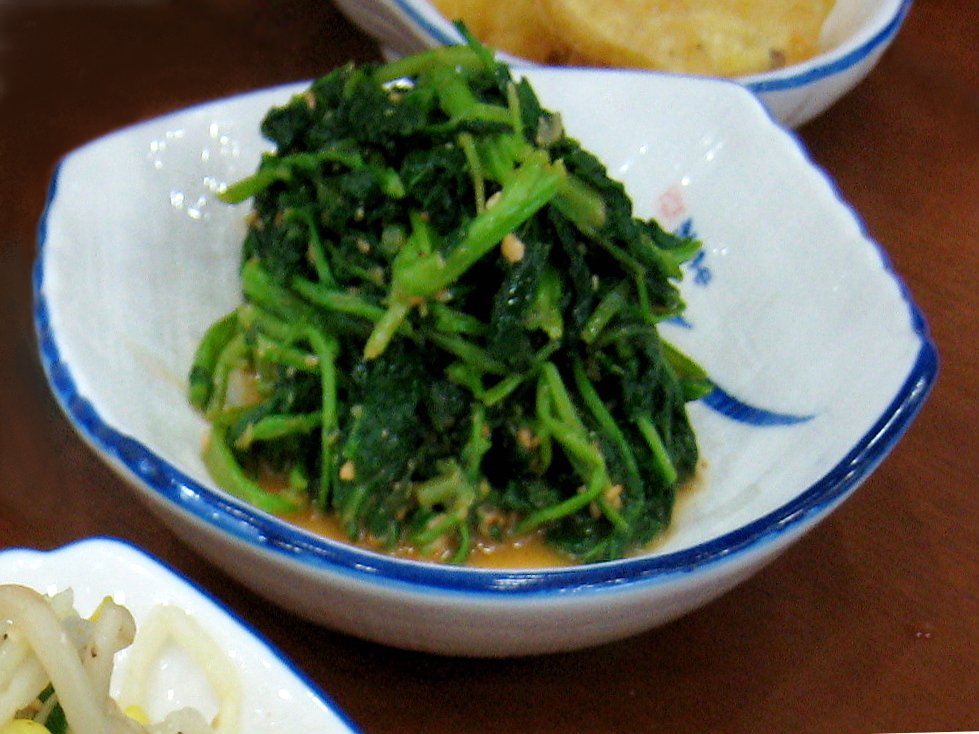
Spinach is mostly water, and blanching adds more of it. A handful of blanched spinach can be more than 90 percent water by weight, and none of that water is doing your dish any favors. Sesame oil is hydrophobic — it beads on wet leaves instead of coating them, which is why unsqueezed spinach tastes like sesame oil floating near spinach rather than sesame-oiled spinach. Salt and soy sauce dissolve into whatever liquid is available, and if that liquid is trapped water still clinging to the leaves rather than the surface you’re about to eat, you’ve seasoned the wrong thing.
Squeezing fixes both problems at once. It gives the oil a dry surface to cling to, and it concentrates whatever seasoning you add onto the plant material itself rather than diluting it into runoff. This is also, not incidentally, exactly the point made in the bibimbap namul module: more bibimbap gets ruined by wet namul than by any other single mistake, and spinach is usually the worst offender because it holds water inside its collapsed cell structure, not just on the surface. A quick rinse-squeeze isn’t enough. You want to squeeze in small fistfuls, hard, more than once, until a fistful genuinely stops dripping when you stop applying pressure. It looks like you’re being too rough with it. You aren’t.
Why 30 to 45 seconds, not longer
Spinach cooks almost instantly because the leaf is thin and mostly surface area. Thirty to forty-five seconds in genuinely boiling water is enough to collapse the structure and deepen the color; anything past a minute starts breaking down the cell walls further than you want, which is why over-blanched spinach turns slippery and grey-green rather than staying dark and slightly springy. The ice bath afterward isn’t decorative either — it stops the cooking dead so residual heat in the pot doesn’t keep working on the leaves while you’re moving on to squeeze the next batch, and it’s what keeps the color a genuine dark green instead of the dull olive you get from spinach that kept cooking in its own heat for another minute on the counter.
Salting the blanching water matters too, and for a reason people skip past: a little salt gets absorbed into the leaf during those forty-five seconds, before you’ve added any seasoning at all. Skip it and you’re seasoning from zero; salt it properly and you’re seasoning from a base that’s already partway there, which is part of why the seasoning step needs so little salt afterward.
Ingredients and substitutes
| Ingredient | Where to get it, or what to use instead |
|---|---|
| 450 g / 1 lb spinach | Baby spinach works and needs less time — about 15 seconds, not 45. Chard, watercress, or kale all work with 30 extra seconds of blanching, per the substitution already used in our bibimbap recipe. |
| 1 clove garlic | No real substitute; it’s foundational to the seasoning. Use less if you’re serving it to kids. |
| Toasted sesame oil | Must be the dark, toasted kind — pale sesame oil has almost no aroma and the dish falls flat without it. See our Korean pantry starter kit for why this one item is close to non-negotiable. |
| 1 tsp soy sauce | Swap for 1/2 tsp salt for the plain white version, closer to what’s served in Korean temple food, with a cleaner, less savory flavor. |
| Toasted sesame seeds | Buy pre-toasted, or toast raw seeds in a dry pan 2-3 minutes until they hop. Crush lightly between your fingers as you scatter them — whole seeds mostly slide off the leaves untasted. |
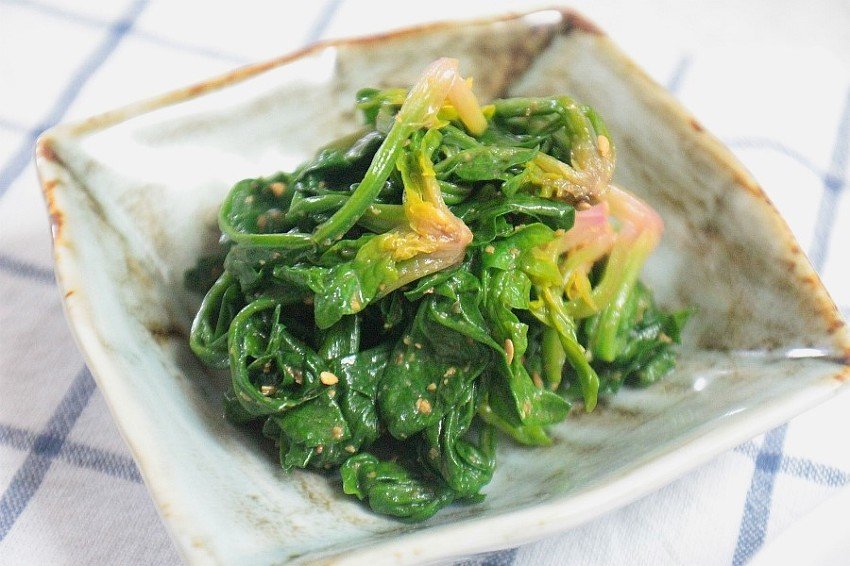
Sigeumchi Namul Recipe
Ingredients
Method
- Bring a large pot of water to a rolling boil and salt it generously, like pasta water.
- Blanch the spinach 30-45 seconds, pushing it under with tongs, until it collapses and turns a darker, glossier green.
- Lift it straight into a bowl of ice water to stop the cooking and lock in the color.
- Working in two or three fistfuls, squeeze the spinach hard and repeatedly until no more water drips out when you stop.
- Loosen the squeezed block apart with your fingers so it isn’t one dense clump.
- Add garlic, sesame oil, soy sauce or salt, and half the sesame seeds, then massage gently with your hands until every strand is coated.
- Taste and adjust salt, then finish with the remaining sesame seeds.
Seasoning order, and why it’s an order at all
Garlic goes in before the oil and salt, not after, because raw garlic needs a moment of contact with something to round off its sharpest edge, and the massaging step that follows does exactly that — working the seasoning into still-slightly-warm spinach softens garlic’s bite in a way that adding it to cold, already-dressed spinach doesn’t. The oil comes next so it coats the leaf surfaces before the salt arrives; salt draws out whatever residual moisture is left, and you want the oil already in place to catch it rather than let it pool at the bottom of the bowl. This is a small thing, and it’s also exactly the kind of small thing that decides whether a namul tastes assembled or seasoned.
Massage the mixture with your hands rather than tossing it with a spoon. Hands apply gentle, even pressure that works seasoning into the folded, collapsed structure of blanched spinach; a spoon just moves pieces past each other without doing that work, and you end up with some strands seasoned and others bare.
Tips and storage
The single most common failure is under-squeezing, covered above, and it’s worth checking twice before you move on — squeeze, look at the bowl underneath, and if there’s a visible puddle, squeeze again. The second most common failure is over-salting the seasoning step because the cook forgot the blanching water was already salted; taste before adding more than a pinch.
Sigeumchi namul keeps 3 days refrigerated in a sealed container, and it’s genuinely better on day two, once the garlic has mellowed and the seasoning has settled evenly through the leaves. Serve it cold or bring it to room temperature — don’t reheat it, since heat brings back exactly the wet, limp texture the squeezing was meant to prevent.
Frequently asked questions
Can I use frozen spinach for sigeumchi namul?
Yes, and in some ways it’s easier, since frozen spinach is already partly broken down. Thaw it completely, then squeeze it the same way — expect to get out even more water than you would from fresh, blanched spinach, because commercial freezing ruptures more cell walls. Skip the blanching step entirely; frozen spinach just needs thawing and squeezing before seasoning.
Why is my sigeumchi namul watery or bland at the same time?
This is almost always the squeeze, and it’s worth reading as one problem rather than two. Watery namul is also under-seasoned namul, because the water you failed to remove is diluting whatever salt and oil you added. Squeeze harder than you think you need to, in smaller handfuls, and season after, not before.
How long does sigeumchi namul keep, and can I use the leftovers elsewhere?
Three days refrigerated, in a sealed container, away from anything you don’t want smelling faintly of garlic. Leftover namul has an easy second life: squeeze it a little drier and it rolls straight into kimbap, which wants the same vegetable cut to a similar size anyway.
Related
If this is your first namul, the other two in this short series build on the same ideas from a different angle. Kongnamul muchim uses the same seasoning but a completely different cooking rule — covered, timed, never stirred while it boils. Oi muchim skips cooking altogether and salts the vegetable instead, which teaches the same lesson about water a different way. And if you haven’t built out the rest of your shelf yet, our Korean pantry starter kit covers exactly which sesame oil and soy sauce are worth the extra dollar.