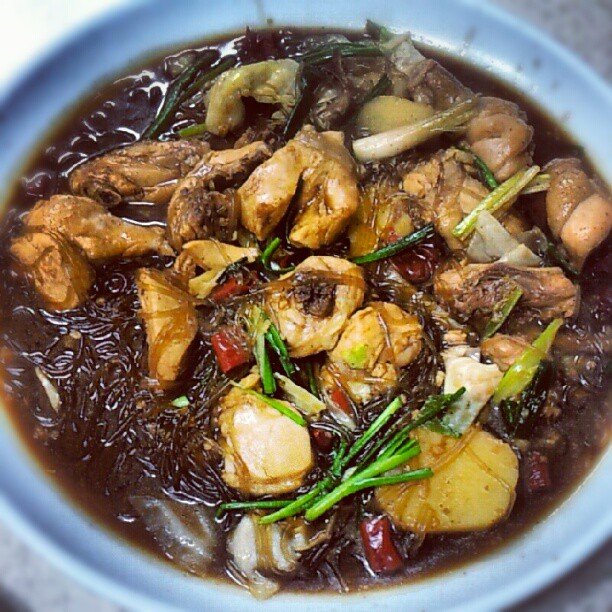
The first time I made Andong jjimdak, I followed a recipe that told me to dump everything into a pot with two cups of water and simmer for twenty minutes. What I got back was a shallow soup with hard, underdone potatoes floating in it, chicken that had given up all its flavor into a broth too thin to matter, and noodles I’d stirred in far too early, which had turned into a soft, starchy mass stuck to the bottom of the pot. It looked nothing like the dark, glossy, almost sticky dish I’d had in Korea. Jjimdak isn’t a soup. It’s closer to a glaze that happens to have chicken and vegetables suspended in it, and getting there means fixing exactly the two things that went wrong for me: how much the liquid reduces, and when the noodles go in.
Quick Facts
| Time | 30 min prep, 45 min cook |
| Serves | 4 |
| Difficulty | Medium — mostly patience, not skill |
| Spice level | 0/5 classic, up to 2/5 with the gochugaru variation |
| Vegan? | No easy substitute — the dish depends on chicken and bone-in braising for its depth |
What Andong Jjimdak Actually Is
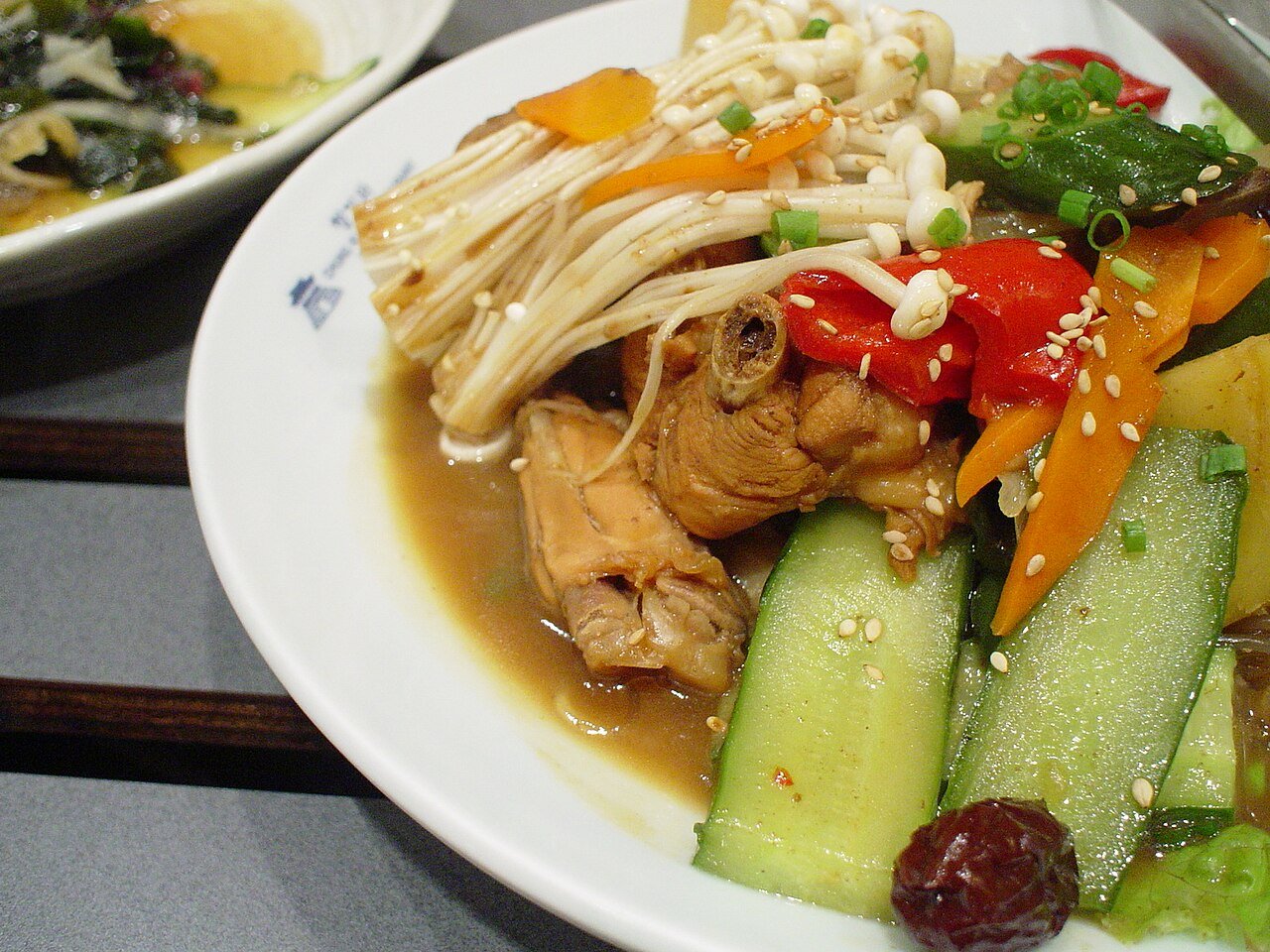
Jjimdak (찜닭) means “steamed chicken,” though “braised” is the more accurate word for what actually happens — chicken, potato, carrot and glass noodles simmered together in a soy-sugar sauce until it thickens into something between a stew and a glaze. The Andong version, specifically, is the one that spread nationwide and then internationally.
Its origin story is relatively recent and well documented. In the 1980s, restaurants clustered around the Andong dak-golmok (“chicken alley”) started making a heartier, less bland version of a plain steamed-chicken dish that had been popular with students, adding a stronger soy-sugar sauce and enough chili to give it some kick. It caught on with Andong’s university crowd first, then spread to Seoul in the 1990s and 2000s as former students opened their own places. It’s worth distinguishing from dakbokkeumtang, a spicier, gochujang-forward braised chicken dish that’s closer to a stew, and from plain jjimdak without the “Andong” name, which historically was milder and less sweet. What’s on this page is the Andong style — soy-based, moderately sweet, chili optional rather than mandatory.
If you know the dish from Let’s Eat, the show built a fair amount of its comedy and its appetite appeal around exactly this kind of home-style braise, chicken and noodles shared out of one big pot at the center of the table — jjimdak is squarely the kind of food that franchise made look good.
Ingredients, and What to Use Instead
| Ingredient | Where to get it, or what to use instead |
|---|---|
| Bone-in chicken thighs and drumsticks, 1.2 kg / 2.5 lb | Bone-in matters here — it gives the braising liquid more body over the 30-plus minutes it spends in the pot. Boneless thigh works if that’s what’s available; shorten the second simmer by about 10 minutes. |
| Dangmyeon / sweet potato glass noodles, 100 g | Sold in most Asian grocers, often next to the japchae noodles since it’s the same product. Mung bean cellophane noodles are the closest substitute — a bit more chew, less of dangmyeon’s glassy shine. |
| Rice syrup or corn syrup, 2 tbsp | Gives the sauce its glossy set. Honey works but browns faster in the last reduction stage — check it a few minutes early. |
| Gochugaru, 1 tbsp, optional | Sold everywhere Korean pantry items are stocked. The classic Andong version skips it; add it if you want the spicy jjimdak variation some restaurants also serve. |
| Potato, carrot, onion, garlic, ginger, soy sauce, sesame oil | All standard grocery items. No substitution notes needed. |
The Reduction Problem: Why Jjimdak Recipes Turn Into Soup
Here’s the part almost every home version gets wrong, mine included the first time. Two cups of liquid for four servings of chicken and vegetables sounds thin on paper, and it is — but the entire dish depends on that liquid cooking down by half or more over the better part of forty minutes, not staying at soup consistency. If you simmer covered the whole time, steam condenses back into the pot and the reduction never actually happens; you end up with exactly the same volume of liquid you started with, just diluted with chicken and vegetable juices. The fix is straightforward: keep the lid on for the first two simmering stages while the chicken and vegetables cook through, then take it off for the final ten minutes so steam can actually escape and the sauce can concentrate. You’ll know it’s working when the liquid stops looking like broth and starts looking like it’s clinging to a spoon rather than pooling around it.
Noodles Go In Last, and Only Once the Sauce Is Ready
The second common failure is timing the noodles wrong. Dangmyeon cooks fast — five to seven minutes once it hits a simmering liquid — and it keeps absorbing liquid and swelling even after you think it’s done, which is exactly why it shouldn’t go in until the sauce has already reduced most of the way. Add it too early, while the pot is still mostly water, and the noodles will overcook into a soft, gluey mass long before the chicken and potatoes are ready, and they’ll have soaked up sauce that was never concentrated enough to season them properly. Wait until the chicken is tender and the liquid is visibly reduced, then add the drained noodles for one focused final stretch of cooking. That’s also the point where you should be tasting and adjusting — a little more soy sauce if it’s bland, a touch more sugar if the chili (or the soy) is running too sharp.
Andong Jjimdak Recipe
Ingredients
Method
- Soak the dangmyeon in warm water for at least 30 minutes, until pliable but not fully soft. Drain and set aside.
- Bring a pot of water to a boil and blanch the chicken pieces for 2 to 3 minutes. Drain and rinse under cold water. This step removes surface impurities and keeps the final broth from turning cloudy or tasting gamey.
- In a wide, heavy pot, combine the soy sauce, sugar, rice syrup, garlic, ginger and water or stock. Bring to a simmer.
- Add the blanched chicken, cover, and simmer over medium-low heat for 15 minutes.
- Add the potato and carrot. Continue simmering, covered, for another 15 minutes, until the chicken and vegetables are tender and the liquid has reduced by roughly half.
- Add the onion wedges and sliced chilies (and gochugaru, if using). Simmer 5 more minutes, uncovered, to let the sauce keep reducing.
- Add the drained noodles. Raise the heat slightly and cook, stirring gently, until the noodles are tender and the sauce has thickened to a glaze that coats everything with only a shallow, syrupy pool left at the bottom, about 5 to 7 minutes.
- Take the pot off the heat, drizzle with sesame oil, and scatter scallions over the top before serving directly from the pot.
How to Make It
- Soak the noodles in warm water at least 30 minutes while everything else comes together. Drain and set aside; don’t cook them yet.
- Blanch the chicken in boiling water for 2 to 3 minutes, then drain and rinse. This one step is the difference between a clean-tasting braise and a slightly muddy one.
- Build the braising liquid. Combine soy sauce, sugar, rice syrup, garlic, ginger and water or stock in a wide pot and bring to a simmer.
- Add the chicken, cover, simmer 15 minutes over medium-low heat.
- Add potato and carrot, cover, simmer another 15 minutes, until everything is tender and the liquid has visibly reduced.
- Add onion and chilies (and gochugaru if using), uncovered, 5 minutes. This is where real reduction starts happening.
- Add the drained noodles. Cook, stirring gently so nothing sticks, until the noodles are tender and the sauce is a thick glaze, 5 to 7 minutes.
- Finish with sesame oil and scallions, off the heat, and serve straight from the pot.
What Goes Wrong, and Why
Thin, watery sauce even after 40 minutes: the lid stayed on the whole time. Uncover the pot for the last 10 to 15 minutes so steam can actually leave and the liquid can concentrate.
Mushy, falling-apart noodles: they went in too early, while the pot was still mostly liquid. Wait until the sauce has reduced before adding them, and don’t let them sit in the finished pot for more than a few minutes before serving — they keep absorbing liquid and softening even off the heat.
Bland despite plenty of soy sauce: the reduction never happened, so the seasoning is technically present but diluted across too much liquid. Taste once the sauce has properly thickened, not before — a dish that tastes weak at the 20-minute mark is often exactly right once it’s reduced.
Storage
Jjimdak keeps 3 days refrigerated. The noodles will keep absorbing sauce and softening in storage, so if you’re planning leftovers, consider holding back a portion of noodles uncooked and adding them fresh when you reheat. Reheat gently in a pot with a splash of water rather than the microwave, which tends to dry out the chicken unevenly.
Common Questions
Why is my jjimdak sauce too thin?
Almost always the lid. Covering the pot the entire time traps steam and prevents the sauce from reducing, no matter how long you cook it. Uncover for the last stretch of cooking, once the chicken and vegetables are tender, and let it actively boil down.
Can I make Andong jjimdak spicy?
Yes, and plenty of restaurants serve a version with gochugaru stirred in alongside the onion and chilies. A tablespoon is a moderate starting point; taste before adding more; the sweetness in the base sauce means it can absorb a fair amount of heat before it tastes aggressive.
What can I use instead of dangmyeon noodles?
Mung bean cellophane noodles are the closest match and cook in a similar window. In a pinch, thin rice noodles work, though they turn softer faster, so add them a couple of minutes later than the recipe calls for and watch them closely.
Related
Jjimdak sits in the same braised-and-reduced family as galbijjim, and the reduction lesson here — uncover the pot to actually concentrate the sauce — applies just as directly there. If you’d rather stir-fry than braise, dak-galbi is the other major Korean chicken dish built around chili and gochujang rather than soy. And if the ingredient list still looks unfamiliar, the Korean pantry starter kit covers which soy sauce and syrup are worth having on hand.