It’s the kind of evening where turning on the stove for longer than five minutes feels like a personal insult. You don’t want soup, you don’t want anything that needs a simmer, and you definitely don’t want to stand over a hot pan. Bibim guksu solves exactly that problem: noodles boil for four minutes, everything else is stirring a sauce and slicing a cucumber, and the whole dish is meant to be eaten cold.
Quick facts
- Total time: 15 minutes (10 prep, 5 cooking)
- Serves: 2
- Difficulty: easy
- Spice level: 3 out of 5 (easy to adjust either direction)
- Vegan-friendly: yes, with the egg left off or swapped for avocado
What is bibim guksu?
Bibim guksu (비빔국수, roughly bee-bim gook-soo) means “mixed noodles.” Bibim is the same word in bibimbap — it means tossed or mixed together, not a specific sauce — and guksu just means noodles. The noodles themselves are usually somyeon, a very thin wheat noodle that cooks in a few minutes and has almost no chew resistance on its own, which is exactly why it needs a bold sauce to carry it.
It’s a warm-weather dish above almost everything else on this site. Korean households make it constantly through the summer, precisely because it doesn’t heat up the kitchen and it’s ready faster than most people can decide what else to eat.
The one step that decides whether this works
Cold rinsing isn’t a garnish step you can skip if you’re in a hurry — it’s the difference between noodles with bite and a bowl of warm starchy paste. Somyeon keeps cooking in its own residual heat even after you drain it, and it’s coated in surface starch from the boiling water. Rinsing under cold running water, while rubbing the strands gently between your hands, stops the cooking instantly and washes off that starch, which is what keeps the noodles from clumping into a gluey mass once the sauce goes on.
Do this the moment the noodles come out of the pot. Waiting even a minute lets them overcook past the point rinsing can fix.
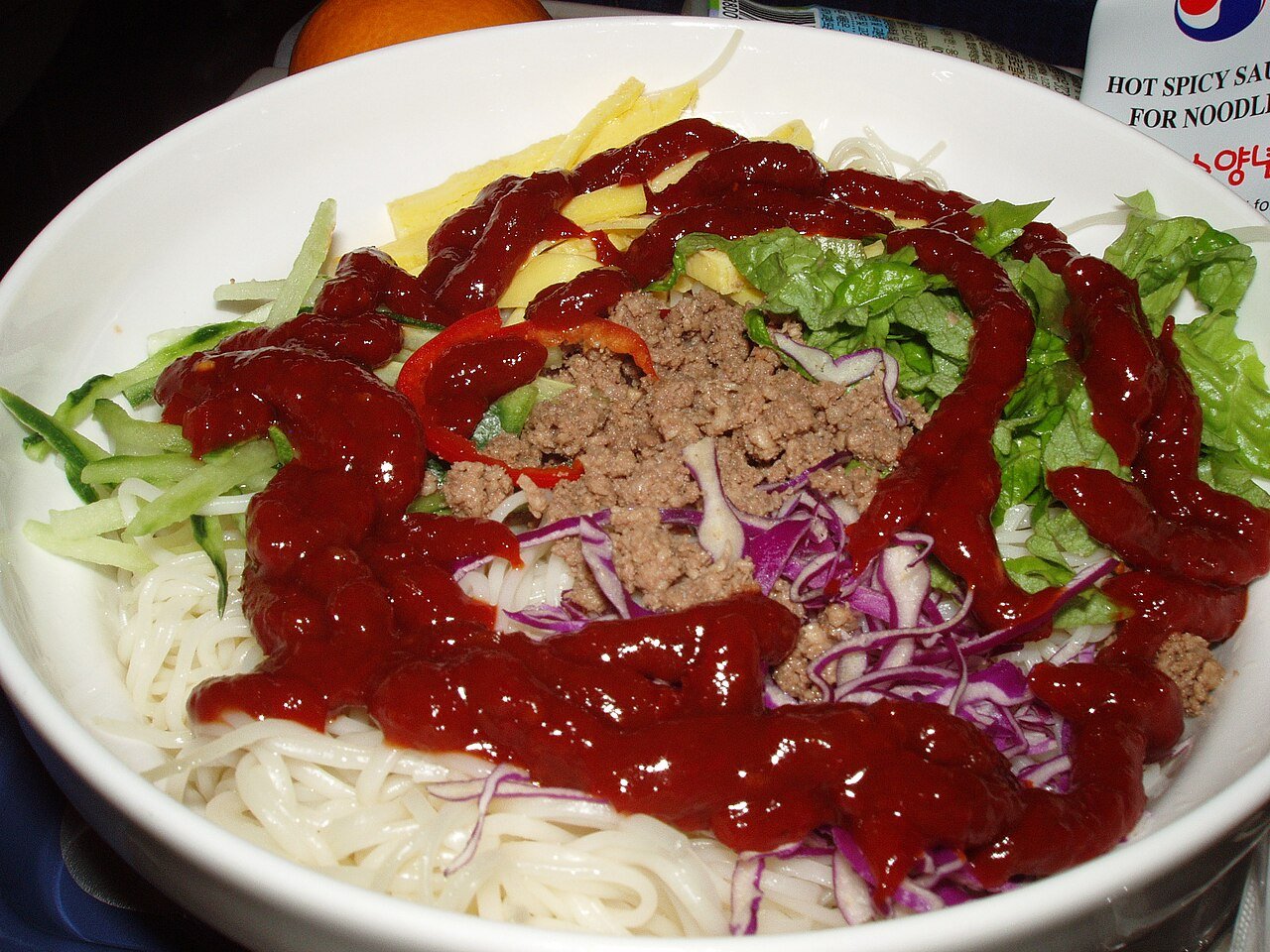
Ingredients, and what to use instead
| Ingredient (for 2) | Where to get it, or what to use instead |
|---|---|
| Somyeon, 200 g / 7 oz | Korean or pan-Asian grocer. Angel hair pasta or Japanese somen are close substitutes — slightly different chew, but they take the sauce just as well |
| Gochujang, 2 tbsp | Increasingly common in mainstream supermarkets. Substitute: white miso plus cayenne and a little extra sugar — savory instead of fermented-sweet |
| Gochugaru, 1 tsp | Korean chili flakes. Substitute: sweet paprika plus a pinch of cayenne |
| Rice vinegar, 1 tbsp | Any supermarket. Apple cider vinegar works, slightly fruitier |
| Sugar, garlic, soy sauce, sesame oil | Standard pantry items |
| Cucumber, 1/2, julienned | For crunch and coolness. Shredded lettuce is a fine stand-in if cucumber’s out of season |
| Kimchi, 1/4 cup, optional | Adds tang and crunch. If you skip it, a splash of the kimchi juice in the sauce keeps some of that flavor |
| Egg, 1, fried or hard-boiled | Standard. Skip for vegan, or top with avocado instead |
Toppings are flexible in a way the sauce isn’t. Shredded nori, sliced perilla leaves, or a handful of julienned Korean pear all show up in home versions, mostly depending on what’s already in the fridge. None of them are required — cucumber, egg, and a little kimchi cover the base version most people expect when they order this at a Korean restaurant.
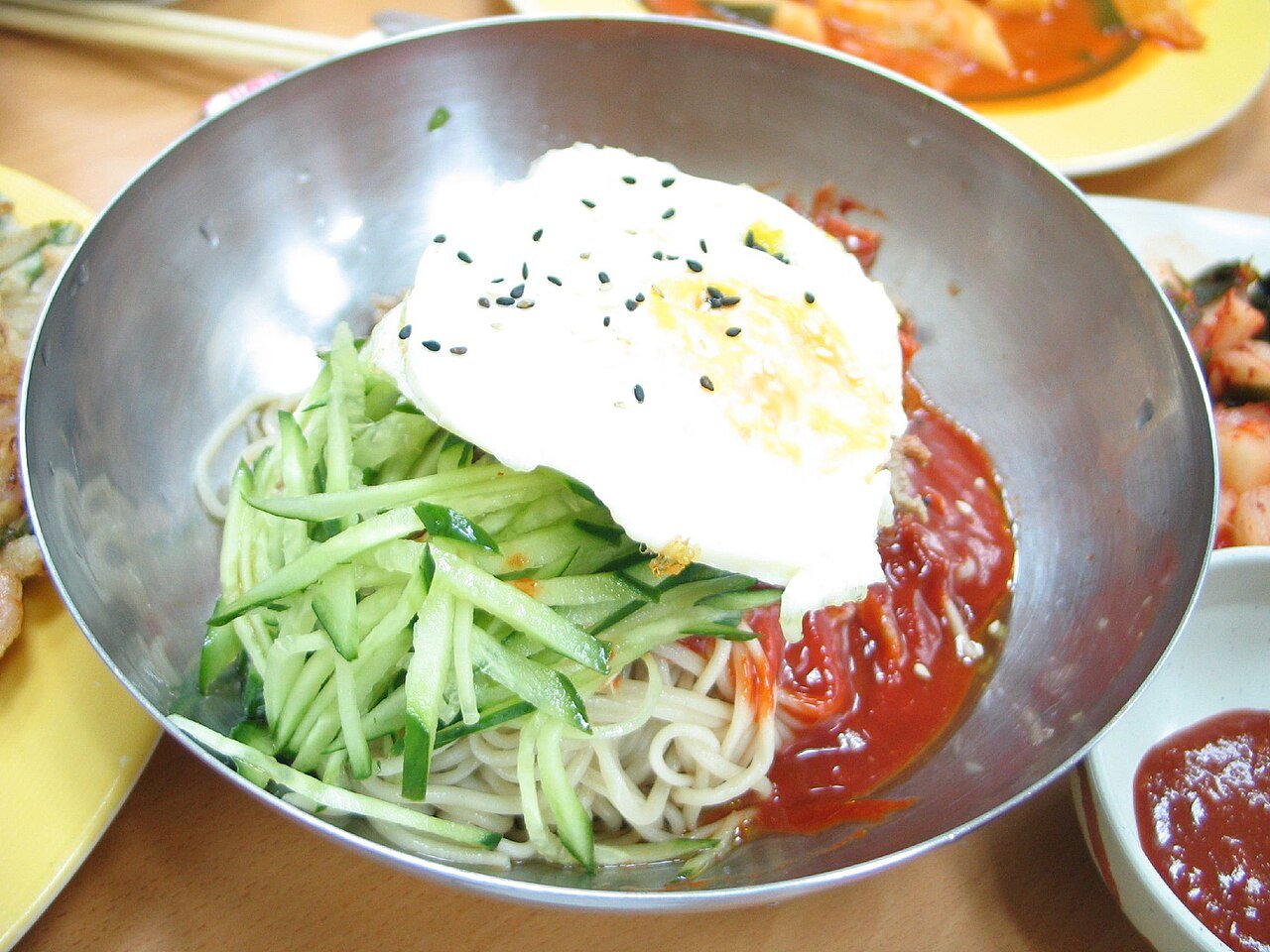
Bibim Guksu Recipe
Ingredients
Method
- Bring a pot of water to a rolling boil and cook the noodles according to the package time, usually 3 to 4 minutes.
- While the noodles cook, whisk together the gochujang, gochugaru, vinegar, sugar, soy sauce, garlic, and sesame oil in a large bowl.
- The moment the noodles are done, drain them and rinse immediately under cold running water, rubbing them gently between your hands, until they’re fully cooled and no longer starchy to the touch.
- Drain well and add the noodles to the bowl with the sauce.
- Toss thoroughly with tongs or chopsticks until every strand is coated.
- Divide between two bowls and top with cucumber, kimchi if using, the egg, and a scatter of sesame seeds.
- Serve immediately.
How to make it
- Bring a pot of water to a rolling boil and cook the noodles per the package time — usually just 3 to 4 minutes for somyeon.
- While they cook, whisk together the gochujang, gochugaru, vinegar, sugar, soy sauce, garlic, and sesame oil in a large bowl. This can be done well ahead of time; the sauce keeps for days.
- The instant the noodles are done, drain and rinse them under cold running water, rubbing the strands gently between your hands until they’re completely cool and no longer feel starchy or slick.
- Drain thoroughly — leftover water dilutes the sauce and makes the dish watery.
- Add the noodles directly to the bowl with the sauce.
- Toss hard with tongs or chopsticks until every strand is coated evenly; this takes more effort than it looks like it should.
- Divide into two bowls and top with cucumber, kimchi if using, the egg, and sesame seeds.
- Serve right away. This dish doesn’t wait around.
Where it goes wrong
Skipping or rushing the cold rinse is the single biggest failure point, covered above, and it’s worth repeating: no rinse, no bite, just warm mush.
The second issue is over-saucing early and under-tossing. The sauce looks like plenty in the bowl, but somyeon soaks it up fast — toss thoroughly rather than gently folding, so the sauce actually coats every strand instead of pooling at the bottom.
Leftovers are genuinely not great here. The noodles keep absorbing the sauce and softening in the fridge, so a next-day bowl is soft and a little bloated rather than the springy dish you made fresh. If you want to meal-prep, keep the sauce and noodles separate and toss them together only right before eating.
One more small thing that trips people up: skipping the second cold-water rinse right before serving if the noodles sat for even five minutes after the first rinse. Somyeon keeps releasing surface starch as it rests, and a quick second pass under the tap fixes any stickiness that crept back in while you were slicing the cucumber.
Frequently asked questions
Can I make bibim guksu ahead of time?
The sauce, yes — it keeps for several days refrigerated and the flavor actually deepens a little. The noodles should be boiled, rinsed, and tossed fresh each time you eat, since they turn soft and gummy if they sit dressed in the fridge.
Can I use regular spaghetti instead of somyeon?
Thin spaghetti works in a pinch, cooked until just tender and rinsed the same way. It has more chew and a slightly different starch profile than somyeon, so the texture won’t be identical, but the dish still works.
How do I make it less spicy?
Cut the gochugaru entirely and use 1 tablespoon instead of 2 of gochujang. The dish will land closer to sweet-and-tangy than spicy, which is still a legitimate way to eat it — plenty of milder versions exist in Korean home cooking.
What to cook and eat next
If cold noodles are what you’re after in hot weather, naengmyeon is the other classic — a chewier buckwheat noodle in an icy broth rather than a dry sauce, and worth trying once you’ve got this one down. For another fast weeknight option that uses the same pantry staples, kimchi fried rice comes together just as quickly with whatever’s already in your fridge. And if gochujang and gochugaru are new to your kitchen, our Korean pantry starter kit explains what to buy first and what can wait.