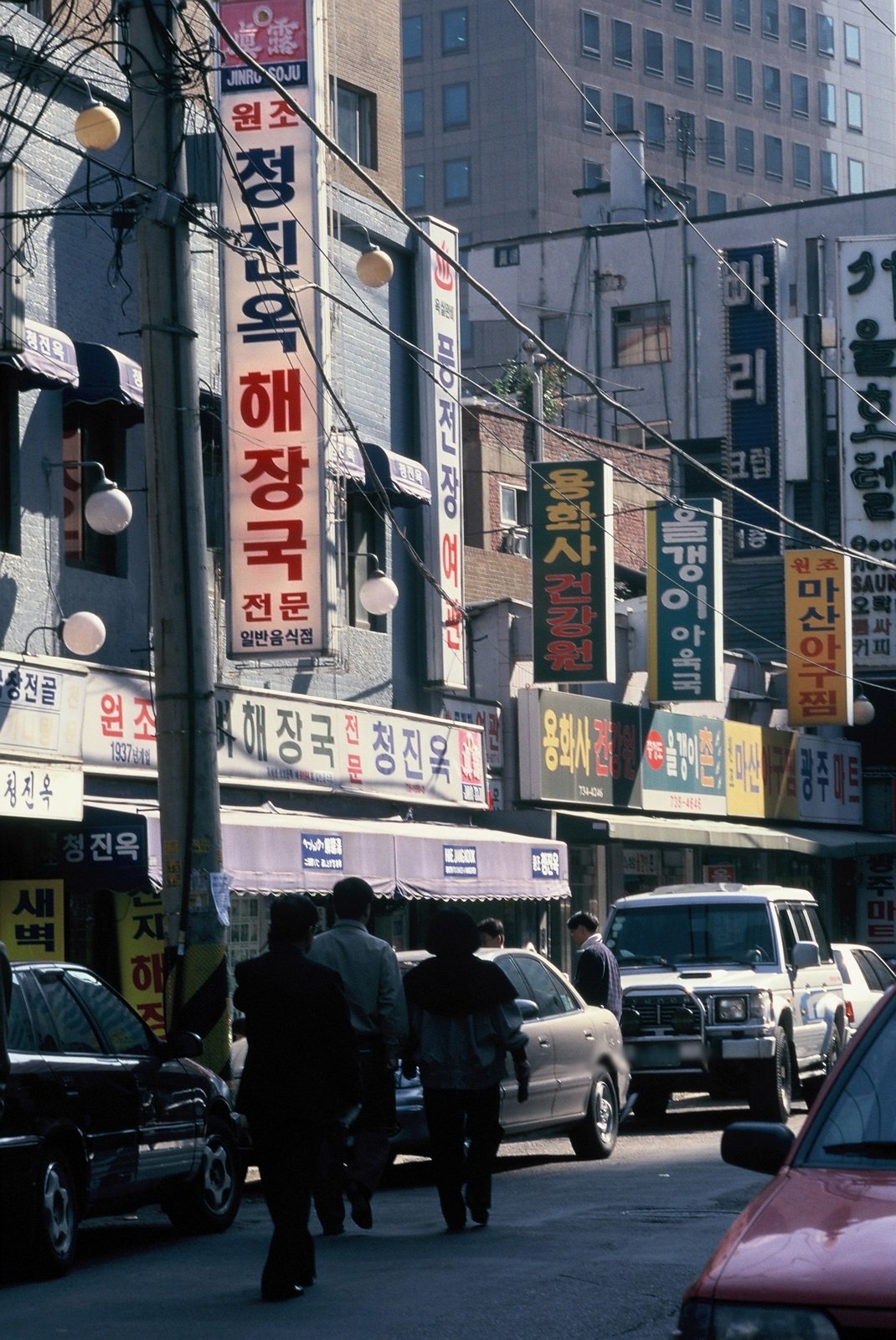
There used to be a whole street for this in Seoul. Cheongjin-dong, tucked behind Jongno, was lined with restaurants that opened before dawn and served one thing: hot soup, for people who’d been up all night and needed something before they went home or back to work. Some of those places are still running decades later, though the neighborhood around them has been rebuilt more than once. That’s the honest context for haejangguk — it’s not a novelty or a meme food, it’s a category of restaurant that Seoul has supported for a very long time, built around the simple fact that a long night eventually needs a hot, salty, easy-to-eat meal at the end of it.
Quick facts
- Total time: about 50 minutes
- Serves: 2
- Difficulty: easy
- Spice level: 2 out of 5
- Vegan-friendly: yes, with the swap noted below
What is haejangguk?
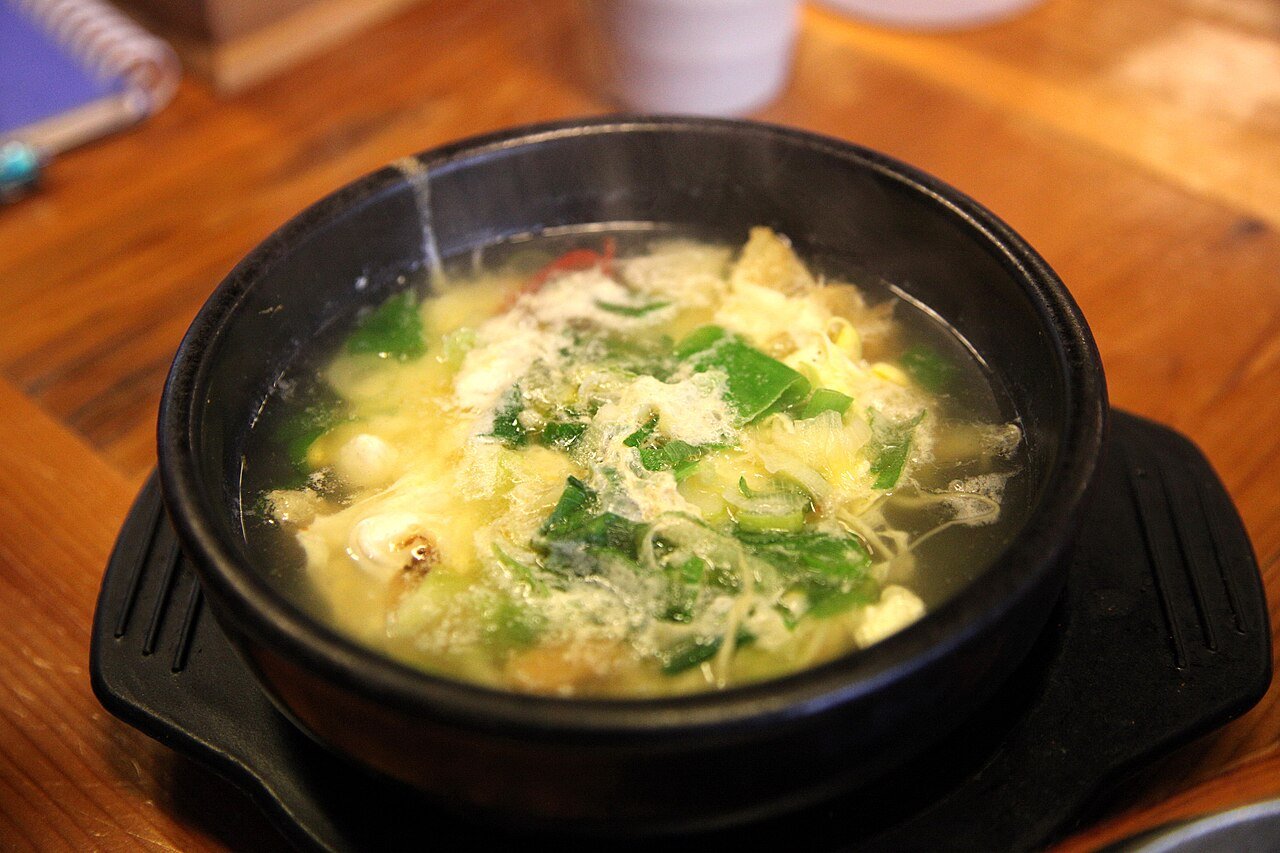
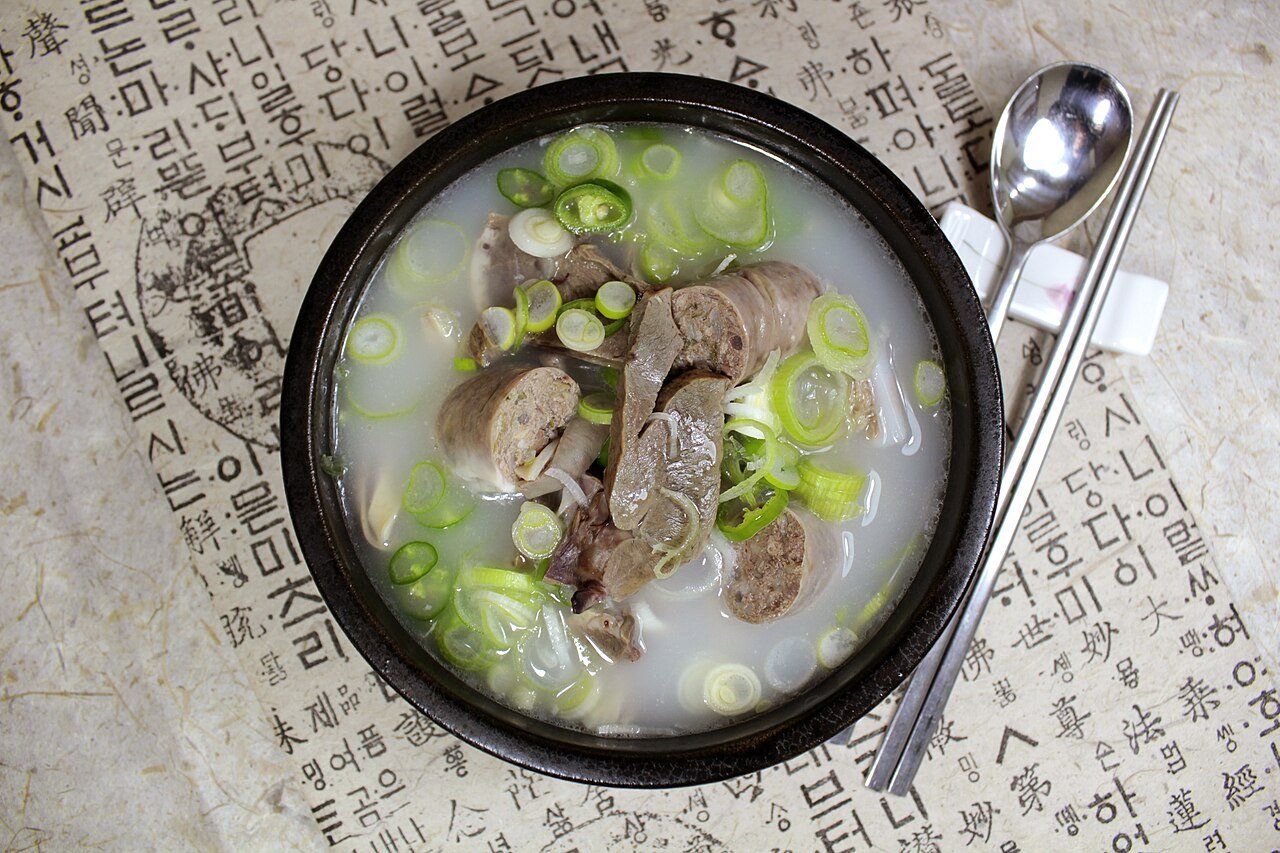
Haejangguk (해장국, roughly heh-jang-gook) translates loosely to “soup that helps the body recover,” and it’s eaten traditionally the morning after a long night out. It isn’t one fixed recipe — it’s a category, and different regions and restaurants fill it in differently. Bukeoguk uses dried, rehydrated pollack. Seonjiguk uses coagulated ox blood, an ingredient most visitors haven’t encountered before. Kongnamul haejangguk is built on bean sprouts (see our kongnamul guk recipe for that version on its own). The version in this recipe is closer to a household style: beef, napa cabbage, and doenjang in a quick anchovy-kelp broth, which is the version most home cooks abroad can actually put together on a weeknight.
To be clear about what this soup is and isn’t: it’s a hot, hydrating, savory meal that Koreans traditionally reach for the morning after a late night, the same way other food cultures have their own go-to dishes for that moment. It isn’t a medical remedy, and no soup reverses what a long night does to you. Treat the name as cultural, not clinical.
What all the regional versions do share is timing and format. Haejangguk restaurants open early — some as early as 5 or 6 a.m. — and close their kitchens by mid-morning, because their customers are people heading home or into work rather than people planning a leisurely brunch. The menu is usually short, sometimes a single soup, and the tables turn over fast. It’s utilitarian food, built for a specific narrow window of the day, which is part of why it doesn’t always translate well onto an all-day restaurant menu abroad.
Ingredients, and what to use instead
| Ingredient (for 2) | Where to get it, or what to use instead |
|---|---|
| Anchovy-kelp broth, 1 liter / 4 cups | The fastest honest base for this soup. Our Korean pantry starter kit covers the broth pack this recipe is built around, and how to make it from scratch if you’d rather |
| Beef shank or brisket, 200 g / 7 oz, thinly sliced | Any butcher. For a meatless bowl, skip it and add extra napa cabbage plus dried shiitake — you lose the meat but keep the savoriness |
| Doenjang, 2 tbsp | Korean grocer. Substitute: red miso plus a pinch of salt, smoother and less funky |
| Gochugaru, 1 tbsp | Korean grocer or online. Substitute: sweet paprika plus a little cayenne |
| Guk-ganjang, 1 tbsp | Korean grocer. Substitute: regular soy sauce plus a pinch of salt |
| Napa cabbage, bean sprouts, scallions, garlic, egg | Standard supermarket |
Haejangguk Recipe
Ingredients
Method
- Bring the anchovy-kelp broth to a simmer in a medium pot.
- Whisk in the doenjang and gochugaru until they dissolve rather than float as clumps.
- Add the beef and napa cabbage. Simmer 15 minutes, until the cabbage has gone fully limp and the beef is tender.
- Stir in the garlic and guk-ganjang. Taste and adjust with salt.
- Add the bean sprouts and simmer 5 more minutes, until they’ve lost their raw crunch.
- Stir in the scallions. If using egg, drizzle it in a thin stream over the simmering surface and let it sit 20 seconds before a gentle stir.
- Finish with a crack of black pepper and serve hot, with rice on the side or spooned directly into the bowl.
How to make it
- Bring the anchovy-kelp broth to a simmer.
- Whisk in the doenjang and gochugaru so they dissolve into the broth rather than sit in clumps on the surface.
- Add the beef and napa cabbage, and simmer 15 minutes until the cabbage is fully soft and the beef is tender.
- Stir in the garlic and guk-ganjang, tasting as you go.
- Add the bean sprouts and simmer 5 minutes more, until they’ve softened but still have a little bite.
- Stir in the scallions. For the egg, drizzle it in slowly over the simmering surface and let it sit 20 seconds before stirring gently, so it forms soft ribbons.
- Finish with black pepper and serve hot, rice alongside.
Tips and storage
This version is built to be quick, which means the broth doesn’t have the depth of an all-night ox bone simmer that some restaurant versions use. If you have the time, swapping in a homemade beef bone broth for the anchovy-kelp base gets you closer to the restaurant style, at the cost of several extra hours.
Leftovers keep 3 days refrigerated and reheat well on the stove. It doesn’t freeze especially well once the egg and bean sprouts are in, since both lose texture — if you’re making a batch to freeze, stop before adding either and finish the pot fresh after thawing.
Frequently asked questions
Does haejangguk actually cure a hangover?
No, and we’d rather say that plainly than dance around it. It’s a hot, salty, hydrating meal that’s traditionally eaten the morning after a long night, which helps the way any real food and fluids help — nothing more specific than that. Treat the name as a cultural label, not a promise.
What’s the difference between the regional versions?
The base idea — a hot soup for the morning after — stays the same, but the protein changes by region and restaurant: dried pollack in bukeoguk, ox blood in seonjiguk, bean sprouts in kongnamul haejangguk. This recipe uses beef and napa cabbage, which is closer to a household style than any single named regional version.
Can I make haejangguk vegetarian?
Yes. Drop the beef, use a kelp-and-dried-shiitake broth instead of the anchovy-kelp base, and add extra napa cabbage and mushrooms to make up the volume. The doenjang and gochugaru carry most of the flavor either way.
Why does this recipe use napa cabbage and not ox blood or dried pollack?
Both of those are authentic to specific regional versions, but they’re genuinely difficult to source outside Korea and, in the case of ox blood, unfamiliar enough to most readers that we’d rather point you toward a version you can actually shop for and finish tonight. If you do find yourself near a restaurant serving seonjiguk or bukeoguk, they’re worth trying — this recipe just isn’t a stand-in for either.
What to cook and eat next
For the bean-sprout-only version of this same idea, kongnamul guk is simpler and quicker, and it’s the base that kongnamul haejangguk is built from. If you’re after something even heartier for a late night, gamjatang is the pork-bone stew that keeps some of the same restaurants open past midnight, and yukgaejang is the spicier, beef-forward cousin of this soup.
If you’re traveling in Korea and end up needing this the morning after a night that ran later than planned, our sister site’s guide to ordering food in Korea covers the basic phrases you’ll need at a haejangguk counter at 7 a.m., where the menu is usually one item and pointing works just fine anyway.