Gamjatang (감자탕) reads as “potato soup,” since gamja is the Korean word for potato. In the pot the potato plays a supporting role: the point is pork spine simmered until the meat slides off the bone and the broth turns red, thick and faintly sticky on the lips. Where cooks run into trouble is not the stew itself but the shopping, because the right bones are rarely on a supermarket shelf outside Korea.
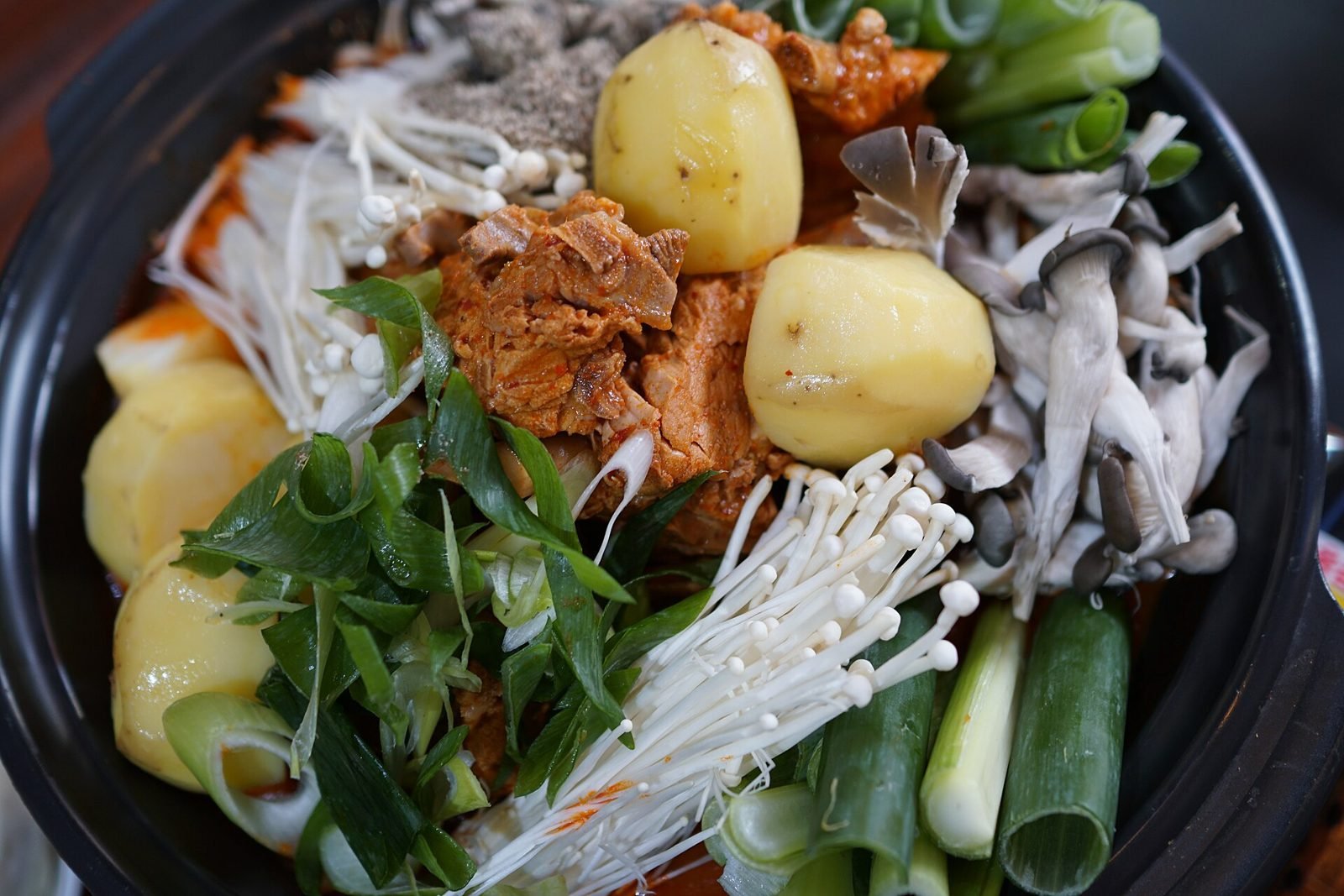

A soup named for the potato, built on the bone
The Standard Korean Language Dictionary defines gamjatang as a stew of pork bones boiled with seasonings such as potato, perilla seed, scallion and garlic. The Korean Folk Encyclopedia calls it a tang, a soup, and names pork spine as the main ingredient, with potato, dried radish greens or cabbage, perilla leaves, scallion and ground perilla seeds in support. The dictionary files the dish as a jjigae and the encyclopedia as a tang, which says something about how loosely the name sits on it.
Why a bone stew carries a potato’s name is disputed. The encyclopedia says the argument is between the pork spine and the potato and leans toward the bone: a tang is something boiled for a long time, and spine, with meat that is hard to pick out of its grooves, is the cut that needs it. It adds that no firm documents show where or when anyone first ate the dish, and that the potato name probably arrived once potatoes went into the pot.
A Seoul Shinmun column lists the competing theories: that the spinal cord was called gamja, that the spine bone itself was called “potato bone,” that a nameless potato stew became gamjatang once spine went in, and that the name comes from gamjeo (甘猪), “sweet pork.” The column also tells a folk story of a Honam bone soup in the Three Kingdoms era, a pot that fed laborers on the Gyeongin railway in 1899 and a flavor refined later in Incheon, and it speculates that diners in 1970s and 80s university districts asking where the potato was may be how it got in. Read those dates as folk history, because the column presents them as a story and not as a documented record. The encyclopedia puts the dish’s social history more plainly: made from inexpensive, easy-to-find spine and potatoes, it began as ordinary people’s food when food was scarce, and franchise restaurants later made it the familiar mass-market dish it is now.
Finding the bones, and what to use instead
The cut is deung-ppyeo (등뼈), pork spine chopped into sections. The Korea Food Promotion Institute’s standard recipe for four uses 1 kg, and the recipe card here uses 1.2 kg (2.5 lb) of spine or neck bones, about 300 g per person, because most of the weight is bone. Outside Korea the spine is rarely on a normal supermarket shelf. The most reliable route is a real butcher shop: ask for meaty pork spine or neck bones cut into sections for soup, and say “for soup” so you do not get clean-picked bones meant for stock. Butchers who break down whole pigs often have the cut even when it is not on display.
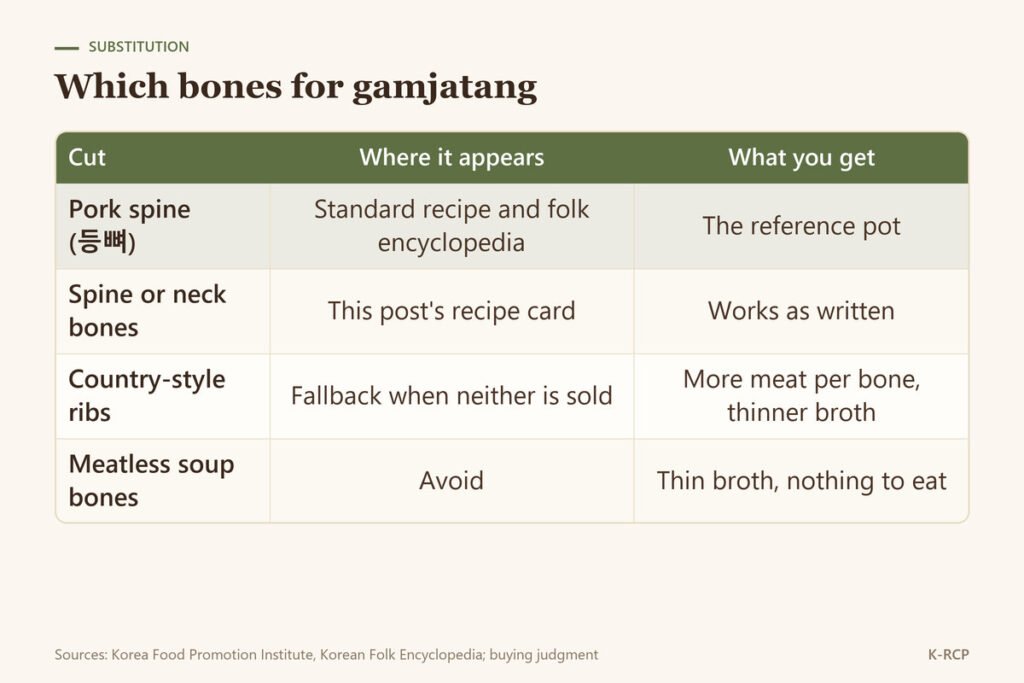
If neither is available, meaty country-style pork ribs are the honest fallback. They give more meat per bone and a thinner broth. Two smaller swaps come from the card: 1 tbsp of red miso stands in for the 2 tbsp of doenjang, and green cabbage can replace napa. The perilla leaves are the one fresh herb that earns its place and go in for the last two minutes only. The encyclopedia says ground perilla seed, pepper and perilla leaves are the usual way to tame the bone’s gamy smell.
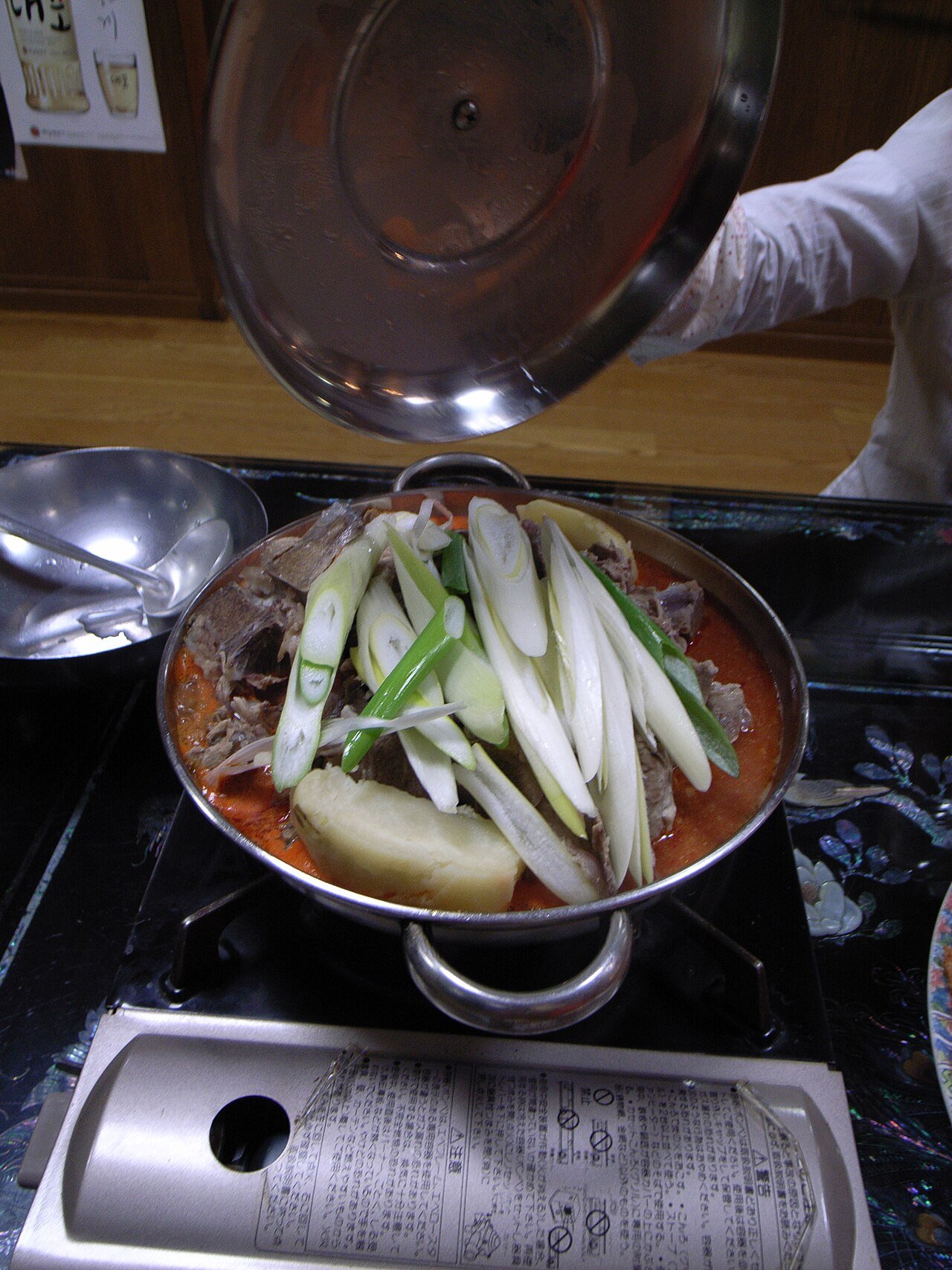
Gamjatang Recipe
Ingredients
Method
- Put the pork bones in a large pot, cover with cold water, and bring to a hard boil for 5 minutes. Drain and rinse the bones and the pot under running water, scrubbing off any grey scum stuck to the bone. Skip this and the broth turns cloudy and smells distinctly of pig.
- Return the rinsed bones to the pot with 1.5 liters / 6 cups fresh water. Bring to a boil, then simmer, partly covered, for 60 minutes, skimming any foam that rises in the first 15 minutes.
- Stir in the gochugaru, gochujang, doenjang, garlic, and ginger. Simmer 10 more minutes so the paste dissolves into the broth instead of sitting on top.
- Add the anchovy-kelp broth and the potatoes. Simmer 15 minutes, until a knife slides into the potato with only slight resistance.
- Add the napa cabbage leaves and perilla seed powder. Simmer 8 minutes, until the cabbage has gone fully soft.
- Stir in the perilla leaves and scallions, season with salt to taste, and simmer 2 more minutes.
- Serve directly from the pot. If anyone wants ramyeon noodles added to the leftover broth once the meat is gone, drop them in at a rolling boil for 3 minutes.
Recipe card photo: Korean soup-Gamjatang-01.jpg by Nagarazoku, CC BY-SA 2.0, via Wikimedia Commons.

The order of the pot: bones, pastes, then vegetables
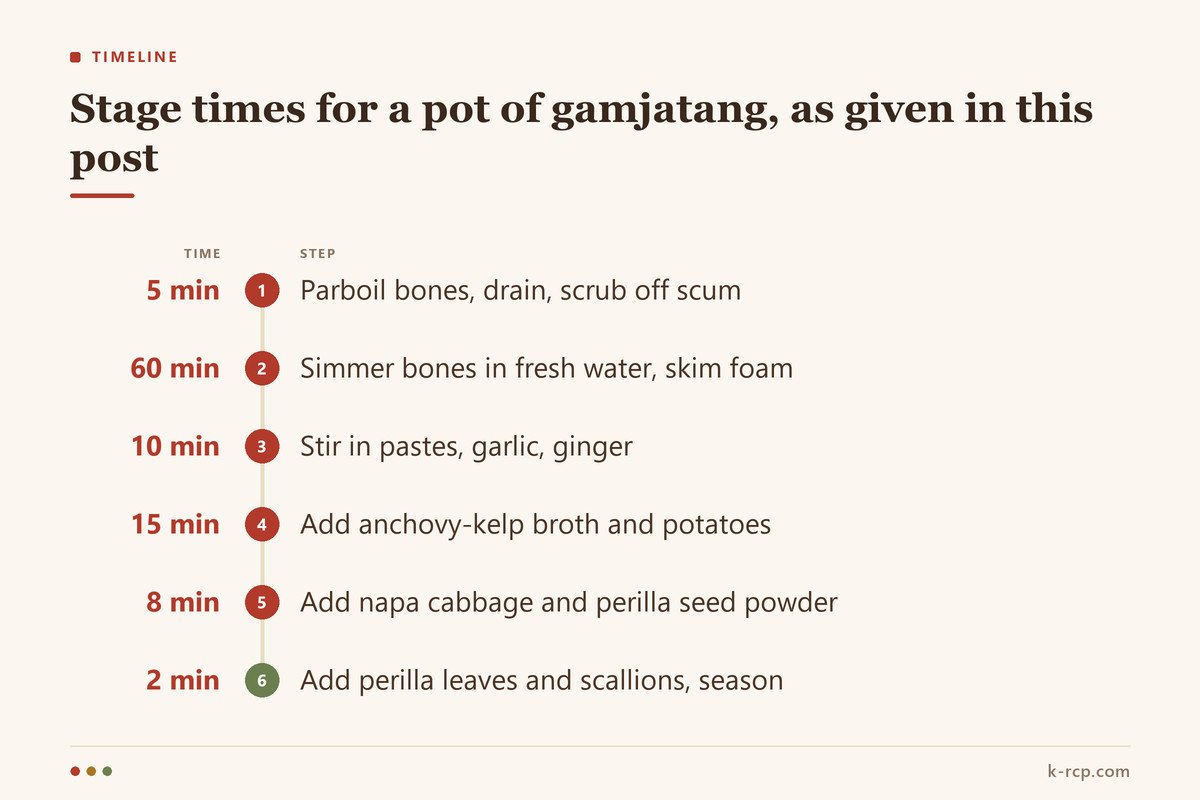
Everything in gamjatang is a matter of sequence, and the card sets it out in six moves.
- Boil the bones hard for 5 minutes in cold water, drain, and scrub off the gray scum under running water.
- Simmer the bones in 1.5 liters of fresh water for 60 minutes, partly covered, skimming foam in the first 15 minutes.
- Stir in the gochugaru, gochujang, doenjang, garlic and ginger and simmer 10 minutes so the pastes dissolve.
- Add the anchovy-kelp broth and potatoes and simmer 15 minutes, until a knife meets only slight resistance.
- Add the napa cabbage and perilla seed powder for 8 minutes.
- Stir in the perilla leaves and scallions, season with salt and cook 2 more minutes.
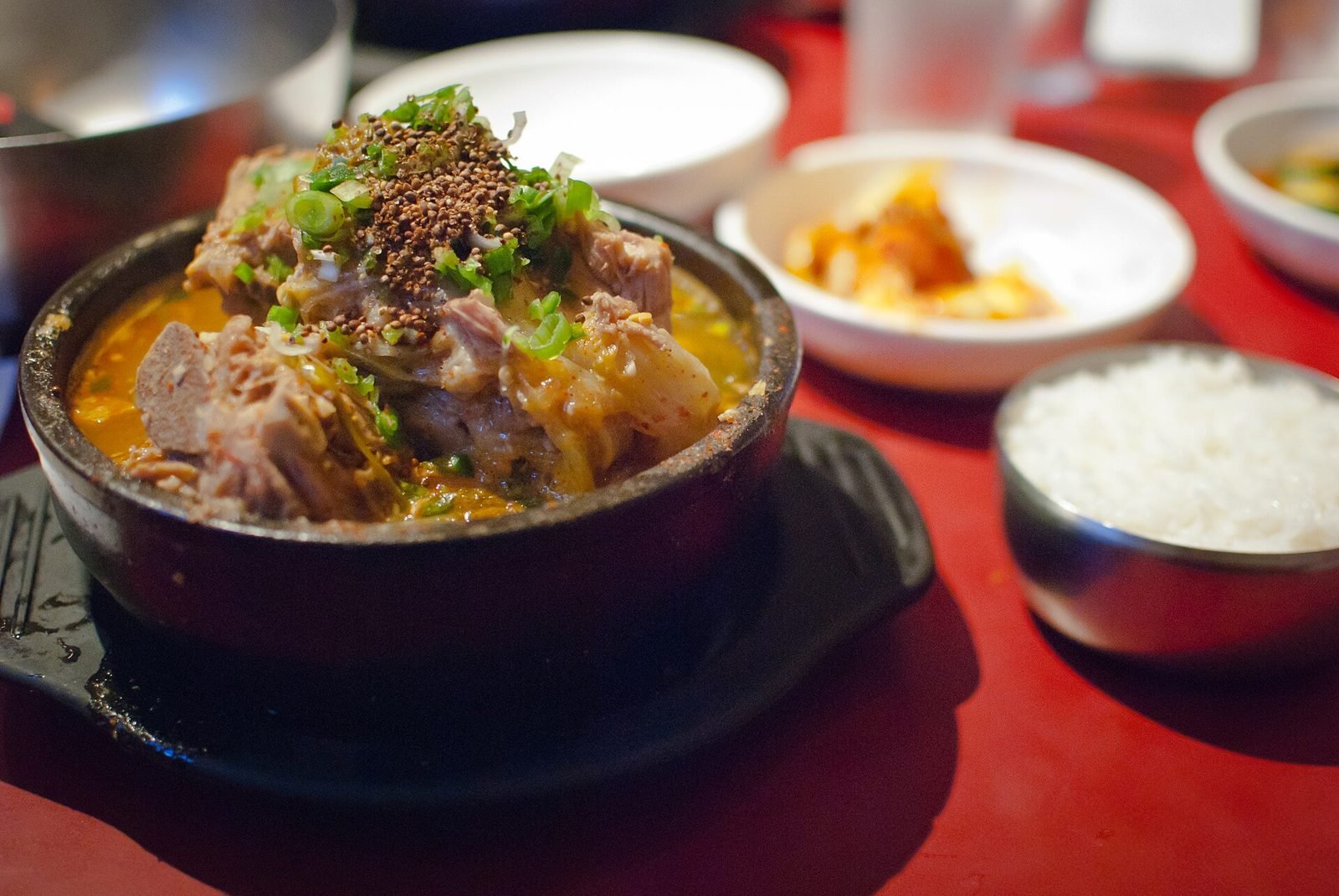

The institute’s recipe takes another road, and comparing the two is useful. For four people it soaks 1 kg of spine in cold water for 3 hours to draw out the blood, boils it for 10 minutes, then simmers it in fresh water with scallion, garlic, ginger, rice wine and potatoes for 40 minutes. Blanched dried radish greens go in for 20 minutes, and onion, perilla leaves, green chili and scallion for the last 5. Ground perilla seed is stirred in off the heat, and the seasoning paste uses gochugaru, gochujang, soy sauce, garlic, ginger and sesame oil with no doenjang. Its tip is to cook with aromatics and rice wine and to take the lid off later in the simmer to reduce the gamy smell. The card here is a shorter, doenjang-based route, and the folk encyclopedia lists doenjang among the usual seasonings, so both are legitimate.
Because the card parboils for 5 minutes without a soak, the scrub matters more. If you can plan ahead, a long soak in cold water with a change of water, as the encyclopedia suggests, is cheap insurance.
Vegetables are where cooks diverge. The encyclopedia lists dried cabbage leaves (uugeoji), dried radish greens (siraegi) and napa cabbage among the options and says the choice produces different gamjatang. The institute’s recipe blanches dried radish greens and simmers them for 20 minutes, while the card adds fresh napa for 8, so expect a chewier, longer-cooked bite from the first and a softer, quicker one from the second.
A quicker pot on the same chili-and-paste base is kimchi jjigae, and sundubu jjigae is the softer, tofu-based option. For a clearer bone soup, try galbitang. The broth of gamjatang thickens as it sits, so reheat leftovers gently with a splash of water.
Three pots that taste wrong, and the step behind each
The broth smells off. The first boil was skipped or rushed. The gray scum that rises in the first five minutes carries blood and impurities and clings to the bones unless they are rinsed under running water before the real simmer. More garlic or ginger will not cover it afterwards, so start over with fresh water if the smell is already in the pot.
The broth is thin and pale. The bones did not get their full hour. Even the institute’s recipe spends 40 minutes on bones and potatoes before any greens go in, so the long simmer is the point and not a step to trim. Give them the full 60 minutes and keep the pot partly covered, as the card says.
The seasoning tastes raw or gritty. The pastes went in late or together with the cabbage and never dissolved, so the soup is sharp at the top and flat underneath. Stir the gochugaru and fermented pastes in early, simmer them the full 10 minutes, and add the perilla seed powder with the cabbage so it thickens the broth instead of clumping.