You’ve got a bag of soybean sprouts going soft in the crisper drawer, twenty minutes before dinner needs to be on the table, and no real plan. This is exactly the situation kongnamul guk was built for. It’s the soup Korean households make when there’s nothing else going on — no special occasion, no long shopping list, just sprouts, water, and a handful of pantry basics you probably already have open.
Quick facts
- Total time: 20 minutes
- Serves: 2, as a side soup with a full meal
- Difficulty: easy
- Spice level: 1 out of 5, optional to add any at all
- Vegan-friendly: yes, with the broth substitute noted below
What is kongnamul guk?
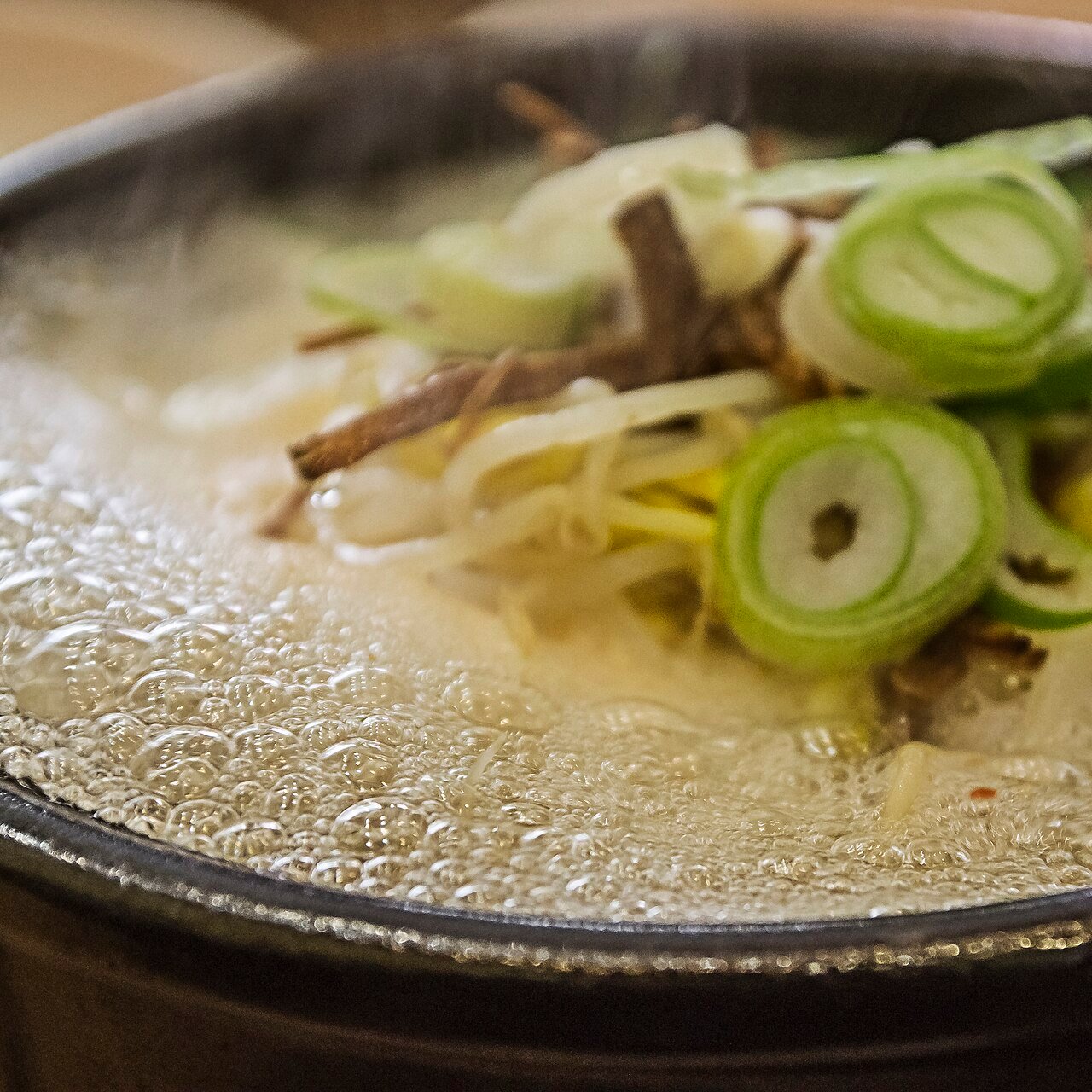
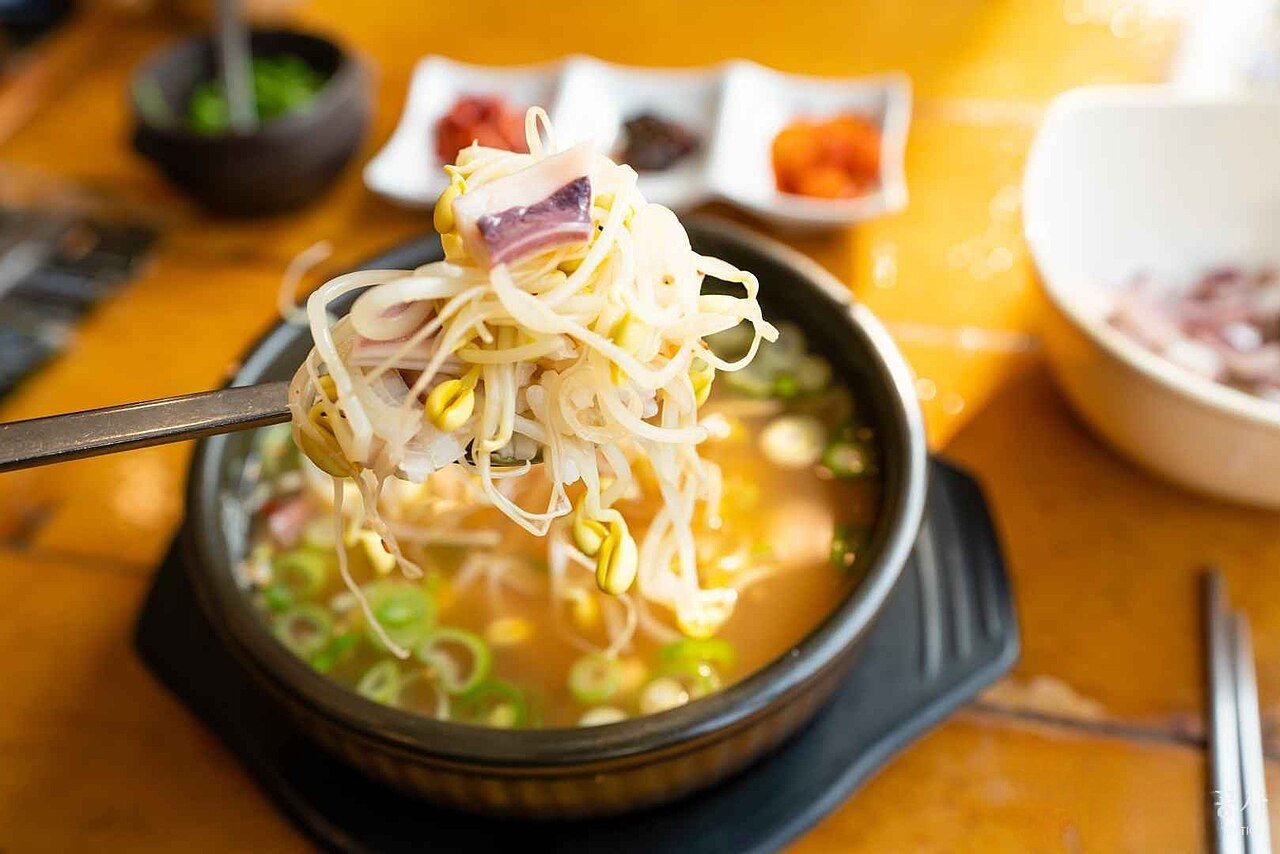
Kongnamul guk (콩나물국, roughly kohng-nah-mool gook) is a clear, mild soup made from soybean sprouts simmered briefly in anchovy-kelp broth, seasoned simply with garlic, salt, and a little soy sauce. It’s a side soup rather than a main event — the kind of thing that shows up alongside rice and a few banchan on an ordinary weeknight, not something anyone orders as the centerpiece of a meal.
It’s also the base of kongnamul haejangguk, a version built up with more seasoning and sometimes rice added directly into the bowl, served as a lighter alternative to heavier hangover soups. If that’s what brought you here, our haejangguk recipe covers that heartier direction; this one stays simple.
There’s also a specific regional reputation attached to this soup. Jeonju, in the southwest, is known for its version, usually served with a raw egg cracked into the still-boiling bowl at the table and a side of rice that some diners drop straight in. It’s a small enough dish that most households don’t think of it as a “recipe” so much as a habit — the thing that happens automatically to a bag of sprouts before they go bad.
Ingredients, and what to use instead
| Ingredient (for 2) | Where to get it, or what to use instead |
|---|---|
| Fresh soybean sprouts, 300 g / 4 cups | Korean or pan-Asian grocer, sometimes labeled just “bean sprouts.” Substitute: mung bean sprouts, thinner and wetter — a genuinely different soup, not a close match, but still edible |
| Anchovy-kelp broth, 700 ml / 3 cups | Covered in detail in our Korean pantry starter kit. Substitute: water plus 1 tsp fish sauce for a faster, noticeably flatter version |
| Guk-ganjang, 1 tsp, optional | Korean grocer. Substitute: a smaller amount of regular soy sauce |
| Garlic, scallions, sesame oil, sesame seeds | Standard supermarket |
For a fully vegan pot, build the broth from dried kelp and a couple of dried shiitake instead of anchovy, and use a soy-based substitute in place of any fish sauce.
Kongnamul Guk Recipe
Ingredients
Method
- Bring the anchovy-kelp broth to a boil in a pot with a tight-fitting lid.
- Add the bean sprouts and garlic. Cover immediately and do not lift the lid for 5 minutes — letting the steam escape early is the most common reason this soup turns out smelling grassy instead of clean.
- After 5 minutes, lift the lid, stir once, and add the salt and guk-ganjang if using.
- Simmer uncovered for 3 to 5 more minutes, until the sprouts have softened but still have a slight snap.
- Stir in the scallions and gochugaru, if using, and simmer 1 more minute.
- Take the pot off the heat, stir in the sesame oil, and top with sesame seeds before serving.
How to make it
- Bring the broth to a full boil in a pot with a lid that actually fits — this soup lives or dies a little on that lid.
- Add the sprouts and garlic, cover immediately, and leave the lid on for a full 5 minutes without peeking. This isn’t superstition: bean sprouts release a sulfurous smell as they cook, and letting the steam escape partway through is the single most common reason home versions of this soup taste grassy or slightly off, rather than clean.
- After 5 minutes, lift the lid, stir once, and season with salt and guk-ganjang.
- Simmer uncovered for another 3 to 5 minutes, tasting a sprout for doneness. You want them tender with a little bit of remaining snap, not limp.
- Stir in the scallions and gochugaru if you’re using it, and give it one more minute.
- Off the heat, stir in the sesame oil and finish with sesame seeds.
Choosing sprouts at the store
Look for sprouts that are firm and pale, with the little yellow bean head still attached and no visible sliminess along the stem. Soybean sprouts are thicker and crunchier than mung bean sprouts, with a small yellow cap at the tip — that cap is the giveaway if a label is missing or unclear at a general grocer. They should smell clean, almost like nothing at all; a sour or ammonia-like smell means they’ve turned and should go in the compost, not the pot.
Fresh sprouts also cook a little differently depending on how recently they were harvested. A very fresh bag, bought the same day, can take a minute or two less than the timing above; a bag that’s been sitting in your fridge for a few days benefits from the full 8 to 10 minutes covered and uncovered combined; so treat the times in this recipe as a starting point and check for that slight remaining snap rather than watching the clock exactly.
Tips and storage
The lid rule is the one thing worth remembering from this whole recipe. If you’re doubting it, cook two small batches side by side once — lid on the whole time versus lifted halfway through — and taste the difference yourself. It’s more noticeable than it sounds like it should be.
This soup is best fresh; the sprouts keep softening in the fridge and lose their snap within a day. It still tastes fine on day two, just softer, and it’s not really a candidate for freezing — sprouts turn watery and limp after thawing.
Frequently asked questions
Why shouldn’t I lift the lid while it cooks?
Bean sprouts give off a distinct, slightly sulfurous smell as they simmer. Kept under a closed lid, that smell cooks off cleanly into the broth as part of the flavor. Let the steam escape partway through and you tend to catch it at its rawest, which reads as grassy or off rather than savory.
Can I make it spicy?
Yes — the gochugaru in the recipe is already an option, and you can double it, or stir in a spoonful of gochujang at the end for a heartier, more filling version closer to kongnamul haejangguk.
What’s the difference between kongnamul guk and kongnamul gukbap?
Kongnamul guk is the soup on its own, usually served in a small bowl alongside rice. Kongnamul gukbap is the same soup with rice added directly into the bowl and simmered together briefly, turning a side soup into a full one-bowl meal. If you’re deciding between them, guk is the better fit for a soup that sits alongside other dishes, and gukbap is the better fit for one bowl that has to cover the whole meal on its own.
Can I use frozen bean sprouts?
You can, though the texture suffers — frozen sprouts have already broken down somewhat and turn soft almost immediately rather than holding any snap. If fresh sprouts genuinely aren’t available, cut the covered simmering time in step 2 by about half, since frozen sprouts release their moisture and cook through much faster than fresh ones do.
What to cook and eat next
If this simple soup worked for a busy night, doenjang jjigae is a similarly quick, pantry-based option with more body to it. And if a bag of bean sprouts led you here because you needed something the morning after a late night, our full haejangguk recipe builds on this same base with beef and more seasoning.