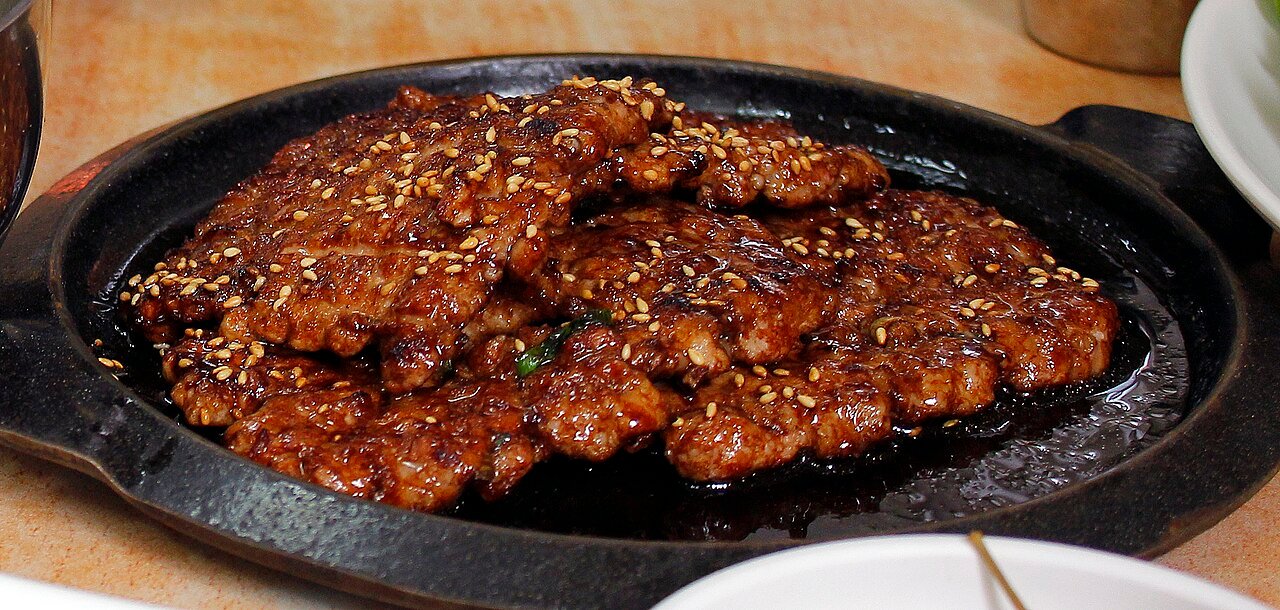
A grill of tteok-galbi in a Gwangju restaurant looks nothing like what most people picture when they hear “Korean short rib.” There’s no bone fan, no rack laid across the coals. Instead there are small, dense ovals sitting directly on the grate, each one glazed dark from a soy-sugar marinade, hissing and slowly caramelizing at the edges while the cook flips them with tongs one at a time, watching the color rather than a timer. The name gives away the texture before you’ve tasted it: tteok means rice cake, and this dish is called that not because there’s any rice in it, but because a well-made patty has that same dense, springy chew.
What it actually is
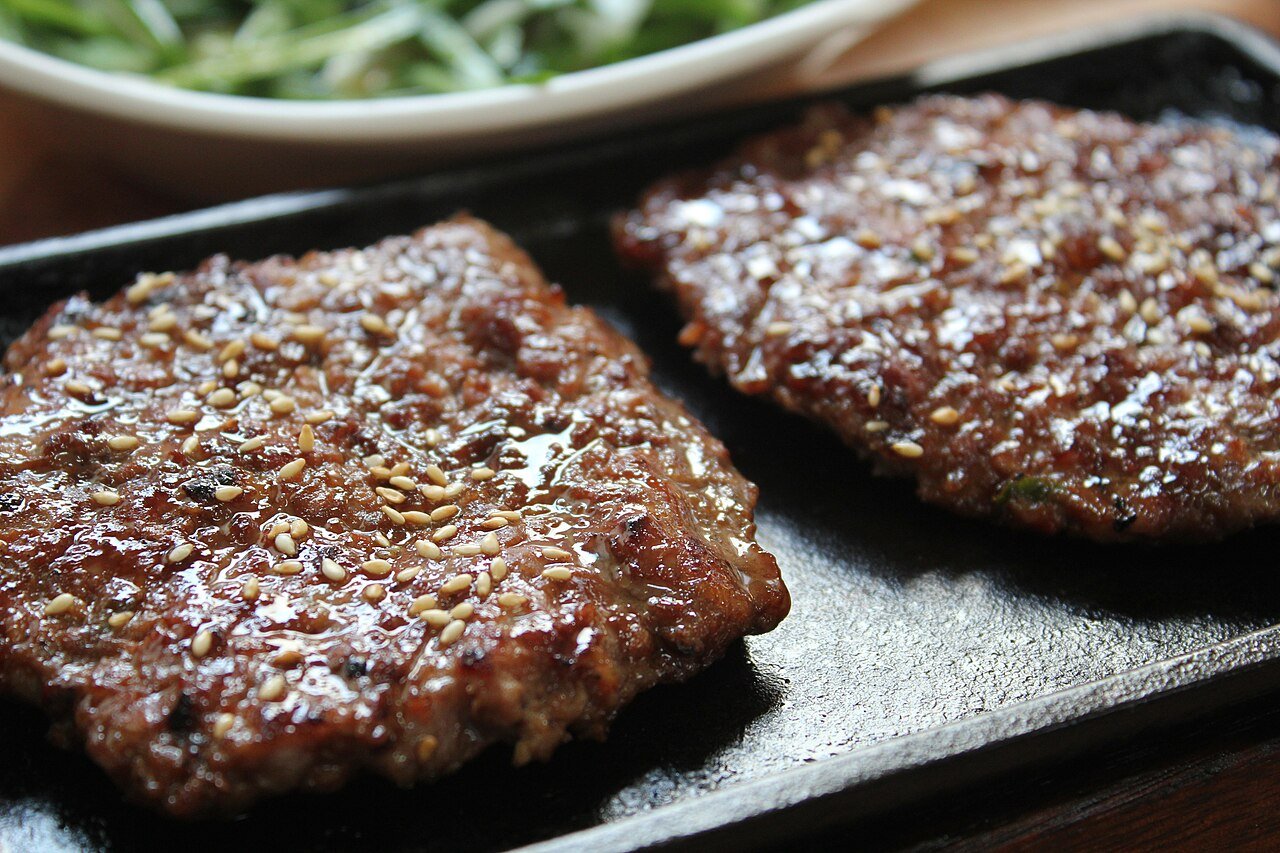
Tteok-galbi is short rib meat, taken off the bone and minced rather than left whole, mixed with grated pear or onion, garlic, soy sauce, and sugar, then formed into small patties and grilled. It’s the Korean answer to a question a lot of cuisines eventually ask: what do you do with the flavorful trim and odd cuts around the rib once the presentation-ready pieces are gone? The answer here is to mince it fine, bind it, and grill it as its own dish rather than folding it into something else. Traditionally the patties were even shaped around a small piece of rib bone left in as a handle, though most home versions and plenty of restaurants skip that step entirely.
It shares its marinade logic with bulgogi almost exactly — soy sauce, sugar, grated pear, garlic, sesame oil — which makes sense, since both dishes come from the same tradition of tenderizing and sweetening beef before high heat. The difference is texture rather than seasoning: bulgogi is thin-sliced whole muscle, tteok-galbi is ground and reshaped, and that single change in preparation is what gives it its distinctive chew.
On screen
Grilled short rib patties turn up more than once in Korean food dramas, and one of the more memorable stretches is in Let’s Eat, the 2013 series built almost entirely around its characters eating — the whole premise is a group of neighbors bonding over meals, and grilled meat gets more screen time than the actual plot in some episodes. It’s a small, uncomplicated pleasure of a show, and the food is filmed like it matters more than anything the characters say to each other, which, in a series like this, is more or less the point.
Tteok
Ingredients
Method
- Combine the minced short rib, grated pear, grated onion, garlic, soy sauce, sugar, sesame oil, pepper, pine nuts, and starch in a bowl.
- Mix by hand, folding rather than squeezing, just until everything is evenly distributed — about 1 minute. Overworking it toughens the meat.
- Divide into 8 portions and shape into oval patties about 1.5 cm / just over half an inch thick, pressing a slight dimple into the center of each so they cook flat instead of doming.
- Cover and refrigerate for 20 to 30 minutes. This firms the fat and holds the patties together on the grill.
- Heat a grill pan, cast iron pan, or charcoal grill to medium-high and brush lightly with oil.
- Cook the patties for 3 to 4 minutes per side, until a deep brown crust forms and the center reaches 71°C / 160°F on a meat thermometer.
- Rest for 2 minutes, then scatter with scallions and sesame seeds before serving.
The binding problem
Here’s where most home attempts fall apart, sometimes literally. Ground short rib on its own, formed into a patty and thrown on a grill, tends to crumble the moment it’s flipped — there’s no connective structure holding it together the way a whole muscle cut has. Three things fix this, and skipping any one of them makes the patty more fragile.
Grated pear or onion isn’t just for sweetness. The liquid it releases hydrates the meat and, along with the sugar and soy, helps the surface proteins bind slightly as they cook, giving the patty just enough structure to hold its shape. A tablespoon of starch does more of that same work, acting the way it does in a lot of ground-meat cookery — coating the meat proteins and helping them set together under heat rather than fry loose. And chilling the shaped patties for 20 to 30 minutes before they hit the grill firms the fat enough that the patties hold their oval shape through the first flip, which is exactly the moment a warm, loose patty tends to split.
Mixing technique matters too, in the opposite direction from what most people assume. Overworking the meat — kneading it hard, squeezing it repeatedly — actually toughens it by overdeveloping whatever protein structure is there, leaving you with a patty that’s dense in the bad way rather than the pleasantly chewy way. A minute of gentle folding is enough.
Temperature is different here than in a whole cut
This is worth being explicit about, because it trips people up if they’ve cooked a lot of steak. Whole-muscle Korean pork dishes like bossam are often simmered well past any minimum safe temperature, purely for texture, since bacteria on a whole piece of meat live on the surface and get killed off long before the center does. Ground meat is different: mixing and forming the patty distributes whatever was on the surface all the way through it, so the center needs to actually reach a safe temperature, not just look done. For beef, that’s 71°C / 160°F at the thickest point — check it with a thermometer the first few times you make this, rather than guessing from color, since the pear and soy marinade darkens the meat and can make an underdone center look further along than it is.
Ingredients, and what to use instead
| Ingredient | Where to get it, or what to use instead |
|---|---|
| Boneless short rib meat, 500 g | Ask a butcher to mince it, or buy short rib and pulse it in a food processor yourself for better texture control. Substitute: a mix of minced short rib and pork shoulder — softer, slightly less rich |
| Asian pear, 1/4, grated | Korean or Asian grocers, sometimes regular supermarkets in the produce section. Substitute: grated apple, or just grated onion — less sweet, still tenderizes |
| Pine nuts, 1 tbsp, chopped | Traditional but pricey. Substitute: chopped walnuts or cashews for similar crunch, slightly different flavor |
| Cornstarch, 1 tbsp | Standard binder. Potato starch works identically if that’s what’s in your pantry |
Where it goes wrong
Skipping the chill before grilling is the most common cause of a patty that splits apart on the first flip — give it the full 20 minutes. The second is grilling over heat that’s too high; the sugar in the marinade burns before the center cooks through, leaving a bitter, blackened crust over a raw middle. Medium-high, not high, and patience with the flip.
Frequently asked questions
Can I make tteok-galbi without a grill?
Yes. A ridged cast iron grill pan or even a regular heavy skillet on the stovetop does the job well — the point is even, direct heat and good contact for the crust, not the specific equipment. Just keep the heat at medium-high rather than cranking it, for the same burning-sugar reason as above.
Is tteok-galbi the same as an American hamburger patty?
Only in the loosest sense of “ground meat, formed, grilled.” The seasoning, the sweet-savory soy marinade, the pear tenderizer, and the dense, springy texture from the starch binder are all specifically Korean, and the result eats nothing like a burger — no bun, usually served with rice and lettuce for wrapping, closer in spirit to tteokbokki or grilled bulgogi than to Western burger cooking.
What should I serve alongside it?
Rice, lettuce for wrapping, and a simple ssamjang dip cover the basics. For something with more of a party feel, it pairs well next to budae-jjigae — another dish that shares an episode of Let’s Eat in spirit, if not the same actual scene — since both are built around communal, help-yourself eating.
Related
If you like the idea of Korean short rib but want it in a faster, thinner form rather than ground and shaped, LA galbi takes the same rib and cuts it across the bone instead, for a dish that grills in minutes rather than needing a chilled, formed patty.