Why does a Korean short rib have an American city’s name on it?
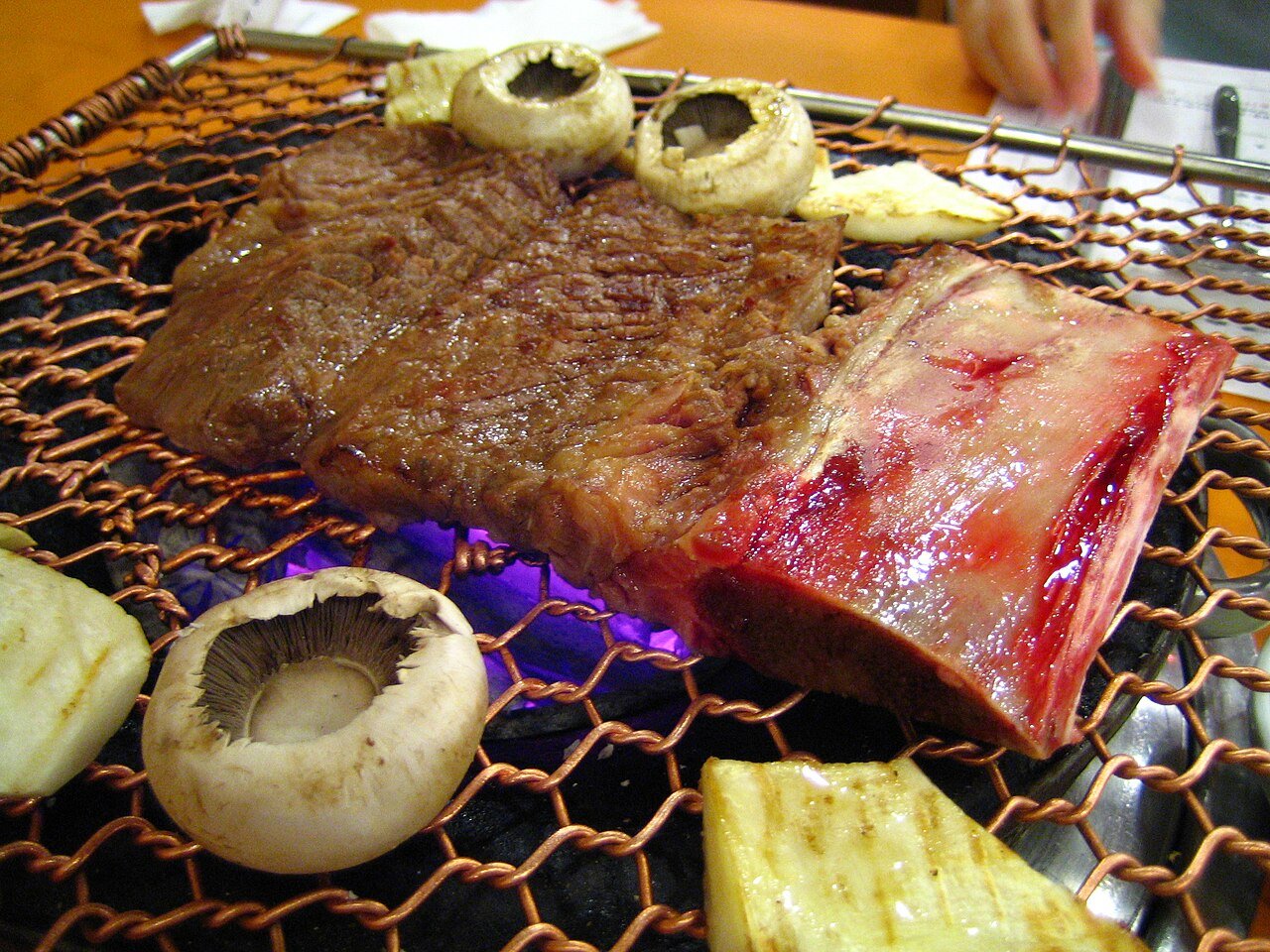
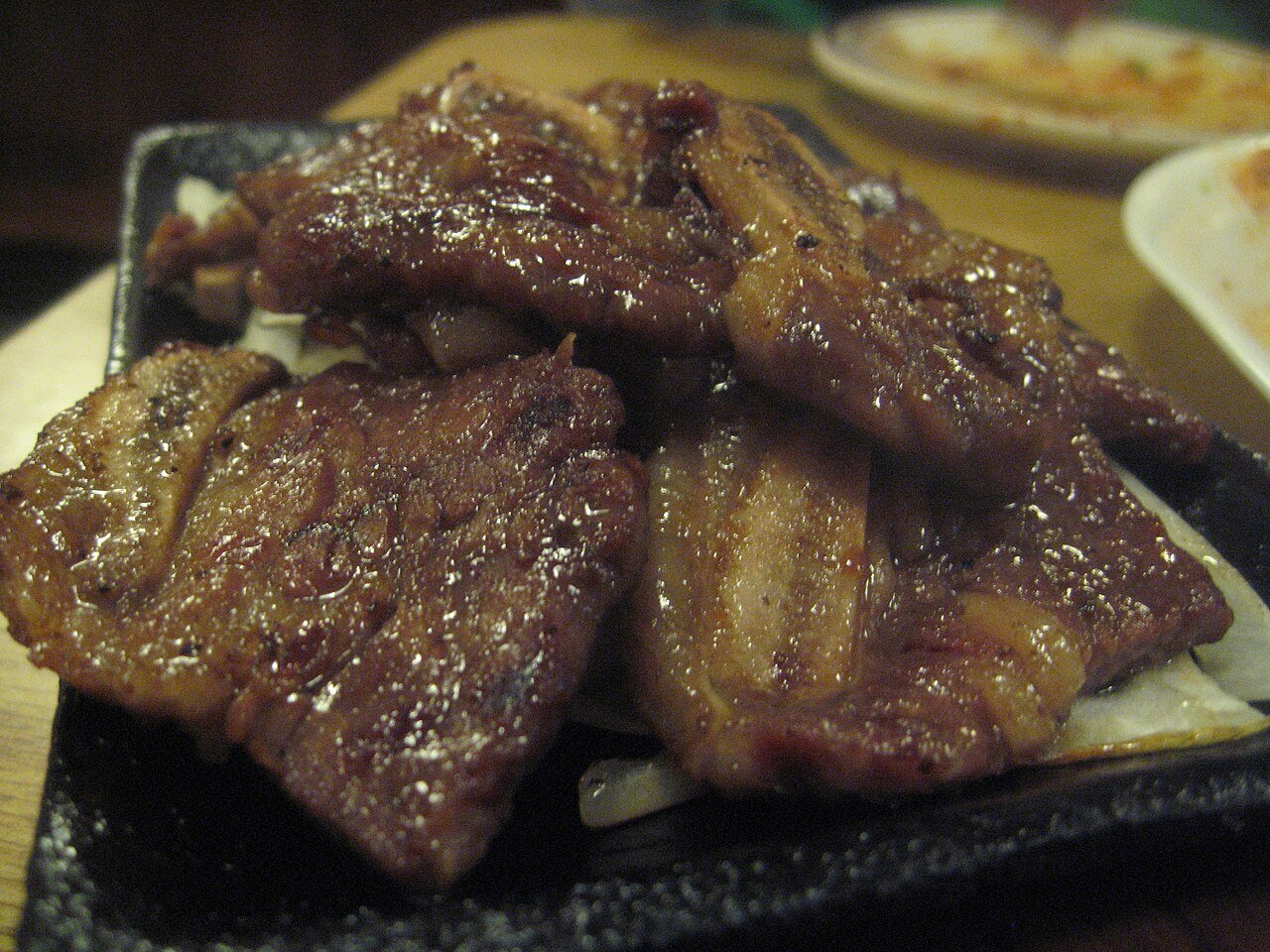
It’s not a marketing gimmick and it’s not a mistranslation. LA galbi refers to a specific way of cutting the rib — thin strips sliced across the bone rather than between the bones, so each strip carries three or four small circular bone cross-sections running down its length instead of one long bone on the side. That cut has nothing to do with California by nature. It has to do with saws.
The actual story, as best anyone can piece it together
Traditional Korean butchery cut galbi lengthwise between the ribs, using a cleaver, which is the “English cut” most people picture when they think of a rack of short ribs — long, bone-in strips with the meat sitting to one side of a single rib bone. Cutting across the bone instead, so that one strip crosses several ribs at once, isn’t something a cleaver handles well; you need a band saw with enough force to cut clean through bone without shattering it.
Korean immigrant butchers and grocers in Los Angeles, working with the industrial meat-cutting equipment common in American supermarkets and wholesale suppliers, had exactly that kind of saw on hand, and the cross-cut style is widely credited to having taken off there first, as a practical way to use equipment that was already sitting in the shop. Thin strips also cook fast, which mattered for a community cooking in smaller kitchens without the space or patience for a long charcoal setup every night. The style caught on, got a name tied to where it became popular, and eventually made its way back to Korea itself, where “LA galbi” is now a completely normal thing to order at a barbecue restaurant — a Korean dish that picked up an American place name on its way to becoming standard, and then imported that name right back home.
LA Galbi Recipe
Ingredients
Method
- Combine the grated pear, onion, garlic, soy sauce, sugar, sesame oil, mirin, and pepper in a bowl or zip-top bag.
- Add the short ribs and the chopped scallions, turning to coat every piece.
- Marinate in the refrigerator for at least 4 hours, or up to 24 hours if using pear (limit kiwi-based marinade to 2 to 4 hours).
- Remove the ribs from the fridge 15 minutes before cooking so they aren’t ice-cold going onto the heat.
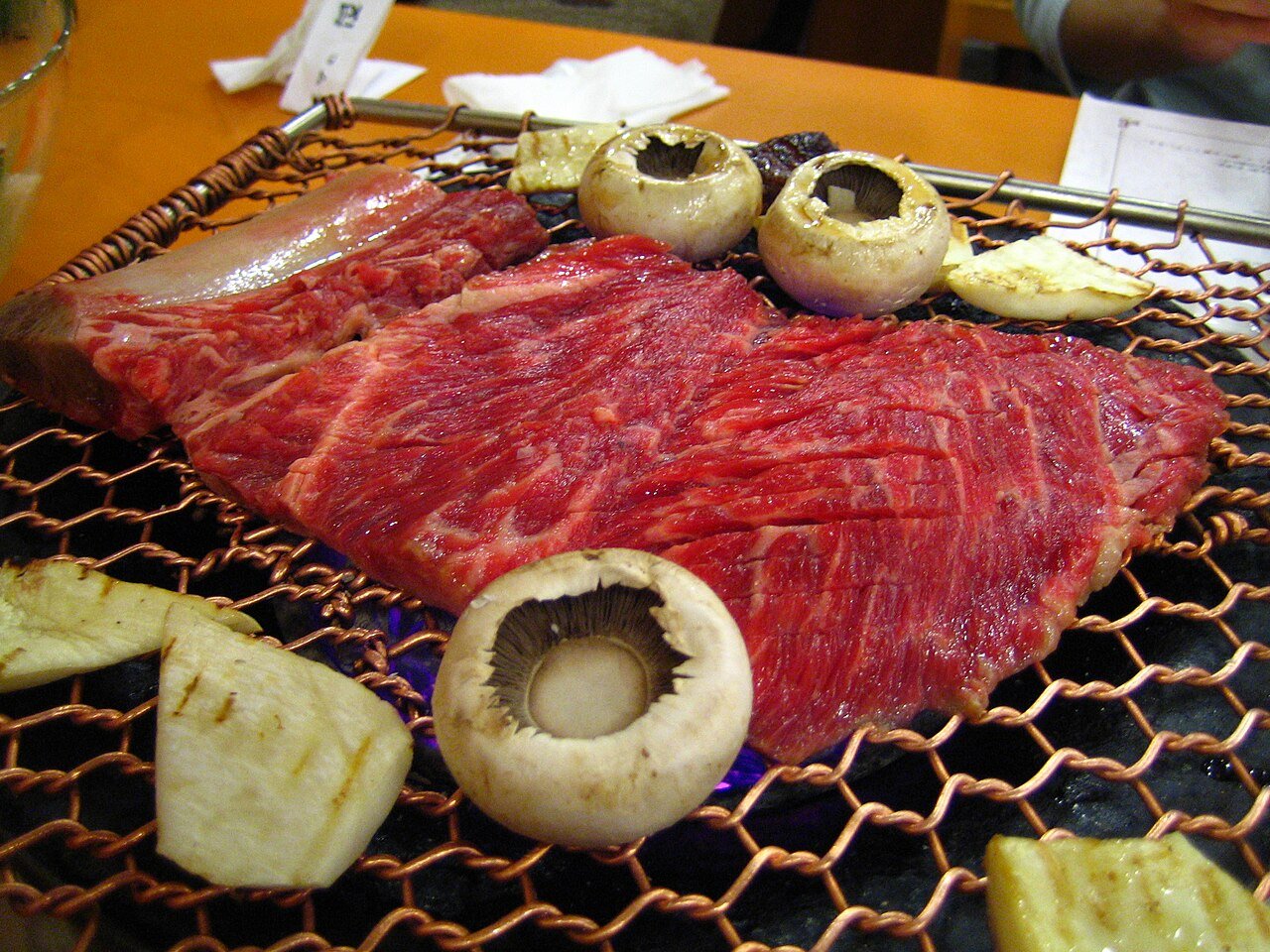
- Grill version: cook over high heat on a charcoal or gas grill for 60 to 90 seconds per side, watching closely, since the sugar in the marinade burns fast on this thin a cut.
- Oven version: broil on a rack set close to the top element for 3 to 4 minutes per side, door slightly ajar, until the edges char and the center is just cooked through.
- Rest 2 minutes, scatter with sesame seeds and extra scallion, and serve with rice and lettuce.
Why the cut changes everything about how you cook it
This is the part that trips people up if they’ve only ever grilled a whole-muscle steak. LA galbi is thin — about a centimeter, a little over a third of an inch — and cut across bone, which means it has almost none of the thickness a regular steak relies on to stay juicy through a slow sear. It cooks in minutes, not the 8 to 10 you’d give a strip steak. Treat it like a thick cut and give it that kind of time over the same heat, and you’ll end up with something dry and overcooked before the outside even fully chars.
High heat and speed are the whole method: 60 to 90 seconds a side over a hot grill is usually enough, and you’re watching for browning and slight char at the edges rather than timing it by the clock. The sugar in the marinade is working against you here too — it caramelizes fast at high heat, which is what gives LA galbi its characteristic dark, glossy crust, but it also burns fast if you look away, so this isn’t a “walk away and check later” cut of meat.
Two ways to cook it
A charcoal grill is the traditional setting and gives the best char and smoke, but plenty of Korean households cook LA galbi in an oven broiler when a grill isn’t practical, and it works well as long as you respect the same speed. Set the rack close to the top heating element, broil on high, and crack the oven door slightly so you can watch the ribs rather than relying on a timer — broilers vary enough in intensity that “4 minutes” on one oven might be “2 minutes and starting to burn” on another. The tell is the same either way: dark, slightly charred edges, a center that’s just barely pink to fully cooked through, and a good three to four minutes total per side depending on your heat source.
The marinade, and the tenderizer trade-off
Grated Asian pear is the classic tenderizer here, and it’s gentle enough that you can marinate the ribs for a full 24 hours without the texture suffering. Kiwi is a common substitute when pear isn’t available, but it’s a meaningfully stronger enzymatic tenderizer — actinidin, the enzyme in kiwi, breaks down muscle protein fast, and a cut this thin can go from tender to genuinely mushy within a few hours if you leave it too long. If you’re using kiwi, treat 2 to 4 hours as the ceiling, not a starting point.
This batch of recipes has ended up covering the full range of what “meat cooking” actually means in Korean food: jokbal needing two full hours of low, patient braising to break down collagen, and LA galbi needing about four minutes total over blazing heat to go from raw to charred. Same broad category of cooking, opposite ends of the clock.
Ingredients, and what to use instead
| Ingredient | Where to get it, or what to use instead |
|---|---|
| LA galbi, flanken-cut, 1 kg | Korean grocers almost always stock it pre-cut and labeled. A regular butcher may need to special-order the cross-cut style, since it requires a band saw most small shops don’t have |
| Asian pear, 1/2, grated | Substitute: kiwi, a stronger tenderizer — limit marinating time to 2 to 4 hours instead of up to 24 |
| Mirin, 2 tbsp | Substitute: dry sherry, or omit and add an extra teaspoon of sugar for the lost sweetness |
Frequently asked questions
What’s the difference between LA galbi and regular galbi?
It’s entirely about the cut, not the marinade. Regular galbi (sometimes called English-cut galbi) is sliced lengthwise between the bones into long strips with meat on one side of a single rib. LA galbi is sliced crosswise through the bones, giving thin strips with several small bone cross-sections running down their length. The thinner cross-cut cooks much faster.
Can I make LA galbi without a grill?
Yes — broiling is a genuine, commonly used method, not just a workaround. Set the oven rack close to the top element, broil on high, and watch it closely rather than timing it blindly, since broiler intensity varies a lot between ovens.
How long should I marinate it?
Four hours minimum, up to 24 hours, if you’re using grated Asian pear as the tenderizer. If you’re using kiwi instead, stop at 2 to 4 hours — its enzyme works much faster and can turn the thin meat mushy if left too long.
What to grill alongside it
If you’re setting up a full Korean barbecue spread, samgyeopsal is the other cut most tables grill alongside short rib, and the two need almost opposite handling — samgyeopsal wants slow, rendered fat over lower heat, while LA galbi wants speed. For a different cut from the same marinade family, bulgogi uses nearly identical seasoning on thin-sliced beef instead of bone-in rib, and is a good next dish if this one goes well.