Bibimbap is the dish people learn last and should probably learn first. It looks like a project — eight little piles, each cooked separately — and that’s exactly what puts people off it. But a bibimbap recipe isn’t really one recipe. It’s an assembly, and once you can see the four parts it’s assembled from, you stop needing a recipe at all. Rice, seasoned vegetables, something with protein, and a sauce. Everything past that is a choice. I’ll give you the full traditional build, and then the version I actually make on a Tuesday out of whatever survived the week in the vegetable drawer.
Quick Facts
| Time | 30 min prep, 20 min cook |
| Makes | 2 large bowls |
| Difficulty | Medium — nothing hard, several things at once |
| Spice level | 2 / 5, and adjustable at the table |
| Vegan? | Yes — swap the beef and egg, keep everything else |
What Bibimbap Actually Is
Bibimbap (비빔밥, bi-bim-bap) means almost literally “mixed rice.” Bibim is the mixing, bap is the cooked rice. A bowl of warm rice, a ring of seasoned vegetables called namul arranged over the top, usually some seasoned beef, a fried egg in the middle, and a spoonful of loosened gochujang.
The arrangement isn’t decoration, though it does photograph well. It exists so you can see what’s in the bowl and adjust — more sauce if you want heat, less if you don’t — before you destroy the arrangement, which you are absolutely meant to do. An unmixed bibimbap sitting at the table is a bowl waiting for you to finish making it.
The dish came out of household practicality more than ceremony. Namul get made in batches and eaten as side dishes across several meals; whatever’s left goes over rice. Jeonju’s version is the famous one, cooked with beef broth and topped with a raw yolk in a brass bowl, but the everyday version was born from leftovers, which is good news for you.
Stop Reading It as a Recipe. Read It as Four Modules.
Module 1 — Rice, cooked slightly dry
Short-grain rice, cooked with roughly 10 percent less water than you normally would. Everything you’re about to pile on top of it — squeezed greens, sautéed mushrooms, a sauce, a broken yolk — adds moisture. Rice cooked to its usual softness turns to porridge by the time it’s mixed.
Substitutions are wide open here. Barley makes boribap, a proper dish in its own right and nuttier for it. Brown rice works and stands up to mixing better than white. Quinoa isn’t Korean at all but functions perfectly well, with one caveat: it doesn’t cling, so the sauce coats less evenly and you’ll want a little more of it.
Module 2 — Namul, and the rule that governs all of them
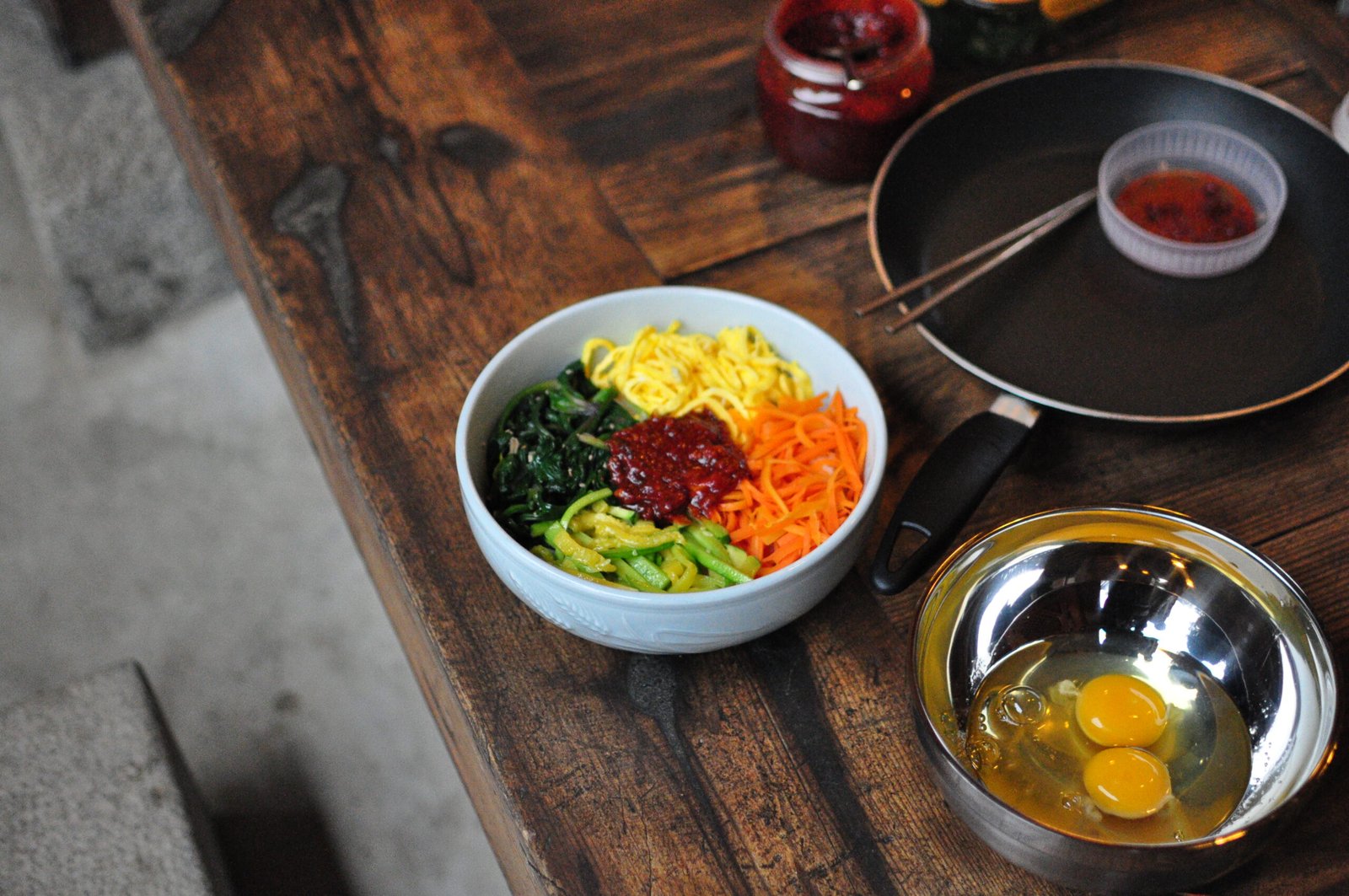
Namul are vegetables cooked and seasoned individually. Aim for three to five, chosen so they differ in both color and texture — that’s the entire selection logic, and it’s why the bowl works. Something green and soft, something orange and firm, something pale and crunchy, something dark and meaty.
The seasoning is nearly identical across all of them: toasted sesame oil, salt, a scraped clove of garlic, toasted sesame seeds. Learn that once — roughly 1 tsp of sesame oil and a good pinch of salt per handful of cooked vegetable — and you can season anything you find in the fridge.
There are only three cooking methods, and every vegetable falls into one. Blanch and squeeze: spinach, bean sprouts, soybean sprouts, chard, watercress. Sauté hot and fast: carrots, zucchini, mushrooms, peppers. Salt and drain with no cooking at all: cucumber, daikon.
And now the failure point, which is a big one: water. Blanched greens have to be squeezed in your fist until they genuinely stop dripping, and salted cucumber has to be wrung out in a cloth. Skip that and the bottom of the bowl fills with grey liquid that dilutes the sauce and turns the rice sodden. More bibimbap is ruined by wet namul than by any other single thing.
Module 3 — Protein, or not
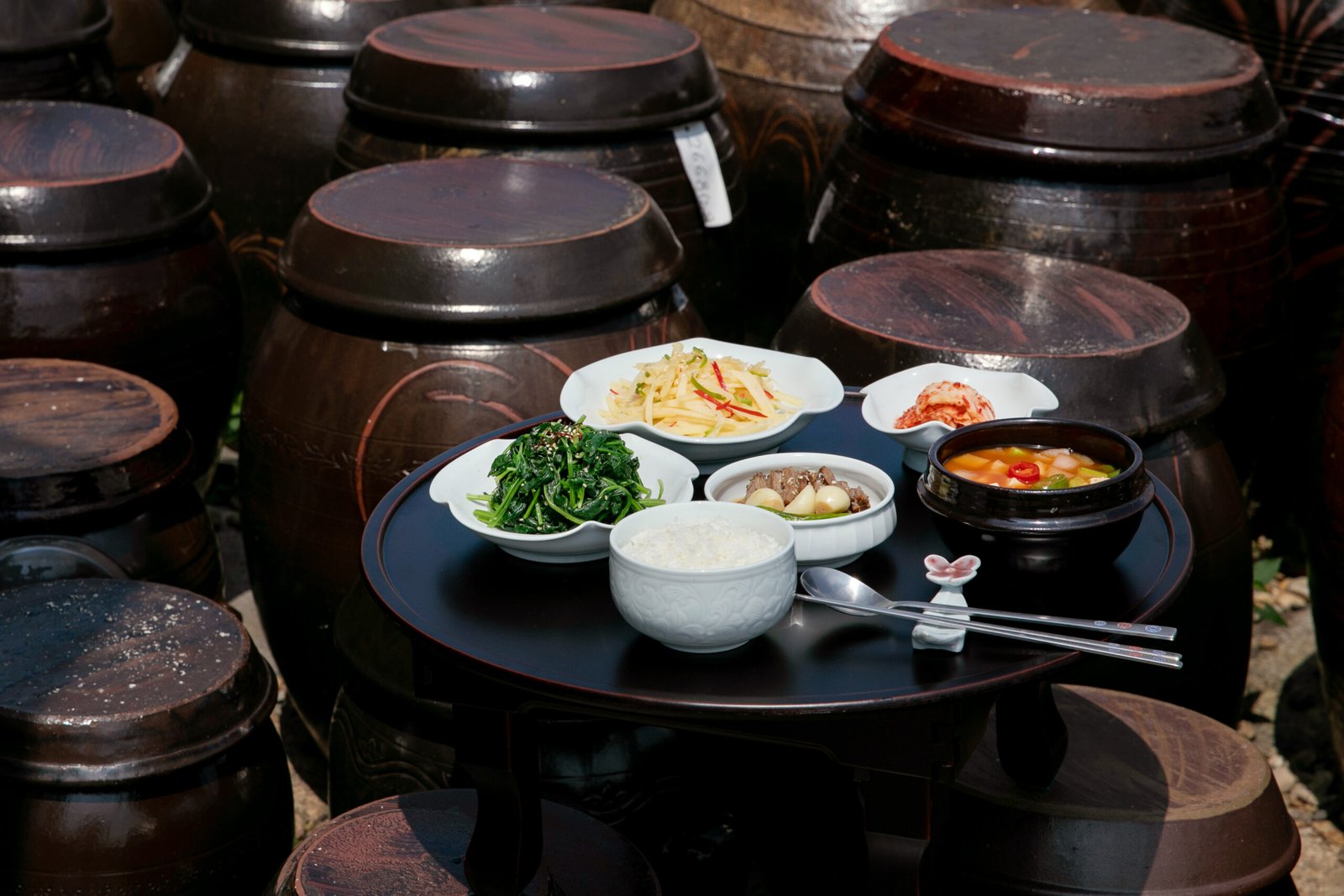
Traditionally beef: 150 g of minced or very thinly sliced beef, marinated ten minutes in 1 tbsp soy sauce, 1 tsp sugar, 1 tsp sesame oil and a grated clove of garlic, then stir-fried hard for two minutes. It’s essentially a small batch of bulgogi.
Ground pork or turkey behaves the same way. Drained canned tuna, loosened with a little sesame oil, needs no cooking at all. For a vegan bowl, press firm tofu for fifteen minutes, cube it, and fry it in a barely-oiled pan until the edges turn golden before seasoning with soy and sesame — the pressing is the difference between tofu that browns and tofu that steams.
Honestly, a fried egg on its own is enough for the bowl to work. Don’t skip dinner because there’s no beef in the fridge.
Module 4 — Sauce, which is the part people get wrong
Gochujang straight from the tub does not belong in a bibimbap bowl. It’s too thick and too concentrated to distribute, so you get salty red lumps in three places and bland rice everywhere else. It has to be loosened into a sauce first.
The ratio worth memorizing, enough for two bowls: 2 tbsp gochujang, 1 tbsp toasted sesame oil, 1 tbsp water, 1 tsp sugar or honey, 1 tsp rice vinegar, 1 tsp toasted sesame seeds, and one small clove of garlic, grated. Stir until it pours off the spoon in a ribbon rather than dropping off in a lump. That’s the whole test.
If you can’t get gochujang where you live, 1 tbsp white miso with 1 tsp gochugaru, 1 tsp honey and a splash of water gives you a workable sauce — saltier, more straightforwardly savory, and missing gochujang’s fermented sweetness entirely. It’s a stand-in, not an equal. Of everything on a Korean shelf, gochujang is the one item most worth ordering online. For gochugaru itself, Aleppo pepper is genuinely close: similar mild fruity heat, similar coarse flake. Paprika with a pinch of cayenne gets the color right and the flavor flat.
And the egg, which is really a fifth sauce
Fry one egg per bowl with the yolk still loose and set it in the middle. When you mix, the yolk breaks and emulsifies with the sesame oil and the gochujang into something that coats every grain of rice. A hard yolk is just a topping. A soft one is structural. If raw yolk doesn’t bother you and you’re using a stone bowl, a bare yolk dropped onto the hot rice cooks itself as you stir.
Ingredients and Substitutes
For 2 bowls.
| Ingredient | Where to get it, or what to use instead |
|---|---|
| 400 g / 2 cups cooked short-grain rice | Calrose or sushi rice. Barley, brown rice, or a mix all work. Long-grain rice won’t cling, so the sauce coats less evenly. |
| 150 g / 5 oz spinach | Any blanchable green — chard, watercress, or kale given an extra minute in the water. |
| 150 g / 5 oz soybean sprouts (kongnamul) | Mung bean sprouts are easier to find and cook in half the time; they’re crunchier and less nutty. Thin-sliced celery is a distant stand-in that at least brings the crunch. |
| 1 medium carrot, julienned | Red bell pepper, or butternut squash matchsticks — both sweeter and softer than carrot. |
| 1 small zucchini, half-moons | Cucumber, salted and squeezed, if you’d rather not cook it. Brighter and crunchier, and it changes the bowl in a good way in summer. |
| 4 dried shiitake mushrooms, soaked | This is already your substitute for gosari (bracken fern), which you almost certainly can’t buy locally. Mushrooms deliver the same dark savory note; gosari’s slippery chew is unique and nothing reproduces it. |
| 150 g / 5 oz minced beef | Pork, turkey, drained canned tuna, or pressed firm tofu. See Module 3. |
| 2 eggs | Vegan: leave them out and add an extra teaspoon of sesame oil to the sauce to make up the richness. |
| 2 tbsp gochujang | 1 tbsp white miso + 1 tsp gochugaru + 1 tsp honey. Saltier, less sweet, no fermented depth. |
| Toasted sesame oil, sesame seeds, garlic, soy sauce, salt | Toasted (dark) sesame oil only. The pale kind has no aroma and the seasoning falls flat. |
Bibimbap Recipe: Build the Bowl From Four Parts
Ingredients
Method
- Start the rice with 10% less water than usual — everything else takes about as long as the rice does.
- Soak the dried shiitake in hot water for 20 minutes until pliable throughout, then squeeze out and slice.
- Marinate the beef 10 minutes in 1 tbsp soy sauce, 1 tsp sugar, 1 tsp sesame oil and a grated clove of garlic.
- Blanch the spinach 30 seconds, cool it, squeeze it dry in your fist, then season with salt, sesame oil and garlic.
- Cook the soybean sprouts in the same water, covered, for 5 minutes. Drain, cool and season the same way.
- Sauté the carrot with a pinch of salt for 2 minutes, then the zucchini for 2 minutes, then the mushrooms with a splash of soy sauce for 3 minutes, plating each separately.
- Stir-fry the marinated beef over high heat for 2 minutes, until no pink remains and the marinade has reduced to a glaze.
- Whisk the sauce ingredients together until the mixture ribbons off the spoon.
- Fry the eggs over medium-low heat for about 3 minutes, until the whites set and the yolks still move.
- Pile warm rice into wide bowls, arrange the namul in wedges around the rim, add the beef and the egg, and spoon the sauce over.
- Mix by cutting down through the rice with a spoon and folding from the bottom up until the whole bowl is one even color, about 20 seconds.
The Full Version, Step by Step
- Start the rice with 10 percent less water than usual. Everything else takes roughly as long as the rice does, so this sets the clock for the whole dish.
- Soak the shiitake if you’re using dried: 20 minutes in hot water, until they’re pliable all the way through. Squeeze them out, keep the soaking liquid for a soup, and slice them thin.
- Marinate the beef in soy sauce, sugar, sesame oil and garlic. Ten minutes on the counter is plenty, and you’ll spend it on the vegetables anyway.
- Blanch the spinach for 30 seconds, until it collapses and darkens. Cool it under running water, then squeeze it in your fist until it stops dripping. Season with a pinch of salt, 1 tsp sesame oil and a scraped clove of garlic.
- Cook the sprouts in the same water, covered, for 5 minutes. Soybean sprouts genuinely need the full time — undercooked, they taste raw and grassy in a way mung sprouts never do. Drain, cool, season identically.
- Sauté the vegetables in sequence, one pan, plating each separately. Carrot with a pinch of salt over medium-high for 2 minutes, until flexible but still snapping. Then zucchini, 2 minutes, until translucent at the edges and still holding its shape. Then mushrooms with a splash of soy sauce, 3 minutes, until they’ve given up their water and started to brown.
- Cook the beef last in that same pan over high heat, 2 minutes, until no pink remains and the marinade has tightened into a glaze on the meat.
- Mix the sauce in a small bowl and check it ribbons off the spoon. If it drops in a lump, add water a teaspoon at a time.
- Fry the eggs in a little oil over medium-low heat, about 3 minutes, until the whites are set and the yolks still move when you tilt the pan. Low and slow is what keeps a yolk liquid.
- Build the bowl. Warm rice into a wide bowl, namul arranged in wedges around the rim so the colors sit next to each other, beef in one wedge, egg in the center, sauce spooned over or served on the side.
- Mix it properly. Cut down through the middle with your spoon and fold from the bottom up, turning the bowl as you go. Stirring in circles at the surface leaves the bottom third as plain rice. Keep going until the whole bowl is one even color — about twenty seconds of real work, and it isn’t optional.
The Weeknight Version
Once the modules are clear, this becomes a twenty-minute dinner with no shopping trip attached. The rule I use: one soft green, one firm and sweet, one crunchy, one savory-brown, plus rice and sauce. Hit those four slots with anything and the bowl reads correctly.
Frozen spinach counts, thawed and squeezed hard. So do frozen peas, shredded cabbage wilted in a dry pan, green beans cut short, leftover roasted vegetables from last night, and a handful of whatever mushroom the shop had. Season each one separately with sesame oil, salt and garlic — that shared seasoning is precisely what makes a random collection of vegetables read as one dish instead of a pile of scraps.
Two shortcuts that cost you almost nothing: cook two or three vegetables together in the same pan when their timings match (carrot and zucchini do, spinach and mushrooms don’t), and make a double batch of the gochujang sauce, which keeps two weeks in the fridge and is better on day two than day one.
The thing you can’t shortcut is the squeezing. Wet vegetables sink a fridge bibimbap faster than any missing ingredient.
Dolsot: How to Get the Crispy Rice
Dolsot bibimbap is the same bowl served in a heated stone pot, where the rice pressed against the hot surface crisps into nurungji — a golden crust you scrape up as you eat. For a lot of people it’s the best part of the dish, and it’s worth the small amount of technique.
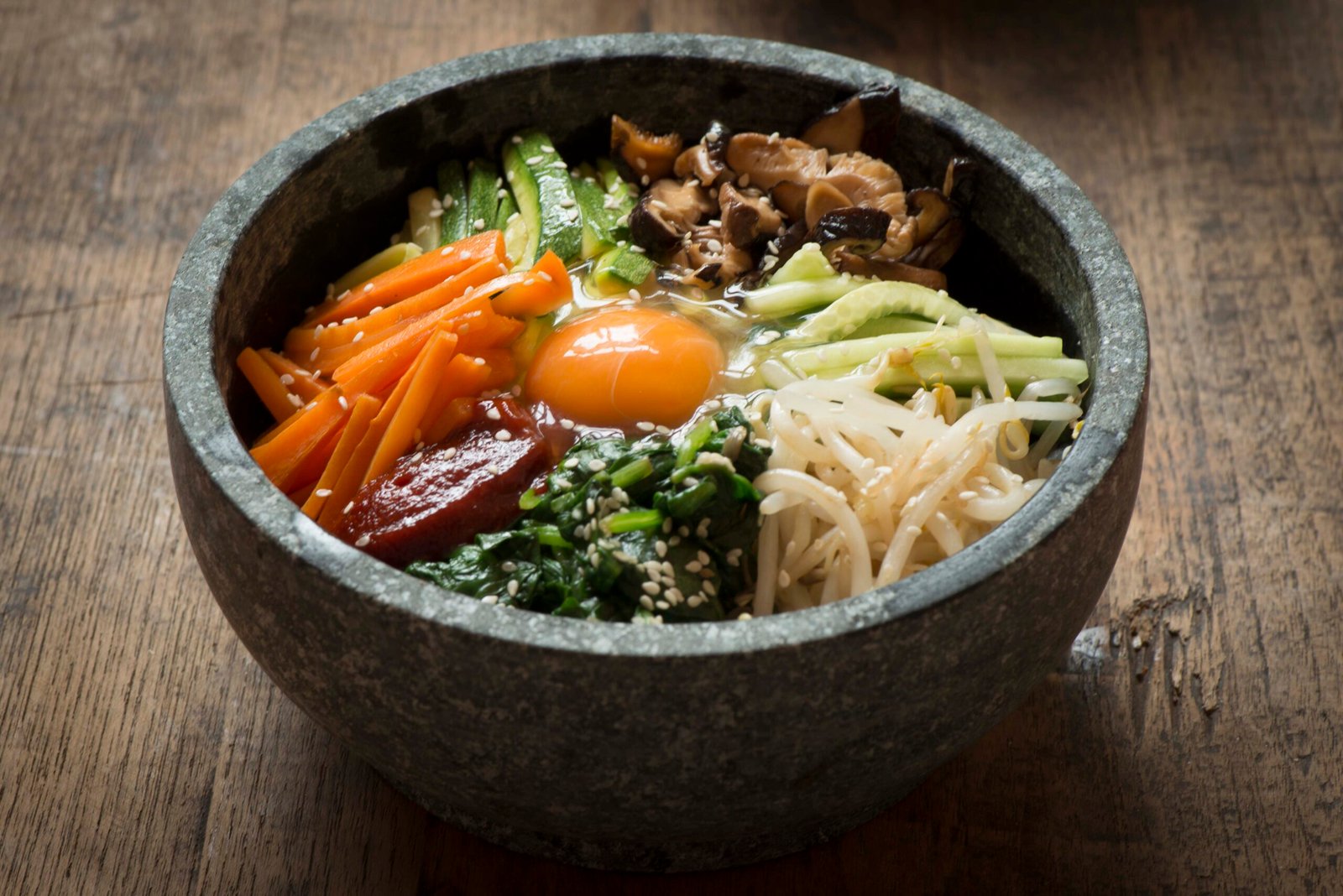
Heat the stone bowl empty over medium for five to eight minutes, until a flicked drop of water skitters across the surface instead of sitting there and boiling. Brush the inside generously with sesame oil — more than feels reasonable, because that oil is what does the frying — then press the rice in, build the bowl on top, and leave it completely alone for three to four minutes. Untouched is the operative word: stirring early stops the crust from ever forming. You’ll hear it start to crackle when it’s ready.
No stone bowl? A small cast-iron skillet gets you most of the way there, because it holds enough heat to keep frying after cold rice hits it. A thin nonstick pan will not — it loses temperature instantly and you’ll end up with warm rice and no crust at all. Cast iron is the only substitute worth attempting.
Where It Goes Wrong, and How to Store It
Three problems account for nearly every disappointing bowl. Watery vegetables, covered above and worth repeating. Under-seasoned namul — each one has to taste good on its own, straight off the plate, because nothing downstream will rescue it, so taste every component before it goes in the bowl. And unloosened gochujang, which leaves half the rice bland while the other half is too much.
Storage is easy and worth planning around. Cooked, seasoned namul keep in separate containers in the fridge for three days and are genuinely meant to be eaten that way — they’re side dishes in their own right, good alongside something like kimchi jjigae. Keep the rice separate and reheat it; keep the sauce separate too. What doesn’t survive is an assembled bowl: the sauce soaks into the rice overnight and the vegetables leak into it. Build the bowl at the moment you plan to eat it.
Common Questions
Can I make bibimbap without gochujang?
Yes, and the bowl still works, because most of the flavor is actually in the sesame-oil-and-garlic seasoning on the vegetables rather than in the sauce. Mix 1 tbsp white miso with 1 tsp gochugaru, 1 tsp honey and a splash of water for something saltier and less sweet that does the job. If you have no chili in the house at all, a plain sauce of soy sauce, sesame oil, vinegar and garlic makes a perfectly good non-spicy bowl — roughly how Korean children eat it.
Do you mix bibimbap before eating it?
Yes, thoroughly, and it isn’t considered rude — the name of the dish is an instruction. Add the sauce, then cut down through the rice with your spoon and fold from the bottom rather than stirring the surface. Stop when the color is even all the way through. Eating it in tidy unmixed sections is the one approach that would look genuinely odd to a Korean at the same table.
Can I make bibimbap ahead for meal prep?
Prep the parts, not the bowl. The namul, the cooked protein and the sauce all keep three days refrigerated in separate containers, which turns weekday assembly into a two-minute job. An assembled bowl is what fails: the rice hardens in the cold and the vegetables release water into it overnight. Fry the egg fresh — it takes three minutes and it’s the component that ties everything else together.
Related, and Where to Eat It in Korea
Jeonju is where people go for the canonical version, served with beef broth and a raw yolk in a brass bowl, and it’s worth building a day around if you’re in the country. Ordering it is its own small skill, and k-trips has a practical guide to ordering food in a Korean restaurant if that’s the part that makes you hesitate at the door.
Back at home, leftover namul has an obvious second life: squeeze it dry and roll it into kimbap, which wants exactly the same vegetables cut to exactly the same size. And if you’re still building the shelf, the Korean pantry starter kit covers which gochujang and which sesame oil are worth paying for.
Bibimbap Recipe: Build the Bowl From Four Parts
Ingredients
Method
- Start the rice with 10% less water than usual — everything else takes about as long as the rice does.
- Soak the dried shiitake in hot water for 20 minutes until pliable throughout, then squeeze out and slice.
- Marinate the beef 10 minutes in 1 tbsp soy sauce, 1 tsp sugar, 1 tsp sesame oil and a grated clove of garlic.
- Blanch the spinach 30 seconds, cool it, squeeze it dry in your fist, then season with salt, sesame oil and garlic.
- Cook the soybean sprouts in the same water, covered, for 5 minutes. Drain, cool and season the same way.
- Sauté the carrot with a pinch of salt for 2 minutes, then the zucchini for 2 minutes, then the mushrooms with a splash of soy sauce for 3 minutes, plating each separately.
- Stir-fry the marinated beef over high heat for 2 minutes, until no pink remains and the marinade has reduced to a glaze.
- Whisk the sauce ingredients together until the mixture ribbons off the spoon.
- Fry the eggs over medium-low heat for about 3 minutes, until the whites set and the yolks still move.
- Pile warm rice into wide bowls, arrange the namul in wedges around the rim, add the beef and the egg, and spoon the sauce over.
- Mix by cutting down through the rice with a spoon and folding from the bottom up until the whole bowl is one even color, about 20 seconds.