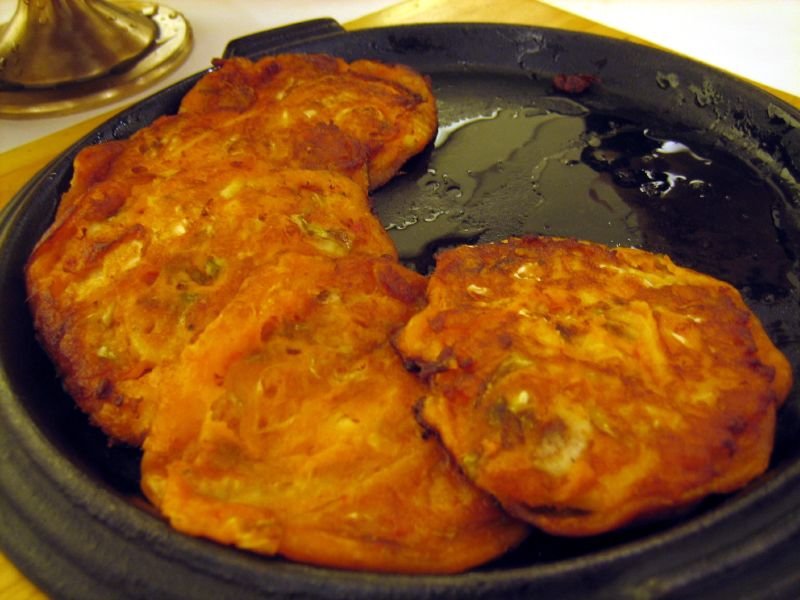
I ruined my first three attempts at kimchi jeon in the same way. The edges came out dark and crackling, exactly right, and the middle stayed pale and wet, like the pancake hadn’t been told the pan was hot. I kept blaming the pan. It wasn’t the pan. It was that I was pouring the batter too thick, the way you’d pour pancake batter for breakfast, and a kimchi pancake does not forgive that the way a breakfast pancake does.
The fix turned out to be almost insultingly simple: pour it thin, and know how wet your kimchi actually is before you start. Once I sorted those two things out, kimchi jeon became one of the fastest, most reliable things I cook. It’s ready in about 20 minutes, it uses kimchi that’s gone a little too sour to eat as a side dish anyway, and it’s the kind of food that goes down well at the center of a table when people are talking and picking at plates rather than sitting down to a formal meal.
Quick Facts
| Total time | 25 minutes |
| Serves | 2 as a light dish, 4 as a shared plate |
| Difficulty | Easy |
| Heat | 2 out of 5, depending on your kimchi |
| Vegan? | Yes, skip the egg |
What Kimchi Jeon Actually Is
Kimchi jeon (김치전) is one dish in the much larger jeon family — batter-based, pan-fried food that also covers scallion pancakes, zucchini jeon, and the mung-bean bindaetteok sold at Seoul’s Gwangjang Market. Take chopped, well-fermented kimchi, fold it into a thin flour batter, and fry it flat until the edges go dark and crisp. That’s the whole idea.
It’s not a special-occasion dish. It’s what happens to a jar of kimchi that’s turned too sour and too soft to enjoy raw with rice. Korean kitchens don’t throw that kimchi away — they cook with it, and a pancake is the fastest route. It shows up on dinner tables on ordinary weeknights just as often as it shows up as something people share over drinks, which is the category it’s usually filed under here. The word for that category is anju, food built to go alongside a drink, though plenty of households eat kimchi jeon with plain rice and nothing else on the table.
Why the Kimchi Itself Decides Everything
Most kimchi pancake recipes treat the kimchi as an ingredient like any other. It isn’t. It’s the ingredient that changes how much water goes into your batter, and getting that wrong is the single most common reason kimchi jeon turns out wrong.
Well-fermented, sour kimchi — the jar that’s been open three or four weeks and gone soft and a little fizzy — releases a lot of liquid when you squeeze it. That liquid is flavor you want in the pancake, not water you want to drain away. Save it, and use less added water in your batter to compensate.
Fresh, mild kimchi behaves completely differently. It’s crunchy, it barely releases any brine, and it tastes cleaner and less funky. If that’s what’s in your fridge, add a teaspoon of rice vinegar and a pinch of extra sugar to the batter to fake some of the sourness a properly fermented jar would have given you for free. The pancake will still work. It’ll just taste brighter and the cabbage pieces will stay crunchy instead of going soft and melding into the batter, which is a different pancake, not a broken one.
Ingredients
| Ingredient | Where to get it, or what to use instead |
|---|---|
| Sour kimchi, 200 g / 1 cup, plus its brine | Any jar that’s gone properly sour works better here than fresh kimchi. Mild or fresh kimchi: add 1 tsp rice vinegar and a pinch of sugar to the batter. |
| Potato starch or cornstarch, 2 tbsp | Sold at any Asian grocery, sometimes labeled “starch” plainly. Skip it and use all flour — you lose some of the glassy crispness at the edge, not the whole pancake. |
| All-purpose flour, 100 g / 3/4 cup | Any brand. |
| Egg, 1, optional | Leave out for vegan. The pancake holds together slightly less firmly without it, so flip carefully. |
| Gochugaru, for the dip | Korean coarse chili flakes. A pinch of any chili flake stands in fine — the pancake itself carries most of the heat, the dip is a minor accent. |
| Scallions, soy sauce, rice vinegar, sesame seeds | Standard grocery items. |
Kimchi Jeon Recipe
Ingredients
Method
- Squeeze the chopped kimchi over a bowl, catching the liquid separately, and set both aside. You want the kimchi damp, not dripping.
- Whisk the flour, potato starch, egg (if using), sugar, and the saved kimchi brine together, then add cold water a little at a time until the batter runs off a spoon in a steady, thin ribbon. Juicier kimchi means less added water; drier kimchi means more.
- Fold in the squeezed kimchi and half the scallions. Don’t overmix — a few uneven streaks are fine.
- Heat 2 tablespoons of oil in a nonstick pan over medium-high heat until it shimmers.
- Pour in a thin layer of batter, about 5 mm / 1/4 in deep, tilting the pan to spread it. Thick pancakes steam in the center before the outside browns.
- Cook undisturbed for 3 to 4 minutes, until the edges visibly darken and lift slightly off the pan.
- Add a teaspoon of oil around the rim, then flip with a wide spatula in one motion.
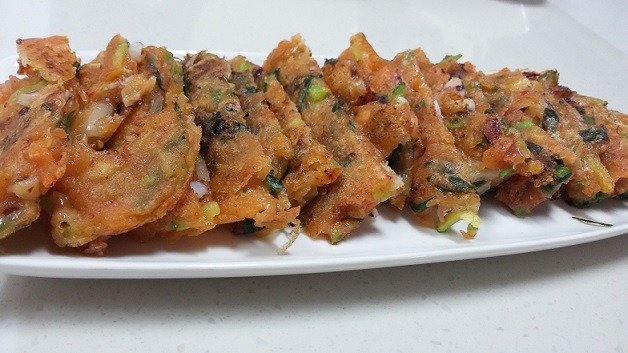
- Press down once with the spatula and cook the second side 2 to 3 minutes, until it’s deep red-brown and firm all the way through, not pale in the middle.
- Slide onto a cutting board, cut into wedges, and serve with the dipping sauce made from soy sauce, rice vinegar, gochugaru, and sesame seeds.
How to Make It
- Squeeze the kimchi, save the liquid. You want it damp, not dripping, and you want that brine in a separate bowl rather than down the drain.
- Build the batter around the brine, not just water. Flour, starch, egg if using, sugar, and the reserved kimchi liquid, whisked together. Add cold water gradually until it runs off a spoon in a thin, steady stream — thinner than you’d expect if you’re used to Western pancake batter.
- Fold in the kimchi and scallions, gently, leaving a few uneven streaks rather than mixing it smooth.
- Pour it thin. This is the step that fixes the soggy-middle problem. About 5 mm / 1/4 inch of batter in the pan, tilted to spread evenly. A thick pour steams in the center before the surface ever browns.
- Leave it alone for 3 to 4 minutes over medium-high heat, until you can see the visible edge darken and start to lift.
- Flip in one confident motion, adding a little more oil around the rim first so the second side doesn’t stick.
- Press once with the spatula on the second side, cooking 2 to 3 more minutes until the whole pancake is a deep red-brown, not just the edges.
- Rest it a minute, then cut into wedges and serve hot with the dip.
Tips and Storage
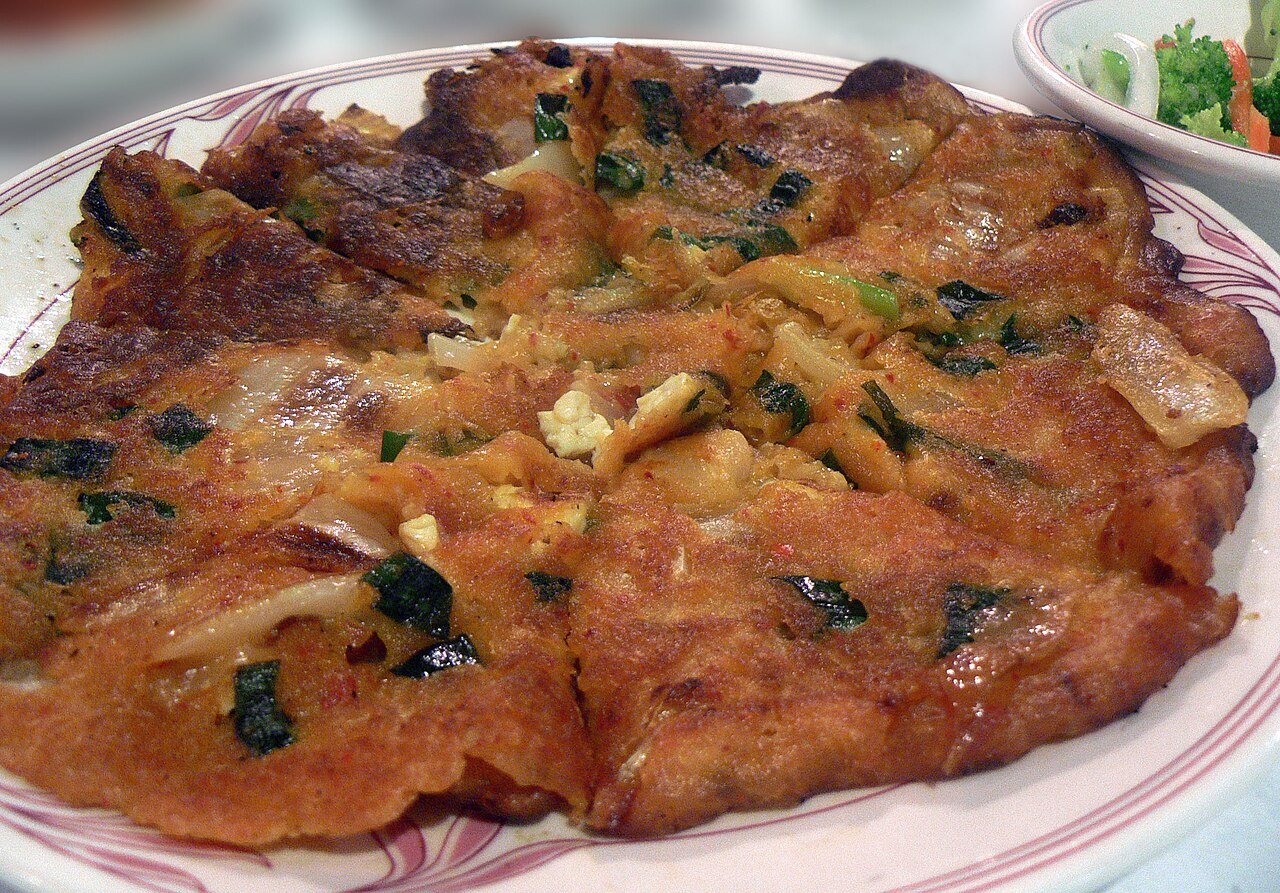
If the middle stays pale after the edges are dark, your batter went in too thick. Pour the next one thinner and resist the urge to fill the pan edge to edge.
If the pancake tastes flat, your kimchi was probably too mild and you didn’t compensate with the vinegar and sugar. Taste your kimchi straight from the jar before you cook with it — it should already taste a little sharp and sour.
Reheating: a dry skillet over medium heat for 2 minutes a side brings back most of the crisp. Skip the microwave, which turns the edges soft and a little rubbery. Leftovers keep 2 days in the fridge, covered.
Common Questions
Can I make kimchi jeon with fresh, mild kimchi?
Yes, but add 1 teaspoon of rice vinegar and an extra pinch of sugar to the batter to make up for the sourness fresh kimchi doesn’t have yet. It’ll taste brighter and less funky than the classic version, and the cabbage pieces will stay crisp instead of softening into the batter — a fine trade, just a different result.
Why is my kimchi jeon soggy in the middle?
Almost always the batter was poured too thick. Kimchi jeon wants a thin layer, closer to a crepe than a griddle cake, so the center cooks through in the same few minutes it takes the edges to crisp.
Do I need potato starch, or will flour alone work?
Flour alone works fine. The starch gives the edges a slightly glassier, more shattering crispness, but plenty of home versions in Korea are made with flour only and nobody complains.
What to Eat With It
Kimchi jeon shares a whole family of frying technique with gamja jeon, the potato version, though the two dishes solve completely different problems in the pan. If seafood pancakes are more your speed, haemul pajeon runs on the same batter logic with shrimp and squid folded in instead of kimchi. And gochugaru, rice flour, and sour kimchi all turn up again in our Korean pantry starter kit, worth a read before your next Korean grocery trip.
Seoul’s Gwangjang Market fries this whole category of pancakes to order, stall after stall, over open flame. Our sister site’s guide to Gwangjang Market’s street food is a good map if you want to eat the real thing before trying it at home.