The rule for the eighth episode of Netflix’s Culinary Class Wars fit in one line: cook a “creative and tasty” dish, and buy every ingredient from the shelves of a convenience store. The chef known as Napoli Matfia, whose real name is Kwon Seong-joon, came back from those shelves with marron cream bread and chestnuts and turned them into a tiramisu.
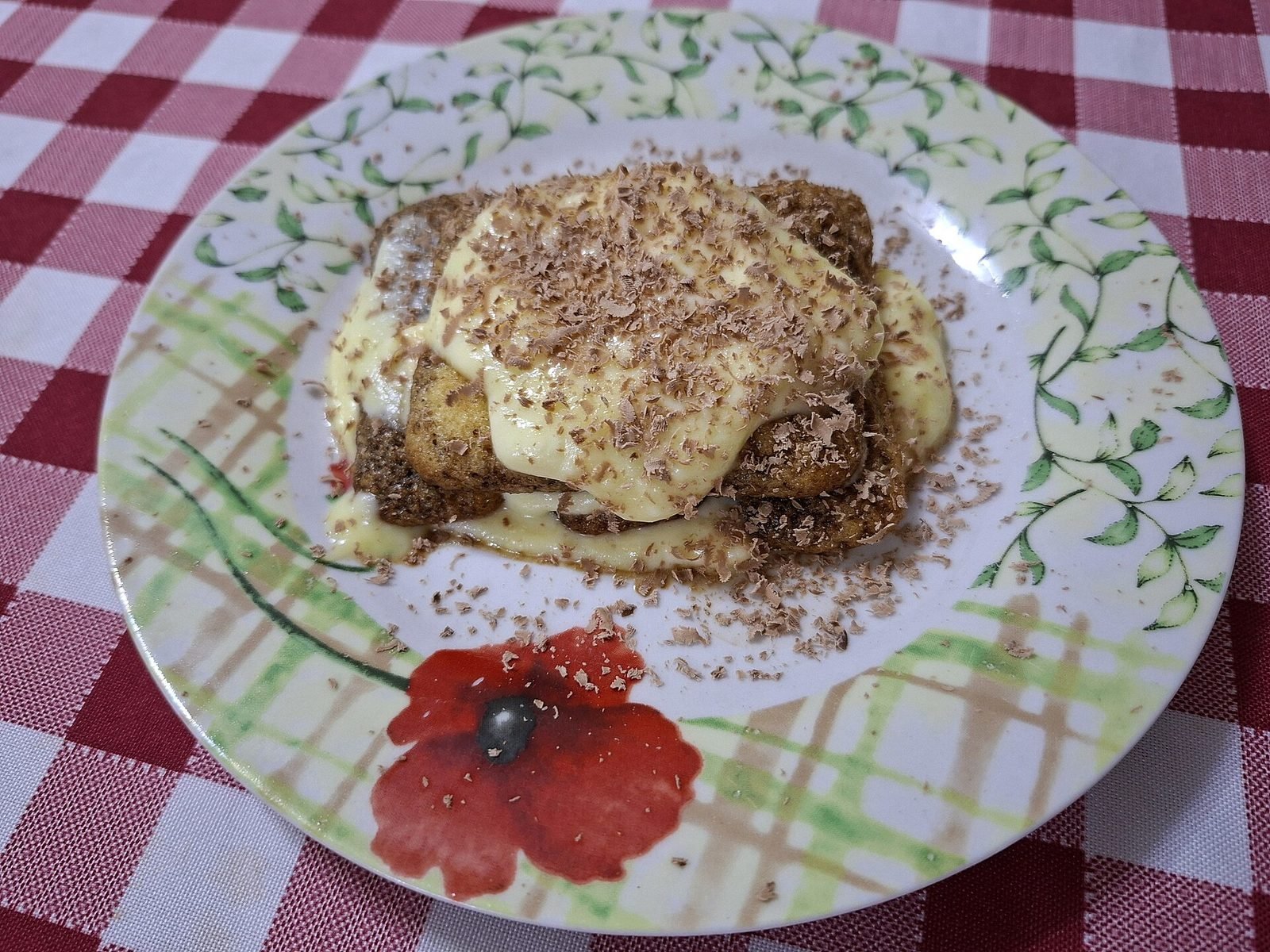
That dessert later became a ₩4,900 cup on CU’s shelves. Back in a home kitchen it becomes chestnut paste from peeled chestnuts, cream cheese in place of mascarpone, coffee-dipped biscuits and no stopwatch.

One episode, one convenience store, two ingredients
Korea JoongAng Daily describes the mission the same way: the chefs had to make a creative and tasty dish using only ingredients they could find at a convenience store, and a CU-inspired set was built on the show for extra immersion. Kwon’s tiramisu came from two store products, marron cream bread and chestnuts.
The numbers that followed are CU’s own, as reported in that article. In the week the episode was released, sales of the marron cream bread rose 31.1 percent and sales of the chestnuts 42.7 percent compared with the week before. Nothing about the dish needed a professional kitchen: sweet chestnut, soft cream and a coffee-soaked layer. That is why it translates so easily into a home dessert, and why the recipe card on this page is a home build rather than a claim to match the broadcast dish.
Seen as a recipe, the idea is a standard tiramisu with one swap. The usual frame stays: biscuits dipped in coffee, a cream layer, cocoa on top. What changes is the flavor of the cream, which carries a sweet chestnut paste instead of plain sweetness. That single change is the whole dish, so almost everything below is about getting that paste smooth and the cream light enough to carry it.
How a TV scene became a 4,900-won cup
CU launched the dessert as Marron & Tiramisu, priced at 4,900 won (about $3.60 when the article ran) and first offered through pre-orders on its mobile app. A second report two weeks later says all 150,000 cups of the app-exclusive pre-sale sold out in nine days, after which the cup went on sale across CU’s 18,000 stores starting on a Thursday in late October 2024. A follow-up product, a fresh cream bread made with Yeonsei milk, was announced for 30 October.
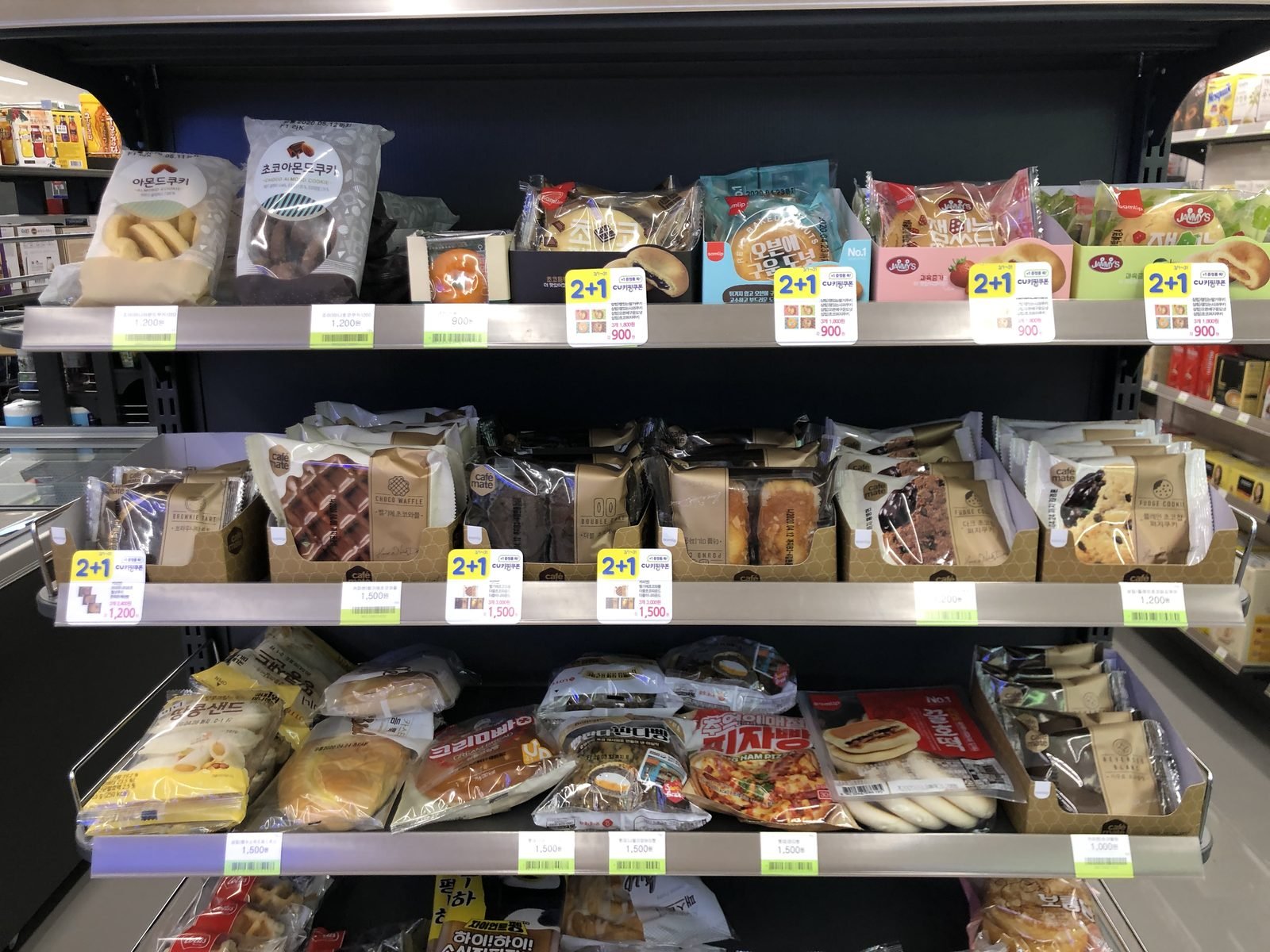

It is a very Korean convenience-store story: a TV challenge becomes a shelf product within weeks. For a tour of what else sits on those shelves after dark, see the full dinner you can build from a Korean convenience store.
Chestnuts are an old Korean fruit
The Encyclopedia of Korean Culture calls the chestnut an essential fruit for weddings and ancestral rites and notes that Korea was known from early times for good chestnuts: Chinese histories record large chestnuts, as big as pears, grown in Mahan and in Baekje. It also describes the winter street scene of roasted-chestnut sellers, so a chestnut dessert is familiar ground.
The National Folk Museum encyclopedia adds the calendar: chestnuts are harvested from late August to mid-October, eaten mostly roasted or boiled, and used in rice cakes and traditional confections. Old farming texts it cites give detailed methods for storing and drying them, a sign of how long the nut has been handled with care. That harvest window matters here. Fresh chestnuts are a seasonal job; peeled, packed ones make the paste possible in any month.

Choosing the chestnut for the paste
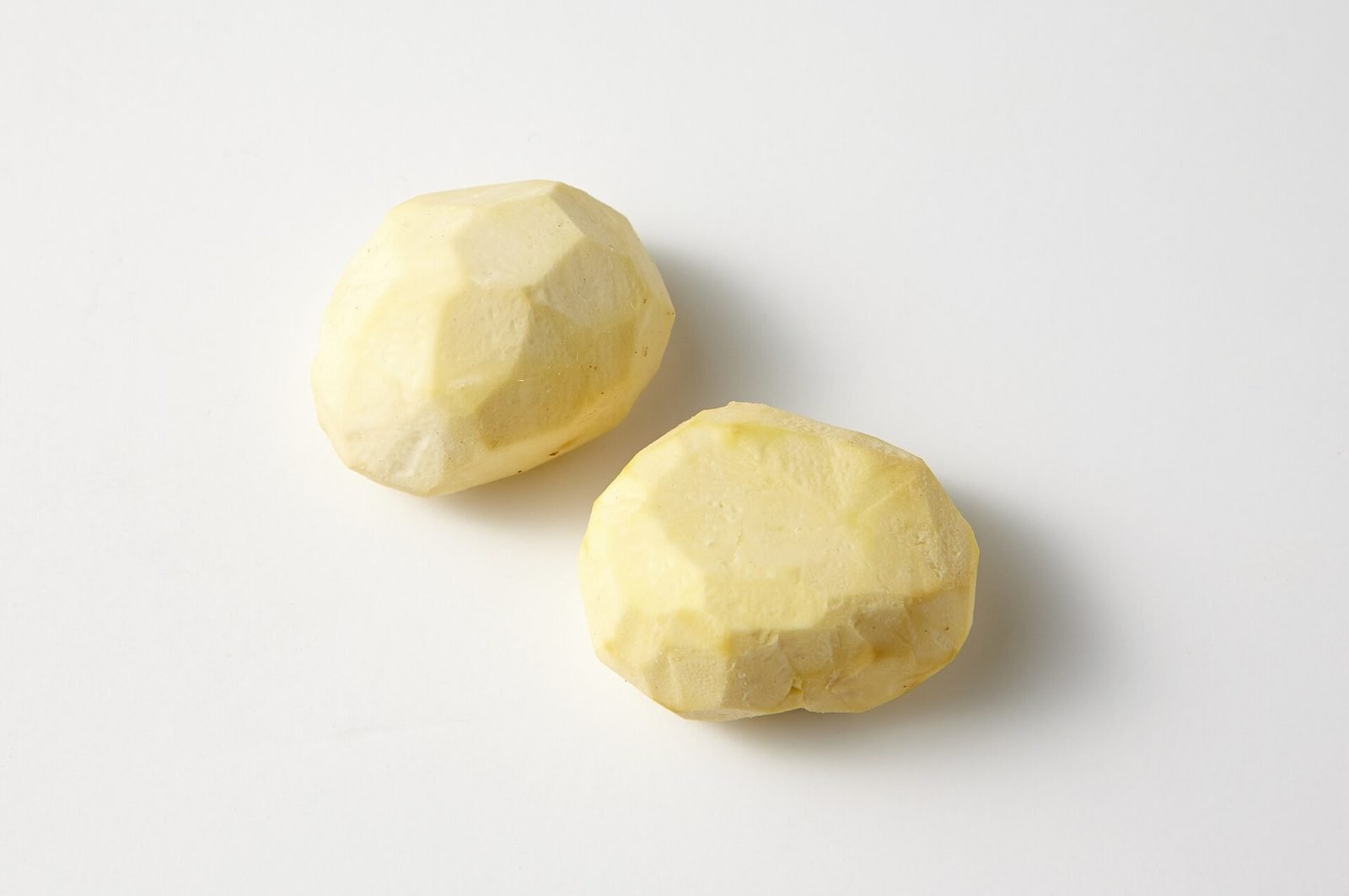
The recipe card calls for 300 g (about 2 cups) of cooked, peeled chestnuts. Three forms get you there, and each changes the sugar and the work.
Peeled and vacuum-packed
This is the easy route. Peeled chestnuts (kkan-bam, 깐밤) come ready to simmer and are sold at Korean grocers and many Asian supermarkets. Taste one first: they are usually unsweetened, so the sugar in the card, 3 tablespoons (40 g), does the sweetening.
Jarred in syrup
Jarred chestnuts also work, but they arrive pre-sweetened. Drain them well, then taste the paste while it is still warm and add sugar a spoon at a time, keeping the card amount as the ceiling rather than the target.
Fresh in the shell
In harvest weeks you can start from raw chestnuts. Score them, boil them and peel them while they are still hot; leftover inner skin turns the paste grainy. Cook down to the same 300 g of peeled chestnut before you begin the card, and use them within a few days of buying.
The topping needs a few pieces of roasted chestnut for dusting. Street-style roasted chestnuts (gunbam), the winter snack the Encyclopedia of Korean Culture mentions, are the natural source: break two or three into rough pieces and keep the rest for eating.
Cream cheese, mascarpone and the coffee dip
The card builds the cream from 225 g (8 oz) of softened cream cheese beaten alone for about a minute until no lumps remain, plus 1 cup (240 ml) of cold heavy cream whipped to soft peaks. Lumps do not disappear once the chestnut paste is in, so the cream cheese gets its own bowl first. Cream cheese is a pantry stand-in for mascarpone: slightly tangier and firmer. If you want the Italian base, use mascarpone at the same weight and leave the method alone.
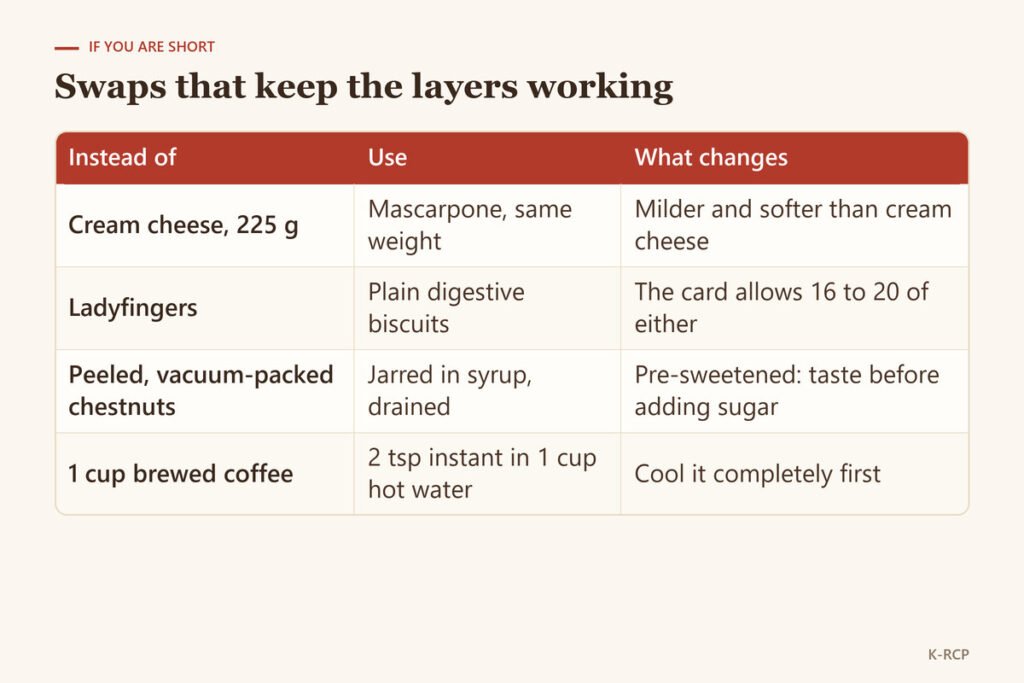
For the dip, brew 1 cup (240 ml) of coffee and let it cool completely, or dissolve 2 teaspoons of instant coffee in 1 cup of hot water and cool that. Hot coffee collapses a biscuit before it reaches the dish. The card uses 16 to 20 ladyfingers or plain digestive biscuits; the swaps in the table above cover the other common substitutions.
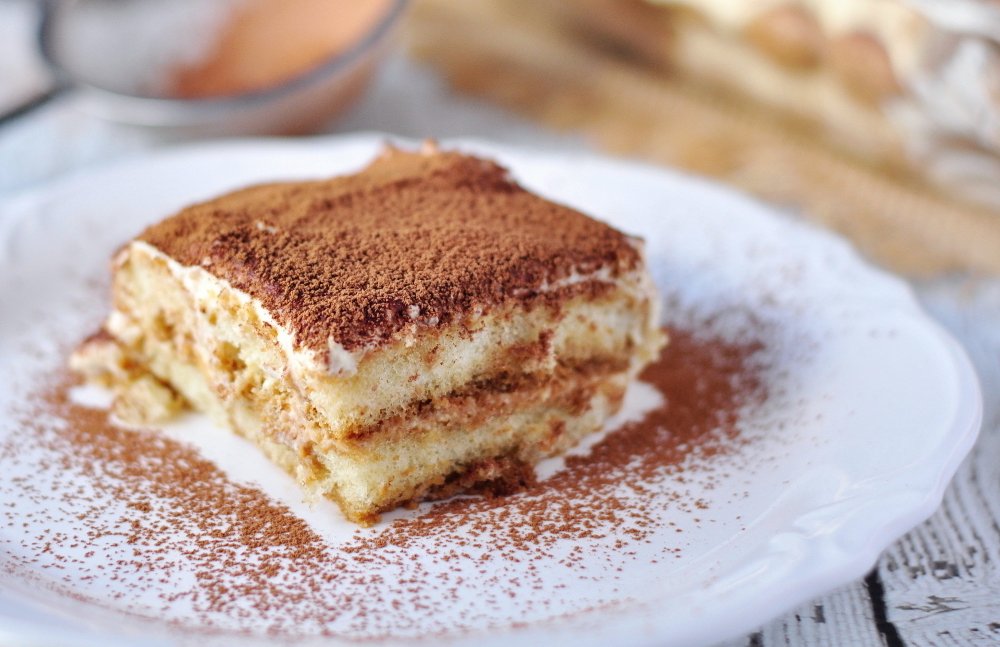
Chestnut Tiramisu Recipe from Culinary Class Wars, Made Simple
Ingredients
Method
- Put the peeled chestnuts in a small saucepan with 3/4 cup of the milk. Bring to a bare simmer over medium-low heat and cook for 3 to 4 minutes, until the chestnuts are soft enough to mash easily.
- Blend the chestnuts and milk together — a stick blender or regular blender both work — adding the remaining milk a little at a time until you get a smooth, thick paste roughly the texture of hummus. Stir in the sugar and vanilla while it’s still warm so the sugar dissolves, then let it cool completely in the fridge, about 30 minutes.
- Beat the cream cheese on its own until smooth and free of lumps, about a minute.
- In a separate bowl, whip the heavy cream to soft peaks.
- Fold the cooled chestnut paste into the cream cheese first, mixing until even. Then fold in the whipped cream in two additions, keeping the mixture as light as you can — this is what makes the final texture airy rather than dense.
- Dip each ladyfinger or biscuit briefly in the cooled coffee — a quick one-second dunk per side, not a soak, or they’ll turn to mush. Arrange a layer in the bottom of a serving dish or individual cups.
- Spread half the chestnut cream over the biscuit layer. Repeat with a second layer of dipped biscuits and the remaining cream.
- Cover and refrigerate for at least 2 hours, ideally overnight, so the biscuits soften properly and the layers set.
- Dust with cocoa powder and scatter a few pieces of roasted chestnut on top just before serving.
Recipe card photo: Classic Italian Tiramisu-3 by Sharon Chen, CC BY 2.0, via Wikimedia Commons.

Where the texture is won or lost
Blending the paste until the grain disappears
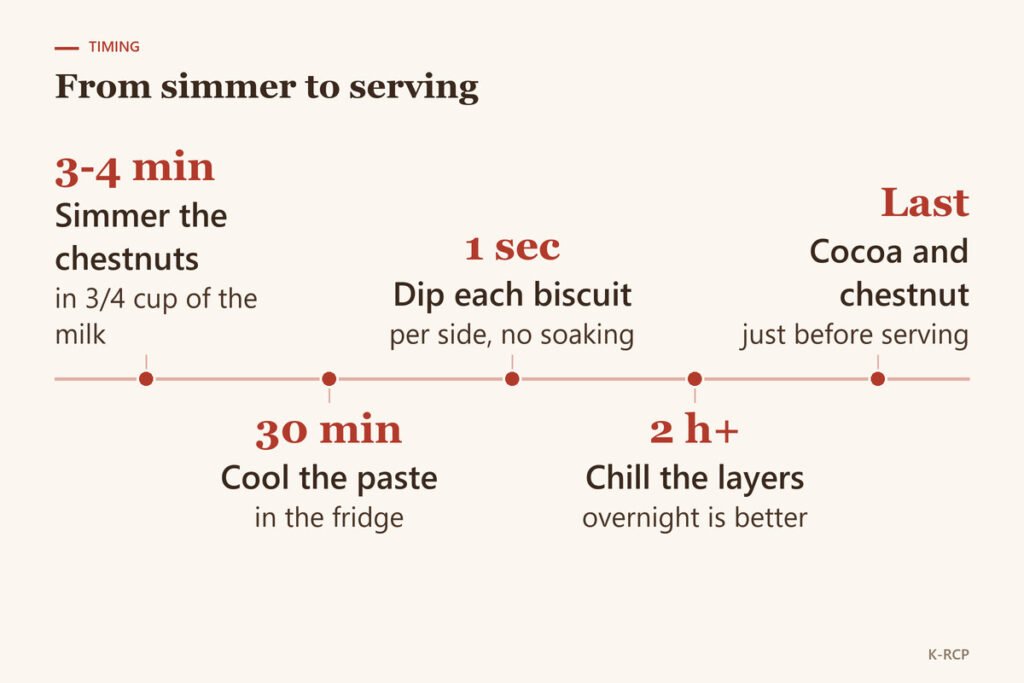
Simmer the chestnuts in 3/4 cup of the milk for 3 to 4 minutes, until they mash easily. Blend them with the remaining milk added a little at a time, aiming for a thick paste about the texture of hummus. A grainy result usually means the chestnuts were not soft enough or the blender had too little liquid. Stir in the sugar and vanilla while the paste is warm so the sugar dissolves, then chill it for about 30 minutes; warm paste thins the whipped cream.
Sweetness is the last variable. The card uses 3 tablespoons (40 g) of sugar and 1 teaspoon of vanilla extract for the paste, with the note “plus more to taste.” Chestnut is naturally mild, and how much sugar it needs depends on what the chestnuts were packed in, so taste while the paste is warm, since sugar dissolves best then, and aim slightly sweeter than you would eat it plain.
The one-second dip
Dunk each biscuit for about a second per side. A soaked biscuit turns to paste under the cream and the layers merge. If one breaks as you move it, patch the gap; the cream will hide it.
Fold in two stages. The cooled chestnut paste goes into the beaten cream cheese first, and the whipped cream follows in two additions, folded gently. That order keeps air in the mixture and gives a texture between a puree and a mousse. Taste before it chills, because cold, folded cream reads less sweet than the spoonful did.
Cups, a dish and the overnight rest
The convenience-store original was a single-serving cup, because the challenge was built around store packaging. At home you can choose. Individual glasses need no slicing, which helps because tiramisu is hard to cut into clean squares, while one dish suits a family table and fits a fridge shelf more easily than a row of cups.
On the clock, the card is modest: it is written for 4 servings, with 25 minutes of preparation and 10 of cooking, so about 35 minutes of work before the long chill. That makes it a dessert to start in the afternoon for a dinner, or the night before.
Either way, the card keeps to two biscuit layers and two cream layers: half the chestnut cream over the first layer of dipped biscuits, then the second biscuit layer and the rest of the cream. Cover it and refrigerate for at least 2 hours, ideally overnight, so the biscuits soften from the inside and the layers set. Dust with cocoa powder and scatter a few roasted chestnut pieces on top just before serving, so the cocoa stays dry.
If the chestnut-and-cream combination makes you want more Korean sweets, there are the brown-sugar-and-nut street pancakes in the hotteok recipe and the cold malted rice drink in a pot of sikhye.
Fridge only, never the freezer
Keep the dessert refrigerated until it goes to the table; the recipe card is written for the fridge, with a chill and an overnight rest and no freezing step, so skip the freezer.