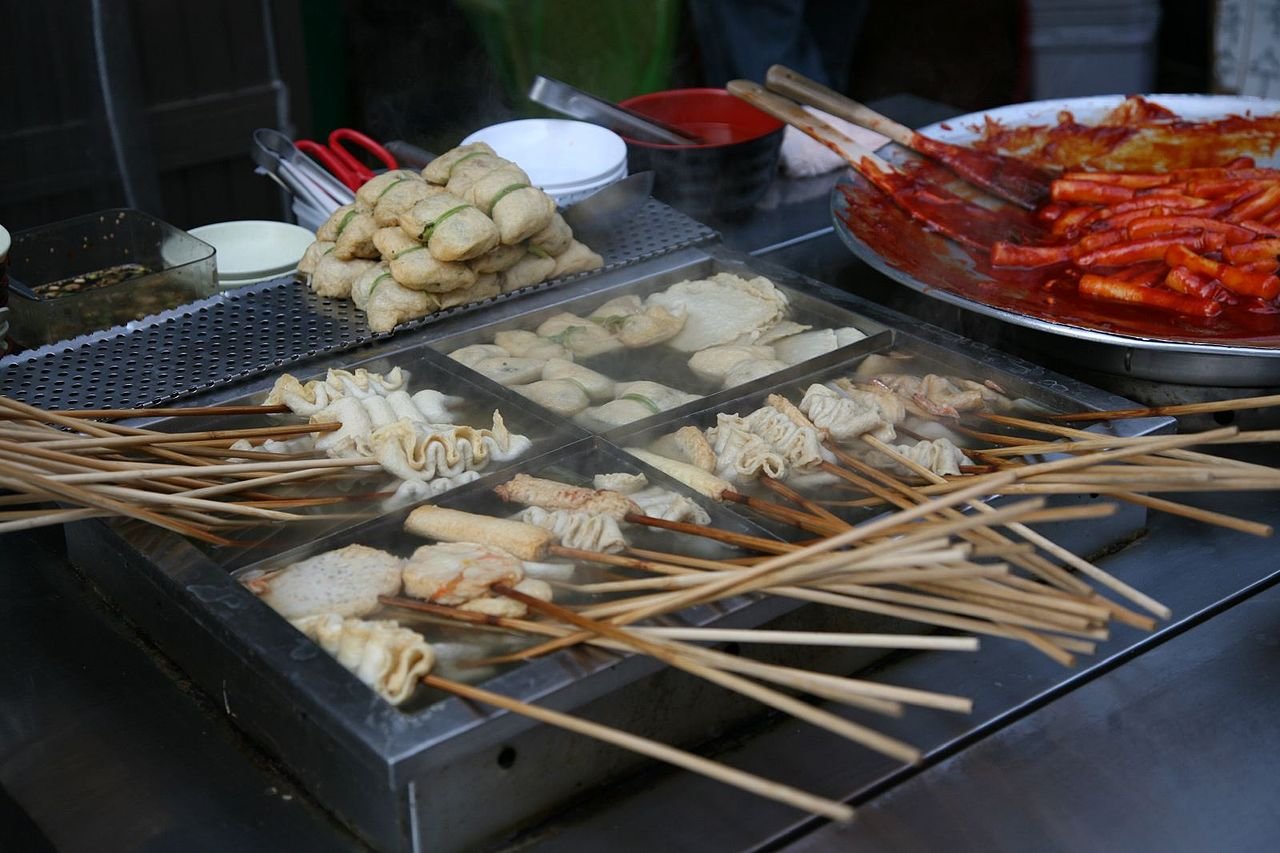
Stand at any street cart selling eomuk on a cold night and you’ll notice something odd about the money. Nobody pays for the broth. You pour it yourself into a paper cup from a giant kettle, drink it, refill it, drink it again, and the vendor doesn’t blink. What you pay for, at the end, is the sticks — literally, the number of used skewers left on your plate. The soup is the free part. The fish cake is the product.
That arrangement only makes sense once you’ve had the soup, because the broth is doing more work than it looks like it’s doing. It’s not an afterthought poured over cheap fish cake. Get the broth right and the fish cake tastes like something. Get it wrong and you’re just eating warm rubber. This is the eomuk tang recipe I use to get the broth right at home, without a cart, a kettle, or a stack of skewers to count.
| Time | 40 minutes |
| Serves | 4 as a snack, 2 as a light meal |
| Difficulty | Easy |
| Heat | 1 out of 5, optional chili for more |
| Vegan? | No — the broth relies on anchovy and fish cake for depth |
What eomuk tang actually is
Eomuk tang (어묵탕), pronounced roughly uh-mook-tahng, means fish cake soup. Eomuk (어묵) is the fish cake itself — flat sheets made from ground white fish pressed with starch, then fried or steamed. Tang (탕) just means soup, the same word you see in samgyetang or seolleongtang. On the street, the same dish usually goes by odeng (오뎅), a word borrowed from Japanese and used almost interchangeably, though purists will point out that odeng technically refers to the whole Japanese dish family this grew out of.
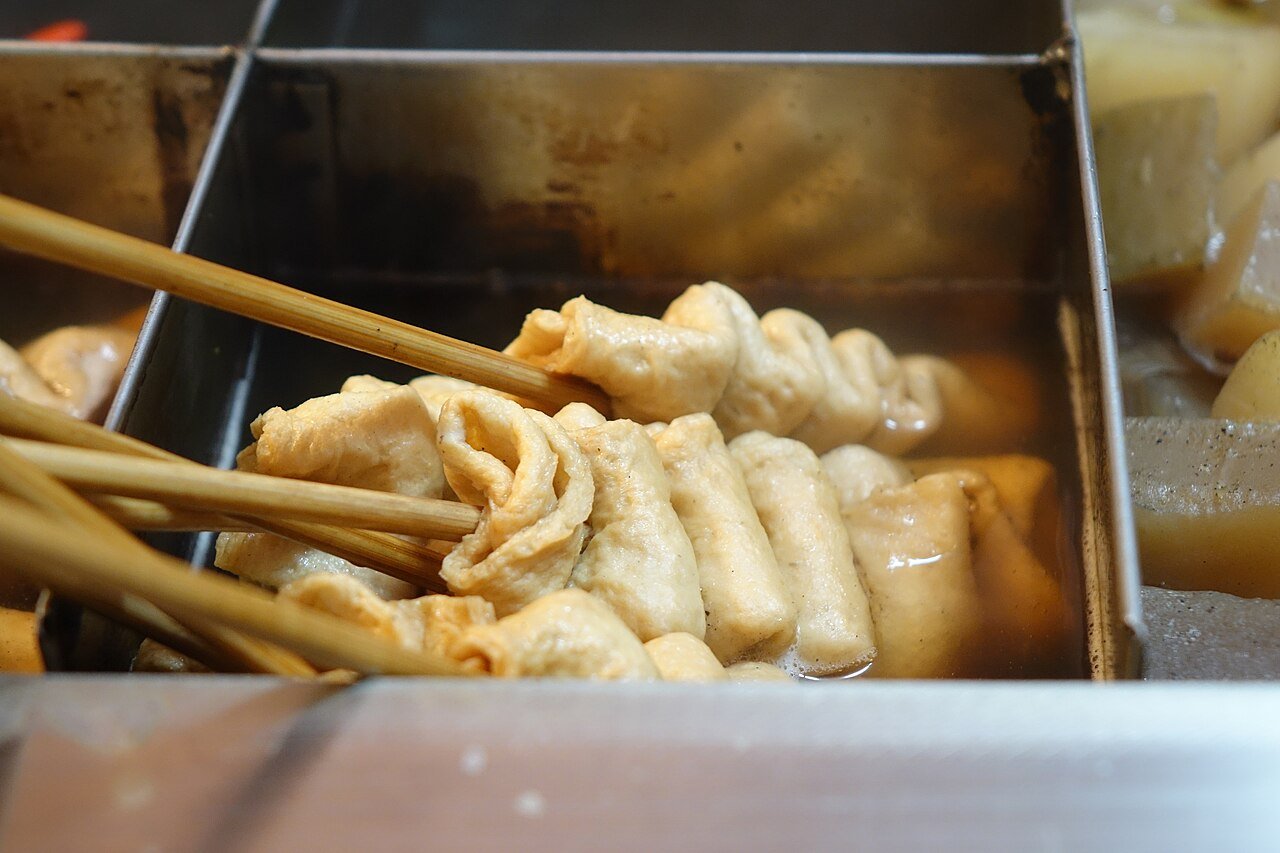
The home version and the street version aren’t really different recipes. What changes is the ritual. At a cart, the broth sits in a wide metal tray all day, topped up and never fully emptied, and the skewers stand up in it like a forest until someone pulls one out. At home, you make one pot, eat it, and that’s that. You lose the self-serve refill culture but you gain control over how salty, how spicy, and how much fish cake actually goes in.
Ingredients, and what to use instead
| Ingredient | Where to get it, or what to use instead |
|---|---|
| Eomuk, 400 g / 14 oz | Frozen or refrigerated aisle of any Korean grocer, usually sold as flat sheets. Japanese chikuwa or hanpen work in the broth — just slice rather than fold them, since they won’t hold pleats. |
| Dried anchovies, 8 | Sold whole in bags at Korean and some Japanese grocers. Without them, stir 1 tsp anchovy fish sauce into the finished broth instead — less body, still savory. |
| Dried kelp, one 10 cm / 4 in square | Same aisle as the anchovies. Any dried kombu works. |
| Korean radish (mu), 200 g / 1 cup | Daikon is essentially the same vegetable under a different name. |
| Soup soy sauce (guk-ganjang), 2 tbsp | A lighter, saltier soy sauce made for soups. Regular soy sauce plus a pinch of salt gets close, with slightly less savory depth. |
| Cheongyang chili, 1, optional | A jalapeño works but tastes greener and less sharply hot. |
| Garlic, scallions, salt, pepper | Standard. |
Eomuk Tang
Ingredients
Method
- Simmer the water, anchovies, and kelp together for 15 minutes over medium heat. Pull the kelp out after the first 10 minutes so it doesn’t turn slick.
- Strain out the anchovies and kelp. You should have about 1.2 L / 5 cups of clear, pale broth.
- Fold each fish cake sheet accordion-style and thread it onto a skewer, the way street carts do, so it holds its pleats while it cooks. If using chikuwa or hanpen instead, just slice thickly.
- Add the radish to the broth and simmer 8 minutes, until it turns slightly translucent at the edges.
- Add the skewered fish cake. Simmer 8 to 10 minutes, until the fish cake is heated through and has taken on the broth’s flavor rather than tasting flat.
- Stir in the soup soy sauce and garlic. Taste and adjust with salt — it should taste a little saltier than a soup you’d sip on its own, since the fish cake is fairly plain.
- Add the scallions and chili, if using. Simmer 2 more minutes, then take it off the heat.
How to make it
- Build the broth. Simmer the water, anchovies and kelp for 15 minutes. Pull the kelp out after 10 minutes — leave it too long and it turns slippery and a little bitter.
- Strain. You want a clear, pale broth, about 1.2 L / 5 cups.
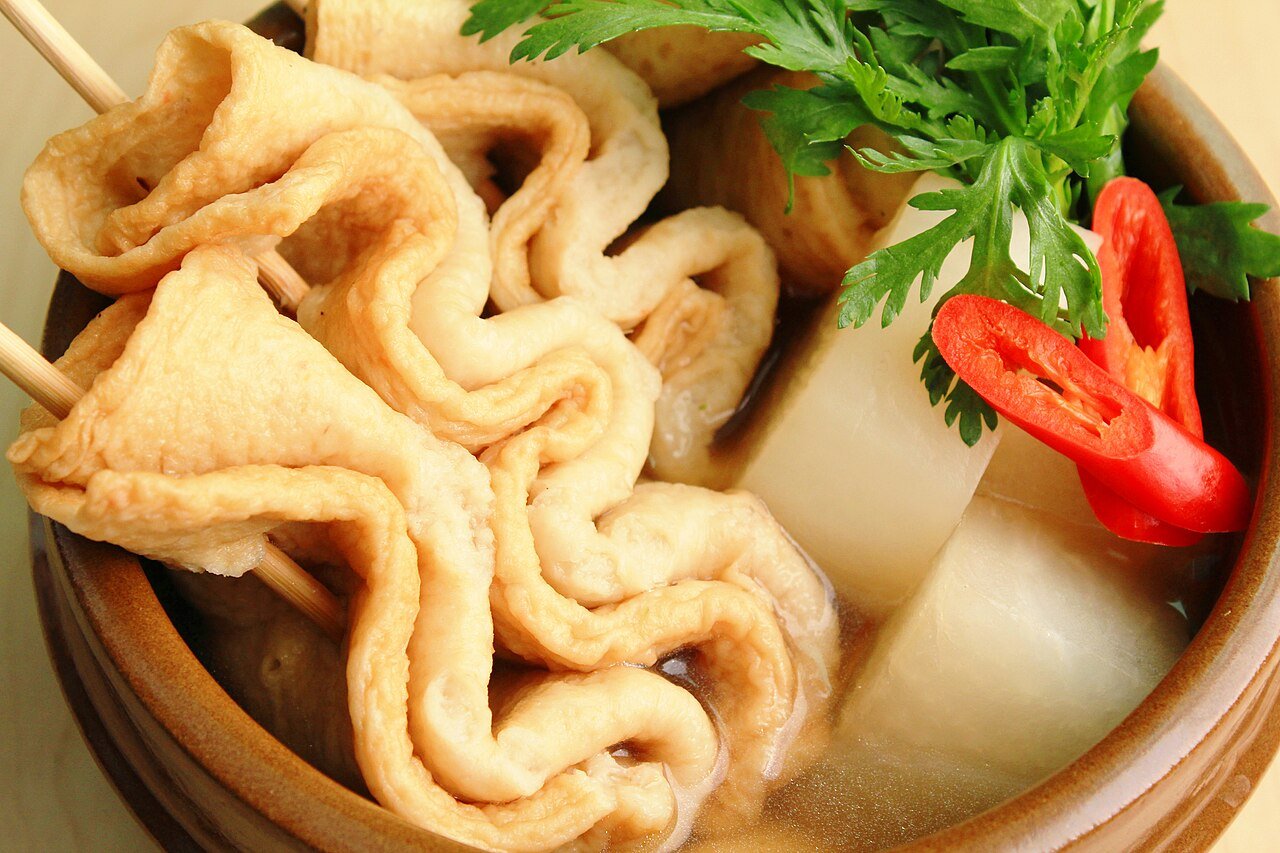
- Fold and skewer the fish cake. Pleat each sheet accordion-style before threading it onto a skewer — this is what makes it look like cart eomuk instead of boiled leftovers, and it also helps the sheet cook evenly instead of curling shut around itself.
- Add the radish. Simmer 8 minutes, until the edges start looking a little translucent.
- Add the fish cake. Simmer 8 to 10 minutes. Taste a piece — it should taste like the broth, not like plain fish cake with broth around it.
- Season. Stir in the soup soy sauce and garlic, then taste. Push the salt a little further than feels natural; the fish cake is bland and pulls seasoning out of the broth as it sits.
- Finish. Scallions and chili in, two more minutes, then serve straight from the pot.
Why the broth matters more than the fish cake
Plenty of recipes treat the broth as a placeholder — water, a bouillon cube, done. That’s the difference between cart eomuk and a sad bowl of boiled fish cake at home. Anchovy and kelp broth has a clean, faintly briny backbone that plain fish cake doesn’t have on its own, since most commercial eomuk is built for texture and bite rather than deep flavor. The soup carries the dish. If you’re going to cut a corner, cut it on the fish cake brand before you cut it on the broth.
Tips and storage
The fish cake toughens the longer it sits in hot broth, so if you’re not eating all four servings right away, keep extra fish cake out of the pot and add it fresh when you reheat. Broth keeps three days in the fridge in a sealed container; skim off any fat that rises to the top when you reheat it. Fish cake itself doesn’t freeze well once cooked — it turns spongy and starts shedding water, so freeze it raw if you’re stocking up, not after it’s been in soup.
If you want to turn this into more of a meal, drop in leftover tteokbokki rice cakes for the last five minutes, or a few pieces of mandu instead of dumpling soup on its own — both are common cart add-ins, not a stretch.
Common questions
What’s the difference between eomuk tang and odeng?
Mostly none, in everyday use. Eomuk tang is the more formal, dictionary-correct name; odeng is what most people actually say, borrowed from the Japanese word for the wider category of simmered fish cake dishes. You’ll hear both at the same cart.
Can I make eomuk tang without dried anchovies?
Yes. Swap in 1 teaspoon of anchovy fish sauce, stirred into the broth after straining the kelp, or a store-bought Korean anchovy stock powder if you have it. The broth will be a touch less rounded but still clearly savory rather than watery.
Why did my fish cake taste rubbery?
Either it was overcooked, or it sat in the broth too long after the heat was off. Fish cake firms up as it cools, which is fine at a cart where it’s eaten within minutes, less fine if the pot sits on the stove for an hour. Reheat gently and don’t let it boil hard.
Where to find it in Korea
Skip the sit-down restaurants for this one. Eomuk tang belongs to street carts and covered market alleys, where the broth tray has usually been simmering since the morning rush. Gwangjang Market’s street food alley has stalls doing exactly this, often two steps from a bindaetteok griddle, which makes it an easy stop if you’re already there for something else.