Every Korean New Year, there’s a small, low-stakes argument that plays out in a lot of kitchens: rice cake soup, dumpling soup, or both in the same pot. If you’ve already read our tteokguk recipe and you’re wondering whether you actually need the rice cake version or would rather just make dumplings, or whether you can get away with doing both without much extra work — you can, and this is the dish that answers that question.
Manduguk is the dumpling half of that decision. Same clean beef broth as tteokguk, same New Year associations, but built around mandu instead of sliced rice cake. It’s arguably the more forgiving of the two to get right on a first try, and it’s also the one where store-bought shortcuts genuinely don’t cost you much.
Quick Facts
| Total time | 55 minutes (20 if using frozen store-bought mandu) |
| Serves | 4 |
| Difficulty | Easy |
| Spice level | 0 of 5 |
| Vegan? | Not easily — the dumpling filling is the hard part to convert, see the FAQ |
What Is Manduguk?
Manduguk (만두국, roughly mahn-doo-gook) is dumpling soup: mandu simmered directly in a clear beef or anchovy broth until the wrappers turn silky and slightly translucent, finished with a scatter of scallion and sometimes a thin ribbon of beaten egg. Mandu are Korean dumplings, generally larger and a little sturdier than a Chinese jiaozi, filled with a mix of pork, tofu, bean sprouts and garlic chives.
Like tteokguk, it’s strongly associated with Seollal, the Lunar New Year, and the two often appear on the same table — sometimes as separate pots, sometimes combined into one bowl called tteok-manduguk. Outside the holiday, manduguk is ordinary comfort food, closer in spirit to a bowl of good broth-and-dumplings than to anything ceremonial, and it’s one of the fastest hot meals in Korean home cooking when the mandu are already sitting in the freezer.
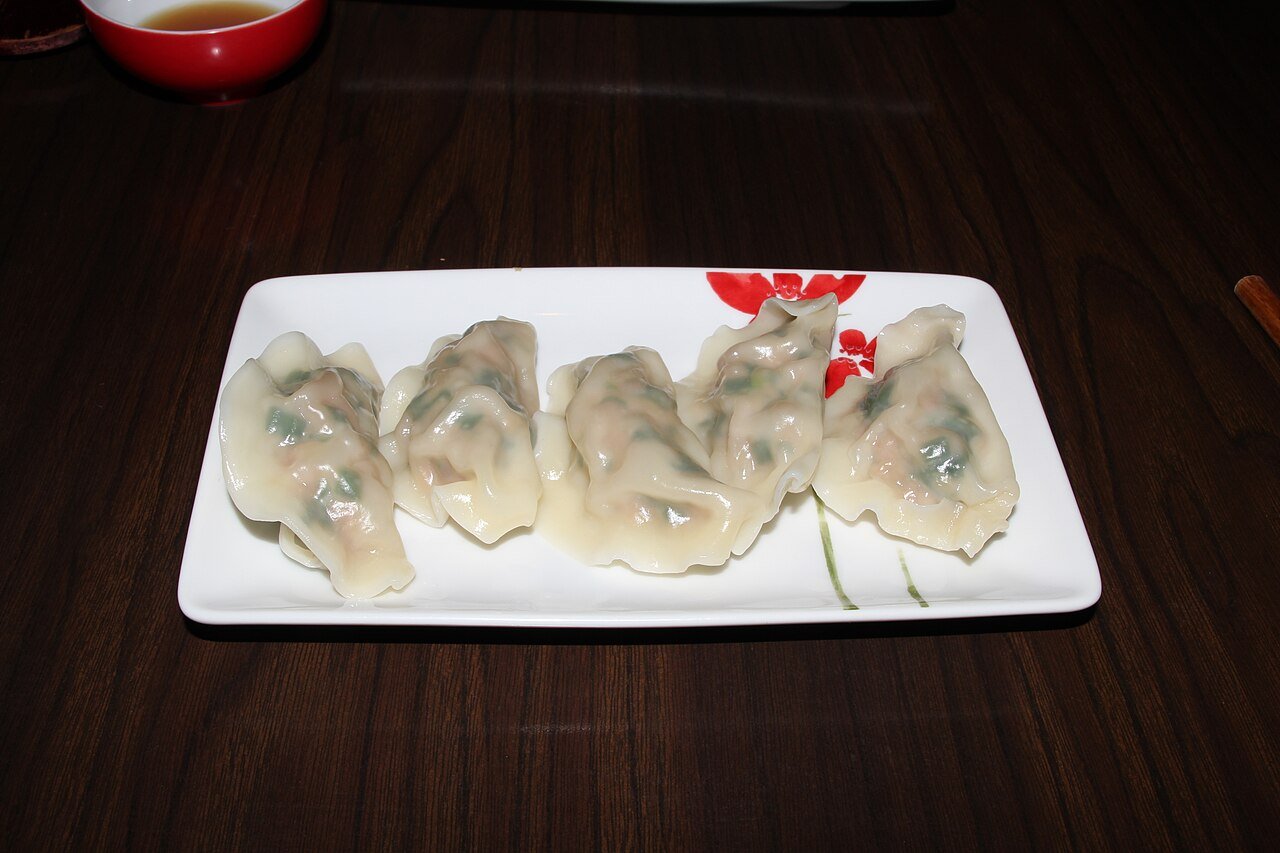
Ingredients
| Ingredient (for 4) | Where to get it, or what to use instead |
|---|---|
| Mandu, 16 to 20 pieces | Frozen mandu from any Korean or Asian grocery — pork or kimchi filling both work — is the honest default here. Making them from scratch is worthwhile once, mostly to understand the filling, but it isn’t a weeknight habit even in Korea. |
| Mandu wrappers, 20 round | Sold as mandu-pi where mandu are sold. Round gyoza or wonton wrappers are the easiest substitute outside Korea and behave almost identically, just slightly thinner. |
| Ground pork, 200 g / 7 oz | For homemade filling. Ground turkey or chicken works, with a little extra sesame oil added to make up for the lost fat. |
| Firm tofu, 150 g / 5 oz | Press it under a weight for 15 minutes first, or the filling turns watery and the dumplings split as they boil. |
| Mung bean sprouts, 100 g / 3 1/2 oz | Blanched 1 minute, cooled, and squeezed dry before chopping — same rule as the tofu: any extra water in the filling works its way out during cooking. |
| Beef brisket, 200 g / 7 oz | For the broth. Skip it for 1.4 L anchovy-kelp stock (simmer 8 to 10 dried anchovies and a piece of dried kelp 15 minutes, strain) if you’d rather keep it meatless on the broth side even while the filling has pork. |
| Garlic chives (buchu) | Standard scallions chopped fine are the easiest swap; you lose a slightly grassier, more pungent note but the filling still tastes correct. |
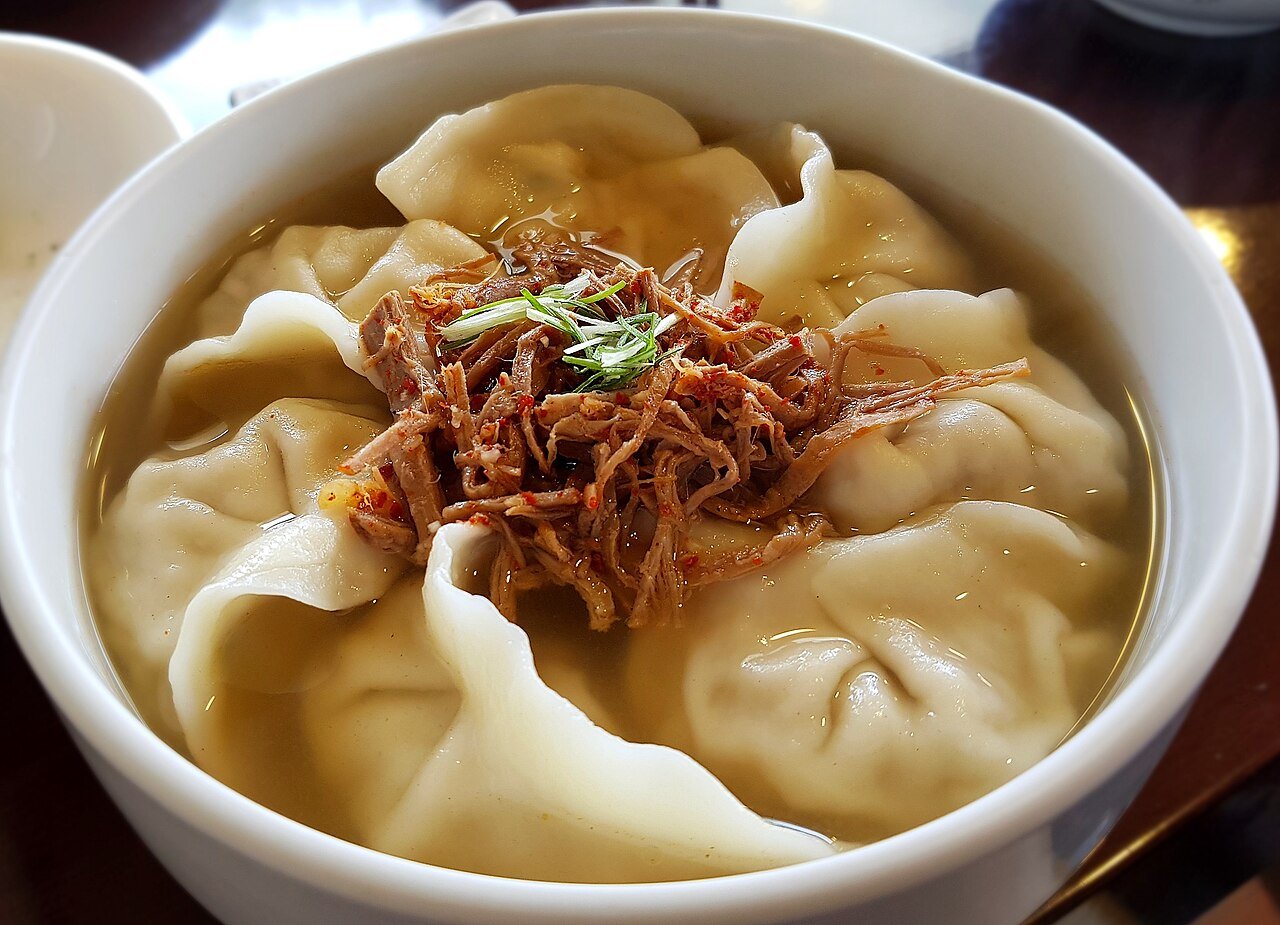
Manduguk Recipe
Ingredients
Method
- If making mandu from scratch, mix the pork, tofu, bean sprouts, chives, garlic, soy sauce, sesame oil and egg in a bowl until it holds together in one mass.
- Place a spoonful of filling in the center of each wrapper, wet the edge with water, fold in half and pinch the seam shut, then bring the two bottom corners together and press to seal, like tortellini.
- Brown the beef in a dry pot over medium heat 2 to 3 minutes, add the water, and bring to a boil.
- Skim the foam, then simmer 15 minutes to build the broth.
- Add the garlic and bring the broth back to a full rolling boil before adding the mandu — a gentle simmer lets the wrappers go soft and split before the filling inside is cooked through.
- Cook the mandu 5 to 7 minutes if fresh, 8 to 10 minutes if frozen straight from the freezer, until they float and the wrappers look slightly translucent.
- If using the egg, drizzle it in a thin stream over the surface in the last 30 seconds and let it set into ribbons without stirring hard.
- Season with soy sauce, salt and pepper, ladle into bowls, and scatter with scallions.
How to Make It
- Mix the filling if making mandu from scratch: pork, pressed and crumbled tofu, chopped bean sprouts, chives, garlic, soy sauce, sesame oil and egg, combined by hand until it holds together as one mass rather than a loose crumble.
- Fill and fold the wrappers. A rounded teaspoon of filling per wrapper is plenty — overfilling is the single most common reason home-folded mandu split open in the pot. Wet the rim with a fingertip of water, fold into a half-moon and pinch the seam closed, then bring the two bottom corners together and press. It doesn’t need to be beautiful. It needs to be sealed.
- Brown the beef in a dry pot over medium heat, 2 to 3 minutes, then add the water and bring it to a boil.
- Skim the foam, then drop to a simmer for 15 minutes to build the broth’s flavor.
- Bring the broth back to a full, rolling boil before the mandu go in. This step is easy to skip and it shouldn’t be — a lazy simmer gives the wrapper time to soften and tear before the filling inside has actually cooked, and you end up with broken dumplings and cloudy broth.
- Cook 5 to 7 minutes for fresh mandu, 8 to 10 for frozen, straight from the freezer with no thawing. You’ll see them puff slightly and rise to the surface, and the wrapper turns a shade more translucent once it’s done.
- Add the beaten egg, if using, in a thin stream over the last 30 seconds, letting it set into loose ribbons rather than stirring it into shreds.
- Season, then serve immediately. Soy sauce, salt and pepper to taste, scallions scattered on top. Like tteokguk, this doesn’t hold well once assembled — the wrappers keep absorbing broth and go soft if the pot sits.
Tips and the Store-Bought Question
The honest truth about manduguk is that the broth is doing most of the work, and a good frozen mandu from a Korean grocery store gets you most of the way to a homemade result with none of the folding. Reserve the homemade version for when you actually want the process — it’s a genuinely pleasant thing to do with another person in the kitchen, less so solo at 7pm on a Tuesday.
If you do fold your own, don’t crowd the freezer bag afterward. Lay unfilled mandu on a tray, freeze them individually for an hour, then bag them up — otherwise they weld into one solid block and you’ll be chiseling dumplings apart with a butter knife in six weeks.
Leftover cooked mandu in broth don’t reheat cleanly; the wrappers keep breaking down. If you’re making a double batch, freeze the uncooked mandu separately from the broth and combine only what you’re about to eat.
FAQ
Can I use frozen dumplings for manduguk?
Yes, without qualification. It’s what a large share of Korean households actually do, and the flavor difference against homemade is smaller than most people expect. Add them straight from frozen; there’s no need to thaw first, and thawing can actually make the wrappers stick to each other.
Can I make mandu ahead and freeze them?
Yes — freeze them uncooked, laid out flat on a tray until solid before bagging, so they don’t stick together. Cook straight from frozen, adding a couple of extra minutes to the simmer time.
Do I need to make my own dumpling wrappers?
No. Making mandu-pi from scratch is a real skill and not one this recipe asks of you. Store-bought round wrappers, or gyoza and wonton wrappers as a substitute, are standard practice even for cooks who make everything else from scratch.
Related Recipes
Manduguk’s natural partner is tteokguk — read that one alongside this if you’re building a proper New Year breakfast, since the two are traditionally eaten together and some families combine them into a single pot. For another everyday soup built on a similar clear broth and quick technique, kimchi jjigae is the spicier, more assertive direction to go. And the Korean pantry starter kit is worth a look before your first grocery run for anchovies, kelp and soy sauce.