Kimchi jjigae can cover for a careless cook with a spoonful of chili paste, and clear galbitang cannot. The recipe card on this page calls the cold-water soak the single biggest factor in whether the broth ends up clear or muddy, and the hours that follow ask for low heat and a skimmer. The soup rewards patience far more than speed.
Galbitang, gomtang and seolleongtang are all beef soups, yet they run on very different clocks, and mixing them up sends cooks to the wrong pot. The card’s way of clearing the broth also differs from the Korea Food Promotion Institute’s, and the difference is worth knowing before the first soak.

Three beef soups, three very different clocks
The Encyclopedia of Korean Culture entry defines galbitang as a soup of cut beef short ribs, and describes the method as cutting the ribs into pieces of 5 to 6 cm and simmering them in plain water until the meat is tender. It says the soup appears in the table settings of court banquets from the 1890s, and that the ribs themselves are presumed to have been eaten since the late Goryeo period. The bones, it adds, release enough that the broth is clear yet distinct from other clear soy-seasoned soups.
Seolleongtang is built differently. The encyclopedia’s seolleongtang entry describes a broth from the head, feet, meat, bones and offal simmered for a long time, milky and rich. It gives several explanations for the name, among them that it comes from a royal ritual at the Seonnongdan altar, and another that traces it to a Mongolian way of boiling meat in plain water. The origin stays unsettled, so only the cooking facts are used here.
Gomtang falls between the other two on water, and its bone stage is repeated until the broth turns milky. The institute’s recipes put numbers on all three, and the contrast is largest in water and time:
- Galbitang (recipe): 1 kg of short ribs in 12 cups (3 L) of water. The ribs boil for 30 minutes, then simmer for another 30 with the radish, then 5 minutes more after seasoning, about 65 minutes of boiling in all.
- Gomtang (recipe): 500 g of ox leg bones with 300 g each of brisket, tripe and intestine in 40 cups (10 L) of water. The bones are boiled and the first water discarded, then simmered until the broth turns milky, and the process is repeated about three times. The meats and radish then cook for 50 minutes, and the assembled soup for 20 more.
- Seolleongtang (recipe): 1.5 kg of leg bones and 500 g of scrap bones with 500 g of brisket in 60 cups (15 L) of water. The bones soak overnight, simmer 5 to 6 hours, and go back into fresh water for two further rounds of 2 to 3 hours each.
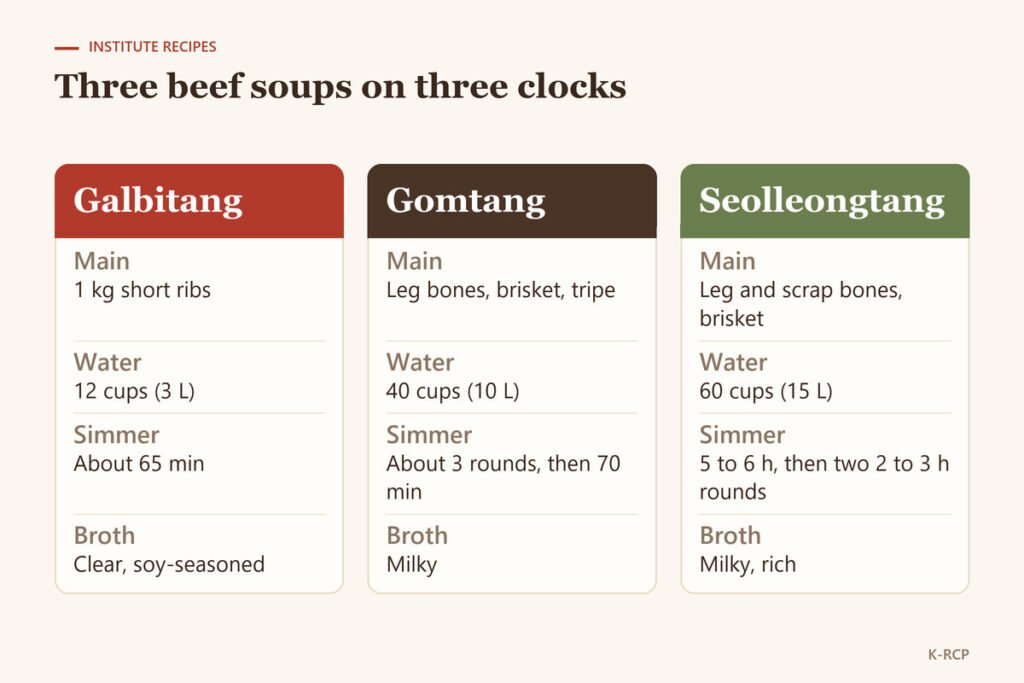
In short, galbitang is the only one of the three you can start after work and eat the same evening. The other two are all about getting a milky broth out of bone, while galbitang is about keeping the broth clear.
Short ribs, radish and soup soy sauce: the amounts that matter
The institute’s recipe for four people uses 1 kg of short ribs cut into 5 cm lengths, a scallion, 6 cloves of garlic, 3 L of water, 300 g of radish and soup soy sauce, with an egg for garnish. The recipe card on this page is a little larger and a little different: 1.2 kg of bone-in short ribs in 2.5 liters of water, with onion, ginger and peppercorns, 400 g of radish, a small piece of dried kelp, 100 g of dangmyeon glass noodles and 2 tablespoons of soy sauce. Neither is the one correct version, and the differences are worth knowing before you shop.
- The recipe below relies on onion, ginger and peppercorns for a clean base; the institute’s version boils the ribs with scallion and whole garlic and adds soy sauce, minced garlic and scallion at the end.
- Kelp and glass noodles are in the recipe below but not in the institute’s version. Adding noodles turns the soup into more of a meal, and the kelp is only in the pot for 20 minutes.
- The radish is the constant. Both versions cook it in the broth until it turns tender, and both treat it as part of the soup rather than a garnish.
Seasoning is where the two recipes differ most in numbers. The institute seasons 3 L of broth with 4 tablespoons of soup soy sauce at the end and uses another 3 tablespoons in the marinade for the ribs, so the ribs are salted on their own before they go back in, while the larger share still goes into the broth. The recipe below seasons 2.5 liters with 2 tablespoons of ordinary soy sauce, a tablespoon of garlic and a teaspoon of salt, all in the broth. Neither set of numbers carries over to the other pot, so taste before the final pinch.
Choosing the ribs at the counter
Look for ribs that still carry a good layer of meat, not ones trimmed almost to the bone. The institute’s tip points the same way: leave the fat on the ribs while they boil and skim it off afterwards, because the fat is part of what gives a clear soup its flavor. Ask for thick English-cut ribs with one bone per piece, and have them cut into 5 to 6 cm lengths if they are not already.

Blanch the ribs or skim the pot
The card and the institute disagree on how to keep the soup clear, and the disagreement is instructive. Both start by soaking the ribs in cold water to draw out blood, and the card spells it out as one hour with a change of water. After that they split.
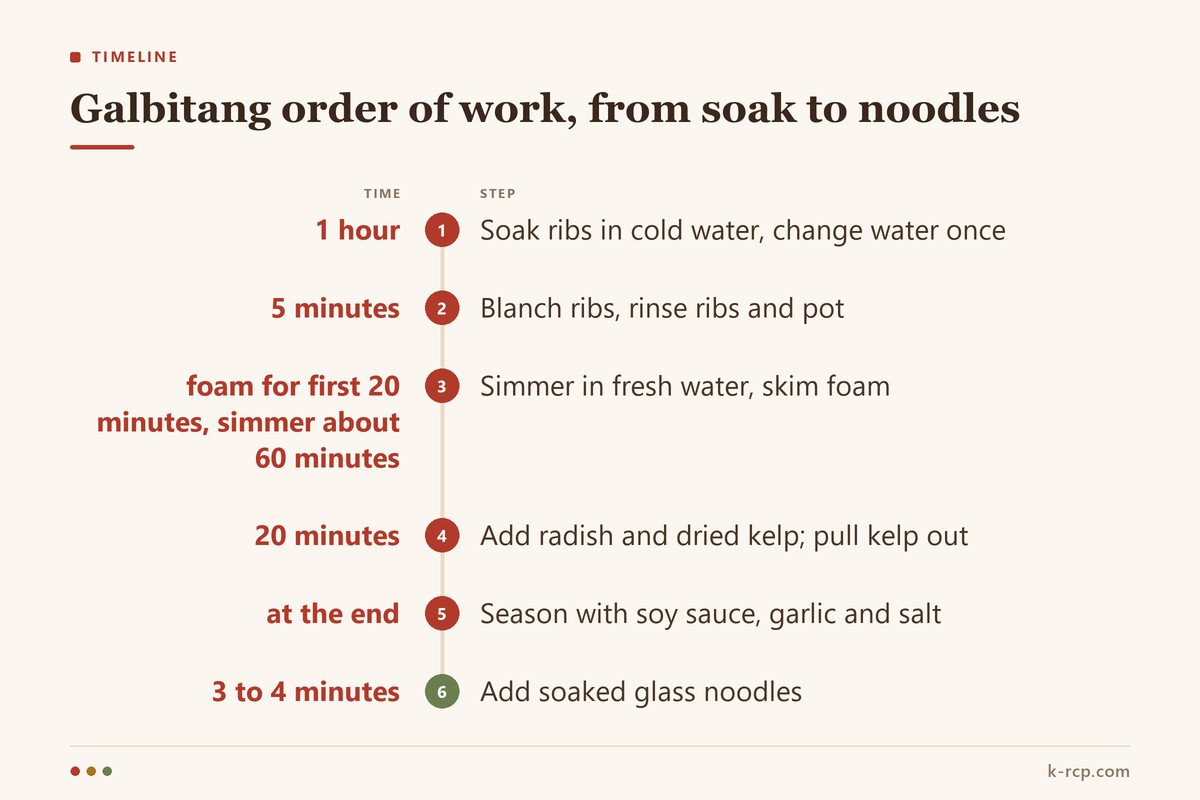
The card’s route blanches the ribs for 5 minutes, drains them, rinses the ribs and the pot, and scrubs off grey foam before starting again with fresh water. It then skims for the first 20 minutes, simmers 60 minutes, adds the radish and kelp for 20, seasons, and finishes with the noodles. That is 90 minutes of cooking, and every bit of scum is thrown out with the blanching water.
The institute’s route keeps the first broth. It boils the ribs with scallion and garlic for 30 minutes at medium heat, skimming foam and fat as it goes, while the radish boils in a separate pot for 30 minutes. The ribs are then trimmed of tough tendon and lumps of fat, scored at 1 cm intervals, and tossed in a marinade of soup soy sauce, scallion, garlic, sesame oil and pepper. They go back into the skimmed broth with the radish for 30 minutes at low heat, and the soup is seasoned with more soy sauce, garlic and scallion and cooked 5 minutes longer.
Galbitang Recipe
Ingredients
Method
- Soak the short ribs in cold water for 1 hour, changing the water once, to draw out blood. This is the single biggest factor in whether your broth ends up clear or muddy.
- Bring a pot of water to a boil and blanch the ribs for 5 minutes. Drain, rinse the ribs and the pot, and scrub off any grey foam clinging to the bone.
- Return the ribs to the pot with 2.5 liters / 10 cups fresh water, the onion, ginger, and peppercorns. Bring to a boil, then reduce to a low simmer, skimming any foam for the first 20 minutes.
- Simmer, mostly covered, for 60 minutes, until the meat is tender but not falling off the bone.
- Add the radish and the piece of dried kelp. Simmer 20 minutes, until the radish turns translucent at the edges. Remove the kelp before it’s been in longer than 20 minutes, or the broth turns slightly bitter and slimy.
- Stir in the soy sauce, garlic, and salt. Taste — the broth should be clean and only lightly salted, not as assertive as a stew.
- Add the soaked glass noodles and simmer 3 to 4 minutes, until translucent and tender.
- Ladle into bowls with a rib standing up in each one. Top with julienned egg, scallions, and a crack of black pepper.
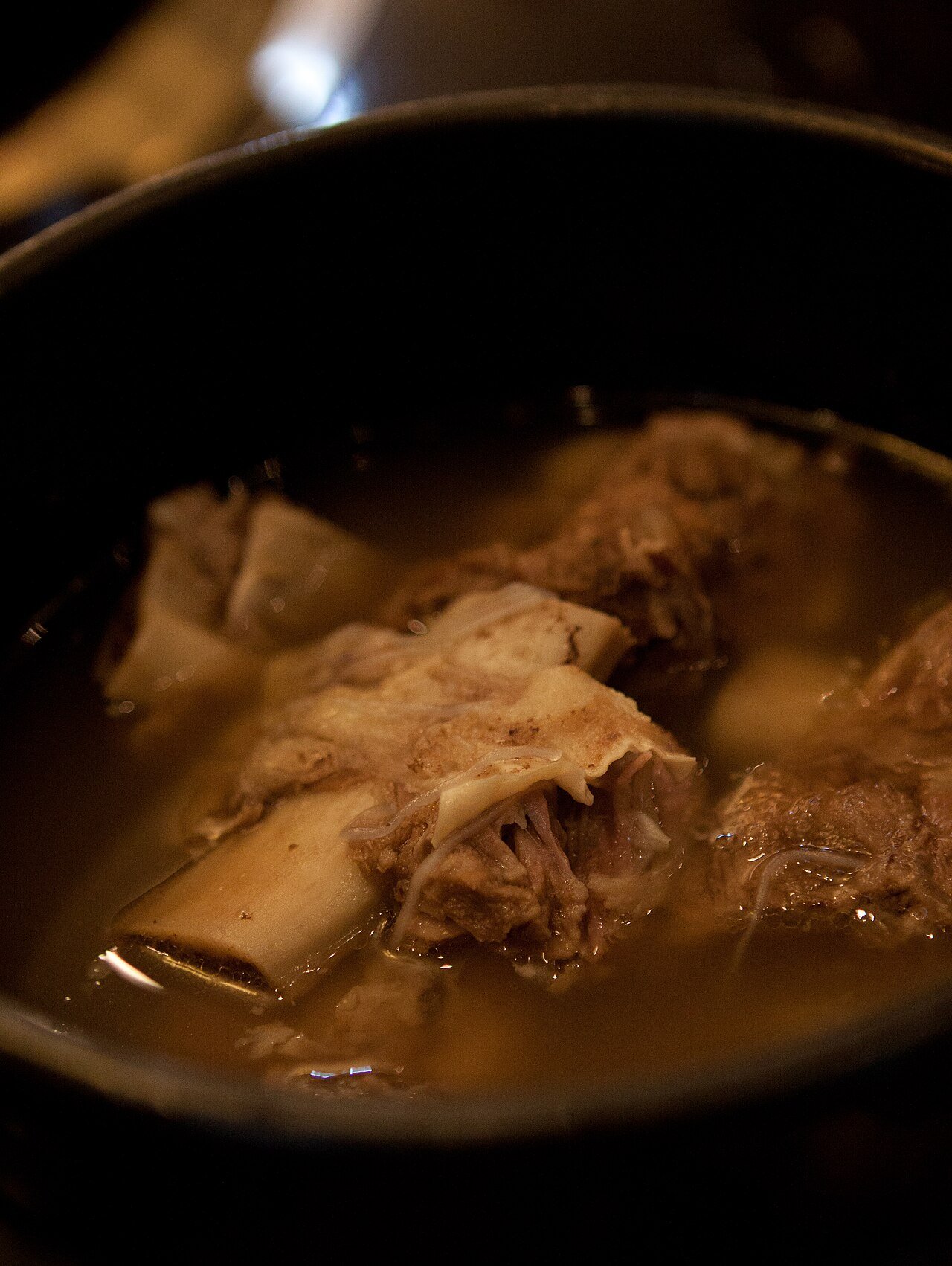
Recipe card photo: File:Galbi-tang 1.jpg by Jirka Matousek, CC BY 2.0, via Wikimedia Commons.

The timeline below puts the blanch-first version on one clock, from the first soak to the last three minutes of the noodles.
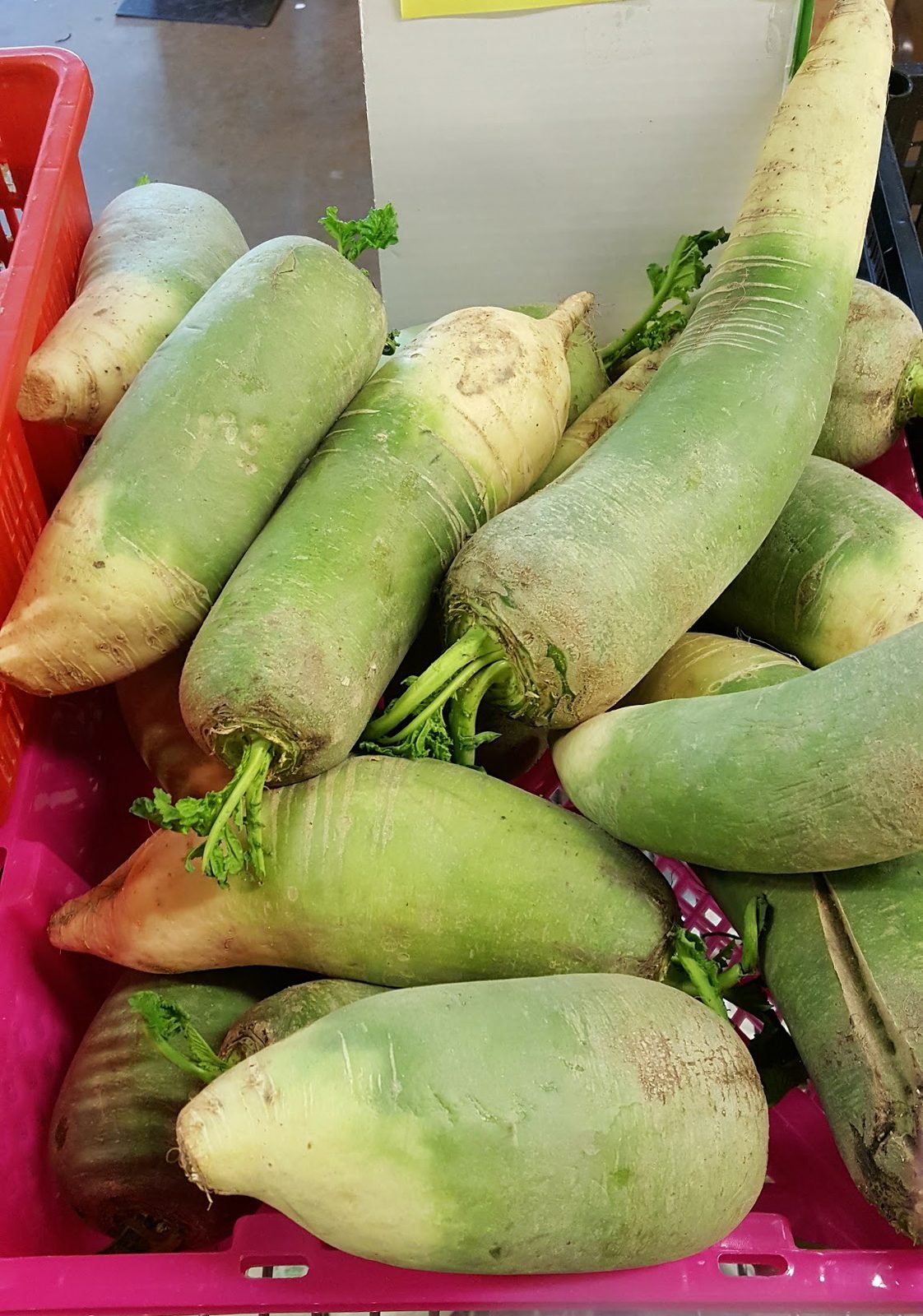
The radish deserves one extra note. The institute cuts it into 4 cm pieces, boils it on its own, and later cuts it into 4 by 2.5 by 2.5 cm blocks before it returns to the soup. The recipe below keeps it in thick chunks and cooks it in the broth for the last 20 minutes, until the edges turn translucent. Both treatments aim at the same thing: radish that has given up its sweetness to the soup but still holds a shape on the spoon.
This post follows the card because a blanch is more forgiving than skimming: the cloudiness leaves the pot with the water. The institute’s route gives a more seasoned rib, since the marinade goes onto the meat rather than into the broth, and it is the one to try if you like each rib to carry its own flavor. Either way, keep the heat low once the long simmer begins, so the surface only trembles, and season at the end. The soup reduces as it cooks, and clear broth has no way of hiding a heavy hand with salt.
At the table, and what to do with the leftovers
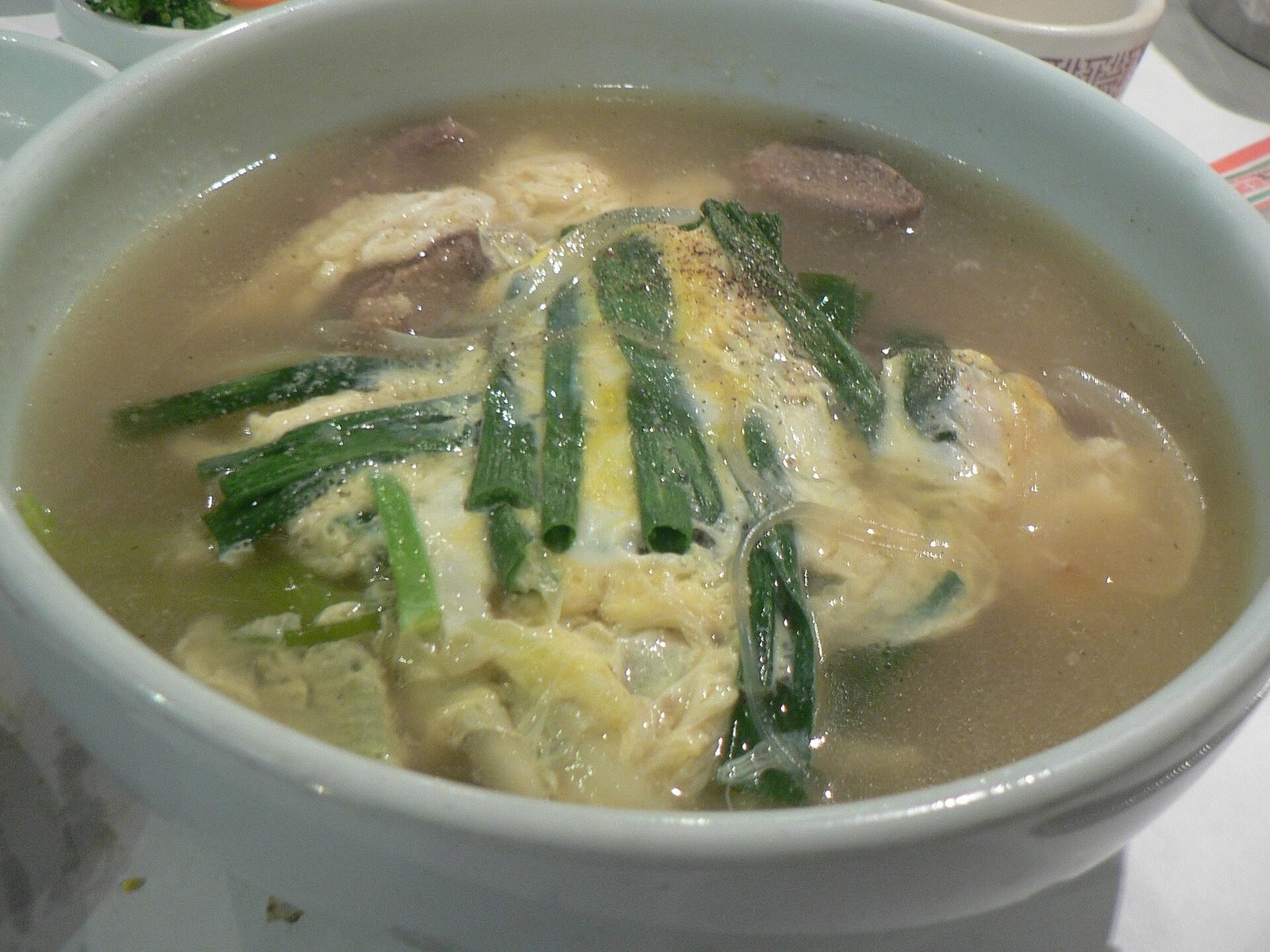
Ladle the soup into bowls with a rib standing in each, then top with thin ribbons of fried egg white and yolk, sliced scallion and black pepper. The garnish is made by frying white and yolk separately in a thin layer and cutting it into strips, which the institute’s recipe also uses. Plain rice and a side of kimchi are the usual company, and the crisp cubed radish kimchi in the kkakdugi recipe fits the clear broth well because both are built on radish.
Plan the evening around the passive steps. The one-hour soak needs no attention, so start it first and cut the radish, garlic and scallions while the ribs sit. Only the 5-minute blanch and the first 20 minutes of skimming ask for your eyes. After that the pot needs a low flame and a lid left slightly open, and you can make the egg ribbons and slice the garnish while the radish cooks. Counting the soak, the steps below add up to roughly two and a half hours from the first pan of water to the first bowl.
Leftovers keep in the refrigerator and reheat best over gentle heat, since a hard boil clouds the broth just as it does in the first cook. A layer of fat sets on top once the soup is cold: skim it for a lighter bowl, or stir it back in for a richer one. If you freeze the soup, freeze it without the noodles and egg and add them fresh after reheating. For a bone-in soup with a very different personality, gamjatang, the pork bone soup, is the natural comparison, and for a clear broth at the opposite temperature, cold naengmyeon covers noodles in chilled broth.
Swaps for hard-to-find ingredients, and what each one changes in the bowl
| Hard to find | Use instead | What changes |
|---|---|---|
| English-cut short ribs | LA-cut (flanken-style) ribs, cut across the bone into thin strips | Cooks faster, so check for tenderness well before the 60 minutes are up. You lose the tall whole-rib presentation. |
| Korean radish (mu) | Daikon | The card calls it nearly identical; keep the thick chunks and test one at the 20-minute mark. |
| Dried kelp | Leave it out | The broth is slightly less rounded but still clean. |
| Dangmyeon glass noodles | Plain rice on the side | Nothing to turn rubbery when the soup is reheated. |
| Soy sauce | Soup soy sauce (guk-ganjang), as the institute’s recipe uses | Start with less than the recipe says and taste; the broth will stay paler. |