There’s a specific sound a bunsik counter makes right before jeyuk bokkeum lands on the table — a skillet still audibly sizzling, a server sliding it onto a trivet with a hot pad, someone at the next stool already reaching for the lettuce leaves stacked next to a bowl of rice. The pork is dark red, glossy, a little charred at a few edges, and the onion underneath it has gone soft and sweet from sitting in the same sauce. What almost never survives the trip from restaurant to home kitchen is that glaze. Most home versions of this dish come out of the pan swimming in a thin, pinkish liquid instead — flavorful, technically, but nowhere near that thick, clinging sauce. The fix is really about two decisions: how thin the pork is sliced, and when the vegetables go into the pan.
Quick Facts
| Time | 20 min prep (plus a 30-min marinate), 15 min cook |
| Serves | 4 |
| Difficulty | Easy |
| Spice level | 3/5, adjustable with the gochugaru |
| Vegan? | No easy substitute for the pork’s texture — firm tofu, marinated and pan-fried, gets the flavor but not the same chew |
What Jeyuk Bokkeum Actually Is
Jeyuk bokkeum (제육볶음) is thin-sliced pork stir-fried in a gochujang-based sauce, usually with onion and sometimes cabbage, served hot straight out of the pan with rice and a stack of lettuce or perilla leaves for wrapping. It’s standard home cooking and standard bunsik-restaurant food in roughly equal measure — the kind of dish that shows up on a weekday dinner table as often as it does at a lunch spot near an office building. It sits in the same spicy-stir-fry family as dak-galbi, which does essentially the same thing with chicken instead of pork, and it’s a close cousin of buldak in terms of sauce base, though jeyuk bokkeum leans a little sweeter and less aggressively hot by default.
Ingredients, and What to Use Instead
| Ingredient | Where to get it, or what to use instead |
|---|---|
| Pork shoulder or belly, 600 g / 1.3 lb, thin-sliced | Ask a butcher to slice it thin, or buy it pre-sliced at a Korean grocer — it’s usually sold specifically labeled for bulgogi or jeyuk bokkeum. Chicken thigh, thinly sliced, is the common swap; it’s milder and cooks noticeably faster. |
| Gochujang, 3 tbsp | The backbone of the sauce. No real substitute preserves both the heat and the sweet-fermented depth, but 2 tbsp miso plus 1 extra tbsp gochugaru gets close, savory instead of sweet. |
| Gochugaru, 1 tbsp | Coarse Korean chili flakes. Cayenne works in a pinch at about a third the volume — it’s sharper and less fruity, so start low. |
| Cabbage, 1/4 head | Standard green cabbage. Skip it and add more onion if you’d rather keep things simpler; the dish loses some bulk but nothing essential. |
| Onion, garlic, ginger, sugar, rice wine, soy sauce | All standard pantry items, no notes needed. |
Slice It Thin, or the Marinade Never Gets In
Jeyuk bokkeum recipes that come out bland at the center, no matter how long the pork marinated, usually have one problem: the pork wasn’t sliced thin enough. At anything over about 5 millimeters, a soy-and-gochujang marinade barely penetrates past the surface in thirty minutes, so you end up with a well-seasoned exterior wrapped around meat that tastes like almost nothing. Korean groceries sell pork pre-sliced to about 3 millimeters specifically for this reason. If you’re slicing it yourself, freeze the pork for 20 to 30 minutes first — just until it’s firm but not solid — and it slices far more evenly and thinly than pork at room temperature, which tends to squish and tear under the knife.
Sear First, Vegetables Second — Otherwise You Get Soup
The other reliable failure point is adding the onion and cabbage in at the same time as the pork. Both vegetables release a fair amount of water as they cook, and if that water hits the pan before the pork has had a chance to sear and the sauce has had a chance to reduce and thicken, everything just simmers together in a thin, watery liquid instead of concentrating into a glaze. Give the pork a genuine head start — sear it undisturbed, let the sauce start clinging and reducing on its own — and only then add the vegetables for a short, high-heat stir-fry at the end. They only need two or three minutes; the goal is soft at the edges with some bite left, not fully cooked through, and they should be coated in an already-thick sauce rather than sitting in a puddle contributing more liquid of their own.
Crowding the pan makes this worse. A skillet loaded with pork straight from the fridge drops the pan’s temperature fast, and the meat releases its own moisture and starts steaming instead of searing before the surface ever gets hot enough to brown. If your pan isn’t genuinely wide, cook the pork in two batches rather than one crowded one — it’s a few extra minutes for a meaningfully better result.
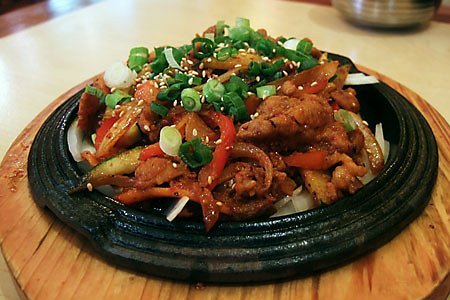
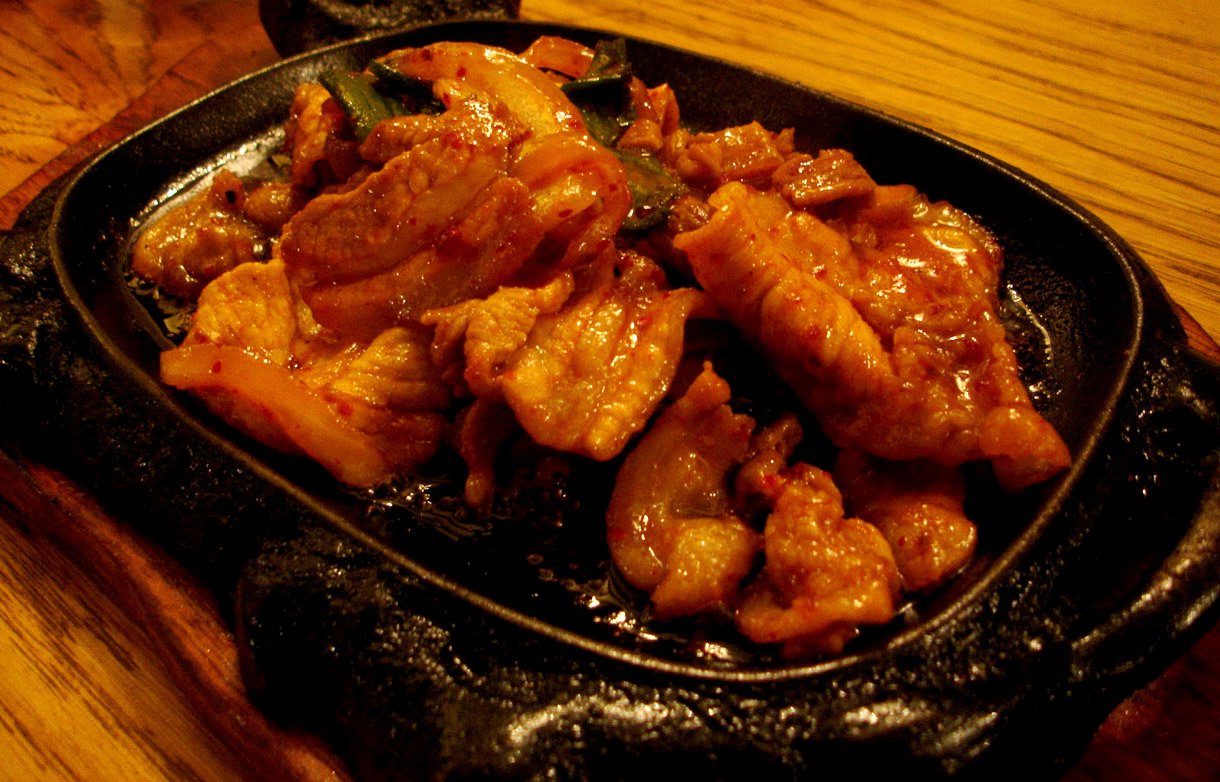
Jeyuk Bokkeum Recipe
Ingredients
Method
- Whisk together the gochujang, gochugaru, soy sauce, sugar, rice wine, grated onion, garlic, ginger and black pepper.
- Toss the pork in the marinade and let it sit at least 30 minutes at room temperature, or up to overnight refrigerated for a deeper flavor.
- Heat the oil in a wide skillet or wok over high heat until it’s shimmering.
- Add the pork in a single layer, in batches if your pan isn’t wide enough to avoid crowding, and let it sear undisturbed for 1 to 2 minutes before stirring.
- Cook, stirring occasionally, until the pork is mostly cooked through and the sauce has started to thicken and cling, about 5 to 6 minutes.
- Add the onion and cabbage. Stir-fry over high heat for 2 to 3 minutes, just until they’ve softened at the edges but still have some bite.
- Add the fresh chili in the last minute, if using.
- Take the pan off the heat, stir in sesame oil, and scatter scallions and sesame seeds over the top.
How to Make It
- Mix the marinade — gochujang, gochugaru, soy sauce, sugar, rice wine, grated onion, garlic, ginger and black pepper.
- Marinate the pork at least 30 minutes. Overnight, refrigerated, goes deeper, but thirty minutes on thinly sliced pork already does real work.
- Get the pan properly hot before anything goes in — oil shimmering, close to smoking.
- Sear the pork in a single layer, in batches if needed, undisturbed for the first 1 to 2 minutes.
- Cook 5 to 6 minutes total, stirring occasionally, until the pork is nearly done and the sauce is visibly thickening.
- Add onion and cabbage. Two to three minutes of high heat, no longer — you want them softened, not limp.
- Fresh chili in the last minute, if using.
- Off the heat, finish with sesame oil, scallions and sesame seeds.
Common Mistakes
Watery sauce despite a long marinate: the vegetables went in too early, before the pork had a chance to sear and the sauce had a chance to reduce on its own. Give the pork a real head start.
Bland pork despite plenty of sauce in the pan: it was sliced too thick for the marinade to penetrate in the time given. Thinner slices, or a longer marinate — ideally both.
Meat that’s gray and boiled-looking rather than seared: the pan was overcrowded or not hot enough to start. Cook in batches and don’t add the pork until the oil is genuinely hot.
Storage
Jeyuk bokkeum keeps 3 days refrigerated and reheats well in a hot pan for a couple of minutes, which actually helps re-thicken any sauce that loosened up in storage. It’s not an ideal microwave dish — the pork toughens unevenly — but it’s fine in a pinch on a lower power setting.
Common Questions
Why is my jeyuk bokkeum watery instead of glazed?
Almost always the vegetable timing. Onion and cabbage release water as they cook, and if they go into the pan before the pork has seared and the sauce has started reducing, everything cooks together into a thin liquid. Sear the pork first, add vegetables only for a short finish at the end.
Can I make jeyuk bokkeum without gochujang?
You’ll lose some depth, but 2 tablespoons of miso plus an extra tablespoon of gochugaru gets you a savory, spicy stand-in. It reads less sweet and slightly saltier, and the sauce won’t cling quite as thickly, since gochujang’s starch content is part of what gives the glaze its body.
What’s the best cut of pork for this dish?
Shoulder is the standard choice — enough fat to stay juicy through a hot sear, but not so much that it renders out and leaves the meat dry. Belly works too, richer and a bit more forgiving if you overcook it slightly.
Related
If the sauce here appealed to you, buldak uses a related chili base pushed hotter and built around chicken instead of pork. Dak-galbi is the closest chicken equivalent to this exact stir-fry technique, sauce and vegetable timing included. And the Korean pantry starter kit covers which gochujang and gochugaru are worth buying first if this is your entry point into Korean cooking.