At 11:40 on a weeknight, the one lit doorway left on the block is a convenience store with a hot-water dispenser, a microwave and a stool along the window. Most visitors grab a snack and walk out, which skips the part of the shop built for sitting down to a whole meal. Every price below carries the month it was reported.

Why the stores are built for sitting down to eat
Four chains cover the country: CU, GS25, 7-Eleven and Emart24, and the April 2026 Newdaily comparison cited below puts all four side by side. Every chain sells the same core formats, so there is no need to agonize over which sign to walk under.
The layout is nearly always the same. Drinks fill the back wall in glass-doored coolers, the chilled shelf near the entrance holds rice triangles, sandwiches and lunch boxes, and dry aisles carry instant noodles and snacks. Somewhere along a wall is the counter with a hot-water dispenser, a microwave and a bin of chopsticks. That counter is why the whole system works as a meal. The numbers support the idea that people eat real meals here: GS25 told Hankyung that its lunch box sales grew 51.0 percent in 2023, 28.1 percent in 2024 and 23.5 percent in 2025.
The folk museum’s encyclopedia gives some background to the “snack meal” habit. Its entry on bunsik explains that the word began as flour-based food and now means simple one-plate dishes such as tteokbokki and kimbap, popularized by the 1960s and 1970s campaigns to eat flour and mixed grains. Convenience stores sell the next step of the same idea.
Triangle kimbap and the wrapper that opens itself
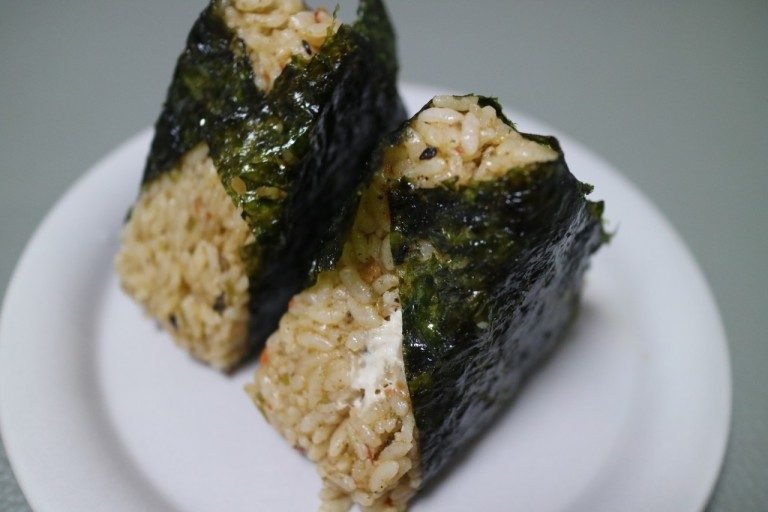
The signature item is samgak gimbap (삼각김밥), a triangle of seasoned rice with a filling in the middle. The Korea JoongAng Daily explained the format as long ago as 2003: the rice is in plastic and the seaweed is kept apart from it by another layer of clear wrap until you open the pack. The same article says triangular gimbap were introduced to Korea in the 1990s.

Opening it without losing the seaweed
Open it the way the wrapper shows: pull the tab or string at the top, then pull the two sides apart. The film slides away and the seaweed folds around the rice by itself. Tear it from the wrong end and the seaweed sticks to the plastic while the rice drops out. The 2003 JoongAng feature gave the same instruction with some humor: pull the string, pull the sides apart and cross your fingers.
Which filling to try first
Tuna mayo (참치마요) is the default and the safest first try. According to a Newdaily comparison of the four chains in April 2026, GS25’s tuna mayo sells more than 50 million units a year, and Seven-Eleven’s triangle kimbap sales rose 17 percent from January to March over the same months of the previous year. The reviewers found that rice texture, seasoning and filling quality differ noticeably between chains, and one noted that the 7-Eleven tuna mayo costs 1,200 won. Spicy stir-fried pork, bulgogi and spicy chicken are the other staples; a chili graphic usually marks the hot ones. It is the single-serving version of what we cover in the full-size version of this roll.
The chains compete on the rice as much as the filling, per the same article. CU leans on ingredients, with 29 products under its in-house “PBICK The Kitchen” concept; GS25 renewed its triangle kimbap with about 10 percent more topping by weight and kelp extract for savoriness; Seven-Eleven started a rice project to keep chilled rice from hardening; and Emart24 added seasoned vinegar to its rice. One CU soft-boiled-egg triangle in the review listed 46 g of carbohydrate and 8 g of protein, which is why a single big one can pass for a light meal.
Cup ramyeon at the hot water station
Size and heat symbols
Sizes matter more than brands. Small cups are a snack; the big bowl-shaped ones are a meal. If you want to avoid heat, look for the chili icon or red flame printed on the package, because “spicy” on a Korean noodle label is not decorative.
The three-minute routine
Peel the lid back to the arrow, tip in the sachets, fill to the printed line from the free hot-water dispenser, close the lid and wait the time printed on the package, which is often around three minutes. Chopsticks sit in a box on the same counter. For a bowl worth making on purpose, see the packet-by-packet ramyeon upgrades.
The microwave shelf
Lunch boxes
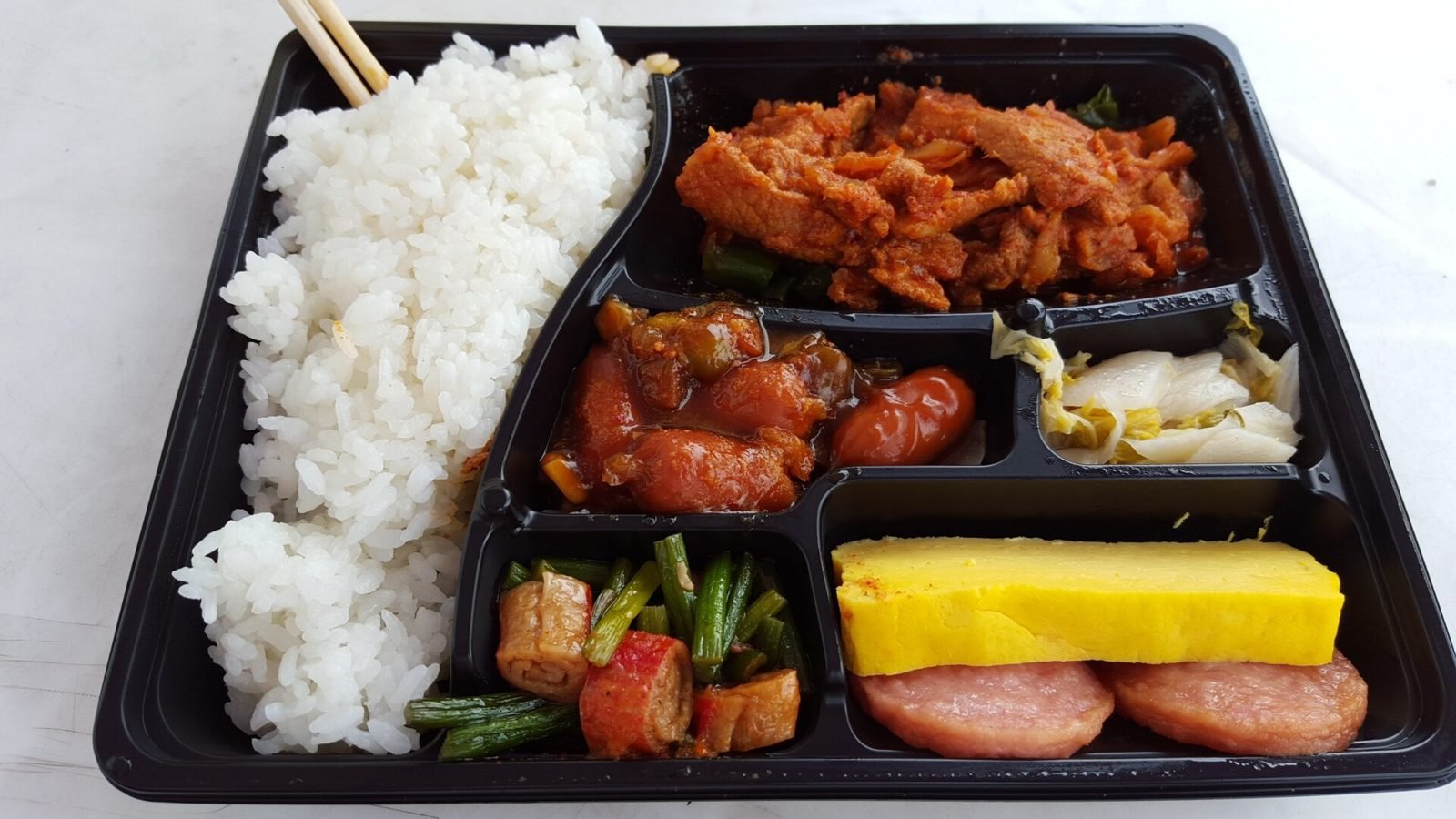
Next to the water dispenser is a microwave, which stores let customers use for what they buy. What goes inside is the dosirak (도시락), a compartmented tray with rice on one side and a mix of meat, egg and seasoned sides on the other. As an example of the price range, GS25 launched a limited January 2026 box at 3,900 won with rice and seven side dishes, including grilled short ribs, mini pork cutlets, ham, stir-fried potato, a Vienna sausage and stir-fried kimchi, according to the Hankyung report. It was a one-month item in a new monthly series, so expect the box on the shelf to be a different one when you visit. Peel the film back partway and heat for around ninety seconds to two minutes, or follow the time on the label.
The monthly series is worth knowing about. GS25 told Hankyung it began planning the “box of the month” line in September 2025, with a new concept in the first week of each month, a seasonal or trend theme, and sale only during that month. For January the concept was value, and a card promotion that ran from 7 to 31 January cut the price by half for NH card payers, which Hankyung described as bringing it into the 1,000-won range. Promotions like that are the reason a sticker price and a receipt can differ.
Sandwiches and the cold case
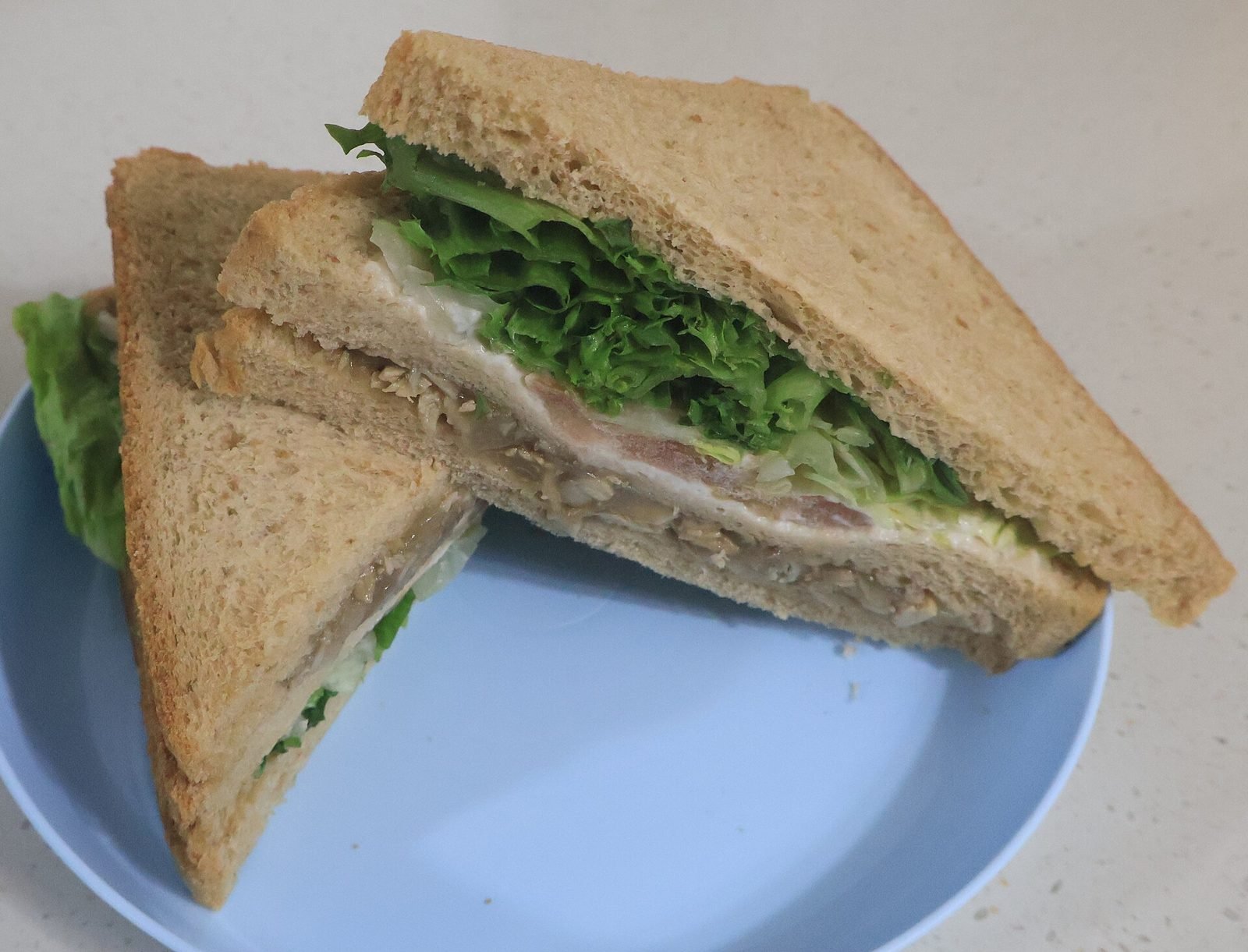

The cold case also carries triangle-cut sandwiches, salads and rice balls that need no heating at all. They are easier to take away, and they suit a first night when you do not want to learn a microwave in a foreign language.
Banana milk and the ice cup
The drink to try is Binggrae banana flavored milk, in a squat, round-bellied bottle. The Asia Business Daily explains that it launched in 1974 in a translucent plastic container modeled on a traditional moon jar, which the development team found at a pottery exhibition, so that it would stand out from the glass bottles and plastic packs of the time. The opening has a lip so the milk does not spill if the container tilts, the translucence shows off the banana-yellow color, the design had been kept for 49 years when the article ran in May 2023, and the shape was registered as a trademark in 2016.
The other summer habit is ice. On the weekend of 11 and 12 July 2026, GS25 said it sold more than one million cups of ice in two days, up 55.9 percent on the same days of the week before, as Newsis reported during a heat wave. Its 400-gram extra-large cup rose by more than 66 percent over the same days, and watermelon sales rose 107.2 percent and frozen desserts 62.8 percent, so the shelves clearly follow the weather. A cup of ice and a chilled coffee from the cooler is a common pairing. In October 2024 the same shelves also carried a TV dessert: the story of the cup is in the Culinary Class Wars chestnut tiramisu page.
If the banana milk is too sweet for you, a cold, lightly sweet rice drink is the Korean answer; the rice-cooker sikhye method shows how it is made.
Reading the 1+1 and 2+1 stickers
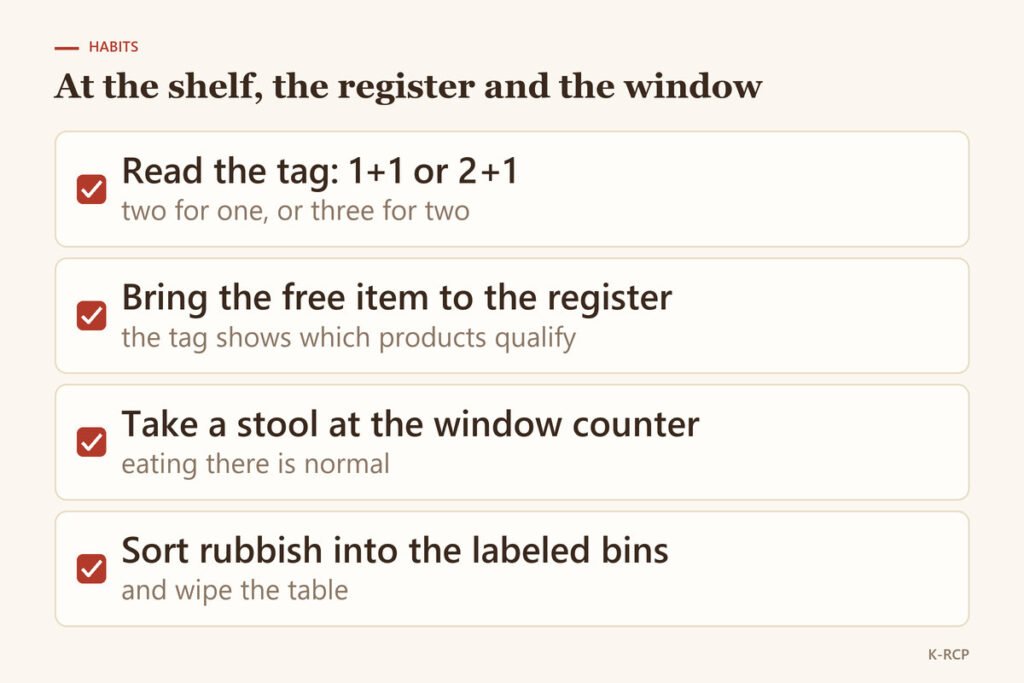
You will see these on shelf edges constantly. 1+1 means buy one and get a second free, so two for the price of one, or 50 percent off each. 2+1 means buy two and get a third free, three for the price of two, roughly 33 percent off each. Both usually apply to identical products or to a group listed on the tag, and the free item has to come to the register with you. Promotions rotate monthly and differ between chains, and the shelf tag shows which items qualify.
Paying, sitting and clearing up
Seating is the part visitors underuse: plenty of stores have a narrow counter with stools along the window, a few tables inside, or plastic chairs on the pavement. Eating there is normal. Separate your rubbish into the labeled bins by the door and wipe the table.
Prices as reported in 2026
Prices move with promotions and ingredient costs, so treat these as dated reference points, not a menu.
| Item | Price in the report | Where and when reported |
|---|---|---|
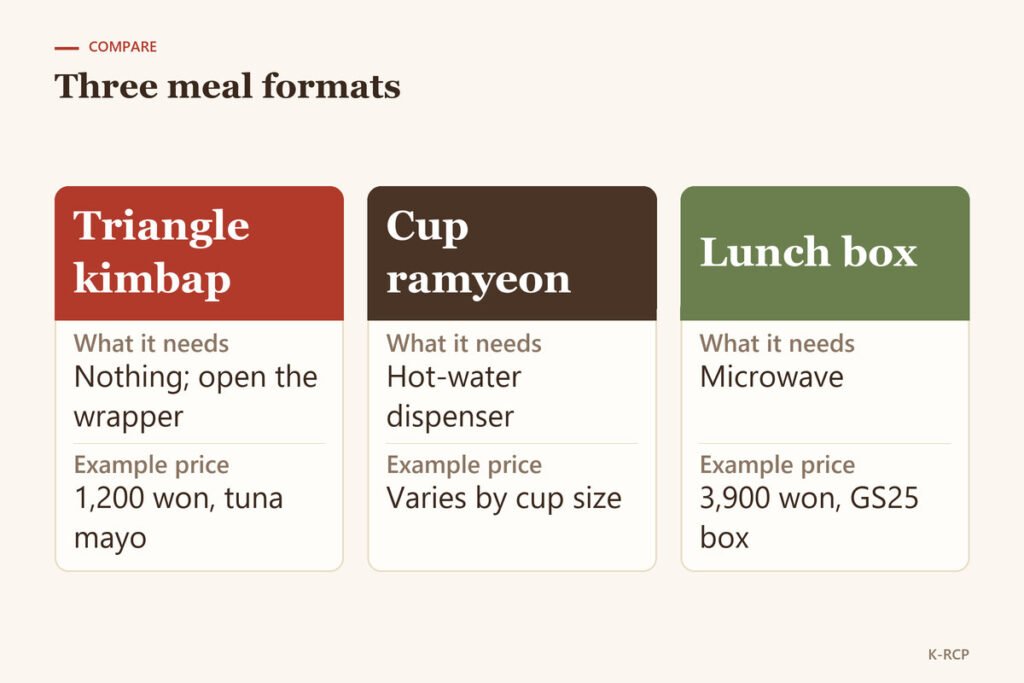
| Tuna mayo triangle kimbap | 1,200 won | 7-Eleven, Newdaily comparison, April 2026 |
| Lunch box with rice and seven side dishes | 3,900 won | GS25 January 2026 limited box, Hankyung |
| Lunch box with a 50 percent card promotion | In the 1,000-won range | GS25, 7 to 31 January 2026, Hankyung |
What should a first-timer buy?
Start with one tuna mayo triangle, one cup ramyeon and a banana milk. That covers the three formats, cold, hot and drink, and at the dated price above the triangle costs 1,200 won. If you are hungrier, swap the triangle for a lunch box and use the microwave. Eat it at the window counter, and try a different filling next time.