Doenjang jjigae doesn’t photograph particularly well and it isn’t trying to. It’s brownish, a little murky, full of vegetables cut into unglamorous chunks. It’s also the stew a lot of Korean households make without really thinking about it — the default pot when nobody’s asked for anything specific and there’s a potato and half an onion sitting around. Nothing about it is a special occasion. That’s kind of the whole point.
The question this doenjang jjigae recipe gets asked more than any other is whether you can just use miso instead. The honest answer is: sort of, but you should know exactly what you’re trading away before you do it.
Quick Facts
| Total time | 25 minutes |
| Serves | 2 |
| Difficulty | Easy |
| Spice level | 1 of 5 (barely there unless you add extra gochugaru) |
| Vegan? | Yes, if you skip the pork or clams and use a kelp-only stock |
Doenjang vs. Miso: What Actually Changes
Both are fermented soybean pastes, and both come from the same basic starting point — cooked soybeans, salt, and time. Where they split apart is in how that fermentation happens.
Doenjang is made from meju, blocks of boiled, mashed soybeans that are dried and hung to ferment in open air for weeks, developing wild bacteria and mold before they’re submerged in brine for months. That long, open-air stage is why doenjang has a stronger, more pungent, almost barnyard-adjacent funk — it’s chunkier in texture too, with visible bits of soybean rather than a smooth paste.
Miso is fermented indoors under more controlled conditions, usually with a rice or barley koji culture added deliberately, and for a shorter time in the case of white and yellow miso. The result is smoother, sweeter, and considerably milder. Red and darker miso varieties, fermented longer, land closer to doenjang’s intensity than white miso does, but even they don’t fully replicate the specific sourness doenjang has.
In practice: if you swap in miso, use somewhat less than the recipe calls for, since miso tends to be saltier gram for gram, and expect a stew that’s rounder and sweeter with less of that assertive fermented edge. It’s a genuinely different pot of soup, not a lesser version — some people prefer it. It’s just not doenjang jjigae in the strict sense.
What Is Doenjang Jjigae?
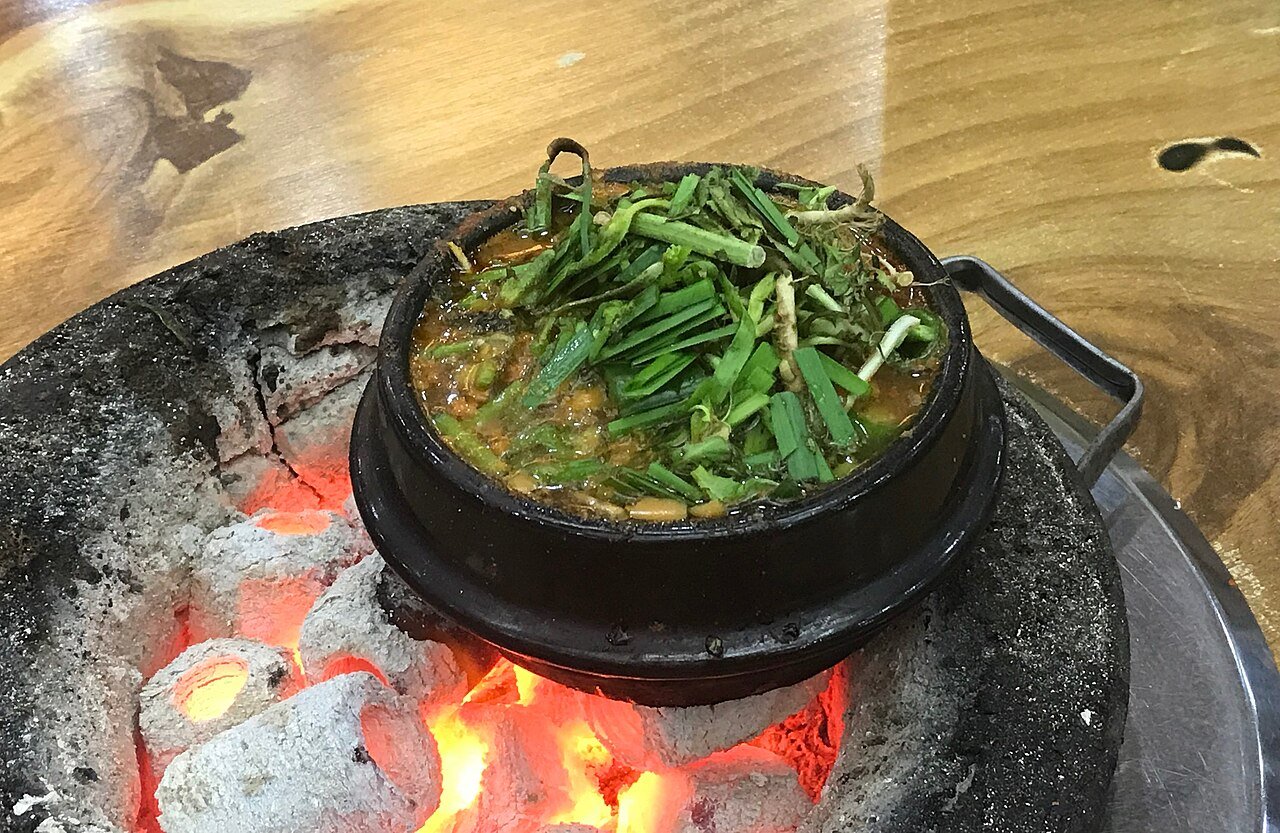
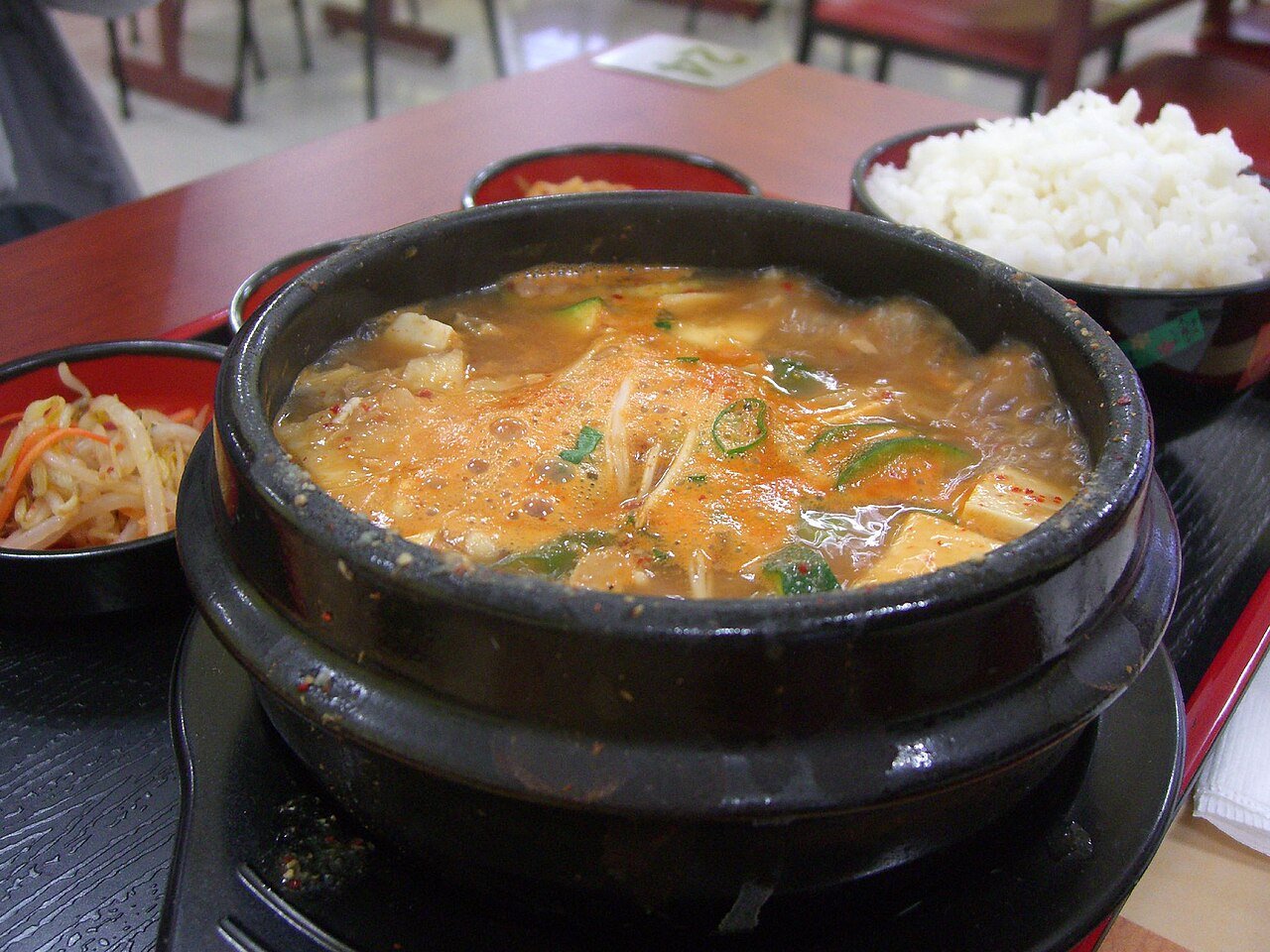
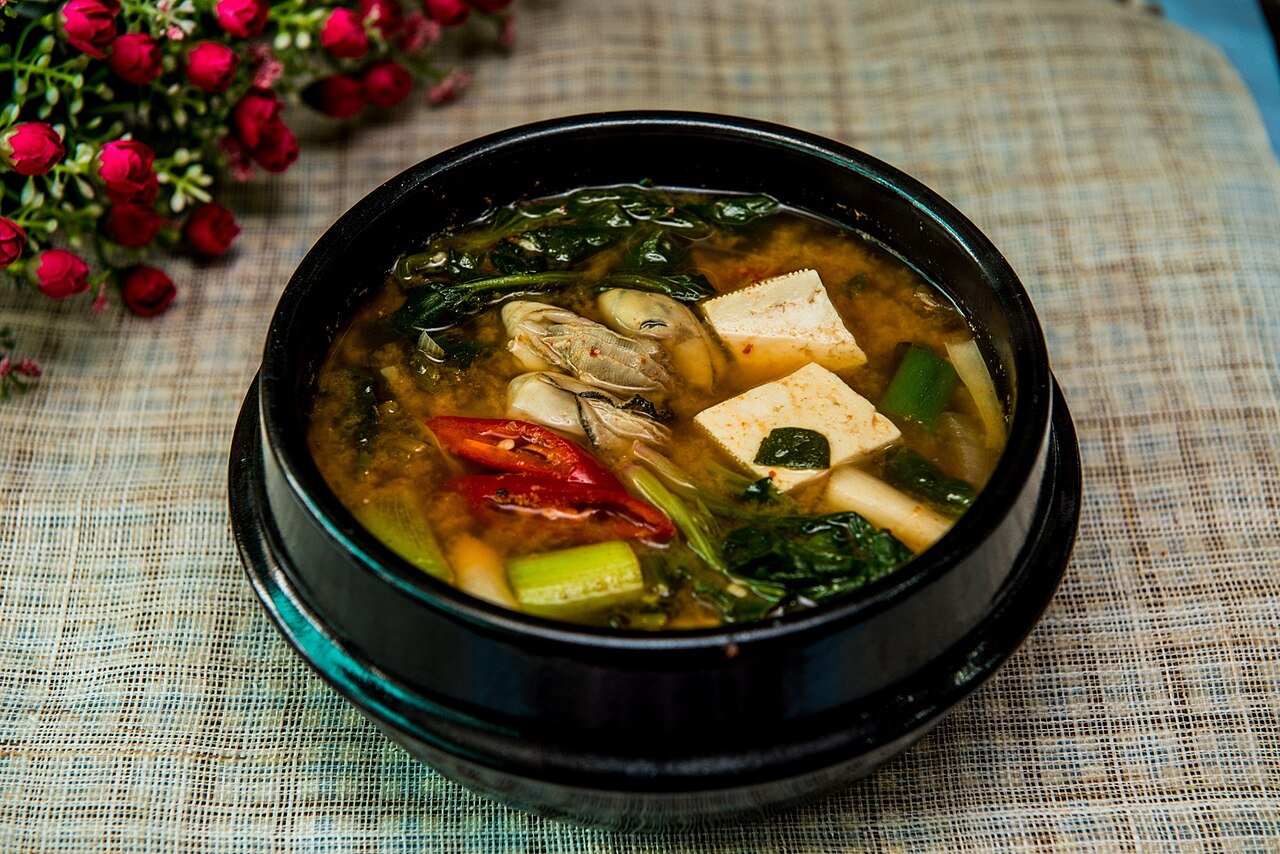
Doenjang jjigae (된장찌개, roughly dwen-jang jji-gae) is a stew built on doenjang dissolved into anchovy or kelp stock, with whatever vegetables are on hand — potato, zucchini, onion, and tofu are the standard four. It’s one of the most common home-cooked dishes in Korea, often served alongside grilled meat as a companion stew rather than the main event, and it shows up on nearly every baekban (rice-and-side-dishes) restaurant menu as the default soup option.
Ingredients
| Ingredient (for 2) | Where to get it, or what to use instead |
|---|---|
| Doenjang, 3 tbsp | Any Korean grocery, sold in tubs. Miso (yellow or red) is the workable substitute — see the comparison above for what changes. |
| Anchovy-kelp stock, 500 ml / 2 cups | Made from dried anchovies and a piece of kelp simmered 10 minutes. Fastest substitute: water plus a teaspoon of instant dashi powder. |
| Potato, zucchini, onion | Standard produce, sold everywhere. |
| Firm tofu, 150 g / 5 oz | Regular firm tofu, not the soft tube kind used in sundubu jjigae — it needs to hold its shape through simmering. |
| Pork belly or clams (optional) | Either adds body. For a vegan pot, leave both out entirely — doenjang has enough savor on its own to carry the broth. |
A note on the doenjang itself. Not all tubs are the same. Homemade or small-batch doenjang, the kind made by grandmothers and small regional producers, tends to be saltier and more intensely fermented than the mass-market brands sold in most overseas grocery stores. If you’re working with a mild commercial tub, you may want the full 3 tablespoons or slightly more; with something homemade or artisanal, start with less and build up, since it can overwhelm the pot quickly.
Doenjang Jjigae Recipe
Ingredients
Method
- If using pork, brown it in a dry pot over medium heat for 2 minutes before adding anything else. If using clams or going meatless, skip straight to the next step.
- Add the stock to the pot and bring to a simmer.
- Scoop the doenjang into a small ladle or fine sieve, lower it into the simmering stock, and stir with a spoon to dissolve it against the mesh. This keeps lumps of undissolved paste out of the final stew.
- Add the potato first and simmer 4 minutes, since it takes the longest to cook through.
- Add the onion and zucchini, and the clams here if using. Simmer another 4 minutes.
- Add the tofu, garlic, gochugaru if using, and sliced chili. Simmer gently 3 to 4 minutes — a hard rolling boil at this stage makes the broth taste flatter and slightly bitter, so keep it at a low, steady bubble.
- Taste and adjust. Doenjang brands vary widely in saltiness, so add more paste or a splash of stock rather than following the measurement blindly.
- Scatter the scallion over the top and serve immediately, straight from the pot, with a bowl of rice on the side.
How to Make It
- Brown the pork first, if using. Two minutes in the dry pot before any liquid goes in. Skip this step entirely for a vegan or clam version.
- Bring the stock to a simmer.
- Dissolve the doenjang through a sieve or ladle, stirring it against the mesh so it breaks down smoothly instead of leaving clumps of paste floating in the broth.
- Potato goes in first, since it needs the longest cooking time of anything in the pot. Four minutes.
- Onion and zucchini next, plus clams if you’re using them instead of pork. Another 4 minutes.
- Tofu, garlic, and chili last, simmered gently for 3 to 4 minutes. Keep the heat at a low bubble here, not a hard boil — doenjang turns slightly bitter and the broth loses clarity if it’s boiled too hard for too long.
- Taste before serving. Doenjang brands range widely in saltiness, so the exact amount that tastes right varies pot to pot.
- Scallions on top, served straight from the pot.
Tips and Storage
Don’t boil it hard. A gentle simmer the whole way through keeps the broth from turning cloudy and slightly bitter, which is the most common complaint about home versions of this stew.
Dissolve the paste properly. Whisking doenjang directly into the pot without a sieve or ladle almost always leaves small lumps that never fully break down.
It’s better the next day. Doenjang jjigae is one of those stews where the flavors settle and deepen overnight. Leftovers keep 3 days in the fridge, reheated gently on the stove.
FAQ
Can I use miso instead of doenjang?
Yes, with adjustments. Use somewhat less miso than the doenjang amount called for, since it’s generally saltier, and expect a milder, sweeter stew without doenjang’s fermented punch. Red or dark miso gets you closer than white miso does.
Is doenjang jjigae vegan?
It can be. Skip the pork or clams, build the stock from kelp and dried shiitake instead of anchovies, and the stew is fully plant-based. Double check your doenjang brand’s label, since a few commercial ones add trace animal products.
Why does my stew taste bitter?
Almost always a boil that was too hard or too long. Keep it at a gentle simmer once the doenjang is in, and don’t let the pot sit on high heat after the tofu goes in.
Related Recipes and Where to Eat It in Korea
Doenjang jjigae is the quiet cousin to kimchi jjigae, which uses the same simmer-a-stew-in-fermented-paste logic but leans on sour kimchi instead. Doenjang, gochujang, and dried kelp all get covered in our Korean pantry starter kit, worth reading before stocking a Korean pantry from scratch. It’s also the traditional companion soup to a samgyeopsal grill night, simmering on the side while the meat cooks.
You’ll find doenjang jjigae on almost every baekban restaurant menu in Korea, usually included with a rice-and-side-dish set for ₩8,000–11,000 (about $6–8 as of 2026). If you’re eating out rather than cooking, our sister site’s guide to ordering food in Korea walks through the basics of a baekban table setup.