Does the idea of cooking octopus at home make you want to order it at a restaurant instead? That’s a completely reasonable reaction, and it’s worth saying plainly: almost nobody in Korea is wrestling a live octopus in their kitchen for a weeknight dinner either. Most home cooks, myself included, buy nakji already cleaned and frozen, thaw it, and skip straight to the part that actually matters. The seafood counter isn’t the hard part of this dish. The ten minutes it spends in the pan is.
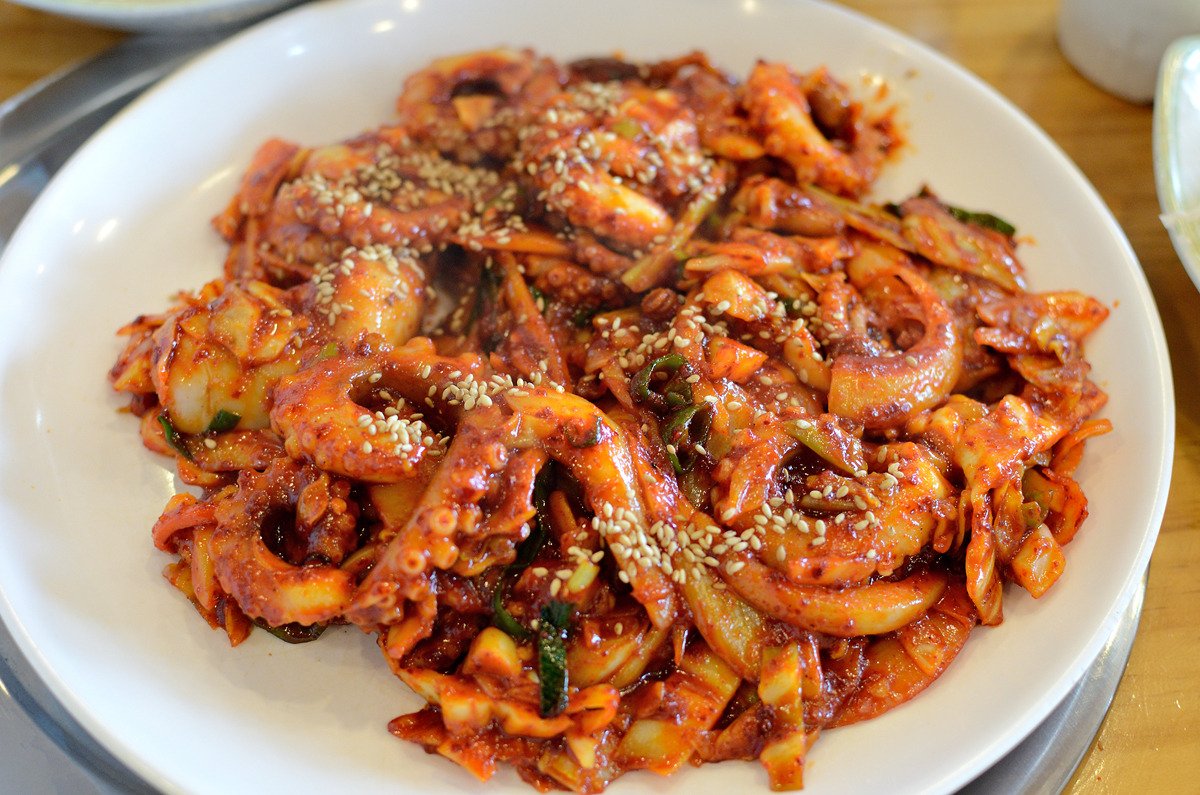
Nakji bokkeum is spicy stir-fried octopus, tossed hot and fast in a gochujang-based sauce with onion and cabbage, and it’s a genuinely forgiving recipe once you get past the idea that octopus is fragile or difficult. It isn’t. It just cooks quickly, and the only real skill here is knowing when to pull it off the heat.
Quick Facts
| Total time | 30 minutes |
| Serves | 2 as a main with rice, 4 as a shared plate |
| Difficulty | Easy |
| Heat | 3 out of 5 |
| Seafood needed? | Frozen, pre-cleaned is completely standard |
What Nakji Bokkeum Actually Is
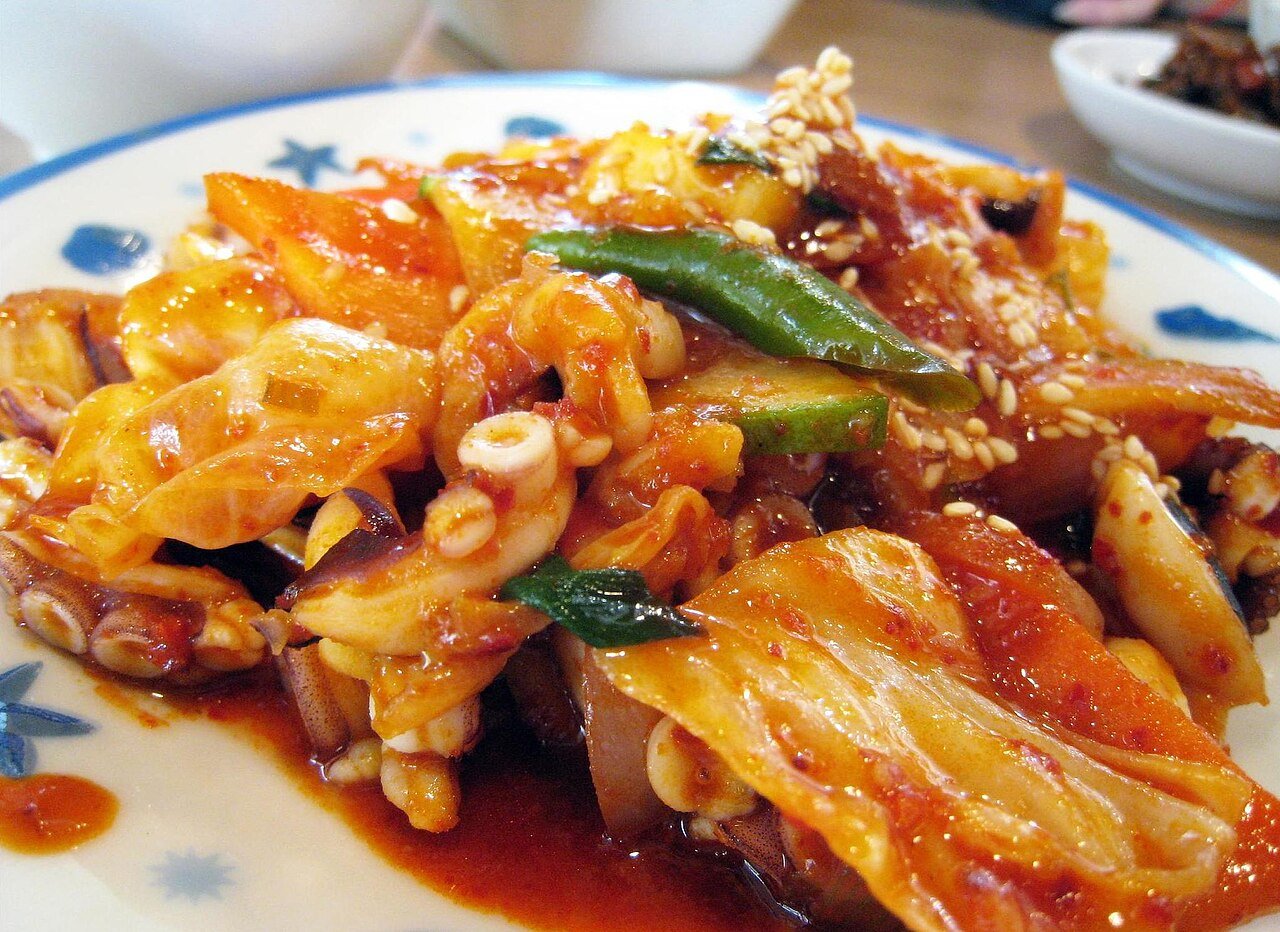
Nakji (낙지) is a small species of octopus, notably leaner and more tender than the larger octopus used for things like grilled or braised dishes. Bokkeum just means stir-fried. Put the two together and you get octopus, cut into bite-size pieces, tossed hard and fast over high heat in a red chili sauce with vegetables, usually served straight from the pan with rice on the side.
It’s a staple of dinner tables and shared-plate spreads across Korea, sold at seafood-forward restaurants and made just as often at home with whatever frozen octopus is in the freezer. Some versions are drier and more intensely seasoned, meant to be eaten on its own; others get a splash more liquid and turn into something closer to a quick braise. This version sits in the middle — a proper stir-fry, sauced but not soupy.
The Part That Actually Scares People, and Why It Shouldn’t
Cleaning a whole octopus involves turning the head inside out, removing the innards, and rubbing it with salt to strip away surface sliminess. It’s not complicated, but it’s unfamiliar, and unfamiliar plus raw seafood is exactly the combination that makes people avoid a dish entirely.
Here’s the honest shortcut: buy it already cleaned. Frozen, pre-cleaned nakji is sold at nearly every Korean grocery store’s freezer section, and it’s what most home cooks reach for regardless of skill level — this isn’t a beginner’s workaround, it’s just normal. Thaw it in the fridge overnight, rinse it, and you’re already at the part of the recipe that involves a knife and a hot pan, which is the easy part.
If you can only find fresh, whole octopus and want to try cleaning it yourself, a firm two-minute rub with coarse salt handles the sliminess on the outside — the octopus will foam up as you rub it, which is normal, and rinsing afterward leaves it clean and ready to cut. It’s genuinely not much harder than cleaning a chicken.
Ingredients
| Ingredient | Where to get it, or what to use instead |
|---|---|
| Nakji (small octopus), 400 g / 14 oz | Frozen and pre-cleaned, from the freezer case of any Korean or Asian grocery. This is the standard choice, not a compromise. Jukkumi (baby octopus) is an easy, even more tender swap. |
| Gochugaru, 1 tbsp | Korean coarse chili flakes. Without it: 1 1/2 tsp sweet paprika plus 1/2 tsp cayenne gets you the color and heat, just flatter and less fruity. |
| Gochujang, 2 tbsp | Sold in tubs at most grocery stores now. |
| Cabbage or perilla leaves | Cabbage is the everyday choice. Perilla leaves, torn, add a distinctly Korean herbal edge if you can find them. |
| Onion, carrot, scallions, garlic, ginger | Standard produce. |
Nakji Bokkeum Recipe
Ingredients
Method
- If using frozen octopus, thaw it fully in the refrigerator, then rinse and pat dry. If using fresh whole octopus, rub it firmly with coarse salt for 2 minutes to remove surface sliminess, then rinse well.
- Cut the octopus into bite-size pieces, about 4 cm / 1 1/2 in, tentacles and body both.
- Whisk the gochujang, gochugaru, soy sauce, sugar, garlic, ginger, and sesame oil together in a small bowl until smooth.
- Heat the neutral oil in a wide pan or wok over high heat until it shimmers.
- Add the onion and carrot and stir-fry for 2 minutes, until the onion turns translucent at the edges.
- Add the octopus and the sauce together, all at once, and toss constantly over high heat.
- Cook for 3 to 4 minutes only, tossing the whole time, until the octopus turns opaque and firms up slightly but is still tender when you bite into a piece. Pull it off the heat the moment it looks done — a few seconds past that point and it turns rubbery.
- Add the cabbage and scallions in the last minute of cooking, tossing just until they wilt slightly but keep some crunch.
- Scatter sesame seeds over the top and serve immediately with a bowl of rice.
How to Make It
- Thaw frozen octopus in the fridge, fully, then rinse and pat dry. If you’ve bought fresh whole octopus instead, rub it firmly with coarse salt for 2 minutes, then rinse.
- Cut into bite-size pieces, roughly 4 cm / 1 1/2 inches — both the tentacles and the body.
- Mix the sauce ahead of time. Gochujang, gochugaru, soy sauce, sugar, garlic, ginger, and sesame oil, whisked smooth. Having it ready matters because the actual cooking happens fast.
- Get the pan properly hot before anything goes in — a wide pan or wok, high heat, oil shimmering.
- Stir-fry the onion and carrot first, 2 minutes, just until the onion softens at the edges.
- Add the octopus and sauce together, all at once, and keep it moving constantly.
- Watch the clock, not the recipe card. Three to four minutes is the real target, but pull it the moment the octopus turns opaque and firm but still gives when you bite into a piece. A few extra seconds and it toughens up — this is the one place nakji bokkeum can actually go wrong, and it happens from overcooking, not undercooking.
- Toss in the cabbage and scallions in the final minute, just long enough to wilt slightly.
- Serve immediately, with rice, while everything’s still hot from the pan.
Tips and Storage
Overcooked octopus is rubbery octopus. If you’re unsure, cut a piece open and check — it should look opaque all the way through but still feel tender, not springy or tough.
Don’t crowd the pan. If doubling the recipe, cook in two batches. A packed pan drops in temperature and the octopus steams instead of searing, which changes the texture.
Leftovers keep 2 days in the fridge but reheat best in a hot pan for under a minute — anything longer and already-cooked octopus tips over into tough. Skip the microwave for this one.
Common Questions
Do I have to clean the octopus myself?
No. Frozen, pre-cleaned octopus is the standard choice for home cooking in Korea, not a workaround for beginners. It thaws in the fridge overnight and goes straight into the recipe.
How do I know when the octopus is done?
It turns from translucent to opaque and firms up slightly, usually in 3 to 4 minutes over high heat. Cut a piece open if you’re unsure — it should look cooked through but still feel tender, not rubbery.
Can I make this less spicy?
Cut the gochugaru in half and use 1 tablespoon of gochujang instead of 2. You’ll lose some heat and color but keep the savory base intact.
What to Eat With It
Nakji bokkeum and ojingeo bokkeum run on almost the same sauce and technique, just with squid standing in for octopus and a slightly different cooking window to manage. If seafood pancakes fit the mood better, haemul pajeon uses shrimp and squid in a completely different format. And gochugaru, sesame oil, and gochujang all show up again in our Korean pantry starter kit.
Korea’s coastal cities, Busan especially, are known for excellent, ultra-fresh seafood served simply. If you’re planning a trip, our sister site’s two-day Busan guide is a solid starting point for where to eat it in person.