Rain against a window, a pot already on the stove, flour on somebody’s hands instead of a rolling pin. That’s the image most Koreans have of sujebi, and it isn’t just nostalgia marketing — the dish really does show up more on wet days than clear ones, the same way people reach for grilled cheese in a thunderstorm somewhere else.
In Little Forest (2018), the film about a young woman named Hye-won who leaves an exhausting life in Seoul and moves back to her rural hometown, sujebi is one of the many dishes she cooks her way through across the seasons. It isn’t a big scene, no drama attached to it — she just makes it, the way you’d make it on a slow, quiet day. That’s the whole appeal of this soup, honestly. It doesn’t need noodles from a package or a pasta machine. It needs flour, water, ten minutes of patience, and a pot of simmering broth.
Quick Facts
| Total time | 50 minutes (30 of it hands-off, dough resting) |
| Serves | 2 |
| Difficulty | Easy |
| Spice level | 0 — this is a mild broth, not a chili soup |
| Vegan? | Yes, with the swap below |
What Is Sujebi?
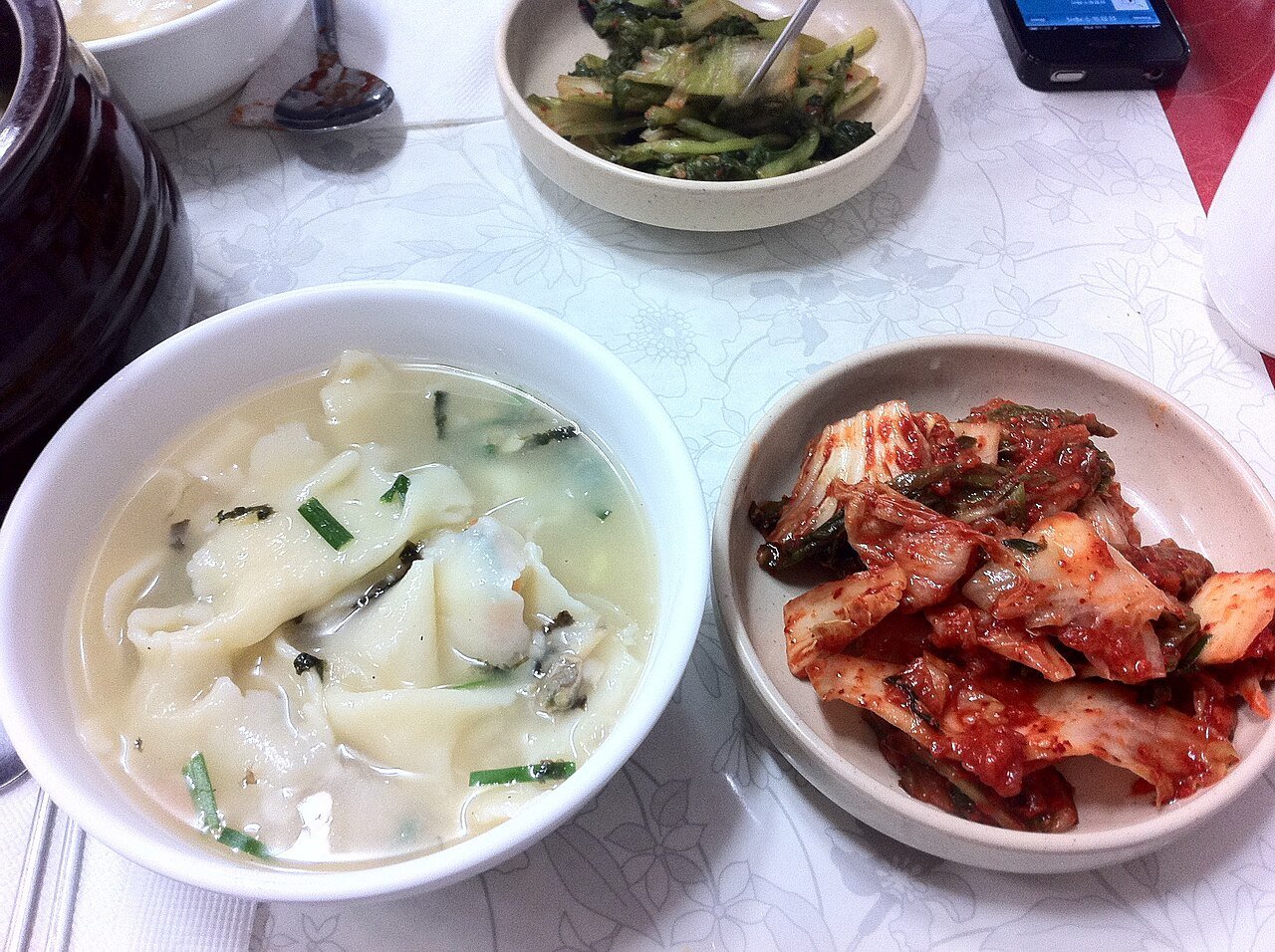
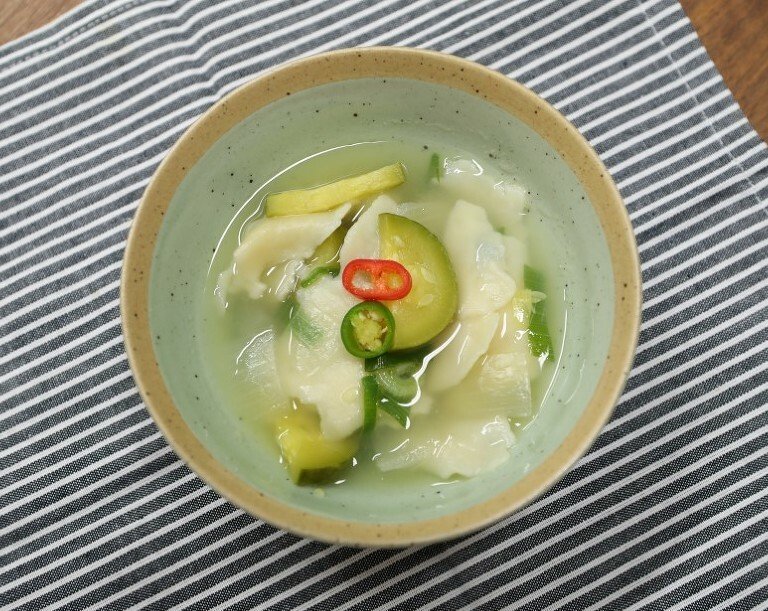
Sujebi (수제비) means, more or less, “hand-torn” — you make a simple wheat dough, let it rest, then tear off pieces and stretch them thin between your fingers before dropping them straight into a simmering pot. No cutting board, no knife, no noodle machine. The torn edges cook up thinner than the center of each piece, so you get a mix of textures in one bowl: silky at the edges, a little chewy in the middle.
The broth is usually built from dried anchovies and kelp, the same base used for a lot of Korean soups, simmered with potato, zucchini, and onion. Clams show up in a lot of home versions too, added for a sweeter, briny note.
Sujebi has a history that isn’t especially glamorous, and that’s part of why it reads as comfort food rather than a special-occasion dish. During the lean postwar years in Korea, wheat flour was one of the more available staples, thanks in part to foreign food aid, and sujebi became a way to stretch a small amount of flour into a filling meal. It’s carried that hardship-food, rainy-day, use-what-you-have identity ever since — which is also probably why it feels so at home in a film about someone rebuilding a simpler life in the countryside.
Ingredients
| Ingredient (for 2) | Where to get it, or what to use instead |
|---|---|
| All-purpose flour, 1 1/2 cups / 190 g | Nothing fancy required — regular all-purpose flour is what most Korean home cooks use. |
| Dried anchovies + dried kelp | Sold in any Korean grocery, usually in the same aisle. No anchovies on hand? A teaspoon of instant dashi powder dissolved straight into the water gets you a broth in under a minute, though it comes out flatter and less briny than the real thing. |
| Potato, onion, zucchini | Standard produce-aisle vegetables. Any waxy potato works; a starchy baking potato will break down more and cloud the broth slightly, which isn’t a disaster, just a different look. |
| Soup soy sauce | A lighter, saltier soy sauce made for seasoning broths. Regular soy sauce with a pinch of extra salt does the job almost as well. |
| Clams (optional) | A small handful of littlenecks or Manila clams, added with the zucchini, brings real depth. Skip them and the soup is still good, just a little plainer. |
A note on the dough. Resting it matters more than any ingredient choice here. Skip the rest and the gluten hasn’t relaxed, so the pieces tear thick and stay chewy rather than thinning out into silky sheets. Twenty minutes at room temperature is the minimum; an hour is better if you have it.
Sujebi Recipe
Ingredients
Method
- Combine the flour, water, and salt in a bowl. Mix until it forms a shaggy dough, then knead by hand for 5 minutes until smooth. Knead in the sesame oil if using.
- Cover the dough and let it rest at room temperature for at least 20 minutes, up to an hour. This step isn’t optional — unrested dough tears thick and chewy instead of thin and silky.
- Meanwhile, simmer the dried anchovies and kelp in 900 ml water for 10 minutes over medium heat. Remove the kelp after 5 minutes so it doesn’t turn bitter, then strain out the anchovies once the stock is done.
- Bring the strained stock back to a boil. Add the onion and potato and simmer 5 minutes, until the potato is nearly tender.
- Pull off a small piece of the rested dough and stretch it between your fingers into a thin, uneven sheet, roughly 3 to 5 cm / 1 to 2 in across, then drop it straight into the boiling broth. Repeat until all the dough is used, stirring occasionally so the pieces don’t stick together.
- Simmer 6 to 8 minutes, until the dough pieces float and turn slightly translucent at the thin edges.
- Add the zucchini and garlic and cook 2 to 3 more minutes, until the zucchini is just tender.
- Season with soup soy sauce, taste, and adjust with salt. Ladle into bowls, top with scallion, and serve with a small side of kimchi.
How to Make It
- Make the dough. Flour, water, salt, mixed into a shaggy ball, then kneaded by hand for about 5 minutes until it’s smooth and no longer sticky. Add the sesame oil here if you’re using it.
- Let it rest, covered, at least 20 minutes. Go do something else. This is the one step you genuinely cannot skip and still get the right texture.
- Make the anchovy-kelp stock while the dough rests: simmer both in the water for 10 minutes, pulling the kelp out at the 5-minute mark so it doesn’t turn the broth bitter.
- Strain out the anchovies, then bring the clear stock back to a boil. Add the potato and onion, and simmer 5 minutes.
- Tear the dough. Pinch off a piece, stretch it thin between your fingers — thinner than you think, almost translucent at the edges — and drop it directly into the boiling broth. Work through all the dough this way, stirring now and then so the pieces don’t clump into one mass.
- Simmer 6 to 8 minutes, until the dough pieces are floating and cooked through. You’ll see the edges turn slightly see-through when they’re done; the centers stay a touch more substantial.
- Add the zucchini and garlic, cook 2 to 3 minutes more, until the zucchini softens but still has some bite.
- Season, taste, adjust. Soup soy sauce first, then salt if needed. Serve hot, with kimchi on the side — the acidity cuts through what is otherwise a very mild, starchy bowl.
Tips and Storage
Tear the dough thin. Thicker pieces take longer to cook through and can leave the center gummy. Aim for something close to a thin dumpling wrapper.
The broth will thicken as it sits, since the dough releases starch the whole time it cooks. That’s normal and part of the texture — sujebi broth is meant to feel a little more substantial than a clear noodle soup, closer to a light stew.
Don’t over-boil once the dough’s in. A hard, aggressive boil can tear the pieces further than intended and make the broth cloudier than it needs to be. A steady simmer is enough.
Leftovers don’t keep especially well — the dough keeps absorbing liquid in the fridge and gets soft and swollen by the next day. If you must store it, keep it airtight up to a day and expect a thicker, stew-like reheat rather than a clean soup.
FAQ
Can I use store-bought dumpling wrappers instead of making dough?
You can thin them out slightly and tear them into pieces, and it will work in a pinch, but the texture is different — wrapper dough is usually a bit denser and won’t get that silky, torn-edge quality homemade sujebi dough has.
Why did my sujebi turn out gummy in the middle?
Almost always a thickness problem. If the torn pieces are too thick, the outside cooks before the center does. Stretch each piece thinner than feels natural, closer to see-through at the edges.
Can I make the dough ahead of time?
Yes. It keeps, wrapped tightly, in the fridge for up to a day. Let it come back closer to room temperature before tearing, since cold dough is stiffer and harder to stretch thin.
Related Recipes
If you like the mild, anchovy-and-kelp broth style here, doenjang jjigae is a heartier, fermented-soybean cousin that shows up in a lot of the same countryside cooking. For another soup tied to a specific, meaningful day rather than everyday eating, there’s miyeok guk, the seaweed soup every Korean eats on their birthday. And if dried anchovies and kelp are new to your pantry, our Korean pantry starter kit walks through what to buy and how long it keeps.