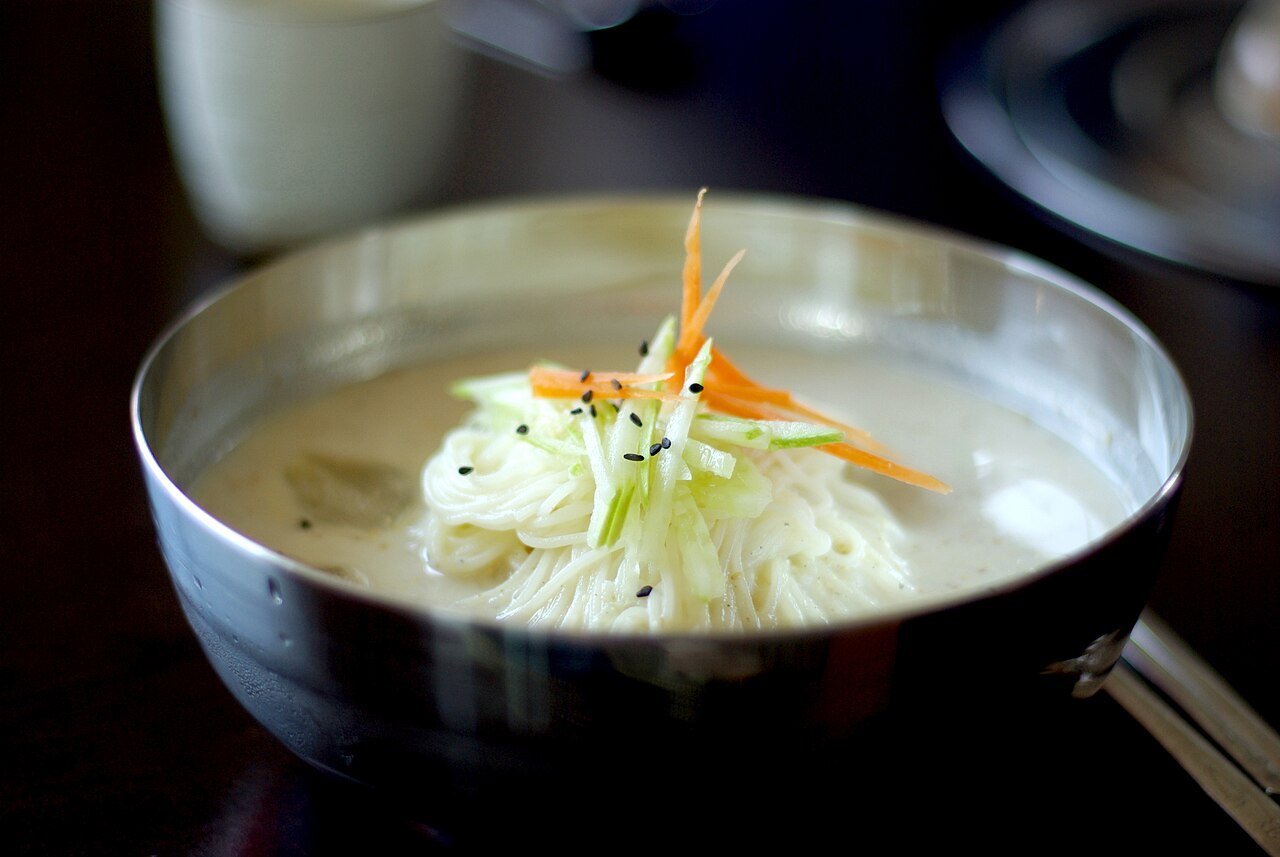
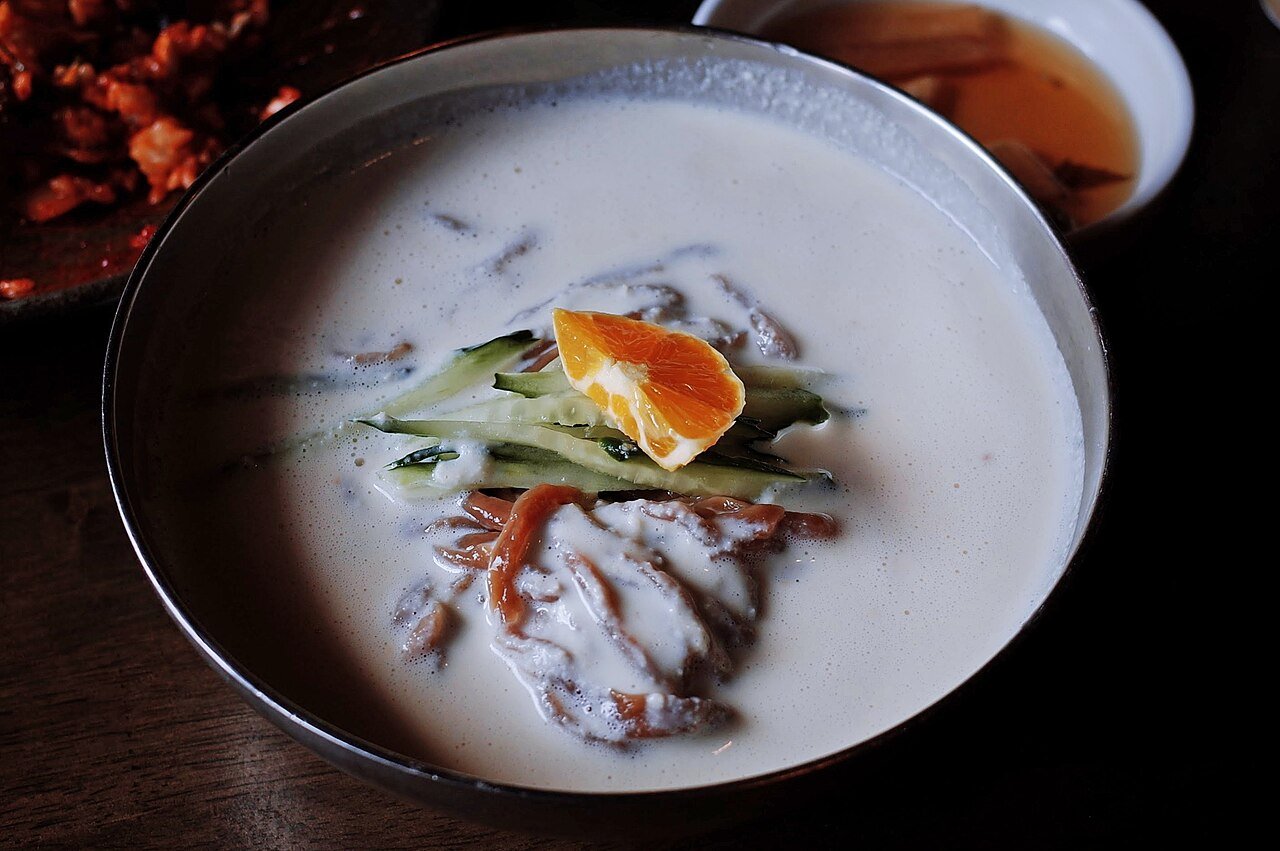
Picture a Korean market stall in the middle of July, the kind of heat that makes the asphalt shimmer, and a bowl arriving at the table that is entirely, opaquely white — noodles submerged in what looks, for one confusing second, like a bowl of cold milk. That’s kongguksu, and if you’ve never had it, the first spoonful is genuinely disorienting in a good way: cold, faintly nutty, savory rather than sweet, and about as far from a typical noodle soup as Korean food gets.
It’s a summer-only dish in the way that some foods are calendar-bound whether or not the calendar agrees — you’ll rarely see it on a menu once the weather turns, and you’ll see it everywhere the second real heat arrives.
Quick Facts
| Total time | 35 minutes, plus soaking and chilling time |
| Serves | 2 |
| Difficulty | Medium — nothing hard, but a blender step and a wait for the soy milk to chill |
| Spice level | 0 of 5 |
| Vegan? | Yes, without the egg garnish |
What Is Kongguksu?
Kongguksu (콩국수, roughly kohng-gook-soo) is thin wheat noodles served cold in a chilled, unsweetened soy milk made from scratch — boiled and blended soybeans, strained until smooth, seasoned only at the table. Kong means bean, guksu means noodles. It’s eaten almost exclusively in summer, traditionally around sambok, the three hottest stretches of the Korean calendar, on the logic that a cold, dense, protein-rich soup is exactly what the body wants when it’s too hot to want much of anything.
The soup itself is deliberately plain going in — no soy sauce, no salt, nothing added during cooking. Seasoning happens at the table, bowl by bowl, and that’s where kongguksu gets genuinely interesting.
The Salt-Versus-Sugar Argument
Ask ten Korean families how they season kongguksu and you will get, honestly, more than ten opinions, and most of them will be delivered with real conviction. Salt is the traditional, arguably more common approach in and around Seoul — a savory bowl, closer in spirit to a cold, dense soup than a dessert. Sugar shows up widely too, especially outside the capital and among people who grew up eating it that way, turning the same bowl into something closer to a sweet, milky noodle dish.
Neither side is wrong, and neither side is likely to convince the other at the table, which is exactly why this recipe puts both salt and sugar out as options rather than picking one. Try a spoonful plain first if you can stand the suspense. Then decide, and don’t be surprised if the person next to you decides differently over the same pot of soy milk.
Ingredients
| Ingredient (for 2) | Where to get it, or what to use instead |
|---|---|
| Dried soybeans, 200 g / 1 cup | Soaked overnight, then boiled and blended for homemade soy milk. If that’s more process than you want on a hot day, 1 L of plain, unsweetened soy milk from any grocery store is the honest, widely used shortcut — thinner and a little less nutty than homemade, but a real bowl of kongguksu all the same. |
| Somyeon, 200 g / 7 oz | Thin Korean wheat noodles, sold dry in bundles at any Korean grocery. Angel hair pasta or vermicelli are the closest substitutes and cook in almost the same time. |
| Sesame seeds, pine nuts | Blended into the soy milk for extra richness. Pine nuts especially are easy to skip without much loss — they’re traditional rather than essential. |
| Cucumber, tomato, egg | All standard produce, added cold as toppings rather than cooked into anything. |
Kongguksu Recipe
Ingredients
Method
- Drain the soaked soybeans and boil them in fresh water for 20 minutes, until a bean squeezes apart easily between two fingers.
- Drain again, then blend the beans with 1 L / 4 cups of fresh cold water, the sesame seeds and pine nuts until completely smooth — a full 2 minutes in a strong blender, longer in a weaker one.
- Strain through a fine sieve or a layer of cheesecloth for a silkier soup, or skip this if a little texture doesn’t bother you.
- Chill the soy milk at least 2 hours, or speed things up with a handful of ice cubes stirred in just before serving.
- Cook the noodles in boiling water 3 to 4 minutes, until tender, then rinse immediately under cold running water while rubbing the strands between your hands to strip off the surface starch.
- Divide the noodles between two bowls and pour the chilled soy milk over them.
- Top with cucumber, tomato and the egg, and drop in a few ice cubes to keep everything cold at the table.
- Serve salt and sugar on the side and let everyone season their own bowl — this is genuinely how Korean families still disagree about it.
How to Make It
- Boil the soaked soybeans in fresh water for 20 minutes, until a bean gives way easily when you pinch it between two fingers. This is the doneness test that matters — undercooked soybeans leave a raw, slightly grassy taste no amount of blending fixes.
- Blend thoroughly with fresh cold water, sesame seeds and pine nuts. Two full minutes in a strong blender, longer in a weaker one — you want it completely smooth, with no gritty bean fragments left.
- Strain if you want it silkier. A fine mesh sieve or a layer of cheesecloth removes the last bit of hull and grit. This step is optional; some people prefer the slightly rustic texture of unstrained soy milk.
- Chill for at least 2 hours. Kongguksu is meant to arrive genuinely cold, not just room-temperature-with-ice. If you’re short on time, a handful of ice cubes blended or stirred straight into the soy milk gets you there faster.
- Cook the noodles 3 to 4 minutes in boiling water, then rinse immediately under cold running water while rubbing the strands between your hands. This step does double duty: it stops the cooking and strips off the surface starch that would otherwise make the noodles clump and turn the soy milk cloudy with residue.
- Assemble the bowls, noodles first, soy milk poured over.
- Top with cucumber, tomato and egg, and drop in a few ice cubes right before serving.
- Serve salt and sugar on the side. Let each person season their own bowl to taste — see above.
Tips and Storage
Don’t skimp on the soybean boiling time. Raw or undercooked soybeans carry a grassy, slightly bitter edge that blending only spreads around rather than removes.
Rinse the noodles properly. Skipping the cold rinse is the most common reason kongguksu turns gummy — the noodles keep releasing starch into the chilled soy milk and the whole bowl thickens unpleasantly within minutes.
Soy milk keeps 2 days refrigerated in a sealed container, and it actually separates slightly as it sits — give it a good stir before using. Don’t freeze it; the texture turns grainy on thawing. Cook the noodles fresh each time rather than storing them dressed in the soy milk, which turns the noodles soft and waterlogged overnight.
FAQ
Salt or sugar in kongguksu?
Genuinely, either — this is a real regional and family divide within Korea, not a right-or-wrong question. Salt gives a savory, more traditional bowl associated with Seoul; sugar makes it sweeter and closer to a dessert-like noodle dish, and it’s common in other parts of the country. Try it plain first, then season to your own taste.
Can I use store-bought soy milk instead of making it from scratch?
Yes, and plenty of people do, especially in summer heat when boiling a pot of soybeans is the last thing you want to do. Use the plain, unsweetened kind — sweetened or vanilla soy milk turns the whole dish into something else entirely.
Is kongguksu vegan?
Yes, as long as you skip the hard-boiled egg garnish, which is optional and easy to leave off. Everything else in the dish — noodles, soy milk, vegetables — is plant-based by default.
Related Recipes
Kongguksu’s opposite in every sense is kalguksu, the hot, hand-cut noodle soup, and reading the two together says a lot about how differently Korean noodle soups treat summer and winter. For another chilled noodle dish, naengmyeon covers the buckwheat, ice-broth version that shows up on the same hot-weather tables. And if soy milk and somyeon are new additions to your kitchen, the Korean pantry starter kit is a good next stop.