The first time I made oi muchim, I made it an hour before guests arrived, because that’s when you’re supposed to prep a salad, right? By the time we sat down, the bowl had gone from crisp red-dressed cucumber to a shallow puddle of pink water with limp cucumber slices floating in it. Nobody said anything, but I noticed, and I’ve made it a dozen times since without that happening again. The fix isn’t complicated. It’s just the opposite of how you’d prep any other salad.
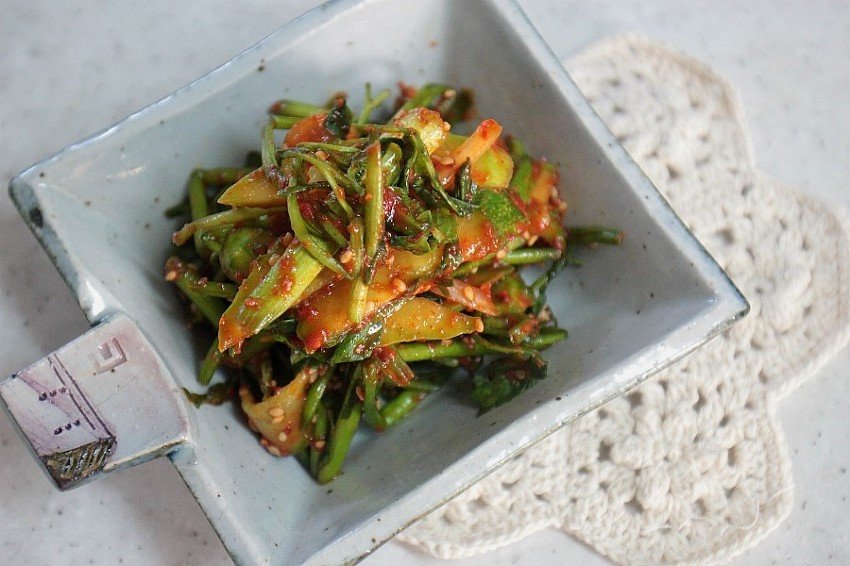
Oi muchim (오이무침) is raw cucumber, salted briefly to pull out water, then tossed with gochugaru, vinegar, garlic, and sesame oil. No blanching, no boiling — it’s the odd one out in this short series alongside sigeumchi namul (spinach, blanched and squeezed) and kongnamul muchim (bean sprouts, boiled covered). Cucumber gets neither treatment. It gets salt, and salt alone does the same job that blanching and boiling do for the other two — it pulls water out so the seasoning has something dry to land on.
Quick facts
| Time | 20 min prep (mostly salting), 0 min cook |
| Makes | 4 small side-dish portions |
| Difficulty | Easy |
| Spice level | 2 / 5, adjustable with more or less gochugaru |
| Vegan? | Yes |
What oi muchim actually is
Muchim (무침) means “seasoned and tossed,” the same word in kongnamul muchim. Oi (오이) is cucumber. Put together, it’s a quick, no-cook side dish that shows up constantly in Korean summer cooking, when cucumbers are cheap and a raw, cold, faintly spicy salad is more appealing than anything that needs a stove. It’s one of the fastest banchan on this site — genuinely twenty minutes, and fifteen of those are just waiting.
Why salting replaces blanching here
Cucumber is roughly 95 percent water, held inside cells with a fairly rigid structure — that’s what gives raw cucumber its crunch. Salt draws that water out through osmosis: salt on the surface creates a concentration difference, and water moves out of the cells to balance it, which is why salted cucumber slices visibly wilt and pool liquid within ten minutes even though nothing has touched heat. This is functionally the same outcome as squeezing blanched spinach dry, and the bibimbap recipe on this site actually uses this exact method — salt and drain, no cooking — as its standard substitution for zucchini, for the same reason.
Skip the salting step and dress raw cucumber straight away, and you get a version of the same failure spinach has when it isn’t squeezed: the dressing sits on a wet surface instead of a dry one, slides off, pools at the bottom of the bowl, and dilutes into something thin and watery within the hour. The salting step isn’t about seasoning the cucumber at this stage. It’s about getting the water out of the way so the actual seasoning, added later, can do its job.
The step everyone skips: squeeze after salting
Salting alone gets water moving out of the cucumber, but it doesn’t remove it from the bowl. You still have to squeeze the slices — gently, in small handfuls, the same idea as the harder squeeze sigeumchi namul needs, just with less force, since cucumber doesn’t hold water as stubbornly as blanched spinach does. Taste a squeezed slice before dressing anything: it should taste seasoned and slightly firmer than raw cucumber, not aggressively salty. If it’s too salty, a quick rinse under cold water and one more gentle squeeze brings it back into balance without undoing the texture work you just did.
Ingredients and substitutes
| Ingredient | Where to get it, or what to use instead |
|---|---|
| 2 Korean or Persian cucumbers | English cucumber with the seeds scraped out works well. A regular slicing cucumber, peeled in alternating stripes and seeded, is a fine substitute — the skin can be bitter and tough on the common supermarket variety. |
| 1 tbsp gochugaru | Aleppo pepper is genuinely close: similar mild, fruity heat and a similar coarse flake. Paprika with a pinch of cayenne gets the color right but tastes flatter, as covered in our bibimbap sauce notes. |
| Rice vinegar | Any mild white vinegar works; apple cider vinegar is a touch sweeter and slightly more assertive. |
| Toasted sesame oil | The dark, toasted bottle only. Covered in more detail in the Korean pantry starter kit. |
| Fish sauce (optional) | Vegan version: skip it and add a touch more salt, or a splash of caper brine for a similar briny note. |

Oi Muchim Recipe
Ingredients
Method
- Slice the cucumbers thin, about 2-3 mm, on a mandoline if you have one or diagonally by hand.
- Toss with 1 tsp salt in a colander set over a bowl and let sit 10-15 minutes, until visibly wilted and pooling water underneath.
- Squeeze the slices gently in small handfuls to press out the drawn water. Taste one — it should taste seasoned, not harshly salty. Rinse briefly and squeeze again if it’s too salty.
- Whisk gochugaru, vinegar, sugar, and garlic together in a bowl until the sugar dissolves.
- Add the squeezed cucumber and scallion to the dressing only when you’re ready to eat, and toss to coat.
- Finish with sesame oil and sesame seeds, tossed in at the very end.
Why you dress it last, not first
This is the detail that ruins the dish if you skip it, and it’s the whole reason for this article. Everything up to the squeezing step can happen well ahead of time — the cucumber can sit salted and squeezed in the fridge for hours. But once gochugaru, vinegar, and sesame oil go on, the clock starts again: dressed cucumber releases more water within thirty minutes to an hour, this time driven by the vinegar and salt in the dressing itself rather than the initial salting. That released water dilutes the dressing and softens the crunch you worked to preserve. Salt and squeeze ahead. Dress at the table, or as close to serving as you can manage.
This is also, structurally, the opposite lesson from the other two namul in this series: sigeumchi namul and kongnamul muchim can both be seasoned well ahead and improve after a day in the fridge as the garlic mellows. Oi muchim doesn’t have that grace period. It’s a same-day, near-serving-time dish, and that’s the tradeoff for skipping the stove entirely.
Tips and storage
Watch the salting time — ten to fifteen minutes is usually enough for thin slices; much longer and the cucumber turns limp rather than pleasantly crisp-tender. If your cucumbers are particularly watery (this varies more by variety and season than people expect), lean toward the shorter end and check by taste rather than the clock.
Oi muchim is best eaten the day it’s dressed. The salted, squeezed cucumber keeps 2 days in the fridge undressed; once dressed, it holds for a few hours at most before the texture and flavor start to slide. If you’re making it for a meal later in the week, keep the cucumber and the dressing in separate containers and combine them just before serving.
Frequently asked questions
Why is my oi muchim watery?
Almost always one of two things: not enough salting time before dressing, or dressing it too far ahead of when it’s eaten. Salt and squeeze the cucumber properly first, then dress it as close to serving time as you can — ideally within the hour.
Can I make oi muchim ahead of time?
Partially. Salt, squeeze, and refrigerate the plain cucumber up to a day ahead — it holds up fine at that stage. Mix the dressing separately and combine the two only when you’re ready to serve, since dressed cucumber doesn’t keep the way the other namul in this series do.
Can I make oi muchim without gochugaru?
Yes. Drop the gochugaru and lean on vinegar, a little more sugar, garlic, and sesame oil for a plain, non-spicy cucumber salad — closer to what shows up alongside grilled meat when a milder side is wanted at the table.
Related
Oi muchim’s cool crunch works especially well next to something rich and smoky, like samgyeopsal straight off the grill, or as one more small plate alongside dubu-kimchi at the table. For the rest of this namul series, sigeumchi namul covers the squeezing rule for blanched greens and kongnamul muchim covers the covered-pot rule for bean sprouts — read together, the three cover most of what governs Korean vegetable side dishes. If gochugaru isn’t already in your kitchen, the Korean pantry starter kit explains what to buy first and what can wait.