Samgyeopsal isn’t really a recipe. It’s a way of eating that happens to involve a pan. The meat itself needs almost nothing done to it — no marinade, no rub, sometimes not even salt until it hits the table. What takes practice is everything around it: getting the crust right, building a wrap that doesn’t fall apart in transit from plate to mouth, and clearing the smoke out of your apartment before the neighbors notice.
This samgyeopsal recipe covers all three. The pork belly itself takes about 15 minutes. Learning to eat it properly takes a little longer, and that’s the part most guides skip.
Quick Facts
| Total time | 25 minutes |
| Serves | 2 |
| Difficulty | Easy |
| Spice level | 0 of 5 (heat comes only from the optional ssamjang) |
| Vegan? | No, though the wrap-and-dip method works with grilled mushrooms |
What Is Samgyeopsal?
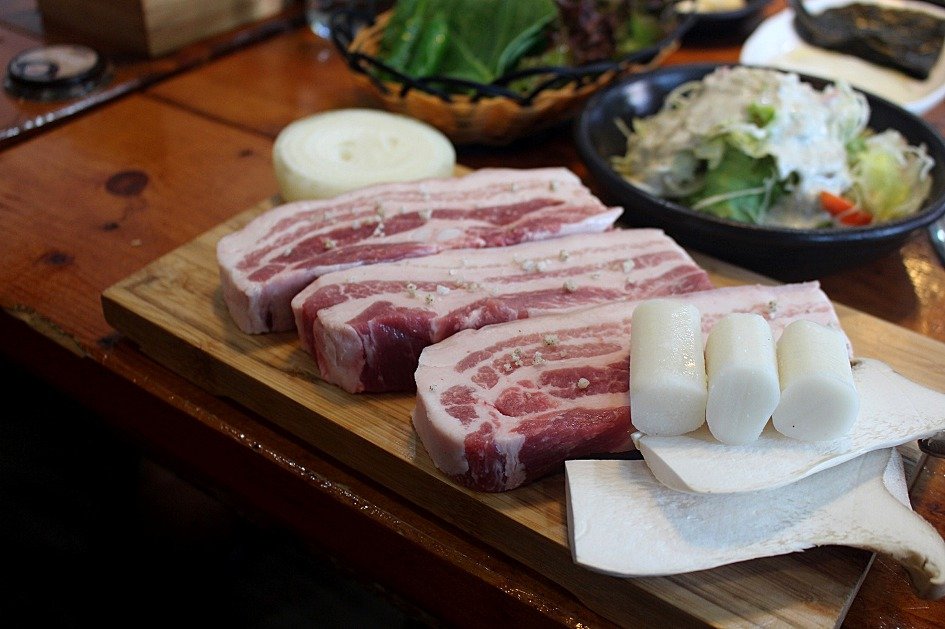
Samgyeopsal (삼겹살, roughly sam-gyeop-sal) translates to “three-layer flesh,” a literal description of the alternating fat and meat in a slab of pork belly. It’s grilled unmarinated, usually right at the table on a small gas or charcoal grill, and eaten wrapped in lettuce with garlic, ssamjang, and whatever banchan happens to be on the table that night. It’s less a dish you order for its flavor complexity and more a format — a specific, ritualized way of getting a group of people to sit around a hot grill for two hours.
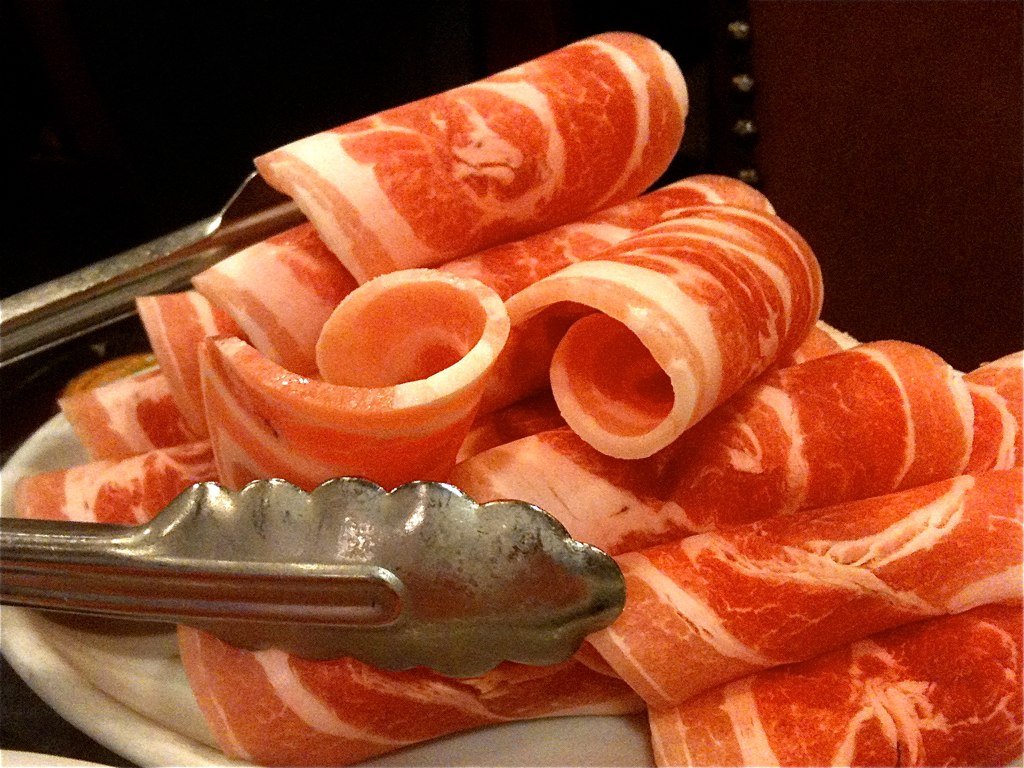
A close cousin is daepae-samgyeopsal, belly sliced paper-thin and draped over the grill edges like a curtain, cooked in seconds rather than minutes. Both versions show up constantly in restaurants and at home, and neither one is “more authentic” than the other — they’re just different cuts of the same idea.
Ingredients
| Ingredient (for 2) | Where to get it, or what to use instead |
|---|---|
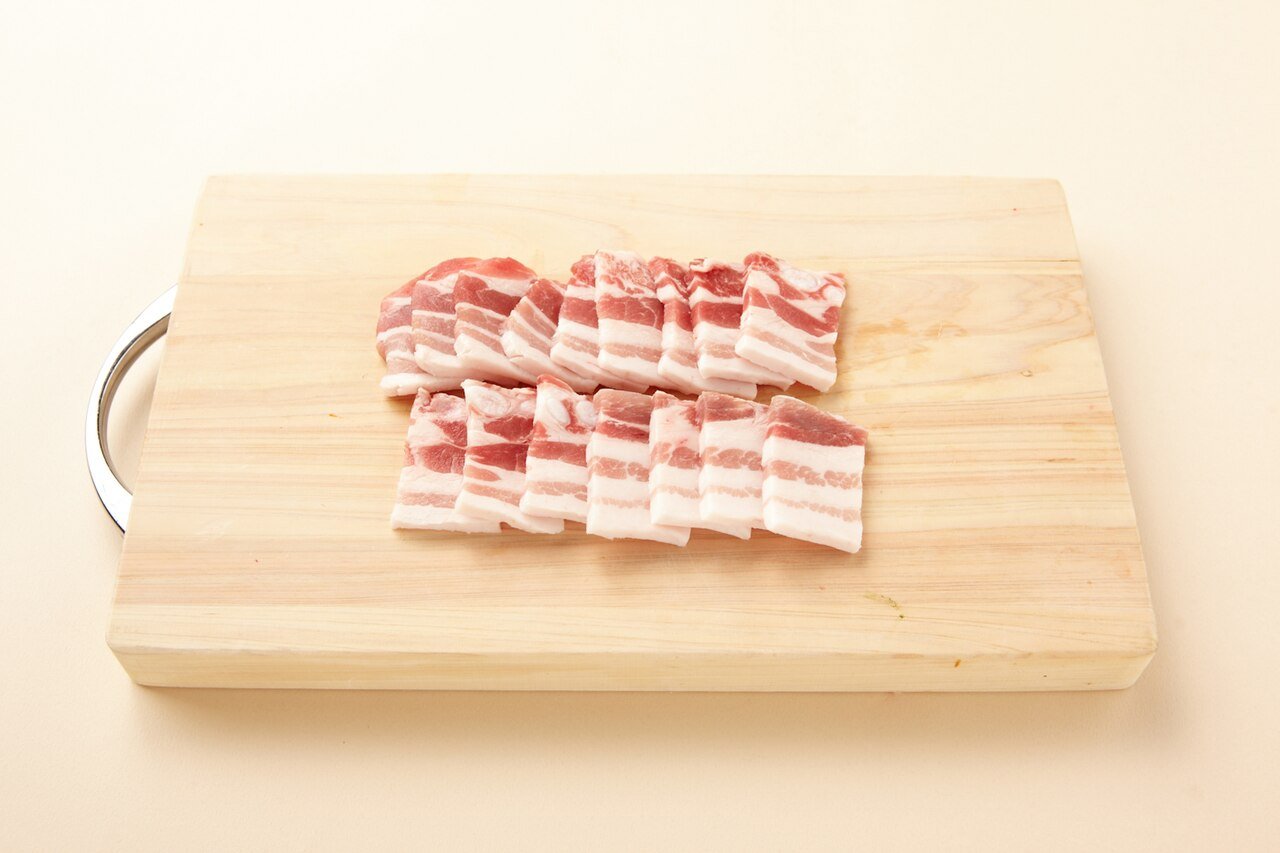
| Pork belly, 600 g / 1.3 lb, sliced 1–1.5 cm thick | Ask a butcher counter to slice a fresh belly to order. Pre-sliced belly meant for hot pot is too thin here — it curls up and dries out before it browns. |
| Lettuce and perilla leaves | Korean groceries sell perilla (kkaennip) fresh in bunches. If you can’t find it, napa cabbage leaves or any soft round lettuce work for wrapping — you lose perilla’s specific bitter, almost mint-adjacent flavor, but the format still holds together. |
| Doenjang, 1 tbsp | Any Korean grocery, shelf-stable. White or yellow miso is the closest substitute — it’s sweeter and milder, so use slightly less to keep the ssamjang from going too sweet. |
| Gochujang, garlic, sesame oil, sugar | Standard Korean pantry items, widely available online and in most large supermarkets. |
| Kimchi | For grilling alongside — any jarred or homemade kimchi works, the more sour the better. |
Samgyeopsal Recipe
Ingredients
Method
- Take the pork belly out of the fridge 15 minutes before grilling so it isn’t ice-cold going onto the heat — cold meat seizes and cooks unevenly.
- Mix the ssamjang: gochujang, doenjang, minced garlic, sesame oil, and sugar in a small bowl. Taste and adjust — it should be salty-sweet with a fermented kick, not just spicy.
- Mix the dipping salt: sesame oil, flaky salt, and a few grinds of black pepper in a second small bowl.
- Heat a heavy pan or tabletop grill over medium-high heat with no oil — the belly renders its own fat. Lay the pork slices in a single layer without crowding them.
- Leave the meat alone for 2 to 3 minutes until the underside is deeply browned. Resist flipping early; a properly rendered crust releases from the pan on its own.
- Flip once, then cook the second side another 2 minutes. Move the pieces to the cooler edge of the pan once cooked through, and use kitchen scissors to snip them into bite-sized pieces directly on the grill.
- Push the rendered fat to one side and use it to sear the sliced garlic and the kimchi for 2 to 3 minutes each, until the garlic turns golden and the kimchi’s edges char slightly.
- Build each bite: a lettuce or perilla leaf in your palm, a small spoon of rice, a piece of pork, a dab of ssamjang or a dip in the sesame salt, a slice of grilled garlic. Fold and eat in one bite.
How to Grill It
- Bring the meat to room temperature. Fifteen minutes out of the fridge is enough. Cold meat hitting a hot pan cooks unevenly and takes longer to brown.
- No oil in the pan. Samgyeopsal is fatty enough to render its own grease within the first minute. Adding oil just makes it splatter more.
- Lay the slices flat, don’t crowd them. If your pan is small, grill in two batches rather than stacking pieces.
- Leave it alone. This is the one rule that actually matters. Two to three minutes on the first side, untouched, until it’s deeply browned and releases cleanly from the pan. Poking or flipping early tears the crust and leaves fat unrendered.
- Flip once, finish the second side. Another 2 minutes, then move cooked pieces to a cooler part of the pan and snip them into bite-sized pieces with kitchen scissors — this is standard practice at Korean tables, not a shortcut.
- Use the fat. Push the rendered grease to one side of the pan and sear sliced garlic and kimchi in it. The garlic turns sweet and golden in about 2 minutes; the kimchi picks up a slight char that mellows its sourness.
- Wrap and eat immediately. A leaf in your palm, a little rice, a piece of pork, a dab of ssamjang, a slice of grilled garlic. Fold it closed and eat it in one bite — the whole point of the wrap is that everything hits your mouth at once.
On not overloading the wrap. The most common beginner mistake is piling too much into one leaf until it splits open halfway to your mouth. A leaf that’s straining to close is a sign to eat what you have and start a fresh one, rather than adding another piece of meat on top.
Ventilation, or How Not to Set Off Your Smoke Alarm
Grilling fatty pork indoors makes real smoke, not the gentle kind. A few things actually help:
Open a window and put a fan in it, blowing out. This does more than any range hood alone.
Line the pan or grill plate with foil first, if it has raised edges, so grease doesn’t pool and start smoking on its own.
Keep the heat at medium-high, not high. Hotter isn’t faster here — it just means more smoke and a burnt crust before the fat has time to render properly.
Wipe the pan between batches if grease starts pooling and smoking rather than sizzling cleanly.
FAQ
Do I need a special grill for samgyeopsal?
No. A cast-iron pan or any heavy skillet does the job at home. Korean households without a tabletop grill use a regular frying pan constantly — the tabletop grill is mostly a restaurant convention.
What’s the difference between samgyeopsal and daepae-samgyeopsal?
Cut thickness. Regular samgyeopsal is sliced about 1 to 1.5 cm thick and grilled in a few minutes per side. Daepae-samgyeopsal is shaved paper-thin and drapes over the grill’s edges, cooking in seconds. Both are the same cut of pork.
Can I make this without a grill at all, just in a regular oven?
You can broil thick slices on a wire rack, but you lose the direct-contact crust that defines the dish. If a pan is available at all, use it — even a small nonstick skillet gets closer to the real thing than an oven.
Related Recipes and Where to Eat It in Korea
Samgyeopsal is almost always served with a side of soup — doenjang jjigae is the classic pairing, simmering quietly at the edge of the grill while the meat cooks. If you’re building out a full Korean pantry for grilling nights, our Korean pantry starter kit covers doenjang, gochujang, and the sesame oil you’ll want on hand. And the same fermented, funky backbone shows up in kimchi jjigae, if you want a stew to make with whatever kimchi is left over.
In Korea, a samgyeopsal dinner for two at a casual restaurant runs roughly ₩25,000–35,000 (about $19–27 as of 2026), usually unlimited on the banchan side dishes. If you’re planning to order it at the table rather than cook it yourself, our sister site’s guide to ordering food in Korea covers the phrases for asking the staff to flip and cut the meat for you, which is completely normal to request.