There’s a tub of gochujang in your fridge. You probably bought it for one specific recipe, used two tablespoons, and now it’s been sitting behind the mustard for three weeks with no plan attached to it. That tub has close to a year of life left in it, and the fastest way to actually finish it is to stop thinking of gochujang as a recipe ingredient and start thinking of it as the base of a sauce you keep in a jar. This is that sauce.
Quick facts
- Total time: 10 minutes, no cooking
- Makes: about 180 ml / 3/4 cup
- Difficulty: easy
- Spice level: 2 out of 5, adjustable
- Keeps: about 3 weeks in the fridge
- Vegan-friendly: yes, if you use rice syrup instead of honey
The ratio: 2-1-1-1
Here it is, and it’s the only thing in this post worth memorizing.
2 parts gochujang : 1 part rice syrup or honey : 1 part soy sauce : 1 part rice vinegar. Then a little toasted sesame oil, a clove or two of minced garlic, and water to thin.
Two, one, one, one. If a “part” is a tablespoon, you get 4 tbsp gochujang, 2 tbsp sweetener, 2 tbsp soy sauce, 2 tbsp vinegar, which lands at about 180 ml / 3/4 cup once the sesame oil, garlic, and water go in. If a part is a quarter cup, you’ve made enough for a party. The ratio scales in either direction without doing anything strange.
Why these proportions and not others? Gochujang at 2 parts stays dominant, so the sauce still tastes like Korean chili paste rather than like a generic sweet chili sauce. The sweetener at 1 part gives you gloss and just enough sugar to caramelize under heat. Soy sauce at 1 part carries the salt so you never need to add plain salt, which would make the sauce taste flat and mineral. Vinegar at 1 part is the part people leave out, and leaving it out is exactly why homemade gochujang sauces so often taste heavy and cloying. Acid is what makes this thing work on a salad.
I keep a jar of it going more or less permanently. It’s on roasted vegetables on Monday and in a rice bowl on Wednesday, and I’ve never once measured it after the first few times, because 2-1-1-1 is hard to forget.
This is not yangnyeomjang
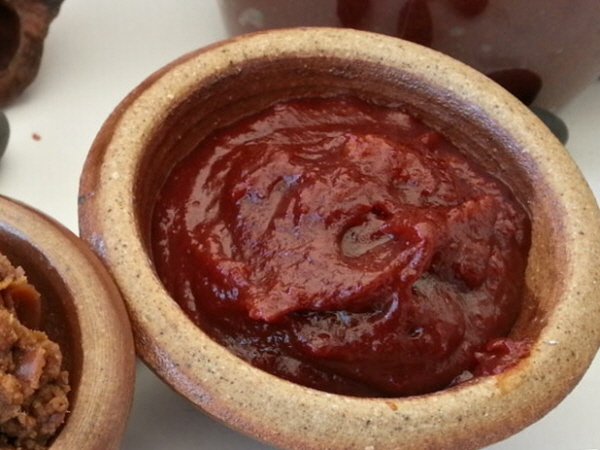
Worth clearing up early, because the two sauces get confused constantly and they do completely different jobs. What you’re making here is thick, reddish, sweet-spicy, and built on fermented chili paste. It coats things. It’s the sauce you brush onto something in the oven or spoon over a bowl.
Yangnyeomjang is thin, clear, and soy-based, seasoned with scallion, garlic, chili flakes and sesame, and it exists mainly to be dipped into alongside jeon, mandu, or bossam. If you want that clear soy-based dipping sauce instead, that’s a different one entirely — see our yangnyeomjang recipe. Don’t try to make one do the other’s work. A soy-based dip slides straight off roasted broccoli, and this gochujang sauce would drown a delicate pancake.
Ingredients, and what to use instead
| Ingredient | Where to get it, or what to use instead |
|---|---|
| Gochujang, 60 ml / 4 tbsp | Mainstream supermarkets now stock it, often in a squeeze tube. Substitute: white miso plus cayenne plus sugar, roughly 4:1:1 by volume — savory rather than sweet, and thinner in the mouth. Add an extra teaspoon of sugar if you go this route, since gochujang brings sweetness of its own. Sriracha is not a substitute here |
| Rice syrup or honey, 30 ml / 2 tbsp | Korean grocers sell mullyeot (물엿) or oligodang (올리고당). Substitute: corn syrup, which behaves identically, or granulated sugar dissolved in a tablespoon of hot water. Honey works and is what most people have, but it brings its own floral flavor. In a simmering pot of chili you’d never notice it; in an uncooked sauce eaten cold on a rice bowl, you will |
| Soy sauce, 30 ml / 2 tbsp | Any naturally brewed soy sauce. Korean jin-ganjang is a touch sweeter; Japanese brands are fine. Substitute: tamari for gluten-free, slightly rounder and less sharply salty. Don’t use guk-ganjang (soup soy sauce) — it’s much saltier and will wreck the balance |
| Rice vinegar, 30 ml / 2 tbsp | Any Asian grocer, most supermarkets. Substitute: plain white vinegar, but use a teaspoon less because it’s sharper and less rounded. Apple cider vinegar is closer in softness but adds a fruity edge that shows up in the dressing version |
| Toasted sesame oil, 10 ml / 2 tsp | Buy the darkest bottle you can find. Substitute: honestly, none. Toasted sesame paste loosened with a neutral oil gets partway there |
| Garlic, 2 cloves | Grate it rather than chop it. Substitute: 1/2 tsp garlic powder if you want a perfectly smooth sauce for a squeeze bottle — cleaner, less pungent |
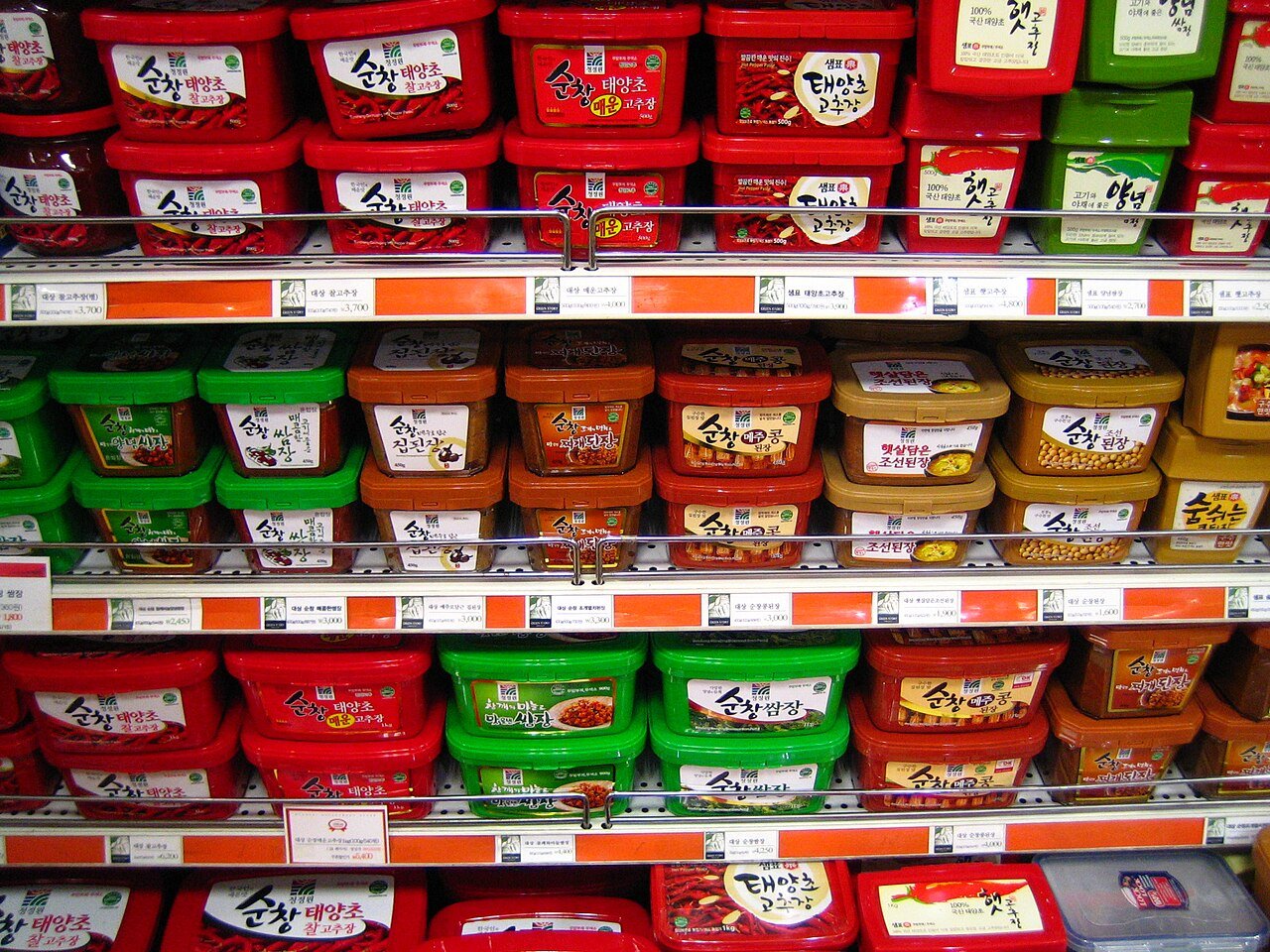
If you’re not sure what gochujang even is, how it differs from chili paste in general, or you need a fuller set of substitutes for the paste itself, our complete guide to gochujang covers it properly. And if you’re building a Korean shelf from nothing, the Korean pantry starter kit explains which four items to buy first.
Gochujang Sauce Recipe
Ingredients
Method
- Mince the garlic as fine as you can, or grate it on a microplane so it disappears into the sauce.
- In a bowl, measure the gochujang, rice syrup, soy sauce, and rice vinegar: 2 parts, 1 part, 1 part, 1 part.
- Whisk hard for about 30 seconds. The mixture looks streaky and broken at first, then suddenly turns smooth and glossy.
- Stir in the toasted sesame oil and the garlic.
- Add water 15 ml / 1 tbsp at a time until the sauce falls off the spoon the way you want it to: thick and slow for a glaze, ribboning for a dressing.
- Let it sit 10 minutes, then taste. Add vinegar if it’s flat, rice syrup if it’s harsh, a splash of soy sauce if it’s dull.
- Transfer to a clean jar and refrigerate. It keeps about three weeks and gets rounder after a day.
How to make it
- Grate or very finely mince the garlic. Chunks of raw garlic in a cold sauce are unpleasant and they get stronger overnight.
- Measure the four main parts into a bowl: 4 tbsp gochujang, 2 tbsp rice syrup, 2 tbsp soy sauce, 2 tbsp rice vinegar.
- Whisk for a good 30 seconds. It’ll look curdled and streaky for the first 15, then it comes together into something smooth and glossy. Don’t stop early and assume it’s broken.
- Stir in the sesame oil and the garlic.
- Add water one tablespoon at a time until the consistency matches what you’re about to do with it. See the next section.
- Rest it 10 minutes and taste. Flat means more vinegar. Harsh means more syrup. Dull means a splash more soy sauce.
- Jar it and refrigerate. Day two tastes better than day one, once the garlic has settled in.
Four things to do with it
A glaze for roasted vegetables, wings, or drumsticks
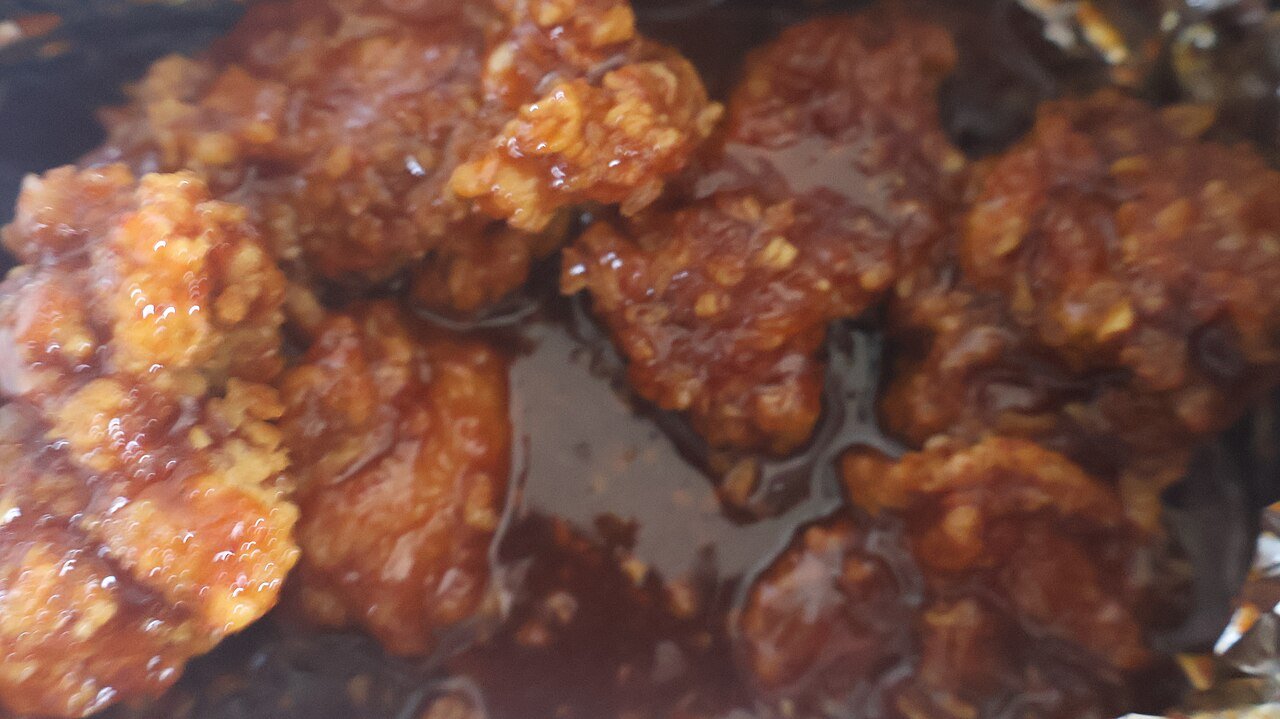
Use no water at all, or at most a tablespoon. You want it thick enough to cling to a spoon. Roast whatever you’re roasting until it’s about 80 percent done, then brush the sauce on and put it back in for the last 8 to 10 minutes at around 200°C / 400°F.
If you want a properly lacquered finish, tip the sauce into a small pan first and simmer it for two minutes, stirring, until it tightens and darkens. That short cook drives off some water and makes the sugars behave. Watch it — sauce with this much sweetener catches fast under a broiler. This is the same logic behind the sticky red coating on Korean fried chicken, though the real thing uses a different ratio and gets tossed rather than brushed.
A dressing for rice bowls or slaw
Add another tablespoon of rice vinegar and 2 to 3 tablespoons of water, and whisk until it pours. It should ribbon off the spoon, not plop. This is the version I make most often, and it goes over rice with whatever vegetables and egg are around — essentially a lazy bibimbap without the arranging.
On raw cabbage or carrot slaw, dress it 20 minutes ahead so the vegetables soften slightly and take on color. Any earlier and they weep water and the whole thing turns pink and loose.
A dip for fries, dumplings, or fried tofu
Use it exactly as the base recipe makes it, one tablespoon of water in, and finish with a sprinkle of toasted sesame seeds. It’s thick enough to hold on a fry and sharp enough to cut through fryer oil. Cold dumplings straight from the fridge are also improved by it. This is the most non-Korean use on the list and the one guests ask about most.
A spread for sandwiches and burgers
Skip the water entirely so it stays thick, and cut it with mayonnaise, roughly 1 part sauce to 2 parts mayo. Be clear about what happens when you do this: mayo-gochujang is not a traditional Korean condiment. It’s a fusion thing, popular in Korea now on burgers and in convenience store sandwiches, but nobody’s grandmother was making it. It’s very good. It just isn’t heritage, and I’d rather say so than pretend otherwise.
Where it goes wrong
Too much water, added too early, is the main failure. Water is easy to add and impossible to remove, so go a tablespoon at a time and stop while it still looks slightly too thick — it loosens on its own in the fridge.
The other one is treating it like a cooking sauce for stir-fries. It has enough sugar to burn in a hot wok before the garlic has even softened. Add it in the last 30 seconds with the heat down, or off the heat entirely. Sauces meant to simmer, like the one under tteokbokki, are built differently and use more gochugaru and less sweetener for exactly this reason.
If the sauce separates in the jar after a week, that’s normal. Stir it and carry on.
Frequently asked questions
What can I use gochujang sauce on?
Roasted vegetables, chicken wings, rice bowls, slaw, fries, dumplings, grilled tofu, salmon, burgers, and eggs. Adjust the thickness for each: no water for a glaze or spread, one tablespoon for a dip, three plus extra vinegar for a dressing. The base ratio doesn’t change.
How long does homemade gochujang sauce last in the fridge?
About three weeks in a sealed jar, and it’s better after the first day. The raw garlic is the limiting factor — leave it out and the sauce keeps closer to two months, since gochujang, soy sauce, vinegar, and sugar are all preservative by nature. Give it a stir before each use.
Can I make gochujang sauce without gochujang?
Sort of, and you should know what you’re giving up. Mix white miso, cayenne, and sugar at roughly 4:1:1 and use it in place of the paste. You’ll get sweet-salty-heat, but not the fermented chili depth that makes the sauce taste specifically Korean, and the color comes out browner than red. Sriracha and generic chili-garlic sauce aren’t workable stand-ins here; they’re vinegary and thin, and the finished sauce ends up tasting like sweet hot sauce.
What to make next
If this jar is your first real use of that tub, the two recipes that will teach you the most about the paste are bibimbap, which is essentially a lesson in gochujang as a seasoning, and tteokbokki, which shows you how it behaves when it’s simmered rather than stirred cold. For the clear, thin, soy-based dipping sauce that belongs next to pancakes and dumplings, go to yangnyeomjang instead.