What do Korean cooks actually mean when a recipe tells them to “make the yangnyeomjang”? The standard Korean dictionary gives a plainer answer than a thick red chili sauce: a sauce made with the full set of seasonings. Nothing in that definition says red, thick or thin, which is why the same word covers very different bowls.
Three of the Korea Food Promotion Institute’s recipes show how wide the family is. The version built here is thin and dark, on a ratio short enough to memorize: three parts soy sauce, two parts water, one part rice vinegar. The 3-2-1 is the author’s own shorthand, not a standard.
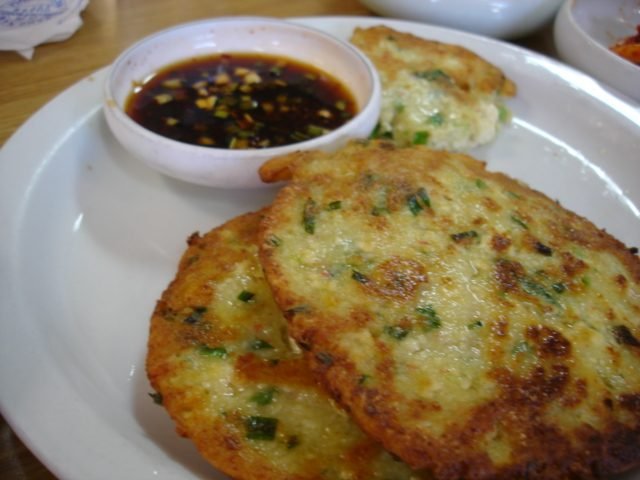

One name, several sauces with different amounts of water and vinegar
The institute’s recipes never use one fixed formula, and the differences are easy to read off. Its scallion pancake recipe pairs the pancake with a sauce of 2 tablespoons each of soy sauce, water and vinegar, a little sugar and 1 teaspoon of gochugaru. Its dumpling recipe serves a vinegar-soy dip of 2 tablespoons of soy sauce, 2 of vinegar and 1 of water, again with 1 teaspoon of gochugaru. The two sauces are close cousins, and the dumpling dip is the sharper of them.
The soybean-sprout rice recipe is a different kind of sauce. It stirs 5 tablespoons of soy sauce into half a cup of water with 2 tablespoons of gochugaru, 2 tablespoons of chopped green chili, scallion, garlic, sesame seeds and sesame oil, and has no vinegar at all. Here the sauce is poured over rice and mixed in, so it is loose, salty and full of chopped aromatics rather than sharp.
Put side by side, the three show the real variables: how much water thins the soy sauce, whether vinegar is present, and how many chopped aromatics ride in the liquid. A dip for fried food leans on vinegar. A sauce for rice leans on water and aromatics. The name stays the same because the principle is the same, soy sauce dressed with what is on hand.
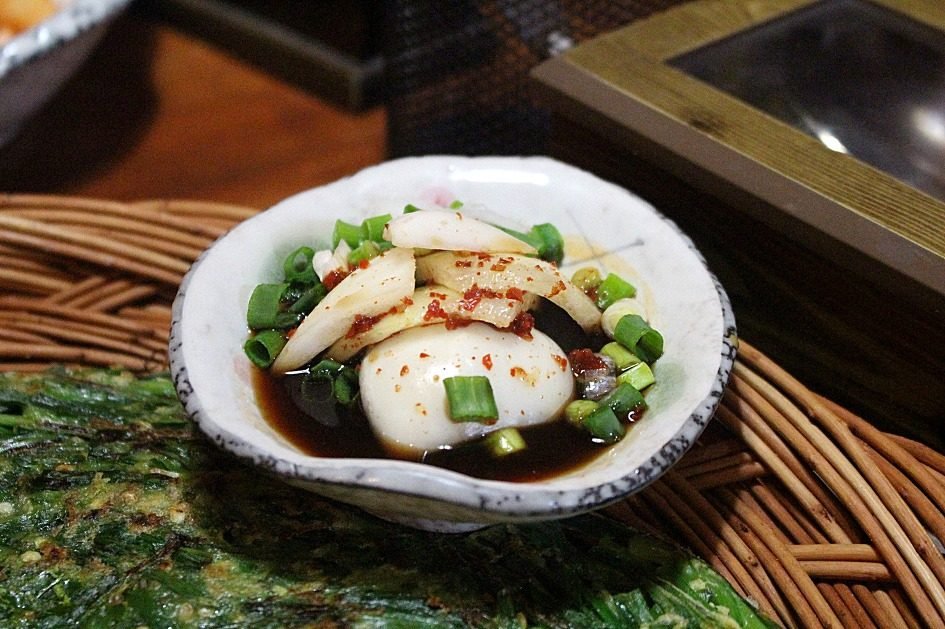

Where the 3-2-1 sits, and how to mix it
Three tablespoons of soy sauce, two of water and one of rice vinegar come to 45, 30 and 15 ml, so 90 ml of liquid, which grows to about 120 ml once the aromatics go in. Measured in tablespoons the ratio scales without arithmetic: six, four, two for a double batch. Per batch, the card adds 2 teaspoons each of sugar and gochugaru, 1 teaspoon of minced garlic, one chopped scallion, 1 teaspoon of toasted sesame oil and 1 teaspoon of lightly crushed toasted sesame seeds.
Compared with the institute’s sauces, the 3-2-1 is more soy-forward than the pancake sauce, which uses equal parts of soy sauce, water and vinegar, and less sharp than the dumpling dip. That is deliberate: it is meant to work as a dip for fried food and as a dressing for plain tofu or rice, with enough aromatics to season both. Water deserves the most care, because it goes in easily and cannot be taken out: an extra half teaspoon of gochugaru changes the sauce slightly, while two extra tablespoons of water would drown it.
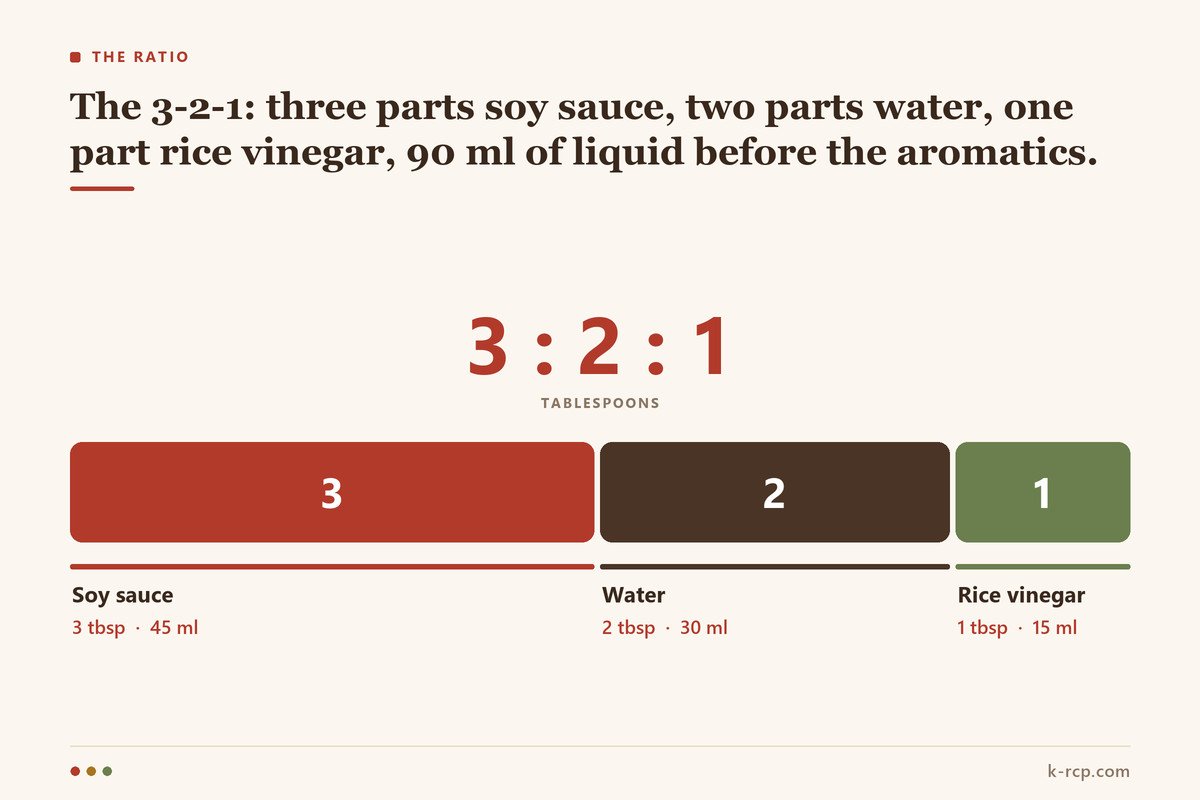
For a triple batch the liquids become nine, six and three tablespoons, with the aromatics tripled to match. Keep the three liquids in proportion, since every other ingredient forgives a small miss and these three do not.
The order of mixing follows the card. Measure the soy sauce, water and vinegar into a small bowl, then stir in the sugar while the liquid is still thin, for about 20 seconds, until no grains scrape the bottom. Add the gochugaru and garlic, then the scallion, sesame oil and crushed seeds. Leave it 10 minutes so the garlic and chili flakes soften and stop tasting raw, and stir once more before it reaches the table, because the sesame oil floats.
Yangnyeomjang Recipe
Ingredients
Method
- Measure the soy sauce, water, and rice vinegar into a small bowl in that order: 3 tablespoons, 2 tablespoons, 1 tablespoon.
- Add the sugar and stir until you can no longer feel grains against the bottom of the bowl, about 20 seconds.
- Stir in the gochugaru and minced garlic.
- Chop the scallion finely and add it, along with the sesame oil and crushed sesame seeds.
- Let the sauce sit for 10 minutes before serving so the garlic and chili flakes soften and stop tasting raw.
- Stir once more just before it goes to the table, since the sesame oil separates and floats.
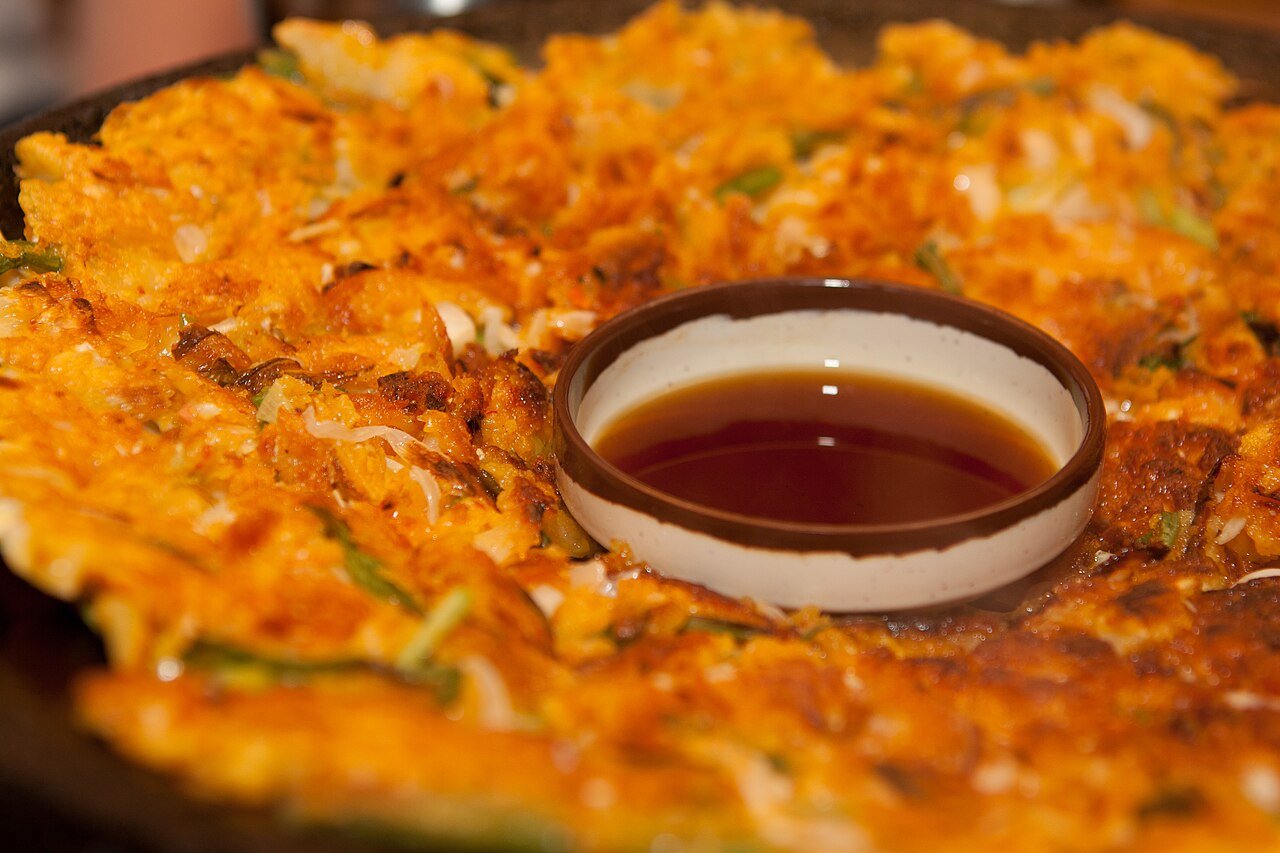
Recipe card photo: File:Haemul-pajeon 1.jpg by Jirka Matousek, CC BY 2.0, via Wikimedia Commons.

Adjusting it for the dish, and choosing the soy sauce
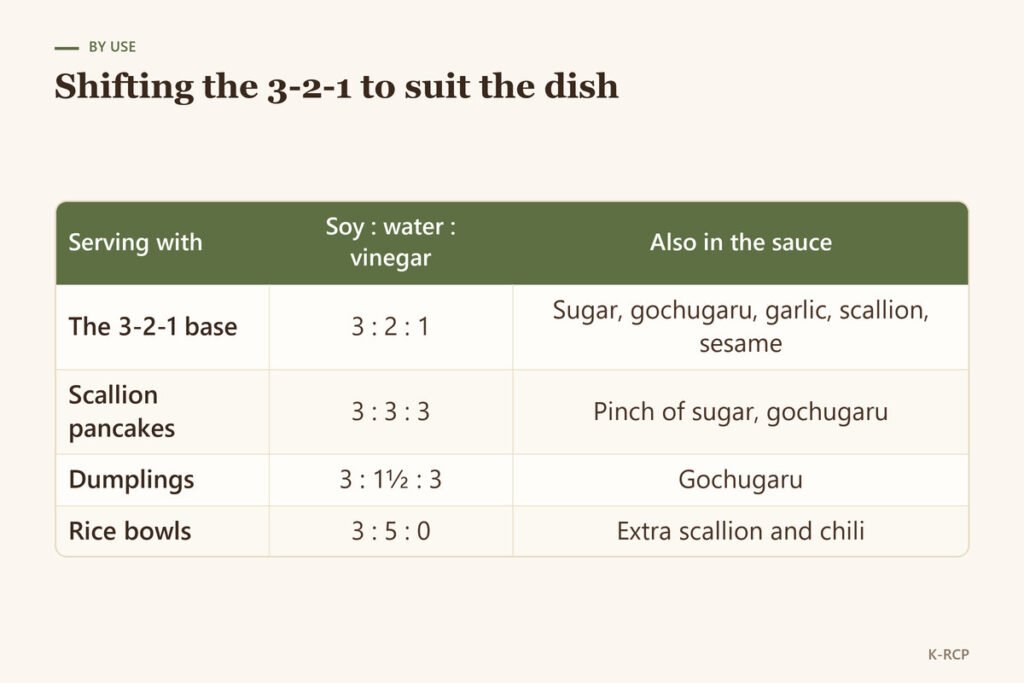
If the sauce is going with something the institute pairs with a different one, shift the ratio toward that sauce, using 3 tablespoons of soy sauce as the base:
- Scallion pancakes: raise the water and the vinegar to 3 tablespoons each, which matches the institute’s equal-parts pancake sauce.
- Dumplings: use 3 tablespoons of vinegar and 1 1/2 tablespoons of water, the dumpling dip scaled up by half.
- Rice bowls: drop the vinegar and thin with about 5 tablespoons of water, closer to the soybean-sprout rice sauce, and add extra chopped scallion and chili.
The card calls for regular Korean soy sauce, jin-ganjang, which is the regular dark bottle rather than the pale soup soy sauce. Korean food law sorts soy sauce into more kinds than a supermarket shelf suggests: in the food standards code for fermented sauces, hansik-ganjang is made from meju blocks and brine, yangjo-ganjang from a koji-fermented grain and soybean base, and mixed soy sauces blend those with acid- or enzyme-hydrolyzed ones. The code sets a total nitrogen minimum of 0.8 percent for soy sauce and 0.7 for hansik-ganjang. In practice that means two bottles with the same name can taste quite different, and the ratio is a starting point rather than a guarantee.
It also helps to know what this sauce is not for. Because it carries vinegar, it suits cold or room-temperature use: dips, dressings, a spoonful over plain pan-fried tofu. Thick red sauces that cling to fried chicken or coat cold noodles are built on fermented chili paste instead, and a thin soy sauce will not stand in for them. A sauce meant to simmer with food, as in a braise, is better mixed without the vinegar and finished at the table.
Taste after the sugar dissolves and before the aromatics go in, and adjust with water by the teaspoon. If you need to stock the shelf from nothing, the guide to which soy sauce to buy first is the place to start, and the gochujang explainer covers the red paste that people sometimes expect this sauce to be. Dumplings are the natural partner, and the mandu recipe shows the fillings that suit a sharper dip.
What the first spoonful tells you
Almost every failed batch announces itself at the first spoonful, and each has a fix.
It tastes of brown water. The liquid was thinned by eye. Measure the water next time and adjust it by the teaspoon; a batch that is already too thin is better remade, soy sauce first, than rescued.
It is harsh, or it fights the food. That is a vinegar and chili problem, and it depends on the plate. With something oily, such as a thick seafood pancake or fried dumplings, an extra half tablespoon of vinegar helps each bite taste as good as the first. With something delicate, such as steamed dumplings or plain tofu, cut the gochugaru to 1 teaspoon and the garlic to half a clove.
It tasted better when it was fresh. The scallion softens and the garlic grows louder as the sauce sits. Mix the soy sauce, water, vinegar, sugar and gochugaru ahead if you like, and stir in the scallion, garlic and sesame oil just before serving.