You bought a bag of frozen squid rings on impulse, because it was on sale, and now it’s been sitting in your freezer for two weeks while you figure out what to actually do with it. That bag is exactly what this recipe is for. Ojingeo bokkeum doesn’t need whole squid, doesn’t need a trip to a specialty market, and doesn’t need any knife skill you don’t already have. It needs about eight minutes of active cooking and a pan hot enough to move fast.
The one thing that trips people up with squid, whether it’s fresh or frozen, is timing. Squid goes from perfectly tender to rubbery faster than almost anything else in a Korean kitchen — we’re talking seconds, not minutes — and once you know what to watch for, that’s the entire skill this dish asks of you.
Quick Facts
| Total time | 23 minutes |
| Serves | 2 as a main with rice, 4 as a shared plate |
| Difficulty | Easy |
| Heat | 3 out of 5 |
| Squid needed? | Frozen rings work completely fine |
What Ojingeo Bokkeum Actually Is
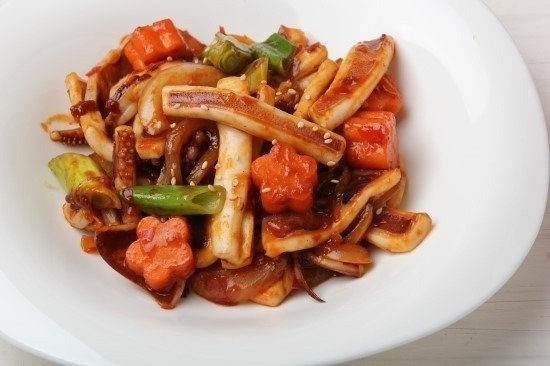
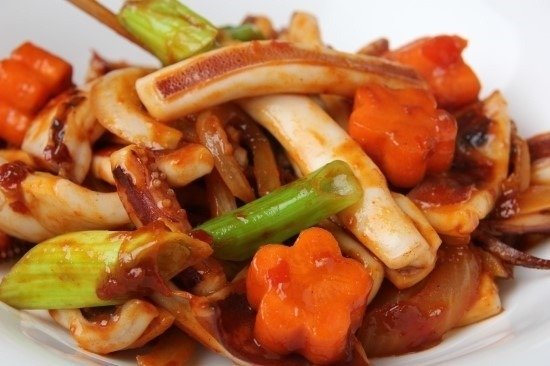
Ojingeo (오징어) is squid. Bokkeum means stir-fried. The dish is squid, cut into pieces, tossed hard and fast over high heat in a red gochujang-based sauce with onion, carrot, and cabbage, then served with rice. It sits in the same family as nakji bokkeum, the octopus version, and the two are cooked almost identically — same sauce, same technique, different seafood, and a slightly different window for how fast things go wrong if you leave them in the pan too long.
It’s dinner-table food more than restaurant-only food. Most households make it with whatever squid is in the freezer, and it’s common enough that specific regional versions exist — dried, shredded squid versions like ojingeochae-bokkeum are a completely different, chewier dish that shares only the name and the sauce family.
The Scoring Question, and Why It’s Optional
Restaurant versions of ojingeo bokkeum usually start with a whole squid tube, cut open flat, and scored on the inside in a shallow crosshatch pattern before it’s cut into pieces. When that scored surface hits the hot pan, it curls into a tight spiral that looks almost like a small pinecone — it’s genuinely one of the more satisfying things to watch happen in a stir-fry.
The scoring isn’t just decoration. It also helps the surface area soak up more sauce and lets the squid cook a touch more evenly. But it requires a whole, cleaned tube, and if what you have is a bag of pre-cut frozen rings — which is what most people actually cook with — you simply can’t score them. That’s fine. Skip the step entirely. Rings cook up just as tender and taste identical; you only lose the visual curl and a slightly better sauce grip, not the dish itself.
Ingredients
| Ingredient | Where to get it, or what to use instead |
|---|---|
| Squid, 400 g / 14 oz | Frozen, pre-cut rings from any grocery freezer aisle are the easy, common choice. Whole cleaned tubes let you score the surface, but aren’t required. |
| Gochugaru, 1 tbsp | Korean coarse chili flakes. Without it: 1 1/2 tsp sweet paprika plus 1/2 tsp cayenne is the closest stand-in, flatter but workable. |
| Gochujang, 2 tbsp | Widely available in tubs now. |
| Cabbage or perilla leaves | Cabbage is the everyday choice; perilla leaves add a more distinctly Korean, slightly bitter edge if you can find them. |
| Onion, carrot, scallions, garlic, ginger | Standard produce section. |
Ojingeo Bokkeum Recipe
Ingredients
Method
- If your squid is whole and uncleaned, pull the head and tentacles away from the body tube, remove the plastic-like quill from inside the tube, and peel off the thin outer membrane. Rinse well. Skip this step entirely if using pre-cleaned or frozen ring-cut squid.
- Cut the tube open flat and score the inside surface in a shallow crosshatch pattern, cuts about 5 mm / 1/4 in apart, without cutting all the way through. Skip this step if using pre-cut rings.
- Cut the scored tube into bite-size pieces, roughly 4 cm / 1 1/2 in squares; leave rings as they are if using pre-cut squid.
- Whisk the gochujang, gochugaru, soy sauce, sugar, garlic, ginger, and sesame oil together until smooth.
- Heat the neutral oil in a wide pan or wok over high heat until shimmering.
- Add the onion and carrot and stir-fry 2 minutes, until the onion softens at the edges.
- Add the squid and the sauce together, all at once, and toss constantly over high heat.
- Cook for 90 seconds to 2 minutes only. Watch for the scored pieces curling into a tight spiral shape and the squid turning fully opaque — that’s your signal it’s done. Squid overcooks in seconds, so pull it the moment it curls.
- Add the cabbage and scallions in the final 30 seconds, tossing just until they wilt slightly.
- Scatter sesame seeds over the top and serve immediately with rice.
How to Make It
- Clean and score, only if you’re using whole squid. Pull the head away from the tube, remove the quill, peel the membrane, rinse well. Skip all of this with pre-cut frozen rings.
- Score in a shallow crosshatch, about 5 mm / 1/4 inch apart, cutting partway through the flesh, not all the way. This is the step that gives whole-tube squid its curl.
- Cut into bite-size pieces, or leave rings as they are.
- Mix the sauce first. Gochujang, gochugaru, soy sauce, sugar, garlic, ginger, sesame oil, whisked smooth. Everything moves fast once the squid hits the pan, so have this ready ahead of time.
- Get the pan hot, wide pan or wok, high heat, oil shimmering, before anything else goes in.
- Stir-fry the onion and carrot first, 2 minutes, until the onion softens.
- Add squid and sauce together, all at once, tossing constantly without pause.
- Watch for the curl, not the clock. Ninety seconds to two minutes is the general range, but the real signal is scored pieces curling tight and everything turning fully opaque. The moment you see that, it’s done — a few extra seconds past that point and the texture turns rubbery, and there’s no fixing it once it happens.
- Add cabbage and scallions in the last 30 seconds, just enough to wilt slightly.
- Serve immediately with rice, while it’s hot from the pan.
Tips and Storage
Squid cooks faster than octopus. If you’ve made nakji bokkeum before and are used to that timing, squid needs noticeably less time in the pan — closer to a minute than four.
Frozen rings need to be fully thawed and patted dry before they go anywhere near the hot pan. Ice crystals hitting hot oil cause spattering and also water down the sauce.
Leftovers keep 1 to 2 days in the fridge, but reheating already-cooked squid in a hot pan for even 30 seconds too long will toughen it further. A very quick reheat, or eating it cold over rice, works better than a long one.
Common Questions
Can I use frozen squid rings instead of whole squid?
Yes, and most home cooks do exactly that. You lose the ability to score the surface into the curling pattern restaurant versions show off, but the flavor and texture are the same. Just make sure the rings are fully thawed and dried before cooking.
How do I know when the squid is done?
Watch for the color change to full opacity and, if scored, the pieces curling tightly. This happens fast — often under two minutes over high heat — so stay at the pan rather than stepping away.
Why did my squid turn out rubbery?
Almost always overcooking, even by a small margin. Squid has a very narrow window between undercooked and tough, and it’s much shorter than most people expect coming from other proteins. Pull it the second it looks and curls done.
What to Eat With It
Ojingeo bokkeum and nakji bokkeum share nearly the same sauce and method, just with different timing windows to watch for. If you’re already boiling water for rice, the leftover sauce here works well stirred into instant noodles too — our ramyeon upgrades guide has more ideas along those lines. Gochujang, gochugaru, and sesame oil all show up again in our Korean pantry starter kit, worth a look before your next Korean grocery run.