The first time I hosted Korean BBQ for non-Korean friends, I forgot the ssamjang. Everything else was covered — meat marinated, lettuce washed, rice made, the little grill set up on the table. And then everyone sat down, wrapped their first piece of pork belly in lettuce, and it just tasted like plain grilled meat in a leaf. Fine, not bad, but missing the thing that makes ssam actually work. I’ve made it every single time since, because that one dinner taught me it’s not a garnish. It’s the reason the whole format holds together.
Quick Facts
| Total time | 10 minutes |
| Makes | About 3/4 cup, enough for 4 as a side sauce |
| Difficulty | Easy |
| Spice level | 1 of 5, adjustable up with more gochujang |
| Vegan? | Yes, as written |
What Is Ssamjang?
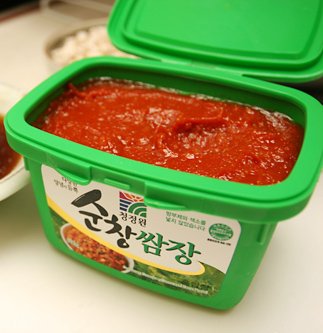
Ssamjang (쌈장) is a thick dipping paste built on two fermented Korean staples: doenjang, a savory, earthy soybean paste closer in flavor to miso than to anything sweet, and gochujang, the sweeter, spicier fermented chili paste most people recognize from tteokbokki and bibimbap. Mixed together with sesame oil, garlic, and a little sugar, they balance each other out — doenjang’s funk gets rounded off by gochujang’s sweetness, and gochujang’s heat gets grounded by doenjang’s savoriness. Neither paste on its own does quite what the combination does.
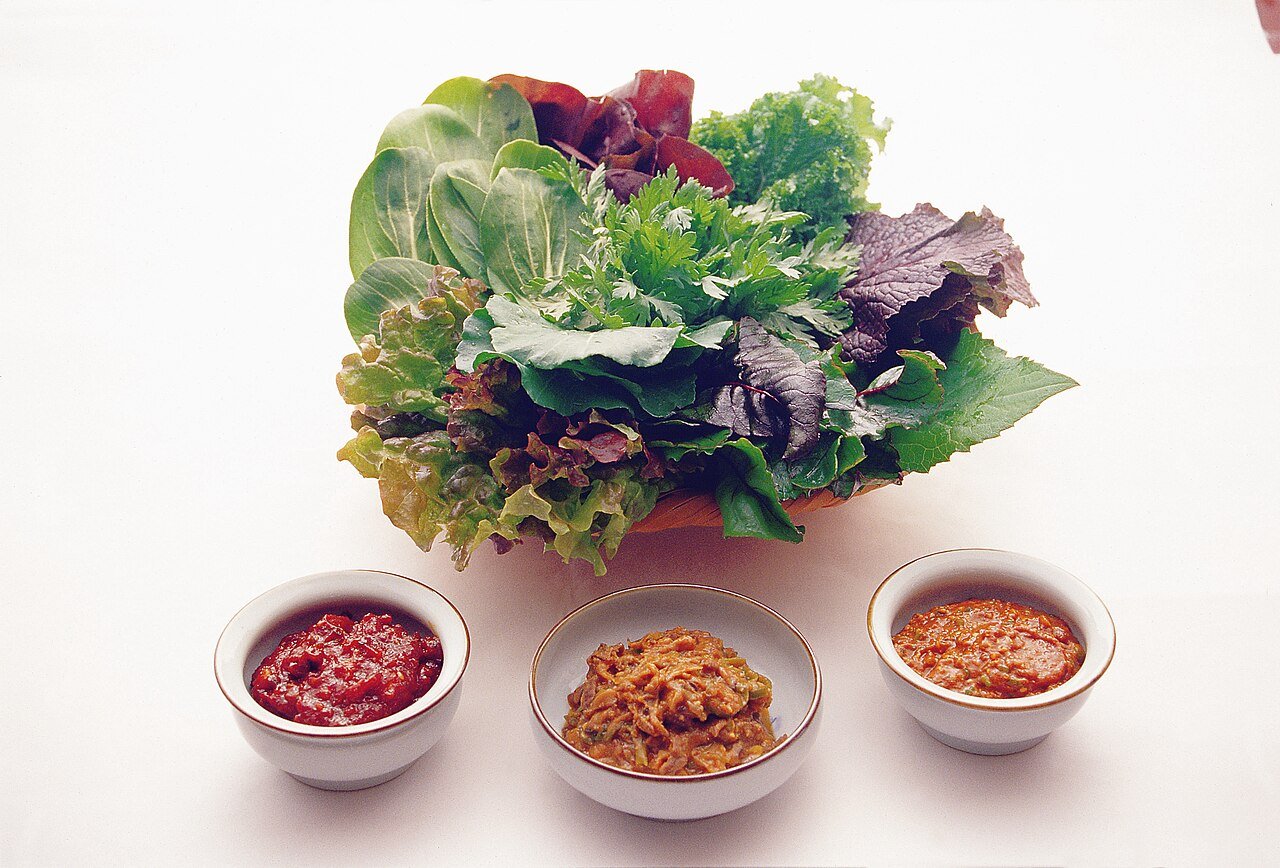
The name breaks down simply: ssam means “wrapped,” referring to the lettuce or perilla leaf the meat gets rolled up in, and jang just means paste or sauce. So ssamjang is, literally, “the sauce for the wrap.” It shows up anywhere there’s grilled meat and lettuce on the table — samgyeopsal joints, home barbecue nights, galbi restaurants — and it’s normal to see a few small bowls of it on any Korean BBQ table, refilled without anyone asking.
Ingredients
| Ingredient | Where to get it, or what to use instead |
|---|---|
| Doenjang, 3 tbsp | Any Korean grocery, usually sold in a tub. White miso plus a touch of soy sauce is the closest non-Korean stand-in — it’s sweeter and much less pungent, so the result reads milder and a little flatter than the real thing. |
| Gochujang, 1 tbsp | Same aisle as doenjang, usually right next to it. A teaspoon of sriracha or another chili paste plus half a teaspoon of sugar gets you into the same color and heat range, but you lose the fermented sweetness gochujang has underneath the spice. |
| Sesame oil, garlic, onion, scallion | Standard kitchen and produce-aisle items. |
| Walnuts or pine nuts (optional) | Some restaurant versions add a little crushed nut for texture. Skip it for a smoother, more classic homestyle sauce. |
On ratio. Most home recipes land somewhere around 2 or 3 parts doenjang to 1 part gochujang. More doenjang gives you a deeper, more savory sauce with less color and heat; more gochujang pushes it sweeter, redder, and spicier. There’s no single correct ratio — it’s closer to how people adjust salt, a little more or less depending on the household and what’s being grilled.
Ssamjang Recipe
Ingredients
Method
- Put the doenjang and gochujang in a small bowl and mash them together with the back of a spoon until smooth and evenly blended.
- Stir in the sesame oil, sugar, garlic, onion, and scallion until fully combined.
- Taste it. This is the step most people skip, and it’s the one that actually makes a good ssamjang — add more doenjang for depth, more gochujang for heat and color, or the rice vinegar if it tastes flat.
- Stir in the crushed nuts if using, and top with sesame seeds just before serving.
- Serve alongside grilled meat and lettuce or perilla leaves for wrapping. Store any extra in an airtight container in the fridge.
How to Make It
- Mash the pastes together first, doenjang and gochujang, until there are no separate streaks of either one left. A small bowl and the back of a spoon does it.
- Stir in the sesame oil, sugar, garlic, onion, and scallion. No cooking required — this is a raw, mixed condiment, not a sauce you reduce on the stove.
- Taste it before serving. This is the step that separates a flat ssamjang from a good one. If it tastes one-note salty, it usually needs more sugar or gochujang. If it tastes too sweet or thin, more doenjang rounds it back out.
- Add texture last. Crushed walnuts or sesame seeds go on right before it hits the table, so they stay a little crunchy rather than going soft in the paste.
Serving It
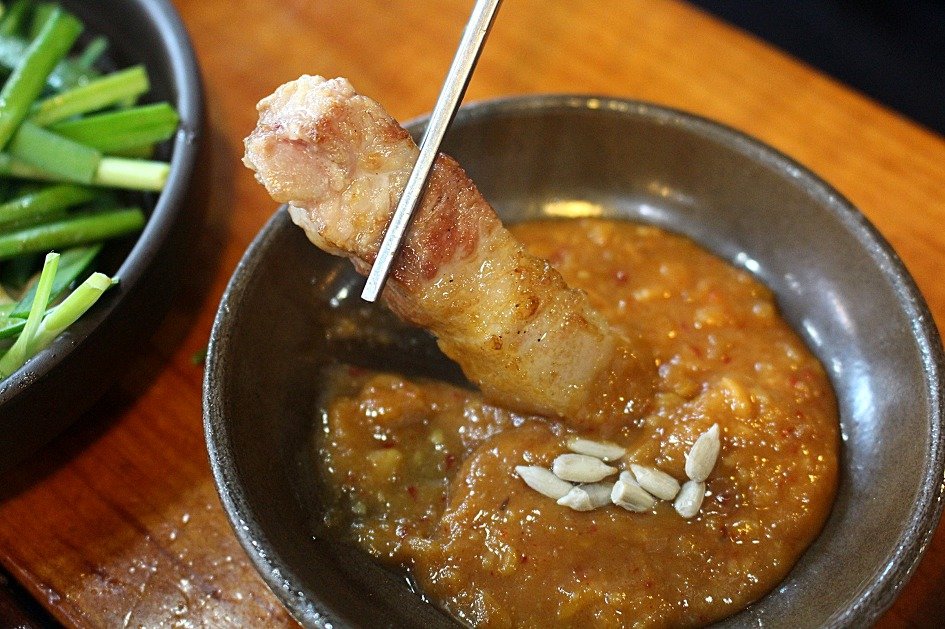
Ssamjang is built to sit next to grilled meat, not on top of it. The standard move: a piece of grilled pork belly or beef, a dab of ssamjang, wrapped in a lettuce or perilla leaf along with a sliver of garlic and maybe a slice of chili, folded into a single bite. It also works well as a dip for raw vegetables — cucumber and carrot sticks, in particular — and some people spread a thin layer on rice as a simple, savory bite when there’s nothing else in the fridge.
Tips and Storage
Make it before the meat goes on the grill, not after. Ssamjang takes ten minutes and no cooking, so there’s no reason to be mixing it while everyone’s already eating.
Fresh garlic matters more here than in most sauces. Because nothing gets cooked, raw garlic’s sharpness comes through directly. Mince it fine, or the texture reads a little rough against the smooth paste.
Don’t skip the taste-and-adjust step. Doenjang brands vary a lot in saltiness, and gochujang brands vary in sweetness, so the same recipe can come out differently depending on what’s in your pantry. A one-to-one recipe assumes an average; your fridge might need more or less of either.
Ssamjang keeps well — up to 2 weeks refrigerated in an airtight container, since both base pastes are fermented and shelf-stable on their own. It doesn’t freeze particularly well; the texture goes a little grainy once thawed.
FAQ
What’s the ratio of doenjang to gochujang in ssamjang?
Most home versions use around 2 to 3 parts doenjang to 1 part gochujang, which keeps the sauce more savory than spicy. If you want a redder, sweeter, hotter version, closer to 1-to-1 works too — there’s no fixed rule, just a starting point to adjust from.
What’s the actual difference between doenjang and gochujang?
Doenjang is a fermented soybean paste, savory and earthy, closer to miso. Gochujang is a fermented chili paste, sweeter and spicier, made with glutinous rice and red pepper. Ssamjang exists specifically because neither one alone does the job a good BBQ dipping sauce needs — together they cover both savory depth and sweet heat.
How long does homemade ssamjang keep?
About 2 weeks in the fridge in a sealed container. Both base pastes are fermented and naturally shelf-stable, so ssamjang holds up much longer than a fresh sauce would.
Related Recipes and Where to Use It
Ssamjang exists for one purpose, really, and that’s samgyeopsal, the grilled pork belly it’s most often served alongside. It’s also a natural match for dubu kimchi, where a small dab on the tofu adds savory depth without more heat. If doenjang and gochujang are both new to your pantry, our Korean pantry starter kit covers what to buy and roughly how long each keeps once opened.
If you’re planning to eat your way through actual Korean BBQ on a trip, our sister site’s guide to eating in Hongdae is a solid place to start looking for grilled-meat spots near the university district.