Here’s the short version, because this is a fridge-cleanout dish and you probably want to actually cook it rather than read about it for ten minutes first. Cold rice, sour kimchi, whatever fat you’ve got — pork, spam, bacon, or nothing — a spoon of gochujang, a fried egg on top. Fifteen minutes, one pan, and it’s better with the ingredients you already have going slightly past their best than with anything you’d make a special trip to buy.
Kimchi fried rice, kimchi-bokkeum-bap (김치볶음밥), is what happens in a Korean kitchen at the end of the week, when the good side dishes are gone, there’s a container of rice from two nights ago in the fridge, and the kimchi tub is down to the sour dregs nobody wanted to eat straight. It isn’t a recipe you plan a shopping trip around. It’s the recipe that exists because you didn’t plan one.
Two things have to be old, not fresh
This is the part most versions of this dish get slightly wrong, and it’s the same lesson our kimchi jjigae recipe is built around: kimchi keeps fermenting after it’s made, and the sourness that builds up over one or two weeks is not optional flavor here. It’s the entire backbone. Fresh kimchi, the crunchy stuff you’d eat as a side dish on day one, tastes like seasoned cabbage when it hits a hot pan — pleasant, but flat, with none of the tang that makes fried rice taste like fried rice and not just red rice. If your only kimchi is fresh, stir in a teaspoon of rice vinegar per cup before it goes in the pan. It’s a real fix, just a slightly one-note one next to the genuine article.
The rice matters just as much, in the opposite direction. It needs to be cold and at least a day old, ideally two. Freshly cooked rice is coated in a layer of surface starch and carries extra moisture, and both of those turn a hot pan into a steamer — you get clumps and a slightly gluey texture instead of individual fried grains. Cold rice has had time to dry out and firm up in the fridge, so the grains separate cleanly with your fingers before they ever touch oil. There’s genuinely no good substitute for this one. If all you have is rice from an hour ago, spread it on a tray and put it in the freezer for fifteen minutes before you cook — it’s not the same as a proper night in the fridge, but it gets you most of the way there.
Why old kimchi tastes the way it does
Lactic acid bacteria are doing the work here, the same ones behind sauerkraut and yogurt. Fresh kimchi is salty and a little sweet from the seasoning paste. Give it a week or two at fridge temperature and those bacteria convert sugars into lactic acid, the cabbage softens, and the liquid at the bottom of the tub turns from cloudy-salty to genuinely sour. That’s the flavor this dish is chasing, and it’s the same chemistry that makes older kimchi the right choice for a stew rather than a side dish — once it’s too sour to enjoy raw, it’s exactly ready for the pan.
If you keep kimchi around regularly, you’ll start to recognize the smell of a tub that’s crossed over from “side dish” to “cooking ingredient.” That’s the one to reach for here, not the crisp, bright red batch you bought last weekend.
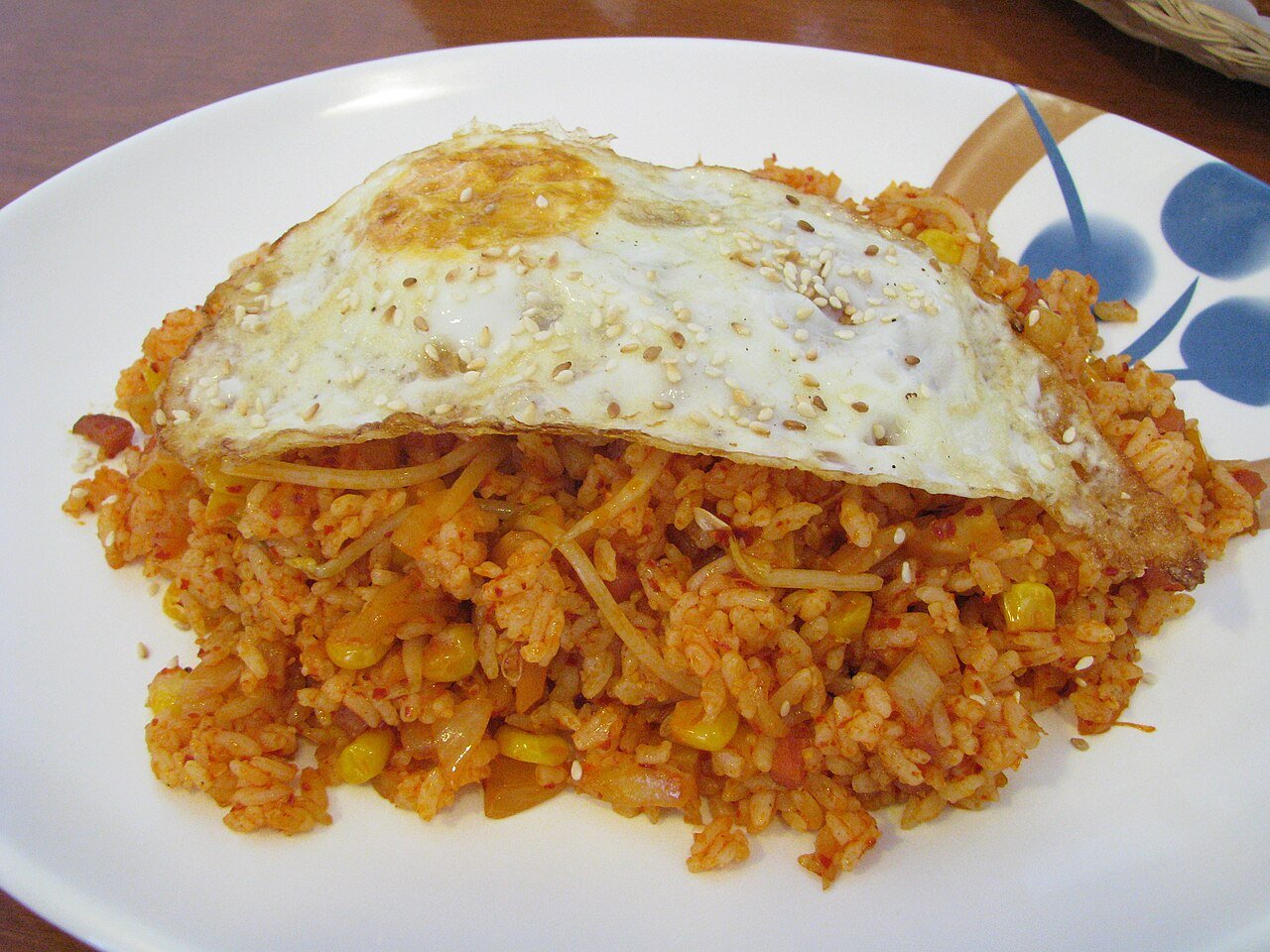
Kimchi Fried Rice Recipe
Ingredients
Method
- Take the rice out of the fridge and break up any clumps with your fingers before it goes near the pan.
- Render the pork belly (or spam) in a dry, cold pan over medium heat until the fat runs and the edges crisp, about 3 minutes.
- Add the kimchi and cook 3 to 4 minutes, stirring often, until it darkens slightly and smells toasted rather than raw.
- Push everything to one side, add the oil to the empty side, and stir in the gochujang for 20 seconds until it’s fragrant.
- Add the cold rice and the kimchi juice. Break up the rice with the back of the spatula and stir-fry over high heat for 4 to 5 minutes, pressing it against the hot pan in stages so parts of it actually fry rather than just steam.
- Taste and add the sugar only if it tastes sharp rather than savory-sweet.
- Fry the eggs separately, sunny-side up, while the rice finishes.
- Off the heat, stir in the sesame oil, divide between two bowls, top each with a fried egg and scallions, and scatter the seaweed or sesame seeds over the top.
The build, once the two basics are sorted
Everything past the rice and the kimchi is a choice. Pork belly, diced small and rendered until the fat runs, is the classic version and gives you a little crackle in every bite. Spam, cut into cubes, is what a lot of Korean households actually use, and it fries up with a saltier, slightly more artificial edge that some people genuinely prefer. Firm tofu, pressed and pan-fried until the edges are golden before it goes in, makes a good vegetarian version — it won’t render any fat into the pan, so add an extra half-tablespoon of oil to compensate.
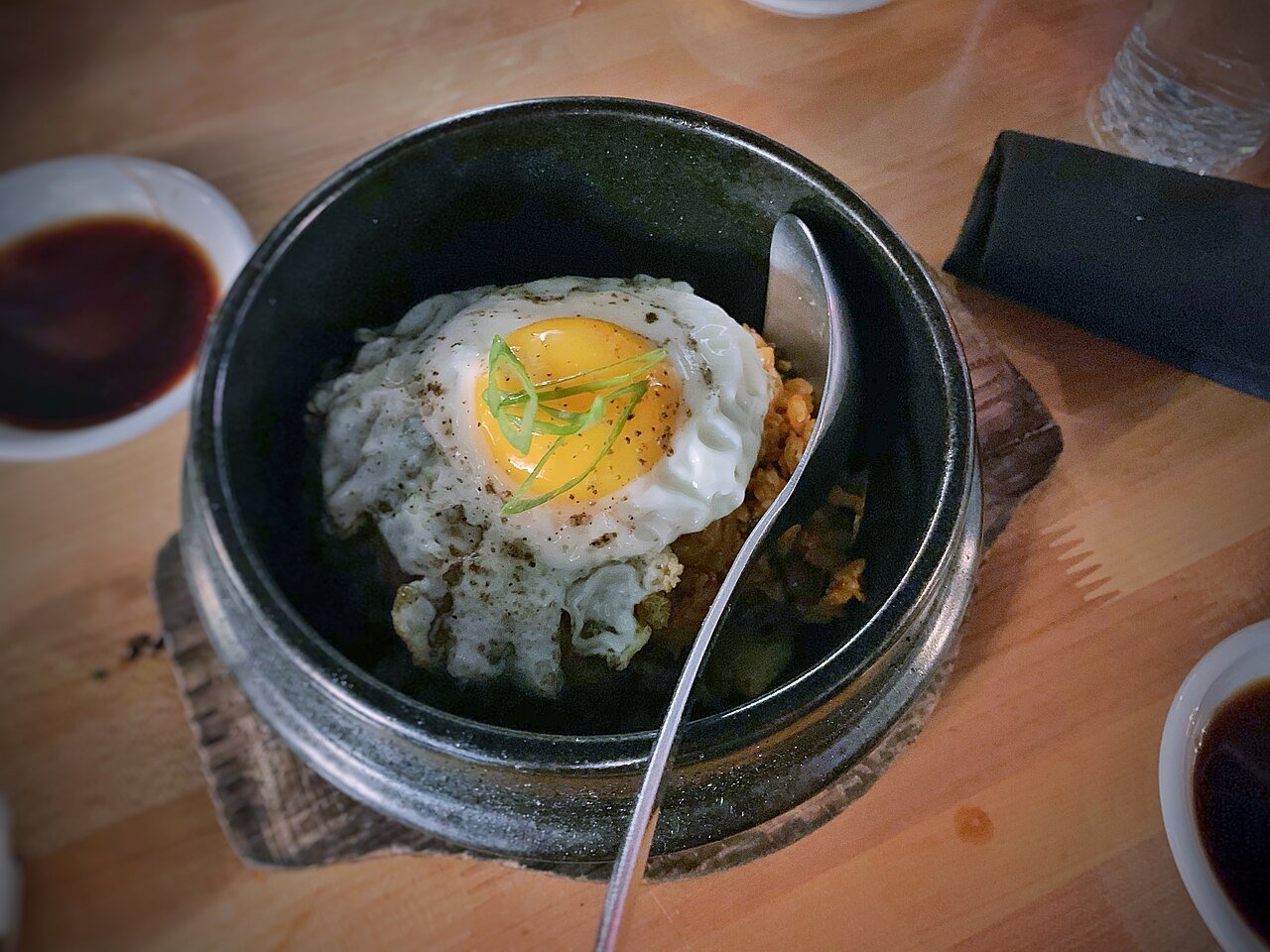
A spoon of gochujang added early, stirred into a cleared patch of the hot pan for twenty seconds before the rice goes in, is what pulls the whole dish together into something more than kimchi-and-rice — it adds a savory depth the kimchi alone doesn’t quite reach. Skip it if you want a lighter, more purely kimchi-forward version; it’s genuinely optional, unlike the gochujang in a bowl of bibimbap.
The egg on top isn’t decoration. A fried egg with a soft yolk, broken into the hot rice at the table, does the same job here that it does in bibimbap — it coats everything in something rich and ties the dish together. Fried rice without an egg on top is still good. Fried rice with one is better, and it costs you ninety seconds.
Where it usually goes wrong
Wet fried rice is the most common failure, and it’s almost always one of two causes: rice that wasn’t properly cold and dry, or a pan too crowded to let steam escape. Use a wide pan, don’t double the recipe in the same skillet, and resist the urge to stir constantly — leaving the rice pressed against the hot metal for ten or fifteen seconds at a stretch is what gives you the occasional crisp, faintly charred grain that makes this dish taste like it came from a restaurant wok rather than a home stove.
Under-seasoned rice is the other one, usually from kimchi that wasn’t sour or juicy enough. Taste before you plate it. If it’s flat, a little more of the kimchi juice or a small splash of soy sauce fixes it faster than more gochujang will.
Frequently asked questions
Can I make kimchi fried rice without pork?
Yes. Skip the meat and add an extra tablespoon of oil so the rice still has something to fry in, or use pressed and pan-fried firm tofu, which crisps at the edges in a similar way. A vegan version needs a kimchi check too — many brands include salted shrimp or fish sauce, though vegan kimchi is widely available now.
My kimchi isn’t sour yet. Can I still make this tonight?
Yes, with a fix rather than a substitute: stir 1 teaspoon of rice vinegar per cup of kimchi into the kimchi itself before it goes in the pan, plus a small pinch of sugar to round it out. It won’t have the depth of a properly aged batch, but it will taste like fried rice rather than seasoned cabbage rice.
What can I use instead of day-old rice?
Nothing does quite the same job, but a rough fix is to spread freshly cooked rice on a tray in a thin layer and freeze it for 10 to 15 minutes to dry the surface out before frying. It’s a stopgap, not a replacement for a proper night in the fridge.
What to make with what’s left
If this became your regular use for aging kimchi, kimchi jjigae is the other dish built entirely around the same logic, and it’s worth reading even if you don’t cook it tonight — it explains exactly why sour kimchi behaves the way it does in a hot pan. And if you’re stocking a Korean pantry from scratch so you always have a tub going sour in the back of the fridge, the Korean pantry starter kit covers which kimchi and gochujang are worth buying first.