Galbitang is the soup you make for someone you want to impress, and it earns that role by being the opposite of everything a stew is. Where kimchi jjigae is loud, red, and forgiving, galbitang is clear, quiet, and unforgiving of shortcuts — a good bowl takes real technique, and a lazy one is obviously lazy. If you’re looking for a Korean soup to serve guests, or to put on the table on a day that calls for something more composed than a weeknight stew, this is the one.
Quick facts
- Total time: about 2 hours 30 minutes, including a soaking step
- Serves: 4
- Difficulty: medium
- Spice level: 1 out of 5 — no chili in this dish at all
- Vegan-friendly: no
What is galbitang?
Galbitang (갈비탕, roughly gal-bee-tang) is a clear beef short rib soup, simmered for hours until the meat is tender and the broth is rich but transparent — no chili, very little seasoning beyond salt and soy sauce, and a garnish of thin egg ribbons and glass noodles. The word breaks down simply: galbi is rib, tang is soup.
It’s frequently served at Korean weddings and hanjeongsik (full-course) restaurants, and on New Year’s some households serve it alongside or instead of tteokguk, the rice cake soup that’s more traditional for the holiday. The through-line across all of these settings is that galbitang reads as an occasion food — something a host serves when they want the meal to feel considered rather than convenient.
Part of that comes down to cost and effort. Short ribs aren’t a cheap cut, and the multi-stage process — soaking, blanching, a long careful simmer — takes an afternoon in a way instant noodles or a quick stir-fry never will. Koreans notice that effort the same way anyone notices a slow-cooked meal versus a rushed one. Order galbitang at a restaurant and you’re usually paying a small premium over a bowl of gomtang or seolleongtang for exactly that reason.
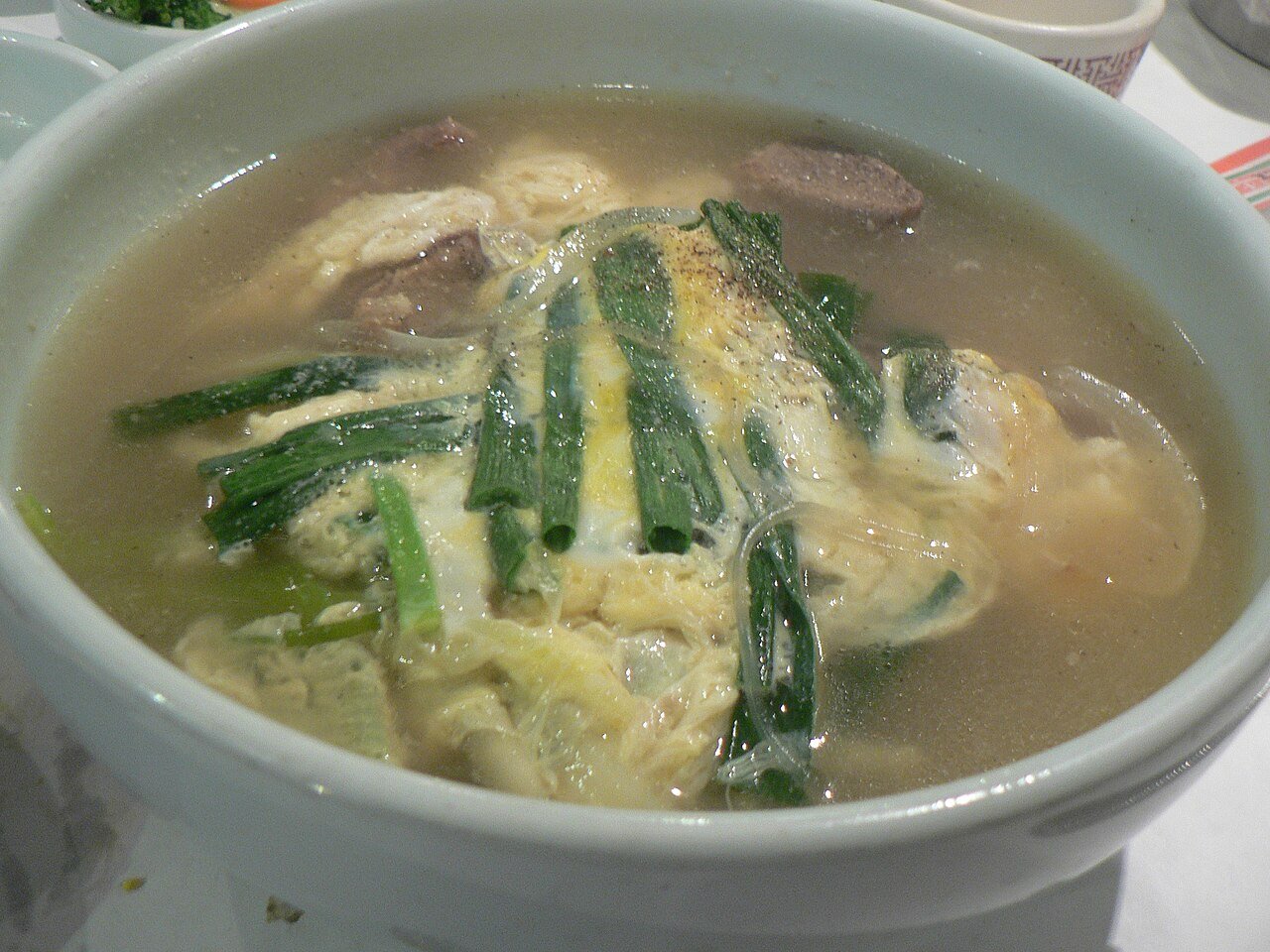
Ingredients, and what to use instead
| Ingredient (for 4) | Where to get it, or what to use instead |
|---|---|
| Bone-in beef short ribs, English cut, 1.2 kg / 2.5 lb | Any butcher counter that sells short ribs; ask for the thick English cut, one bone per piece. Substitute: LA-cut (flanken) short ribs — cooks a little faster and is easier to find, but you lose the tall standing-rib look in the bowl |
| Korean radish, 400 g / 14 oz | Korean grocer. Substitute: daikon radish, nearly identical in taste and texture |
| Dangmyeon, glass noodles, 100 g | Korean or pan-Asian grocer, sold dried in a coil. Substitute: cellophane noodles — the same product under a different name |
| Dried kelp, one 5 cm square | Optional but recommended. Substitute: skip it entirely — the broth loses a little depth but is still a real galbitang |
| Soy sauce, garlic, egg, scallions | Standard supermarket |
For the piece of dried kelp, this is the same item covered in our Korean pantry starter kit under broth essentials — one square dropped in for the last 20 minutes of simmering rounds out the beef broth without muddying its clarity, which is the opposite job it does in a spicier stew.
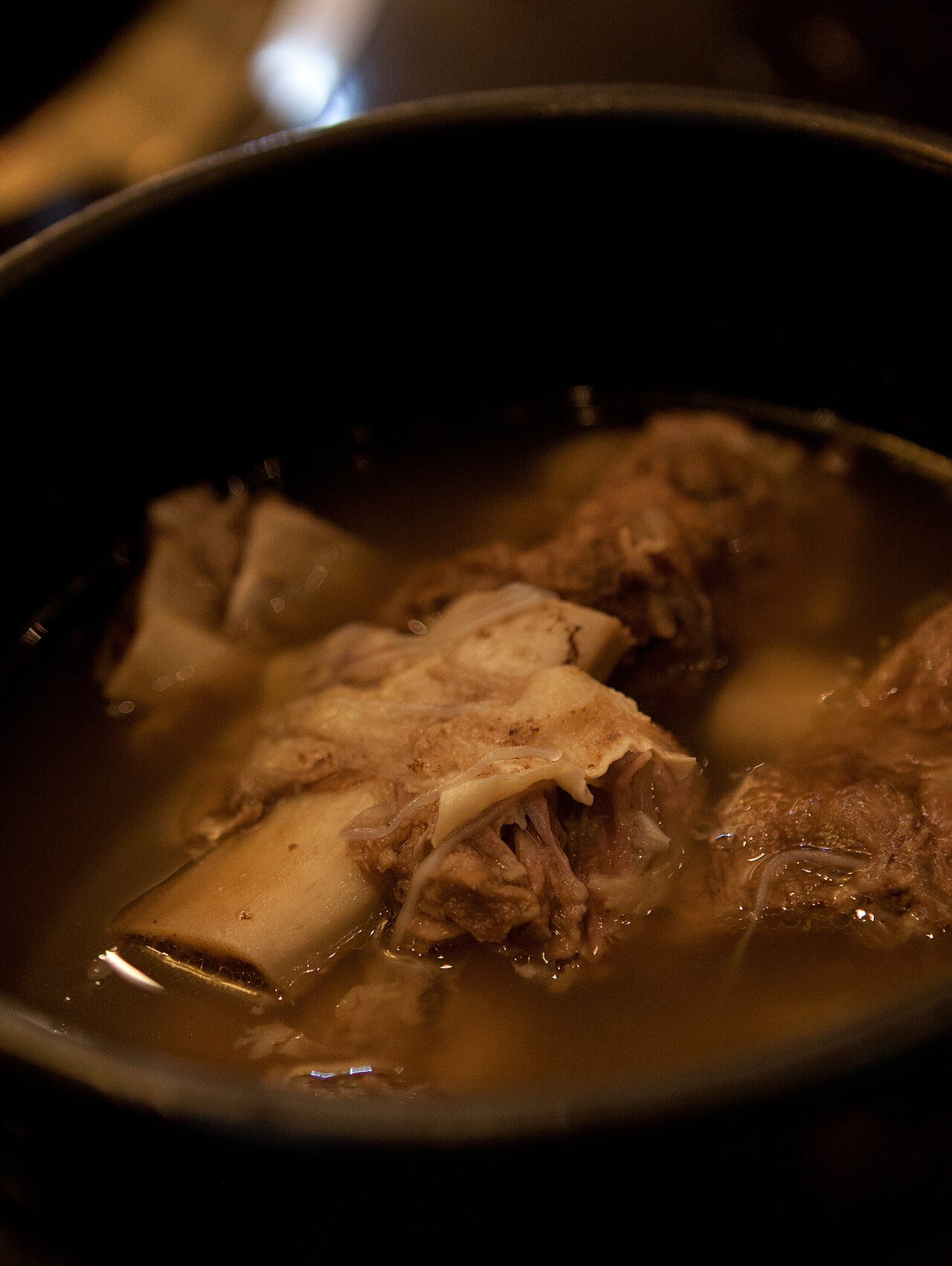
Galbitang Recipe
Ingredients
Method
- Soak the short ribs in cold water for 1 hour, changing the water once, to draw out blood. This is the single biggest factor in whether your broth ends up clear or muddy.
- Bring a pot of water to a boil and blanch the ribs for 5 minutes. Drain, rinse the ribs and the pot, and scrub off any grey foam clinging to the bone.
- Return the ribs to the pot with 2.5 liters / 10 cups fresh water, the onion, ginger, and peppercorns. Bring to a boil, then reduce to a low simmer, skimming any foam for the first 20 minutes.
- Simmer, mostly covered, for 60 minutes, until the meat is tender but not falling off the bone.
- Add the radish and the piece of dried kelp. Simmer 20 minutes, until the radish turns translucent at the edges. Remove the kelp before it’s been in longer than 20 minutes, or the broth turns slightly bitter and slimy.
- Stir in the soy sauce, garlic, and salt. Taste — the broth should be clean and only lightly salted, not as assertive as a stew.
- Add the soaked glass noodles and simmer 3 to 4 minutes, until translucent and tender.
- Ladle into bowls with a rib standing up in each one. Top with julienned egg, scallions, and a crack of black pepper.
How to make it
- Soak the ribs in cold water for a full hour, changing the water once. This pulls out surface blood and is the main reason restaurant galbitang broth looks clear instead of grey.
- Blanch the ribs 5 minutes in boiling water, then rinse both the ribs and the pot. Scrub off any scum stuck to the bone before it has a chance to cook back into the broth.
- Simmer the ribs in fresh water with onion, ginger, and peppercorns for a full hour, skimming foam in the first 20 minutes. This is the step that can’t be rushed — a shorter simmer gives you tough meat and a thin broth.
- Add the radish and the kelp, and simmer 20 minutes. Pull the kelp out at the 20-minute mark exactly; left in longer, it turns the broth faintly bitter and slippery.
- Season with soy sauce, garlic, and salt, tasting as you go. The broth should read as clean rather than heavily seasoned — under-salting here is a much smaller sin than over-salting.
- Add the soaked glass noodles and simmer until translucent, about 4 minutes.
- Serve with a rib standing in each bowl, topped with julienned egg, scallions, and black pepper.
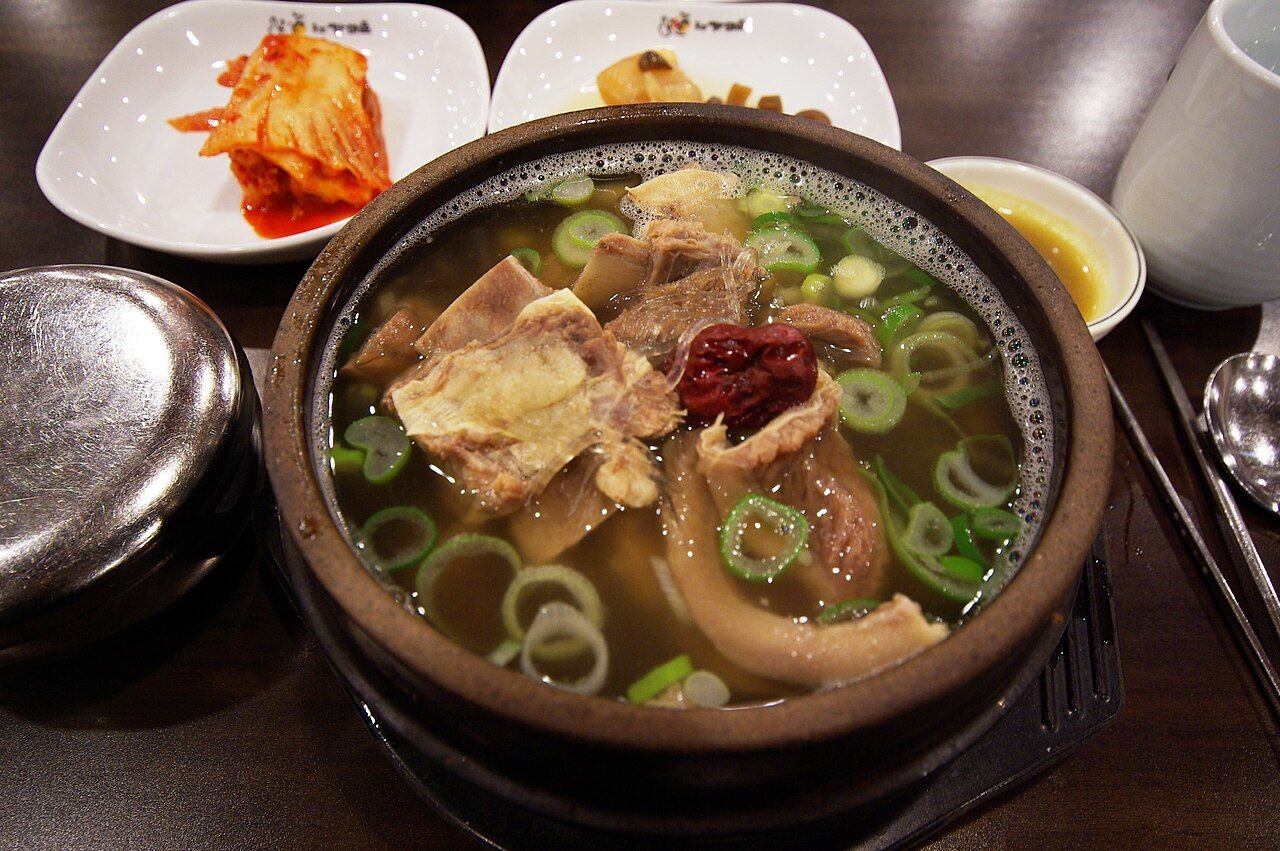
Picking the ribs at the counter
Look for ribs with a decent amount of meat still attached to the bone rather than ones trimmed almost bare — some butchers cut the meat away for other uses and sell the bones cheap, which is a false economy here since the meat is half the point of the bowl. A little marbling in the meat is good; it renders out during the long simmer and adds richness rather than making the broth greasy, since most of the surface fat gets skimmed off in the first 20 minutes anyway.
Tips and storage
Clear broth is mostly a function of two things: soaking the ribs before you cook them, and skimming diligently in the first 20 minutes of simmering. If you forget the soak, blanch a second time before the long simmer — it’s not too late to recover a clear broth.
Refrigerate up to 4 days. A layer of fat will solidify on top when cold; you can skim it off before reheating for a lighter bowl, or stir it back in for a richer one. Galbitang freezes well without the noodles or egg — add those fresh after reheating, since frozen glass noodles turn rubbery.
Frequently asked questions
Can I use a different cut of short rib?
Yes. LA-cut (flanken-style, cut across the bones into thin strips) works and is often easier to find than English-cut. It cooks faster, so start checking for tenderness at the 40-minute mark instead of 60. You’ll lose the tall, whole-rib presentation but not much flavor.
Why does my galbitang broth look cloudy instead of clear?
Almost always skipped soaking, skipped blanching, or a rolling boil instead of a gentle simmer during the long cook. A hard boil emulsifies the fat into the broth and clouds it; keep the heat low enough that the surface only just trembles.
Is galbitang the same as gomtang or seolleongtang?
Related but distinct. Gomtang and seolleongtang are made from beef bones and offcuts simmered until milky white, while galbitang stays clear and is built specifically around the ribs. If you’ve had one and are curious about the others, they’re worth trying side by side.
What to cook and eat next
If you liked the idea of a clear, restorative Korean soup for a special table, samgyetang, the ginseng chicken soup, occupies similar ground with poultry instead of beef. For the spicier, shredded-beef side of Korean beef soups, yukgaejang is built from the same protein but almost nothing else about it is the same.