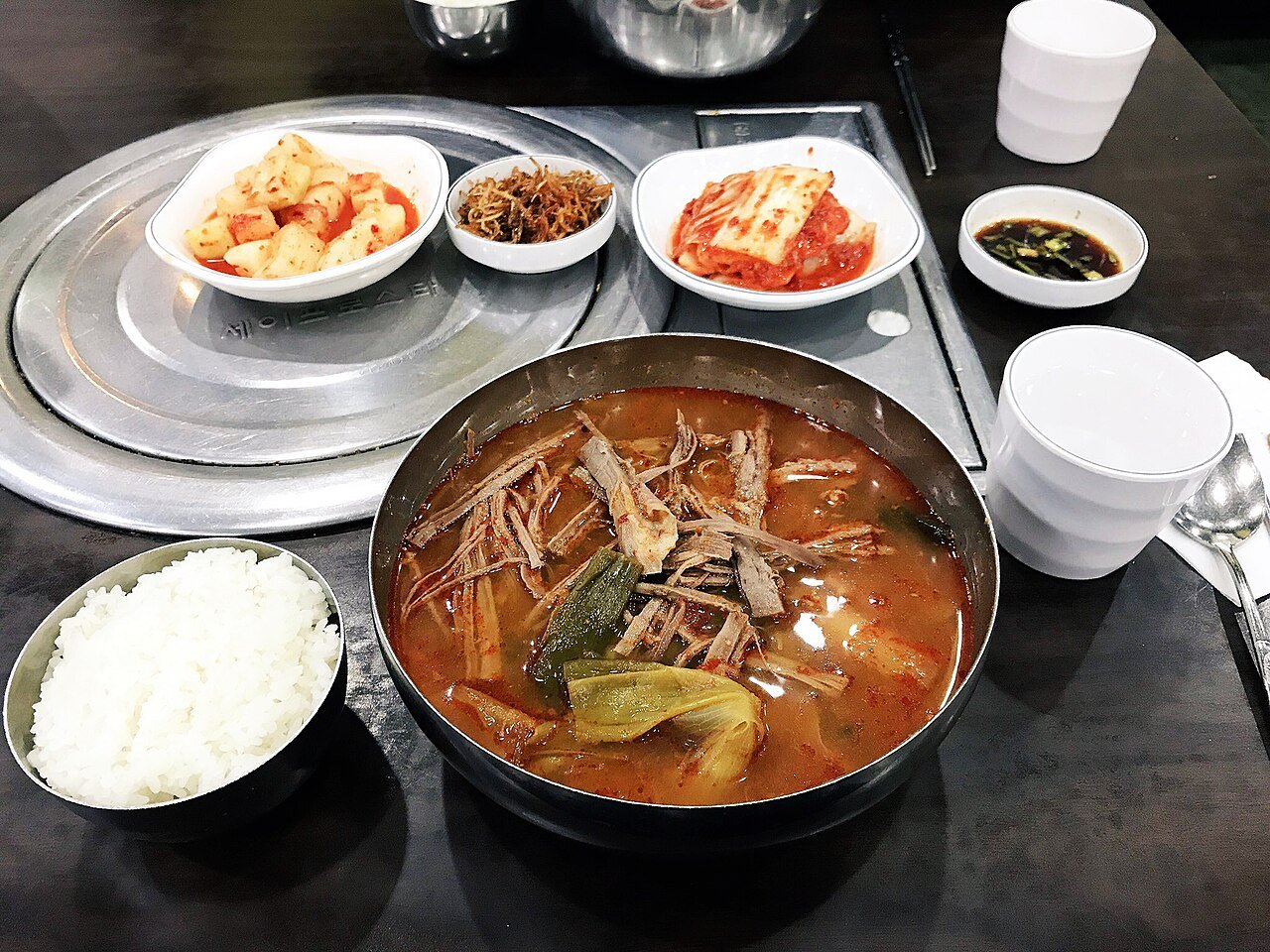
The place was maybe twelve tables, fluorescent-lit, next to a wholesale fabric market that was closing up for the night. Every bowl that came out of the kitchen was the same: dark red, oily on top, a tangle of shredded beef and scallion sticking up out of the broth like it had just been pulled from underwater. Nobody was talking much. It was late, it was cold outside, and this is the kind of food that exists specifically for that combination. Yukgaejang doesn’t photograph as prettily as most Korean soups — it’s a bit of a mess in the bowl — but it’s one of the most flavor-dense things in the entire cuisine, and most of that flavor comes from technique rather than rare ingredients.
Quick facts
- Total time: about 1 hour 35 minutes
- Serves: 4
- Difficulty: medium
- Spice level: 3 out of 5
- Vegan-friendly: no, this recipe is built around beef and beef broth
What is yukgaejang?
Yukgaejang (육개장, roughly yook-geh-jang) is a spicy, oily-red beef soup made by boiling brisket or shank until it shreds, then simmering the shredded meat back in its own broth with a chili-oil seasoning, fernbrake, taro stems, and a heavy hand of scallions. The name literally breaks down to “beef” (yuk) plus a word related to dog-meat soup (gaejang) — an old naming quirk from a time when beef was swapped in for dog in the original stew, and the name stuck to the substitute rather than the original.
It shows up at funerals and memorial gatherings as often as it does on an everyday restaurant menu, which tells you it sits somewhere between comfort food and something more formal. It’s almost always served with a scoop of rice either on the side or dropped straight into the bowl.
Ingredients, and what to use instead
The two ingredients that stop most people outside Korea are gosari (dried fernbrake) and toran-dae (dried taro stems). Neither is dangerous to skip — the soup loses some specific texture, not its identity.
| Ingredient (for 4) | Where to get it, or what to use instead |
|---|---|
| Beef brisket or shank, 500 g / 1 lb | Any butcher. Substitute: chuck roast — a touch less silky once shredded, still good |
| Dried gosari (fernbrake), 60 g / 1 cup dried | Korean grocer, sold dried in bags. Substitute: skip it and double the mushrooms, or use canned bamboo shoots for a different texture that still adds bite |
| Toran-dae (dried taro stems), 1/2 cup | Korean grocer only, and even there it’s inconsistent stock. Substitute: leave it out, add extra bean sprouts and scallions. You lose a fibrous chew, not much flavor |
| Guk-ganjang, soup soy sauce, 3 tbsp | Korean grocer. Substitute: regular soy sauce plus a pinch of salt, slightly darker broth |
| Gochugaru, 4 tbsp | Korean grocer or online. Substitute: sweet paprika plus cayenne, less fruity |
| Bean sprouts, scallions, shiitake, garlic, eggs | Standard supermarket |
If you can only get two of these right, make them the beef cut and the gochugaru — everything else is adjustable without the dish falling apart.
Yukgaejang Recipe
Ingredients
Method
- Put the beef, halved onion, scallion whites, and ginger in a pot with 2 liters of water. Bring to a boil, then simmer 45 minutes, until the beef is tender enough to shred with two forks.
- Lift out the beef and set the broth aside, strained if you like it clear. Once the beef is cool enough to handle, shred it into long, thin strands by hand.
- In a dry small pan, mix the gochugaru with the neutral oil off the heat, then warm it over low heat for 1 minute, stirring, until it turns a deep glossy red. This is your yangnyeomjang, the seasoning oil.
- Return the strained broth to the pot. Stir in the seasoning oil, garlic, guk-ganjang, and black pepper.
- Add the gosari, mushrooms, and taro stems if using. Simmer 15 minutes.
- Add the shredded beef, sliced onion, bean sprouts, and smashed scallions. Simmer 10 more minutes, until the sprouts have lost their raw crunch but still have some bite.
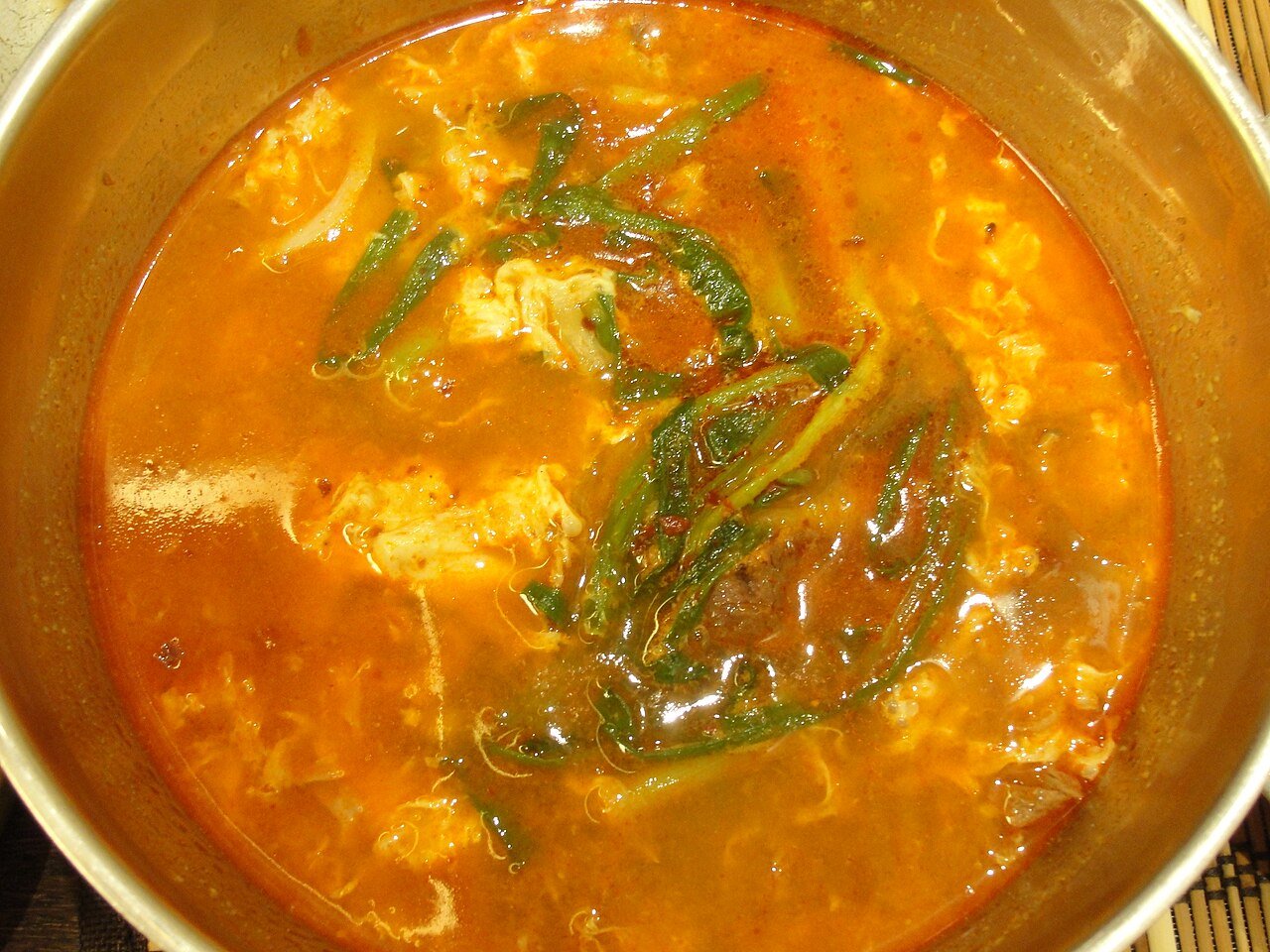
- Taste and adjust salt. If using egg, drizzle it in a thin stream over the surface of the boiling soup and let it sit 20 seconds before stirring gently, so it forms loose ribbons rather than a cloud.
How to make it
- Simmer the beef with onion, scallion whites, and ginger for 45 minutes, until it shreds easily with two forks.
- Pull out the beef, strain the broth if you want it clear, and shred the meat into long thin strands once it’s cool enough to handle. Shred with the grain broken up — this is what gives yukgaejang its stringy, almost pulled-pork texture.
- Bloom the gochugaru in warm oil for about a minute, off high heat, until it turns deep red. This seasoning oil is what carries the chili flavor through the whole pot instead of it sitting as a raw dusting on top.
- Stir the seasoning oil, garlic, guk-ganjang, and pepper into the strained broth.
- Add the gosari, mushrooms, and taro stems (if using) and simmer 15 minutes to soften them and pull flavor into the broth.
- Add the shredded beef, onion, bean sprouts, and scallions, and simmer 10 more minutes. The sprouts should lose their raw snap but keep some bite — overcooked sprouts turn the whole pot mushy.
- If using egg, drizzle it in slowly over the boiling surface and let it set for 20 seconds before a gentle stir, so it forms ribbons instead of scrambled bits.
A faster version for a weeknight
The traditional long beef simmer is what makes yukgaejang taste like it does, but if you’re short on time, you can build the broth from a store-bought anchovy-kelp pack instead and use quickly seared, thinly sliced beef rather than a whole brisket. It’s a real shortcut, not a lesser dish — you trade some of the deep, long-simmered beef flavor for about 40 minutes of your evening. Our Korean pantry starter kit covers what an anchovy-kelp broth pack is and how to use one if you haven’t cooked with one before.
Tips and storage
Don’t skip straining the broth if you want the classic restaurant look — the beef boil throws off a fair amount of foam and fat, and a cloudy broth reads as heavy rather than clean. If your gochugaru scorches while blooming in oil, start over with fresh oil; burnt chili is bitter in a way nothing in the recipe corrects.
This soup keeps 4 days refrigerated and, like most beef soups, improves by day two. It freezes well for up to 2 months, minus the egg — add fresh egg after thawing and reheating.
Frequently asked questions
Can I make yukgaejang without gosari or taro stems?
Yes. Both are genuinely hard to find outside Korea and the soup holds together without them. Extra mushrooms, bean sprouts, and scallions cover most of the textural gap, and the seasoning oil and beef do the rest of the flavor work.
Why is my yukgaejang orange instead of deep red?
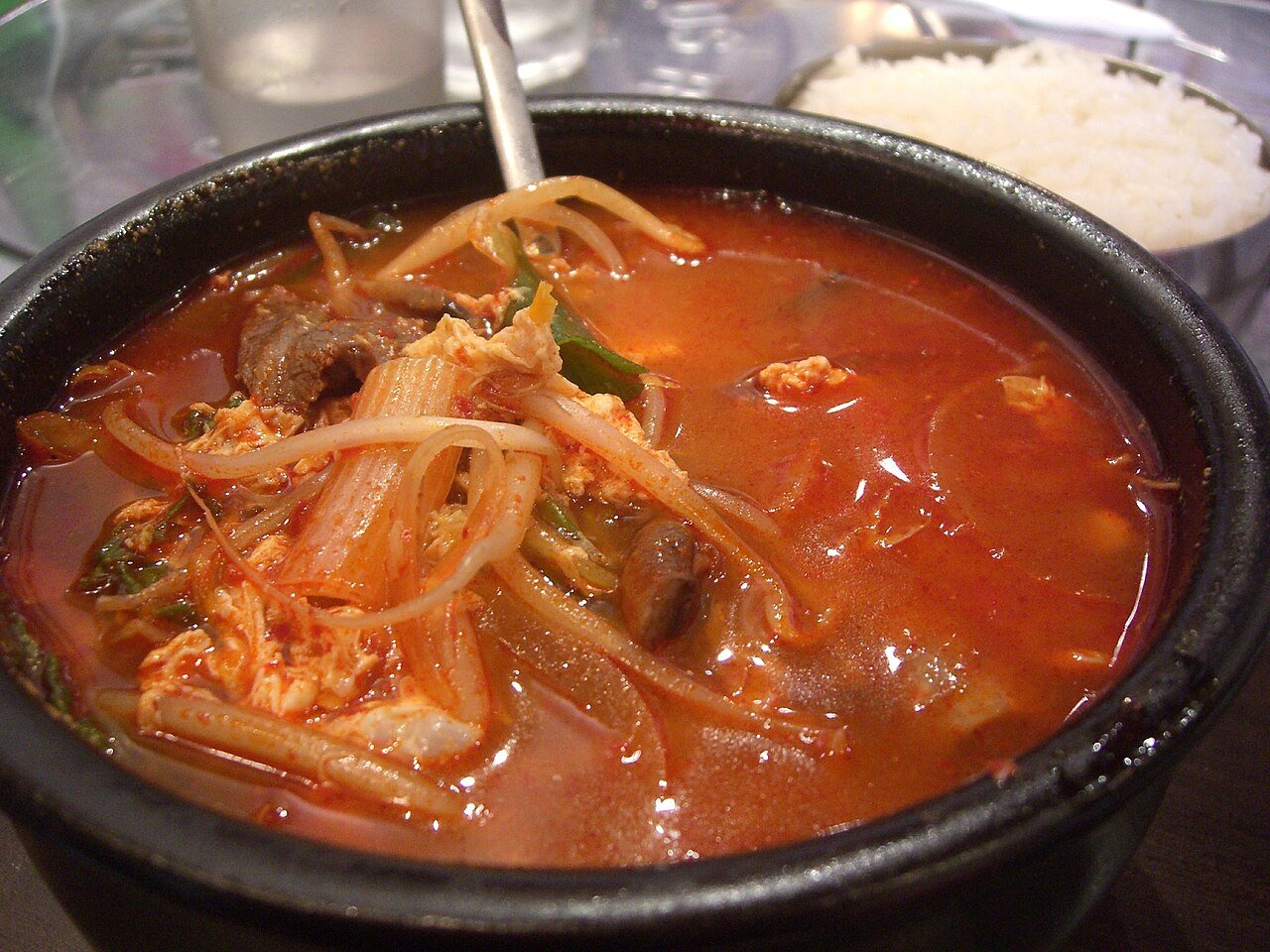
Usually the gochugaru wasn’t bloomed in oil first, or too little was used. Raw chili flakes stirred straight into broth give a paler, more orange color; blooming them in hot oil first is what produces the darker red restaurants get.
Is yukgaejang the same as the chicken version, dak-gaejang?
Related but not the same dish — dak-gaejang swaps shredded chicken for beef and is a newer, lighter variation. The seasoning approach is nearly identical, so if you like this recipe, the chicken version is an easy next step.
What to cook and eat next
For another red, chili-forward stew that runs on a completely different logic — fermentation instead of a long beef simmer — see our kimchi jjigae. If you want the clear, unspiced side of Korean beef soup instead of this one, galbitang is the other end of that spectrum. And if this bowl is standing in for something eaten the morning after a late night, our haejangguk recipe is the more direct version of that same idea.