The first time a friend visiting from abroad sat down at a Korean BBQ place with me, she reached for the tongs before the meat had even hit the grill, then tried to cut a piece of pork belly with her chopsticks, then asked the waiter for a “table for two” refill of rice like it was a diner. None of it was wrong exactly. It’s just not how the room works, and nobody had explained the room to her.
This is that explanation. Not a list of dishes to order — you’ll figure out samgyeopsal and galbi fast enough — but the mechanics of the meal itself: who’s in charge of the grill, how ordering by portion actually works, when the scissors come out, and why the fried rice at the end is not an afterthought.
You’re ordering by the portion, not the plate
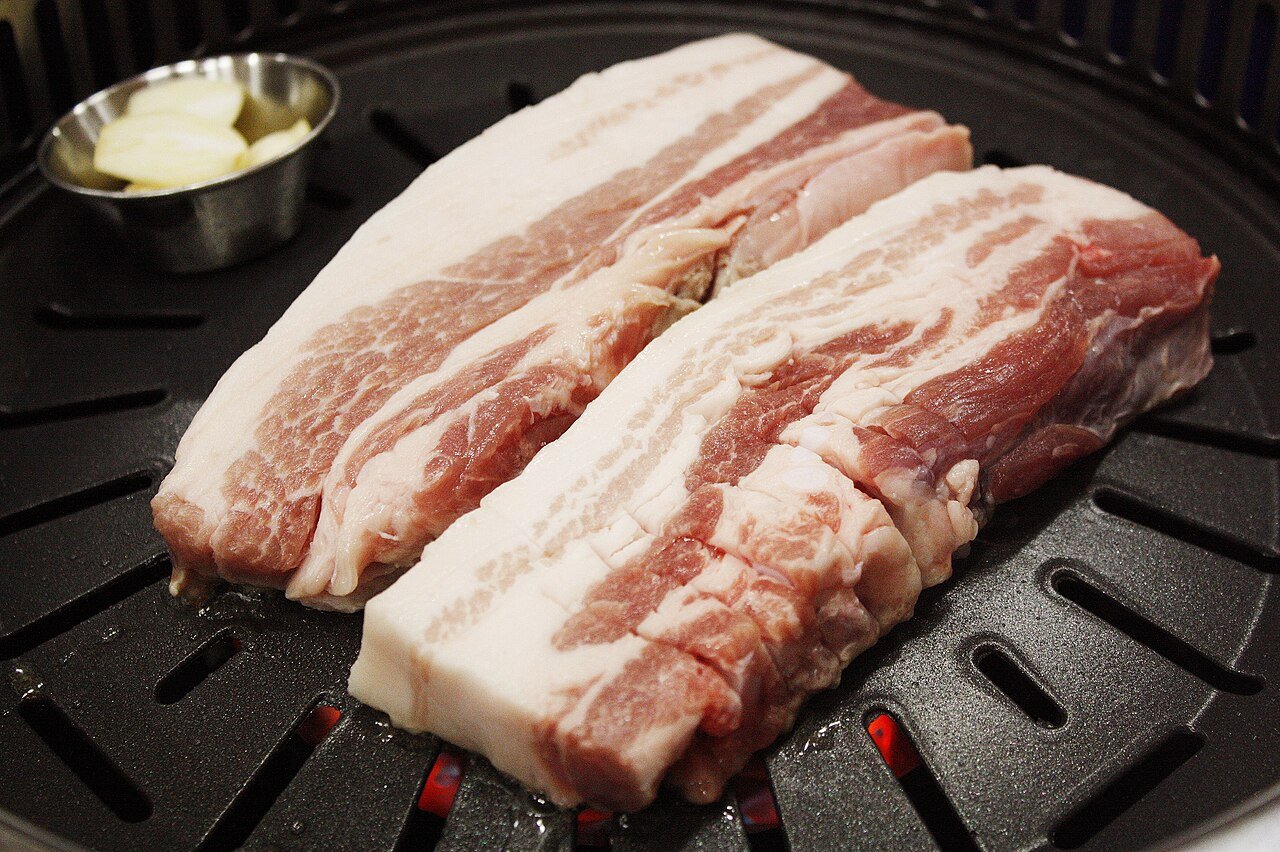
Korean BBQ restaurants sell meat by inbun (인분), a standardized portion usually around 150 to 200 grams. A menu that says samgyeopsal is ₩15,000 means that price per inbun, and most places have a minimum order — commonly two inbun per person, sometimes two total for the table regardless of headcount. This catches first-timers off guard because the portion looks small arriving raw on the plate, thin-sliced and spread out, and it’s tempting to order light. Don’t. Order at least the minimum, see how the table’s appetite is going twenty minutes in, and add more — most restaurants expect and welcome a second or third round rather than one large order up front.
Menus are usually organized by cut: pork (samgyeopsal, the classic fatty belly; moksal, leaner shoulder; galbi, marinated ribs) and beef (bulgogi, thin marinated slices; various unmarinated cuts sold at a premium, often called saeng-galbi or similar). If you’re unsure what to get, samgyeopsal is the safest default — mild, forgiving to cook, and on nearly every menu in the country.
The grill has a hierarchy, and it’s usually not you
At a lot of restaurants, particularly ones aimed at groups or families, a staff member will come by and start the meat cooking, flip it once or twice, and only hand over control once things are underway. This isn’t about doubting your ability to grill meat. It’s partly hospitality and partly damage control — new customers overcrowd the grill, flip too early, or let things burn, and a smoking, blackened grill six minutes into a two-hour meal is bad for everyone at the table.
If nobody comes by and it’s clearly a self-serve setup, the informal rule is that whoever’s closest to the grill, or whoever’s clearly enjoying it most, ends up doing the flipping — and in a group with an obvious senior member (older relative, boss, host), it’s common courtesy to let a younger or more junior person at the table manage the meat rather than the guest of honor. Don’t overthink this if you’re a visitor eating with strangers or in a tourist-facing spot; nobody expects you to know the finer points, and staff will step in if things start going sideways.
Scissors are a real cooking tool here, not a novelty
Almost every Korean BBQ table has a pair of kitchen scissors sitting with the tongs, and they’re for cutting meat directly on the grill — snipping a long strip of galbi or a slab of samgyeopsal into bite-sized pieces once it’s mostly cooked, rather than transferring it to a plate and reaching for a knife. It looks unusual the first time you see it. It’s also just more efficient: the meat’s already hot, the scissors are already there, and cutting on the grill keeps everything moving without dishes piling up. Use them without hesitation. Nobody’s going to think it’s odd — it would be odder not to.
Banchan keep coming, and that’s the system working correctly
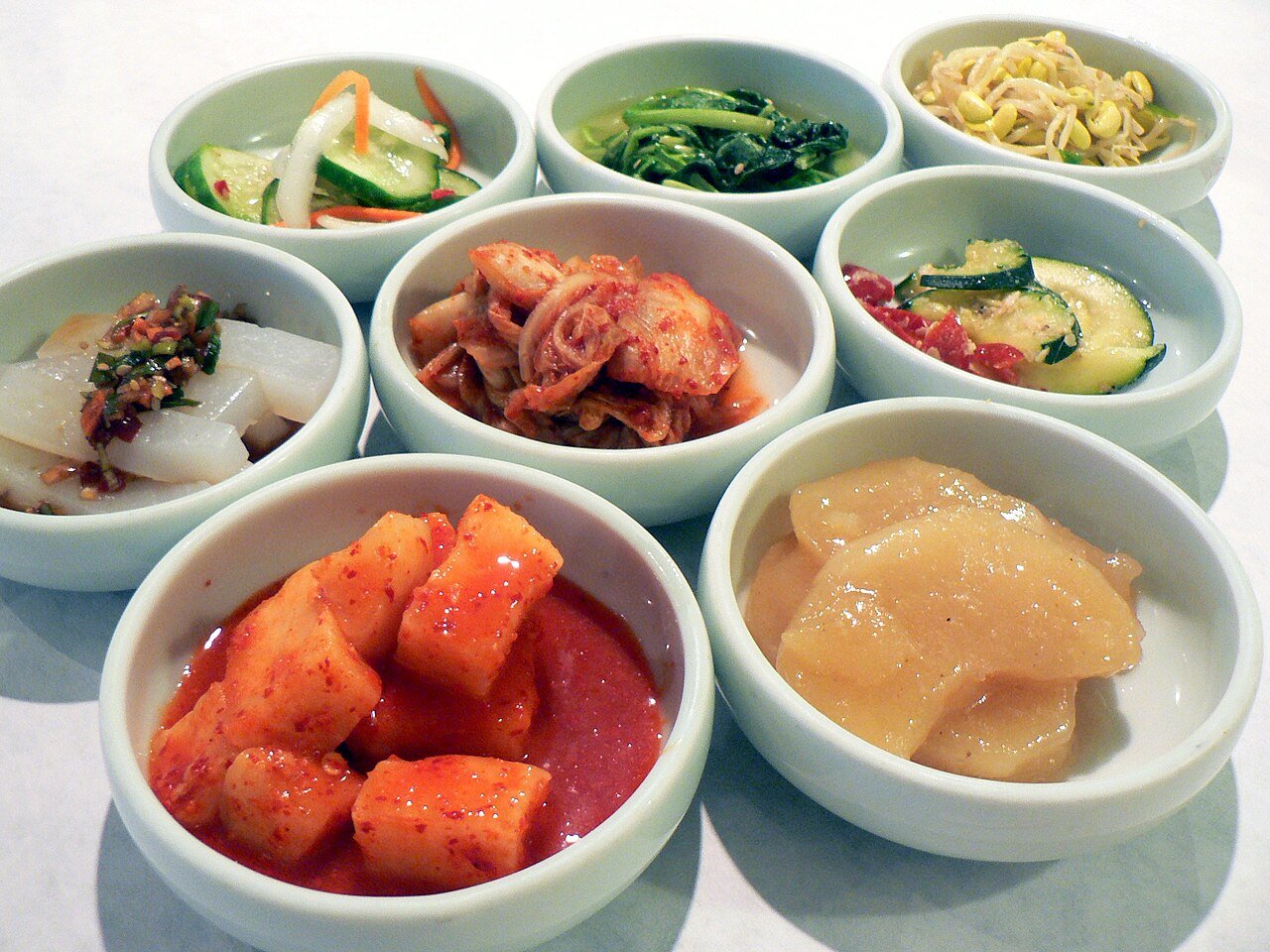
The small side dishes that arrive at the start of the meal — usually some combination of kimchi, seasoned bean sprouts, a simple salad, sometimes a steamed egg — are refillable at most sit-down restaurants, free of charge, on request. Running out of lettuce for wraps or kimchi partway through dinner isn’t a sign you should stop eating it; it’s normal to flag a server and ask for more, and doing so isn’t seen as excessive the way asking for a third bread basket might be elsewhere.
The classic way to eat the meat itself is ssam — wrapping a piece of grilled meat, a dab of ssamjang (the thick soybean-and-chili dipping paste), maybe a slice of raw garlic or a bit of rice, in a lettuce or perilla leaf, and eating it in one bite. It’s messy by design. Nobody’s judging the size of the wrap you can fit in your mouth, though there’s a mild running joke about people who try to go too big.
Calling the staff over
Most Korean BBQ restaurants, especially smaller or older ones, don’t do the hovering-waiter thing you might expect elsewhere. Instead there’s often a call button on the table, or the accepted method is simply saying “yeogiyo” (여기요, roughly “over here”) in the direction of the floor, loudly enough to be heard over the grill noise and conversation. It’s not rude. It’s the standard way to flag anyone working the floor, used the same way regardless of the staff member’s age or gender.
The ending is not optional, or at least shouldn’t be
Once the meat’s mostly finished, the leftover oil, bits of meat and seasoning stuck to the grill (or a side pan, at places that use one) become the base for bokkeumbap — fried rice cooked right there, tossed with rice, a little kimchi, sesame oil, sometimes a fried egg on top, scraping up everything that’s built up in the pan over the course of the meal. Skipping it because you’re full is a completely reasonable choice nutritionally and a mildly tragic one otherwise; it’s often the best part of the whole meal, and ordering it is as simple as asking for bokkeumbap once the meat’s cleared.
Paying and splitting
The bill is settled at the counter on the way out, not at the table, and it’s one check per table by default — Korean dining culture doesn’t really have a norm of splitting a single restaurant bill item by item the way some other countries do. If your group wants to split evenly, that’s worked out among yourselves before or after paying, usually via a mobile transfer app once outside. Tipping isn’t expected or practiced at Korean restaurants of any kind, BBQ included.
Questions people ask
How much meat should I order for a group of four?
A reasonable starting point is two inbun of one cut per person, mixed across two different cuts if your group wants variety — so for four people, expect to start with something like six to eight inbun total, and reorder based on how things are going. Most restaurants will not stop you from ordering “too little” first and adding more, so there’s little risk in starting modest.
Is it rude to ask for the grill plate to be changed?
No — a heavily charred grill surface affects the taste of everything cooked afterward, and most restaurants will swap or clean the grill plate on request, particularly between very different cuts like moving from pork to beef.
Are there vegetarian options at a Korean BBQ restaurant?
Limited, honestly. Banchan and rice are usually vegetarian, and some restaurants grill vegetables like mushrooms, onion or garlic alongside the meat — worth asking for a vegetable-only grill order. It’s not an easy restaurant style for strict vegetarians, and if that’s your situation, a restaurant built around banchan and vegetable dishes rather than a grill will serve you better.
What to cook before you go, and where to eat once you’re there
If you want to understand the flavors before you’re at the table ordering blind, samgyeopsal and bulgogi are the two dishes most Korean BBQ menus are built around, and both are approachable enough to cook at home first. And if grilled meat has you curious about Korea’s other big grilled-and-stir-fried specialty, our guide to Chuncheon’s dakgalbi alley covers a completely different but related style of eating — chicken over a tabletop flame instead of beef or pork.
For the basics of ordering in Korean more generally — menus, phrases, how paying at the counter actually works — our sister site’s guide to ordering food in Korea is a useful companion before your first meal, wherever you end up eating it.