You’re out of gochugaru, or there’s no Korean grocer within an hour of you, and you want to know what actually works instead. Short answer: Aleppo pepper — or Turkish pul biber, which is usually the same chili under a different label — is the closest realistic stand-in, and if you can’t get that, sweet paprika blended with cayenne at roughly 4:1 by volume will carry almost any Korean recipe you’re likely to cook this week. Neither is identical to the real thing. Both are close enough that the dish still tastes like the dish.
The option most people reach for first, ordinary crushed red pepper flakes, is the worst one on this page. I’ll get to exactly why.
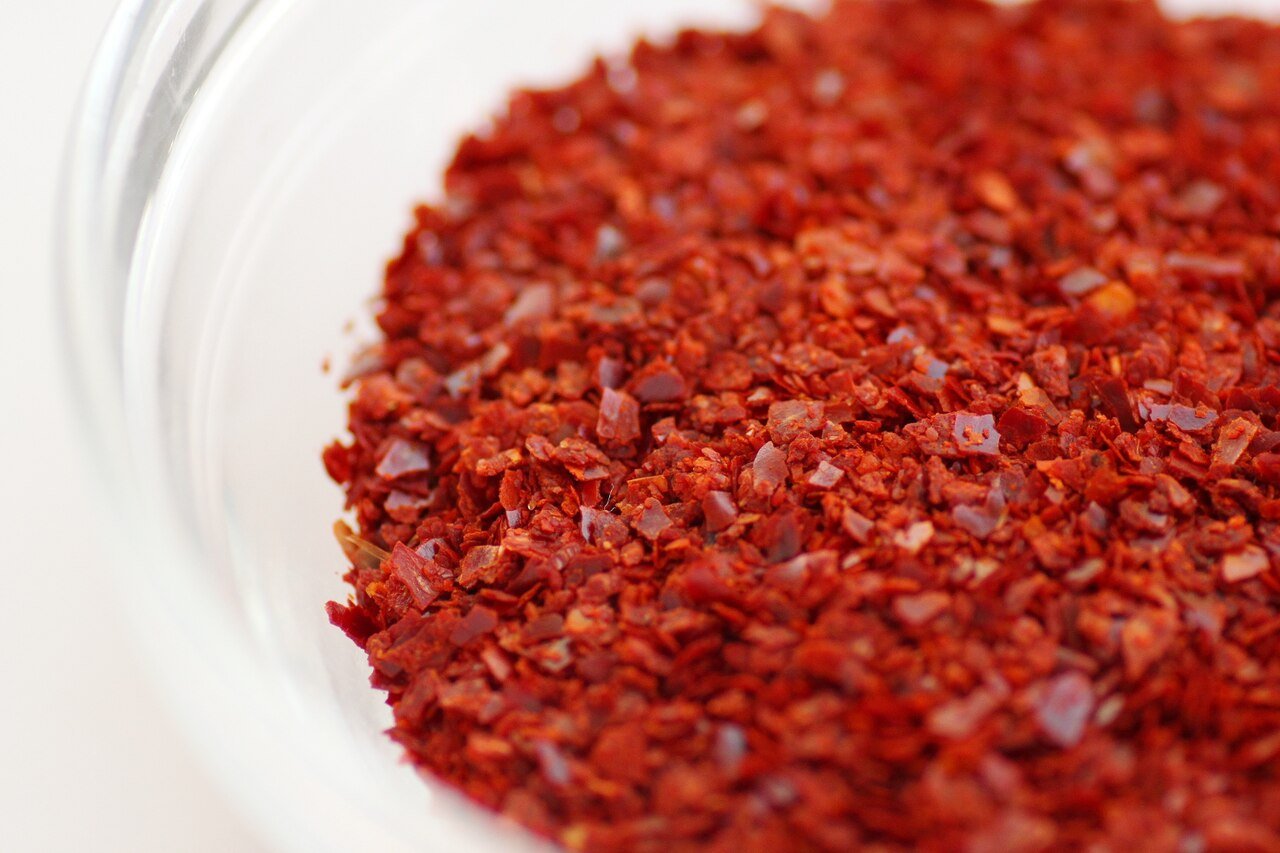
What you’re actually replacing
Gochugaru (고춧가루) is Korean red chili, sun-dried and then ground. Most of the seeds and inner membranes are removed before grinding, and that single processing detail explains nearly everything about how it behaves. The heat arrives slowly and sits low. What comes forward instead is a mild sweetness with a faintly fruity, sun-dried edge — closer to a dried tomato or a raisin than to anything sharp.
It does three jobs in a Korean dish, and you’ll miss them in this order.
Color. Practically every red Korean dish gets its color from gochugaru and almost nothing else. Not from tomato, not from paprika, not from oil. When kimchi looks brick red rather than orange, that’s gochugaru doing it. Lose the color and a stew reads as wrong before anyone tastes it.
Body. This is the part substitute lists skip. Coarse gochugaru doesn’t dissolve. The flakes stay suspended in the liquid, thicken it very slightly, and leave a faint silty texture on the tongue. A broth seasoned with an ultra-fine powder tastes thinner than one seasoned with flakes even when the heat level is identical. If you’ve ever made a substitute version of kimchi jjigae and thought it tasted watery despite being plenty spicy, that was the missing texture, not missing salt.
Heat, last. Gochugaru lands somewhere around 1,500 to 10,000 Scoville units depending on grade and producer. Cayenne runs 30,000 to 50,000. So a full tablespoon / 15 ml of gochugaru in a pot for two people is seasoning, not a dare — which is why substitution goes wrong so often. People swap in something four times hotter at the same volume and end up with a dish that burns and tastes of nothing else.
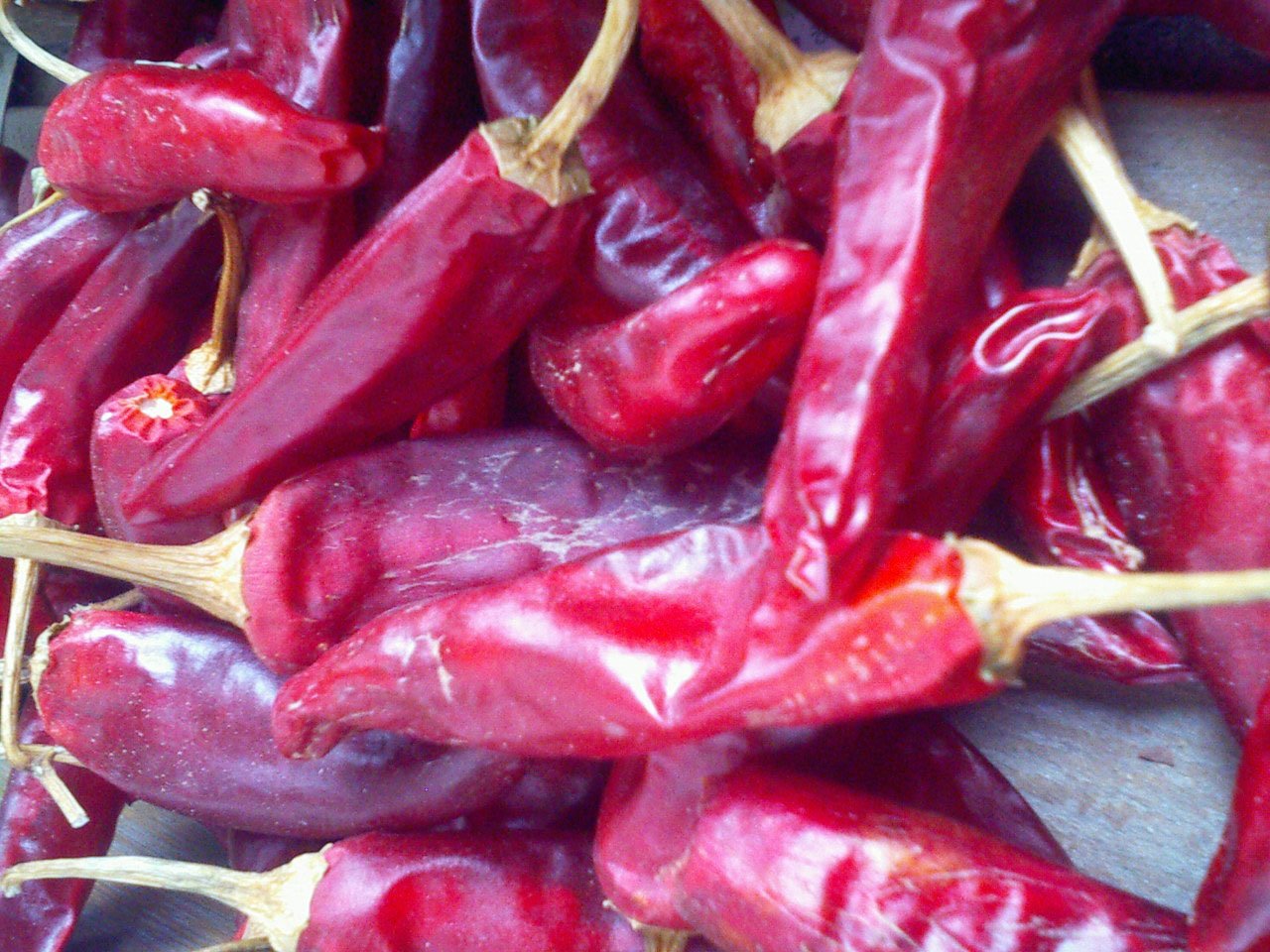
Coarse or fine — a 30-second detour
There are two grinds. Coarse (굵은 고춧가루) is what goes into kimchi, stews, and braises, anywhere you want visible flecks and that suspended body. Fine (고운 고춧가루) is for marinades, dry rubs, and smooth sauces where flakes would look like grit. If you’re only ever buying one bag, buy coarse — you can pulse it finer in a spice grinder, but you can’t turn powder back into flakes. Most bags exported under the plain label “gochugaru” are the coarse grind.
The substitutes, ranked
Amounts below are what to use in place of 1 tbsp / 15 ml of coarse gochugaru.
| Rank | Substitute | Use instead of 1 tbsp / 15 ml | Honest verdict |
|---|---|---|---|
| 1 | Aleppo pepper / pul biber | 1 tbsp / 15 ml, straight swap | Closest on fruitiness and texture; slightly saltier and oilier |
| 2 | Sweet paprika + cayenne, 4:1 | 2 tsp / 10 ml paprika + 1/2 tsp / 2.5 ml cayenne | Nails the color, workable heat, loses the fruit and thins the broth |
| 3 | Kashmiri chili powder + cayenne | 1 tbsp / 15 ml Kashmiri + 1/4 tsp / 1.25 ml cayenne | Best color of any option, almost no heat on its own |
| 4 | Crushed red pepper flakes | Not recommended; if forced, 1 tsp / 5 ml maximum | Far too hot, flat, and sharp. See below |
| 5 | Chipotle or ancho powder | 2 tsp / 10 ml | A different dish. Sometimes a good one |
1. Aleppo pepper or Turkish pul biber
If you can get either, stop reading and buy it. Aleppo pepper is coarse-crushed, moderately hot, and carries the same slightly sweet fruitiness that makes gochugaru what it is. It swaps one-for-one by volume with no adjustment.
Two differences worth knowing. Aleppo is usually cured with salt and a little oil, so it looks damper and clumps in the jar — reduce the salt in your recipe by a small pinch per tablespoon used. And it’s a shade darker and browner than gochugaru, so kimchi made with it comes out deep red rather than bright. Nobody has ever complained at my table about that.
The genuinely useful part: Aleppo and pul biber are stocked at Middle Eastern, Turkish, and Mediterranean grocers, which exist in a lot of towns that have no Korean shop at all. If you’ve been assuming your options are “Korean grocery or nothing,” check the Turkish shop first.
2. Sweet paprika plus cayenne, roughly 4:1
The workhorse. Everyone already has paprika, cayenne is on every supermarket spice rack, and the blend gets you the two things you need most: red color from the paprika, heat from the cayenne. For 1 tbsp / 15 ml of gochugaru, use 2 tsp / 10 ml sweet paprika plus 1/2 tsp / 2.5 ml cayenne.
Adjust freely. Want it milder? Drop to 1/4 tsp / 1.25 ml cayenne and add a little more paprika to keep the color. Want it closer to a proper spicy tteokbokki? Push to 3/4 tsp / 4 ml. The ratio isn’t sacred; it’s a starting point that lands near real gochugaru heat.
What you give up is real. The fruity, sun-dried quality disappears entirely — paprika is sweet but flat, and cayenne is pure heat with no personality. And because both are finely milled, they dissolve completely, so a stew comes out noticeably thinner in body. My fix: stir the blend into the oil or rendered fat at the start of cooking rather than into the liquid, which deepens the color and thickens things slightly, and add a teaspoon of the paprika at the very end for the color you lost to the heat.
Use sweet Hungarian or Spanish paprika, not smoked. Smoked paprika is a good spice that belongs in a different cuisine. And stay away from the jar labeled simply “chili powder” in an American supermarket — that’s a blend with cumin and oregano in it, and it will make your stew taste like a taco.
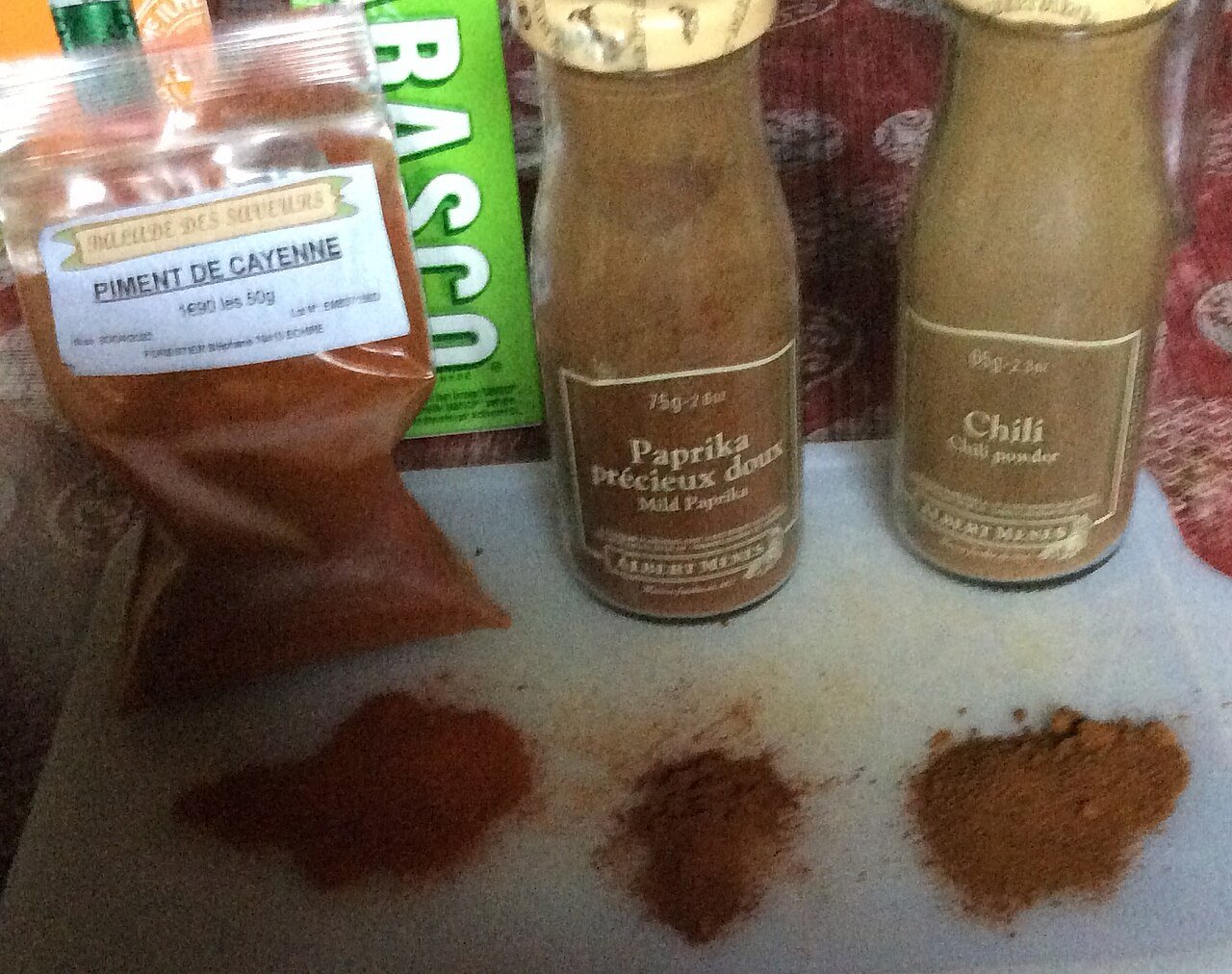
3. Kashmiri chili powder plus a little cayenne
Kashmiri chili is grown and dried largely for color, and on that measure it beats every other option here, gochugaru included. What it doesn’t bring is heat — roughly 1,000 to 2,000 Scoville, so mild enough that a tablespoon of it alone will produce a dish that looks fiery and tastes like nothing much.
Use 1 tbsp / 15 ml Kashmiri plus 1/4 tsp / 1.25 ml cayenne, and taste before adding more. It’s also more widely available than most people realize: any South Asian grocer will have it, often cheaper than gochugaru sold online. Some Kashmiri powders are milled very fine, so you’ll have the same thin-broth problem as the paprika blend. Look for a coarser grind if there’s a choice.
4. Crushed red pepper flakes — the instinctive wrong answer
This is the swap almost everyone tries, because it’s flakes and it’s red, and it fails on all three counts.
It’s much hotter per gram. Pizzeria-style flakes are typically made from cayenne-type chilies at 15,000 to 30,000 Scoville and include the seeds, which push heat higher still — three to five times gochugaru at the same volume. It has no fruit. Where gochugaru gives you a sweetness underneath, these give you heat and a mild dusty bitterness and nothing else. And the texture reads as sharp rather than coarse: the pieces are hard, jagged, and seed-heavy, so they sit in the mouth as separate hot bits instead of melting into the broth.
Cook baechu kimchi with them and you get cabbage in aggressive orange heat with no depth. If you’re truly stuck with nothing else, use 1 tsp / 5 ml where the recipe wants 1 tbsp / 15 ml, sieve out as many seeds as you can, and add 2 tsp / 10 ml sweet paprika for color and body. That’s really a paprika substitution with red pepper flakes standing in for cayenne, which tells you something.
5. Chipotle or ancho — good, but a different dish
Ancho is mild, dark, and raisin-sweet, which is a closer flavor cousin to gochugaru than people expect. Chipotle brings similar sweetness plus heavy smoke.
I’m listing these last on purpose. Neither is a substitution — they’re a substitution with a flavor shift attached, and the shift is smoke, which Korean food does not have. Gochugaru is sun-dried, not fire-dried, and that absence is part of what makes it taste Korean. A doenjang jjigae made with chipotle is a decent stew. It isn’t doenjang jjigae.
Where they work: braises, meat marinades, anything already dark and long-cooked. Where they don’t: kimchi of any kind, and clear-tasting things like sundubu jjigae, where smoke has nowhere to hide. Use 2 tsp / 10 ml per tablespoon and expect the dish to be recognizably its own thing.
Gochugaru and gochujang are not the same word
Quick clarification, since this trips up nearly every beginner: gochugaru is dried chili flakes, gochujang is a sweet, salty, fermented chili paste, and swapping one for the other by volume produces a muddy, oversweet mess. Our post on what gochujang actually is covers the paste properly, including why it can’t do the flakes’ job.
Buying the real thing
Gochugaru keeps about six months at room temperature before the color dulls and the flavor flattens, so buy a small bag and keep it in the freezer. If you’re building a Korean shelf from scratch, our Korean pantry starter kit explains which four items to buy before anything else.
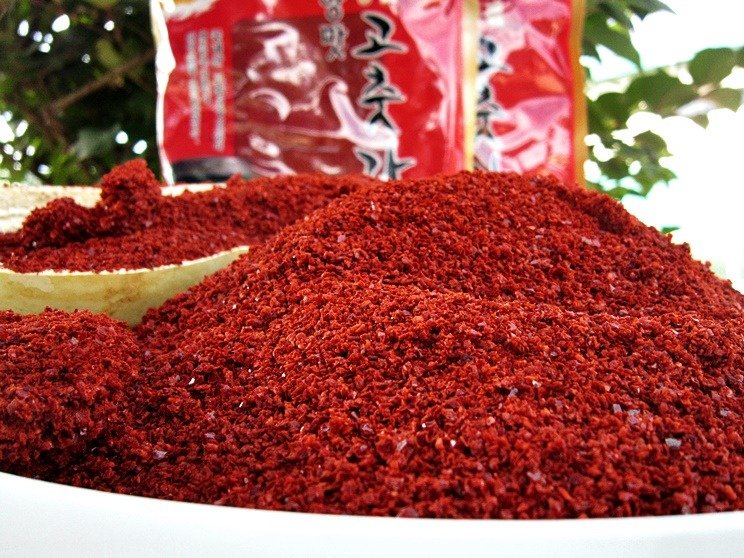
And if you’re going to be in Seoul, don’t buy it at an airport shop. The dried goods stalls sell it by weight at a fraction of export prices — k-trips has a walk-through of Gwangjang Market that covers the stalls worth stopping at.
Frequently asked questions
Is gochugaru the same as regular chili flakes?
No, and they aren’t interchangeable. Regular crushed red pepper flakes are made from hotter chilies, keep the seeds, and are ground into hard jagged pieces. Gochugaru is deseeded Korean chili, sun-dried, ground to a soft coarse flake, and runs roughly a third to a fifth of the heat with a distinct sweetness that pizza flakes don’t have. Substituting one-for-one gives you a dish that’s painfully hot and tastes hollow underneath.
Can I use Chinese or Thai chili flakes instead of gochugaru?
Thai chili flakes, no — they’re extremely hot, usually 50,000 Scoville and up, and the heat is bright and sharp rather than round. You’d need a quarter of the volume and you’d still miss the color and body.
Chinese chili flakes are more promising, but it depends on which ones. The coarse Sichuan-style flakes sold for chili oil (cu la jiao mian) are surprisingly close in grind and are only moderately hot, so at about two-thirds the volume they work respectably in a stew. Facing-heaven chili flakes lean toward a slight smokiness. Whatever you use, taste a pinch dry before committing to a full spoonful.
Will a substitute change how spicy my dish turns out?
Almost certainly, and usually upward, because most substitutes are hotter than gochugaru per spoonful. The safe method is to add half the amount the recipe calls for, taste once the dish has actually simmered, then add more. Chili heat keeps building as it cooks — a pot that tastes right after two minutes will be noticeably hotter after fifteen. The two exceptions run the other way: Kashmiri chili and sweet paprika on their own will leave the dish milder than intended, which is why both need cayenne stirred in.
What to cook once you’ve picked one
Start with something forgiving. Kimchi jjigae is the most substitute-tolerant Korean dish there is, because sour kimchi carries so much of the flavor that the chili is only doing part of the work. Easy mak kimchi is the honest test — kimchi is where gochugaru has nowhere to hide, so if your substitute works there, it works anywhere. And an all-purpose yangnyeomjang seasoning sauce is the fastest way to find out what your chosen substitute tastes like on its own, since you can spoon it over rice and judge it directly instead of guessing at it through a stew.