Extreme Job opens with five broke narcotics detectives buying a failing fried chicken shop to use as cover for a stakeout. Somewhere in the first act, one of them dumps his family’s galbi marinade over a batch of fried chicken out of options and possibly a little frustration. The shop doesn’t just survive. Lines form down the block, and by the end of the film the joke is that the team forgot they were supposed to be watching a drug ring because the chicken got too good to ignore.
That’s the whole plot you need. What actually matters is the sauce: a soy-and-garlic galbi marinade, the kind normally brushed onto grilled short ribs, poured hot over double-fried chicken instead. This extreme job fried chicken recipe is a real technique that predates the movie by decades — Suwon has been glazing fried chicken in galbi sauce since long before anyone wrote a screenplay about it.
Quick Facts
| Total time | About 1 hour, plus 1 hour to overnight marinating |
| Serves | 4 |
| Difficulty | Medium (two fries, one glaze) |
| Spice level | 1 of 5 (2 if you add the gochujang) |
| Vegan? | No — this one doesn’t convert cleanly |
What Is Galbi Fried Chicken?
The dish’s full Korean name is wang-galbi tongdak (왕갈비통닭, roughly wang-gal-bi tong-dak), which translates to something like “king galbi whole chicken.” Galbi refers to the soy-sugar-garlic marinade used on short ribs; tongdak means a whole fried chicken, cut into pieces rather than boned out. Suwon, a city just south of Seoul, is known for two things food-wise: its beef galbi and this chicken, sold at shops that have been doing the glaze-over-fried-chicken trick since well before it had a movie attached to it.
The version in Extreme Job is closer to Korean fried chicken’s usual double-fry method than to Southern-style American fried chicken — thinner crust, drier crunch, built to survive a hot sauce bath without turning soggy in the first five minutes.
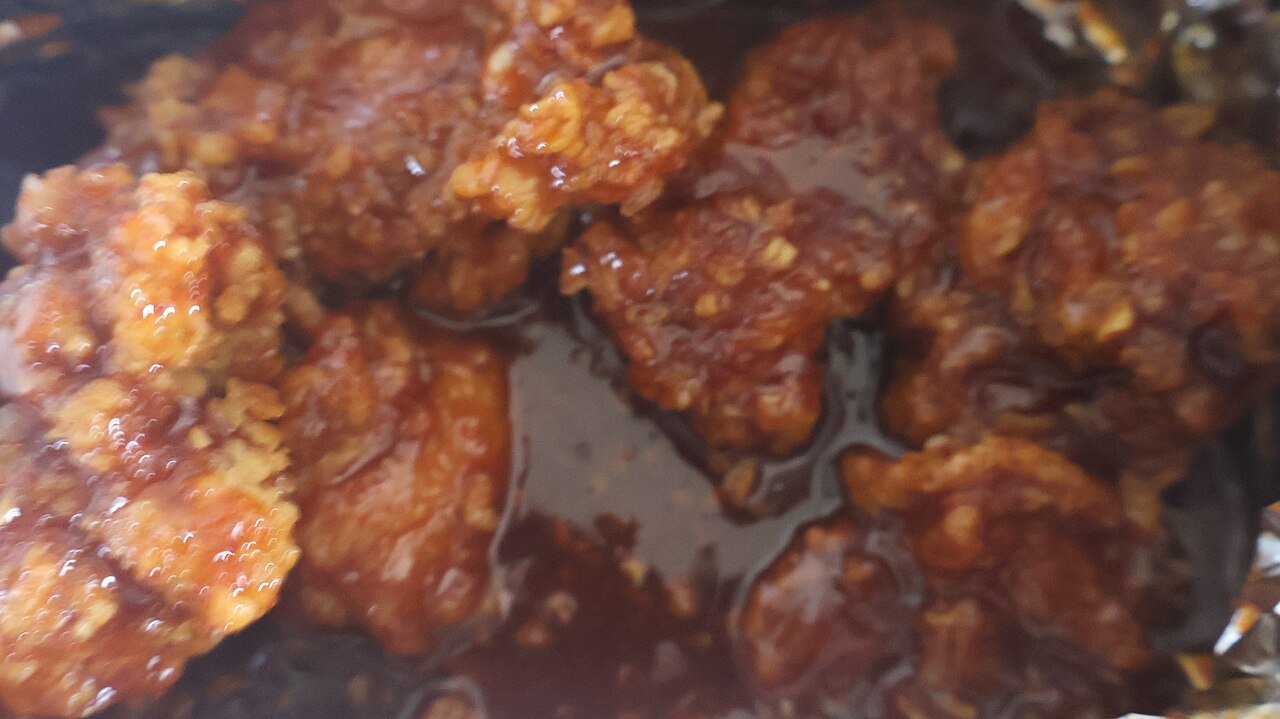
Ingredients
| Ingredient (for 4) | Where to get it, or what to use instead |
|---|---|
| Chicken, 1.2 kg / 2.5 lb, bone-in thighs and drumsticks | Any grocery store. Boneless thighs, cut into large chunks, fry a little faster and are easier to eat, but you lose some of the shattering skin. |
| Buttermilk, 240 ml / 1 cup | Milk plus a tablespoon of lemon juice, rested 10 minutes, does nearly the same tenderizing job. |
| Potato starch or cornstarch, 190 g / 1 1/2 cups | Sold as “starch” in most Asian groceries, separate from flour. All-purpose flour works but the crust softens faster once glazed. |
| Korean pear (optional), 3 tbsp grated | Asian pear section of most large groceries. No pear: 2 tablespoons of honey plus 1 tablespoon of apple juice gets you close, minus the pear’s faint floral edge. |
| Gochujang, 1 tbsp (optional) | Any Korean grocery or online. Without it: 1 teaspoon gochugaru plus 1 teaspoon ketchup, which leans sweeter and less fermented but still brings color and a little bite. |
| Rice wine, garlic, ginger, soy sauce, brown sugar, sesame oil, sesame seeds | Standard pantry items, sold at any large supermarket. |
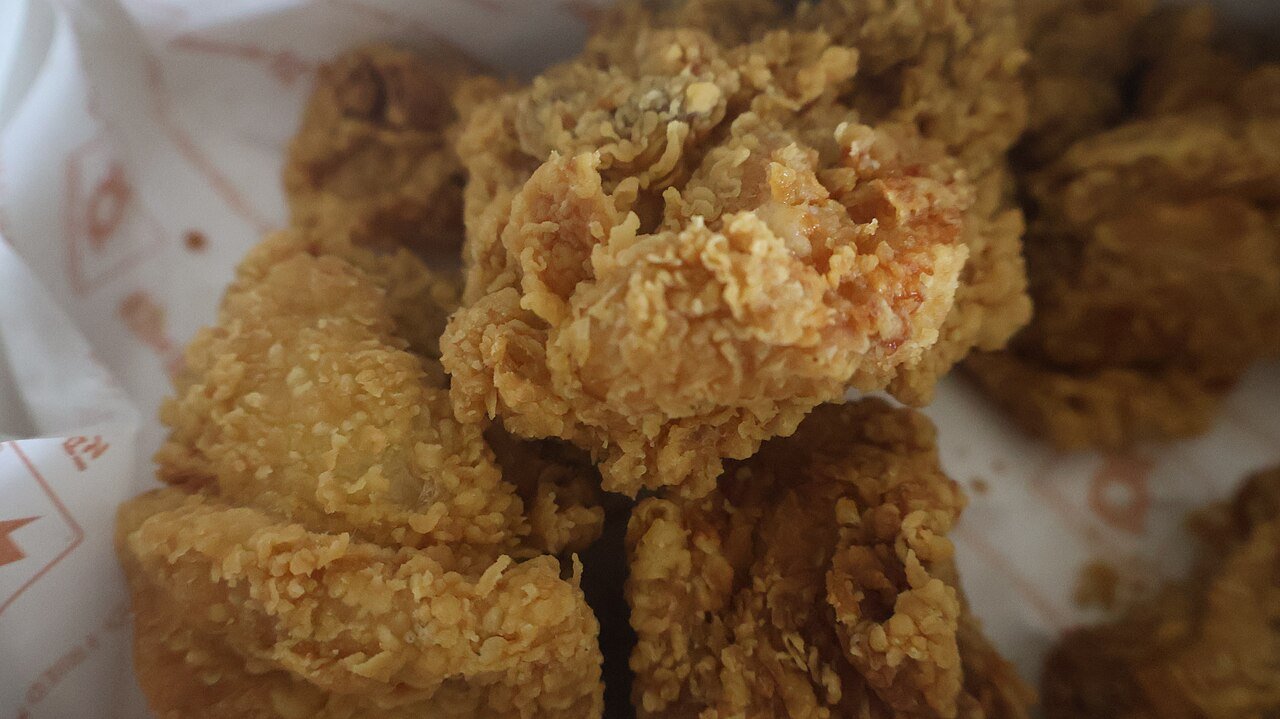
Suwon Galbi Fried Chicken Recipe
Ingredients
Method
- Cut the chicken into pieces if it isn’t already, and score the thighs once through the skin so the marinade can reach the meat. Toss with the buttermilk in a bowl, cover, and refrigerate at least 1 hour or overnight.
- Drain the chicken in a colander, shaking off the excess buttermilk but not patting it fully dry — a damp surface helps the starch cling.
- Season the chicken with the salt and pepper, then dredge each piece in the potato starch, pressing it on firmly. Let the coated pieces rest on a wire rack for 10 minutes; the starch turns slightly translucent and sticky, which is what you want.
- Heat the oil in a deep, heavy pot to 160°C / 320°F. Fry the chicken in batches for 8 to 9 minutes, turning once, until pale gold and just cooked through. Don’t crowd the pot — the oil temperature drops fast if you do. Drain on a rack.
- Let the chicken rest 5 minutes, then raise the oil to 190°C / 375°F. Fry each batch again for 2 to 3 minutes, until deep golden brown and audibly crackling when tapped with tongs. This second fry is what makes the crust hold up under a wet glaze.
- While the chicken rests between fries, combine the soy sauce, brown sugar (and grated pear if using), rice wine, garlic, ginger, and gochujang in a small saucepan. Bring to a simmer over medium heat and cook 3 to 4 minutes, stirring, until it thickens enough to coat the back of a spoon.
- Turn the heat to low and stir in the 2 tablespoons of water to loosen the glaze slightly — it should coat a spoon and drip slowly, not sit like syrup.
- Add the hot, double-fried chicken straight to the saucepan and toss with a spatula until every piece is coated and glossy, about 30 seconds. Work quickly; the glaze tightens as it cools and gets harder to spread evenly.
- Transfer to a platter, drizzle with the sesame oil, and scatter the sesame seeds over the top. Serve immediately — the crust is at its best in the first 15 minutes.
How to Make It
- Marinate the chicken. Score each thigh once through the skin, then toss the pieces in buttermilk. Cover and refrigerate at least 1 hour, ideally overnight — the acid tenderizes and the dairy fat helps the crust brown evenly later.
- Drain, don’t dry. Shake off the excess buttermilk in a colander but leave the surface a little damp. That moisture is what the starch grabs onto.
- Dredge and rest. Season with salt and pepper, press the chicken firmly into the starch, and let it sit on a rack for 10 minutes. The coating goes slightly translucent and tacky — that’s the sign it will stay put in the fryer.
- First fry, low and slow. Oil at 160°C / 320°F, chicken in batches so the pot isn’t crowded, 8 to 9 minutes per batch, turning once. You’re cooking the meat through here, not building color.
- Second fry, hot and fast. Let the chicken rest 5 minutes, then bring the oil up to 190°C / 375°F. Fry another 2 to 3 minutes per batch until deep gold and crackling. Skip this step and the crust turns limp the second the glaze touches it.
- Build the glaze while the chicken rests. Soy sauce, sugar or grated pear, rice wine, garlic, ginger, and gochujang in a saucepan, simmered 3 to 4 minutes until it coats a spoon.
- Loosen with water. A splash of water off the heat keeps the glaze pourable instead of gluey — it should drip slowly, not sit like jam.
- Toss while hot. Add the fried chicken straight into the saucepan and toss fast, about 30 seconds, until every piece is coated. The glaze tightens as it cools, so move quickly.
- Finish and serve now. Sesame oil drizzled over, sesame seeds scattered on top, and onto the table within 15 minutes. This chicken is built for eating fast, not for a buffet table.
Tips and Storage
Two fries, not one. It’s tempting to skip the double fry to save time, but a single fry can’t survive being tossed in a wet glaze — the crust turns chewy within minutes.
Don’t glaze the whole batch if you’re not eating it all at once. Keep plain double-fried chicken and sauce separate, and toss only what you’ll serve immediately. Glazed chicken doesn’t reheat well; the sauce goes gummy in the microwave and the crust never fully recovers.
Oil temperature drops fast. A thermometer clipped to the pot is worth it. Crowding the oil with too much chicken at once is the single biggest reason home versions of this dish come out greasy instead of crisp.
Leftover plain fried chicken (unglazed) keeps 2 days in the fridge and re-crisps in a 200°C / 400°F oven for 8 minutes. Glazed chicken is best eaten the day it’s made.
FAQ
Is the fried chicken from Extreme Job a real dish?
The specific “movie chicken shop” is fictional, but galbi-glazed fried chicken is a real, long-running specialty of Suwon, sold under names like wang-galbi tongdak well before the film came out in 2019.
Can I make this without a Korean pear?
Yes. Two tablespoons of honey plus one tablespoon of apple juice gets you close on sweetness and body. You’ll lose the pear’s faint floral quality, but the glaze still works.
Why fry the chicken twice?
The first fry cooks the meat through at a lower temperature without over-browning the crust. The second fry, done hotter and faster, drives out extra moisture and builds a shell strong enough to survive being tossed in a hot glaze without going soft.
Related Recipes
If you’re building out a small K-drama or K-film dinner, squid game dalgona makes a strange but fun dessert pairing, and our guide to Seoul’s K-drama food spots has a few more places where the screen and the plate overlap. For another Korean meat dish built around a marinade — this time cooked on a grill instead of in oil — see our samgyeopsal recipe.