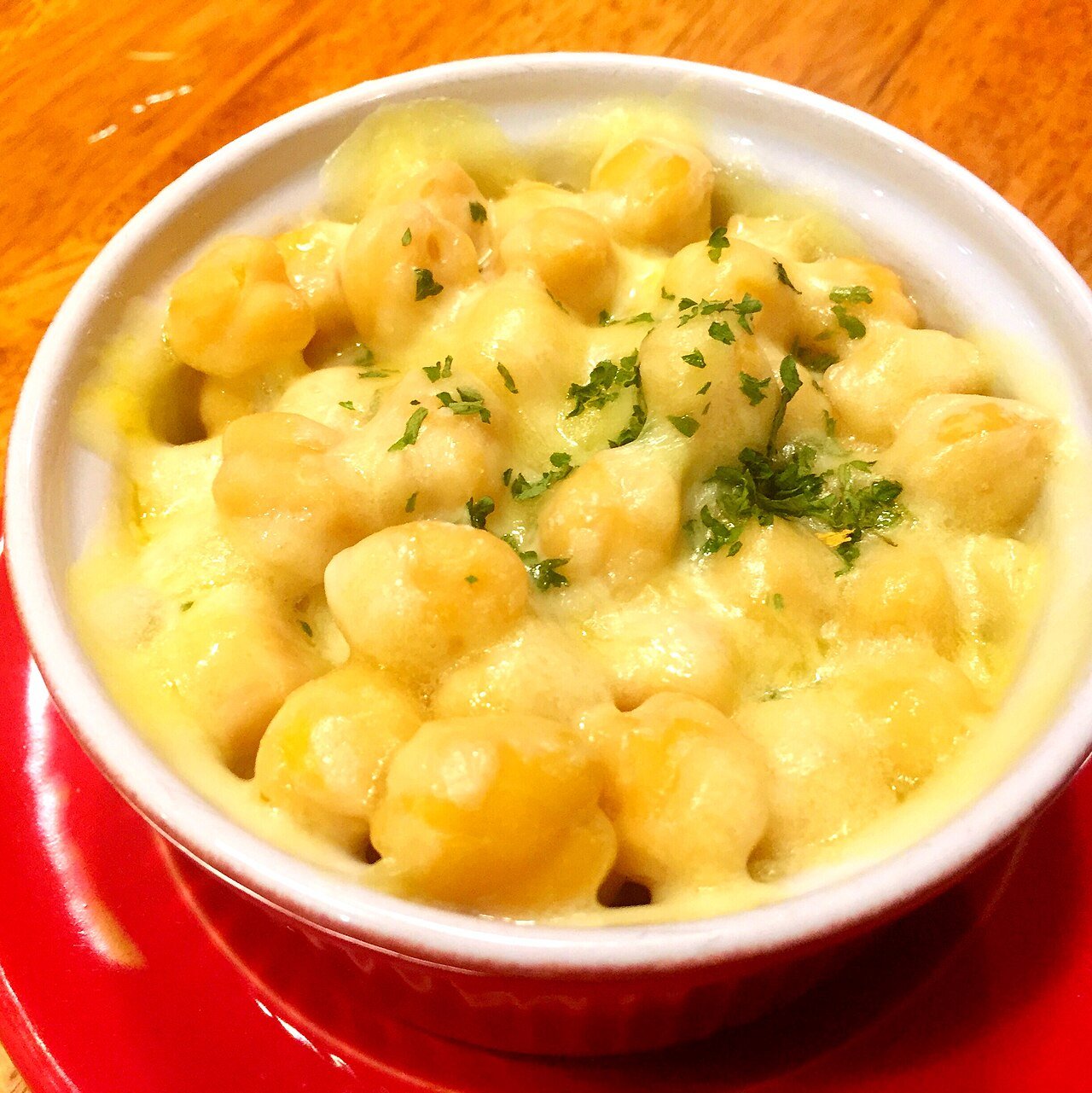
Korean corn cheese is a can of American sweet corn, run through a Korean pantry, and served back as something neither country would fully claim as its own. Mayonnaise, sugar, butter, and a thick layer of melted mozzarella turn a vegetable most people think of as a side dish into the thing a whole table reaches for first. It takes fifteen minutes and one small skillet, and it is, structurally, a very silly recipe — which is exactly why it works.
The identity of this dish is worth sitting with for a second, because it explains why it tastes the way it does. Canned corn became widely available in Korea partly through American surplus food in the decades after the Korean War, the same historical thread that runs through dishes like budae-jjigae. Somewhere along the way, corn stopped being a side and became a pub food in its own right — sweetened further, buttered, and buried under cheese, which is not how anyone in Iowa is eating their corn. It’s Korean interpretation doing exactly what it does best: taking an imported ingredient and rebuilding it into something with its own logic.
Quick Facts
| Total time | 17 minutes |
| Serves | 4 as a shared side |
| Difficulty | Very easy |
| Heat | 0 out of 5 |
| Vegetarian? | Yes, as written |
Why This Combination Even Works
Sweet corn, mayonnaise, sugar, and melted cheese sounds, on paper, like four things that shouldn’t be on the same spoon. In practice, the sugar amplifies the corn’s own sweetness rather than fighting it, the mayonnaise adds a savory richness that plain butter can’t match, and the mozzarella does what mozzarella always does — it goes stretchy, mild, and a little salty, which is the one note the rest of the dish is missing. None of the four ingredients is doing anything unusual on its own. It’s the combination that reads as distinctly Korean, the same way a lot of Korean pub food takes something familiar and pushes one ingredient further than expected.
It appears on tables at Korean beer halls and hofs constantly, usually ordered alongside fried chicken or grilled meat, but it’s just as normal to make it at home on a random Tuesday with whatever’s in the pantry. There’s nothing formal or occasion-specific about it. It’s dinner-table food, gathering food, the kind of side dish that shows up because someone had two cans of corn and felt like melting cheese over something.
Ingredients
| Ingredient | Where to get it, or what to use instead |
|---|---|
| Canned sweet corn, 2 cans / 340 g drained | Any regular grocery store brand. Frozen corn, thawed and dried well, works too — it’s less sweet, so add a little extra sugar to compensate. |
| Mayonnaise, 3 tbsp | Standard American or Japanese Kewpie mayonnaise both work; Kewpie is slightly tangier and closer to what’s used in Korea. Greek yogurt plus a little sugar is a lighter substitute, less rich. |
| Mozzarella, 150 g / 1 1/2 cups | Pre-shredded, low-moisture mozzarella melts most reliably. A slice of processed cheddar laid over the top, the way many Korean pubs do it, browns with more color and a saltier bite. |
| Sugar | Adjust to taste — canned corn brands vary widely in how sweet they already are. Taste the corn plain before deciding how much to add. |
Korean Corn Cheese Recipe
Ingredients
Method
- Preheat the oven broiler, or have a stovetop-to-oven-safe skillet ready.
- Drain the corn thoroughly, pressing out excess liquid with a spoon or paper towel — wet corn waters down the sauce and stops it from thickening.
- In a small oven-safe skillet or cast iron pan, combine the corn, mayonnaise, sugar, salt, and butter over medium heat.
- Stir constantly for 3 to 4 minutes, until the butter melts in and the mixture turns glossy and slightly thickened, coating each kernel.
- Taste and adjust the sugar — canned corn varies a lot in sweetness between brands, so this step matters more than the recipe number does.
- Smooth the corn mixture into an even layer in the pan and scatter the shredded mozzarella evenly over the top.
- Slide the pan under the broiler for 2 to 3 minutes, watching closely, until the cheese is fully melted and browned in spots. Alternatively, cover the pan and cook over low heat on the stovetop for 4 to 5 minutes until the cheese melts through.
- Remove from the heat, scatter scallion or parsley and a crack of black pepper over the top, and serve immediately, straight from the pan, with spoons for scooping.
How to Make It
- Drain the corn hard. Press it with a spoon or blot it with paper towels. Leftover liquid is the single most common reason the sauce never thickens properly.
- Warm the corn, mayonnaise, sugar, salt, and butter together in a small oven-safe skillet over medium heat, stirring constantly.
- Cook until glossy, 3 to 4 minutes. The mixture should coat each kernel evenly and look slightly thickened, not watery.
- Taste before moving on. This is the step most worth pausing for — some corn brands are noticeably sweeter than others straight out of the can, so the amount of added sugar that’s right for one brand can be too much for another.
- Top with the cheese in an even layer, covering the corn completely so it browns evenly rather than in patches.
- Broil for 2 to 3 minutes, watching the whole time — cheese goes from perfectly melted to burnt in about 30 seconds under a broiler. No broiler access: cover the pan and finish on low stovetop heat for 4 to 5 minutes instead.
- Serve straight from the pan, hot, with scallion or parsley scattered on top and a crack of black pepper. Spoons, not forks — it’s meant to be scooped.

Tips and Storage
Cast iron holds heat the longest, which matters here because the whole appeal is eating it while the cheese is still stretchy. A regular nonstick skillet works fine too, it just cools a little faster once it’s off the heat.
Don’t skip draining the corn, even if it feels like an unnecessary step for something this casual. Watery corn cheese never sets up properly and stays soupy under the cheese layer.
Leftovers reheat oddly — the cheese separates a bit in the microwave and the texture turns slightly grainy. It’s genuinely best eaten the same day, within the first ten minutes of coming off the heat.
If you want a version with more texture, stir in a small handful of chopped bacon or ham before the cheese goes on — not traditional, but common enough at pubs that serve a “premium” corn cheese, and it turns the side dish into something closer to a light meal on its own.
Common Questions
Can I use fresh corn instead of canned?
Yes. Cut kernels off two ears of cooked corn and use them in place of the canned amount. Fresh corn is usually less sweet than canned, so taste and adjust the sugar upward if needed.
Is Korean corn cheese always this sweet?
Pub versions vary — some lean sweeter, some barely sweetened at all, relying mostly on the corn’s natural sugar plus the cheese. Start with 1 tablespoon of added sugar and adjust from there; it’s easy to add more, harder to take away.
Can I make this without mayonnaise?
Plain Greek yogurt with a little extra sugar is the closest substitute, though the result is noticeably tangier and less rich. A thin layer of softened butter alone works in a pinch too, with a flatter, less creamy result.
What to Eat With It
Corn cheese and budae-jjigae share the same American-ingredient-meets-Korean-kitchen story, just in stew form instead of a skillet side. It’s a natural side dish alongside samgyeopsal on a grilling night, and if pancakes are more your speed for the same kind of casual dinner-table spread, kimchi jeon fills a similar role.
In Seoul, corn cheese turns up on nearly every pub and hof menu, and the Hongdae area in particular has no shortage of places serving it late into the evening. Our sister site’s guide to where locals actually eat in Hongdae is a good starting point if you’re there in person.