At the banchan counter in my neighborhood market in Seoul, the stainless trays are laid out so the wet things sit at one end and the dry things at the other. Myeolchi bokkeum is always down at the dry end, loose and glossy and never clumped. When the woman working the counter scoops it into a tub, you can hear it: a dry rattle, like gravel going into a bucket. That sound is the entire dish.
A good myeolchi bokkeum recipe isn’t really about the seasoning, which is four ingredients and hard to get wrong. It’s about keeping the anchovies crisp from the pan to the plate to the fridge, and most home versions lose that fight in the last ninety seconds.
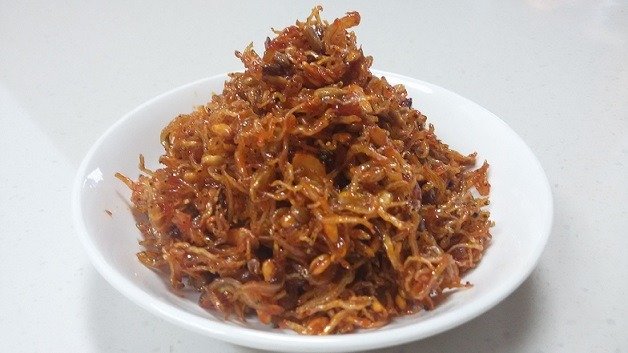
Quick facts
- Total time: 15 minutes (5 prep, 10 cooking)
- Makes: about 6 servings as a side dish
- Difficulty: easy, no special equipment
- Spice level: 0 out of 5, or 1 with the optional chili flakes
- Keeps: 2 weeks refrigerated
Why your anchovies come out chewy
There are two failure points, and almost every soggy batch I’ve eaten was caused by one of them.
The first is simmering. Most recipes tell you to fry the anchovies, then pour soy sauce and syrup straight into the same hot pan and cook everything together until the sauce thickens. That takes a minute or two, and during those minutes the sauce is boiling. Boiling liquid means steam, and steam has nowhere to go except into the fish. The anchovies rehydrate from the inside while the outside caramelizes, and you get the worst possible texture: a sticky shell around something soft and rubbery. Once they’ve absorbed that moisture, no amount of extra cooking pulls it back out. You just darken the sugar until it turns bitter.
The second is skipping the dry toast. Dried anchovies are not bone dry. They sit in a sealed bag or a freezer drawer picking up humidity, and out of the packet they’re leathery rather than brittle. If you drop them into oil and sauce in that state, the residual moisture stays trapped. Toasting them alone in a bare pan first is what drives it off, and it also cooks off the raw, slightly musty smell that puts people off dried fish in the first place.
The fix is a sequence, not a trick.
Toast the anchovies alone, in a completely dry pan, over medium heat for 2 to 3 minutes. No oil yet. Keep them moving. You’re waiting for two signals: the smell shifts from fishy to nutty and faintly toasted, and the sound changes. Early on they thud softly against the pan. When they’re ready they clatter — light, stiff, papery. Tip them straight out onto a plate. Leaving them in the pan while you do anything else undoes the work.
Mix the sauce separately, in a bowl, before you turn the pan back on. Soy sauce, syrup, mirim, sugar, chili flakes if you’re using them. Stir until the sugar is gone. This is the step people skip, and it’s the load-bearing one — a premixed sauce hits the pan already homogeneous, so it needs seconds of heat rather than a minute of reduction.
Add the sauce off the heat, or at the lowest setting your burner will hold. The pan already carries plenty of stored heat. Ten to fifteen seconds of swirling is enough to loosen the syrup and get it moving. If it’s spitting and boiling hard, the pan is too hot; pull it off entirely and let it settle for twenty seconds.
Toss the anchovies back in and work fast — 30 to 40 seconds. Coat everything, then stop. There’s nothing to cook. The anchovies are already done, the sauce is already made, and every extra ten seconds costs you crispness.
Spread them out immediately. This is the part people don’t expect. A pile of hot anchovies in a hot pan keeps cooking and, worse, keeps steaming itself — the pieces in the middle sit in their own moisture and go chewy while you’re washing up. Dump them onto a plate or a small tray in a thin layer and leave them uncovered until they’re completely cool. They crisp up further as they cool. Only then do they go into a container.
Buying the right anchovies
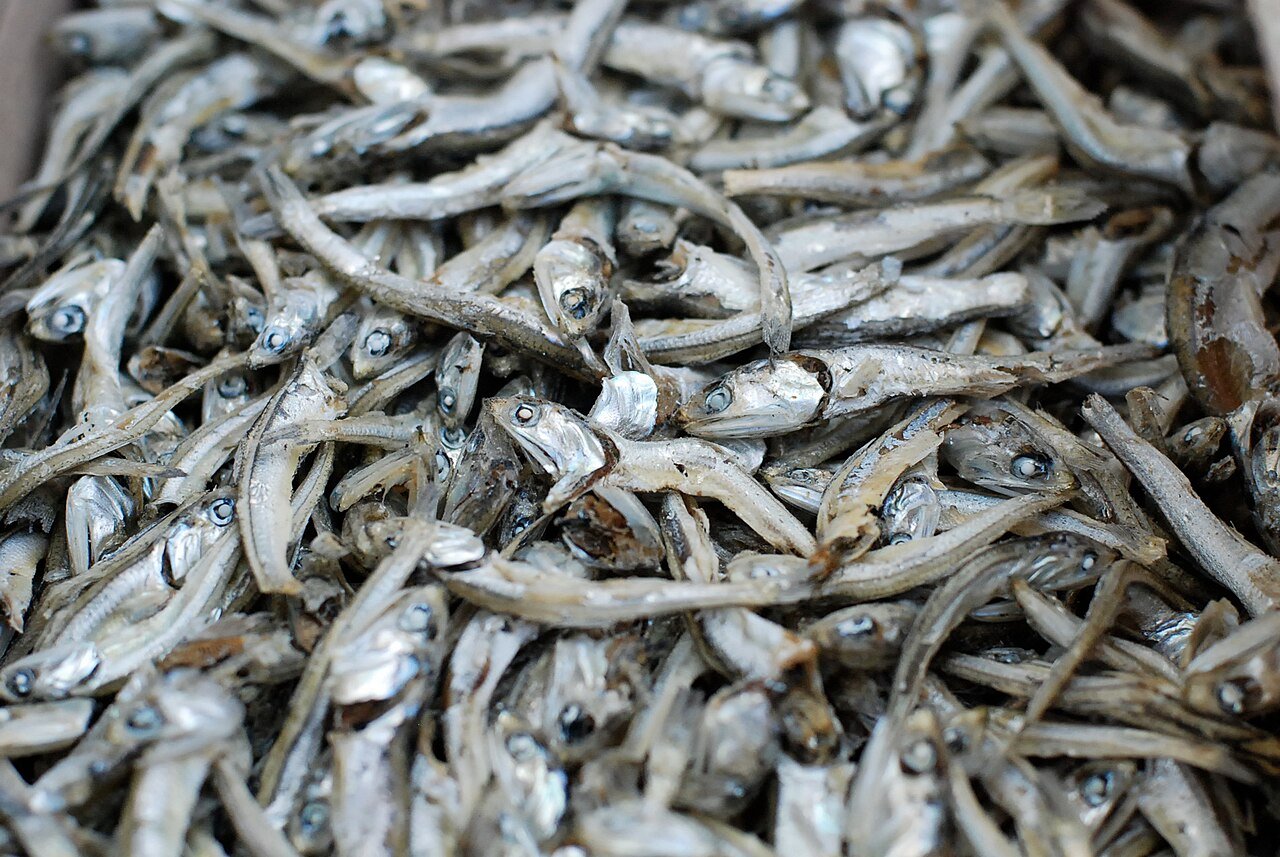
Korean grocers sell dried anchovies in at least four sizes, and they are not interchangeable. What you want here is jan-myeolchi (잔멸치), the small ones, roughly 3 to 4 cm long — small enough that you eat them whole, head and all, without thinking about it. They’re usually labeled “small” or “fine” and sometimes sold specifically for side dishes.
The big ones, 7 cm and up, are dashi-myeolchi, and they exist to be simmered into broth and thrown away. Stir-fry them and you get tough spines and a strong, bitter edge from the innards. If large anchovies are genuinely all you can get, snap off the heads and pull out the dark gut line before you start, and expect a coarser result.
This is one of the few ingredients on this site with no honest substitute. Dried shrimp makes a perfectly nice sweet-salty side dish, but it’s a different one — papery instead of crisp, and sweeter. Anchovy paste, canned anchovies in oil, and dried whitebait from other cuisines all behave differently. If you don’t have small dried anchovies, make something else and buy them for next time.
Where to buy: any Korean grocer keeps them in the refrigerated or frozen section, often in 200 g to 500 g bags. Pan-Asian supermarkets usually carry a version. Online is reliable and no more expensive. Buy the smallest bag you’ll get through in a few months, keep it in the freezer, and don’t bother thawing before use. If the fish look yellowish or smell sharp rather than clean, they’ve oxidized — that’s the source of the “too fishy” complaint far more often than the recipe is.
Ingredients, and what to use instead
| Ingredient | Where to get it, or what to use instead |
|---|---|
| Small dried anchovies, 100 g / 3.5 oz | Korean grocer, refrigerated or frozen aisle, or online. No real substitute — see above |
| Rice syrup or light corn syrup, 1 1/2 tbsp | Korean grocers sell jocheong. Honey works but browns and darkens faster, so drop the heat and move quicker; the finish tastes floral rather than clean |
| Soy sauce, 1 tbsp | Any supermarket. Tamari for gluten-free, but it’s saltier — start with 2 tsp |
| Mirim (cooking rice wine), 1 tbsp | Korean grocer. Substitute: 1 tbsp water plus 1/4 tsp sugar. You lose a little of the clean edge that keeps the fish from tasting fishy |
| Gochugaru, 1/2 tsp, optional | For color and a whisper of heat. Sweet paprika plus a pinch of cayenne gets you the color but not the fruitiness — for other options see our full guide to gochugaru substitutes |
| Garlic, sesame oil, sesame seeds | Standard. Toasted sesame oil only, and always off the heat |
| Pine nuts, slivered almonds, or dried chili slivers, 1 tbsp | Optional, for crunch and contrast. Walnuts work if you toast them for 2 minutes first — earthier, less sweet |
If you’re stocking a Korean shelf from nothing, dried anchovies and rice syrup are both on our Korean pantry starter kit list, and both earn their space in more than one dish.
Myeolchi Bokkeum Recipe
Ingredients
Method
- Tip the anchovies into a sieve and shake out the broken bits and powder at the bottom, which scorch and taste bitter.
- Dry-toast the anchovies alone in a bare pan over medium heat for 2 to 3 minutes, stirring, until they smell nutty and rattle stiffly against the pan. Tip them onto a plate.
- In a small bowl, stir together the soy sauce, rice syrup, mirim, sugar, and gochugaru until the sugar dissolves. Mix this completely before it goes anywhere near the pan.
- Wipe the pan, add the neutral oil and garlic, and cook over low heat for 20 to 30 seconds until the garlic smells sweet but has not colored.
- Take the pan off the heat, or turn it to the lowest setting, and pour in the premixed sauce. Swirl for 10 to 15 seconds until it loosens and bubbles at the edges.
- Return the anchovies and toss fast and evenly for 30 to 40 seconds, no longer. Every piece should be coated and still rigid.
- Off the heat, add the sesame oil, sesame seeds, and nuts or chili slivers, and toss twice more.
- Immediately spread the anchovies in a thin single layer on a plate or tray and leave them uncovered until fully cool. Do not leave them piled in the hot pan.
How to make it
- Tip the anchovies into a sieve and shake. The broken bits and powder that fall through will scorch and taste bitter — throw them out.
- Heat a bare, dry pan over medium. Add the anchovies with no oil and toast for 2 to 3 minutes, stirring, until they smell nutty and rattle stiffly. Tip them onto a plate.
- In a small bowl, stir the soy sauce, rice syrup, mirim, sugar, and gochugaru together until the sugar dissolves completely.
- Wipe the pan out, add the neutral oil and garlic, and cook 20 to 30 seconds over low heat, just until the garlic smells sweet. Don’t let it brown.
- Pull the pan off the heat, or turn it to the lowest setting it will hold, and pour in the premixed sauce. Swirl 10 to 15 seconds until it loosens and bubbles gently at the edge.
- Return the anchovies and toss fast for 30 to 40 seconds. Coat everything evenly, then stop.
- Off the heat, add the sesame oil, sesame seeds, and nuts or chili slivers. Two more tosses.
- Spread them in a thin layer on a plate or tray straight away and leave uncovered until fully cool.
Storing it, and eating it
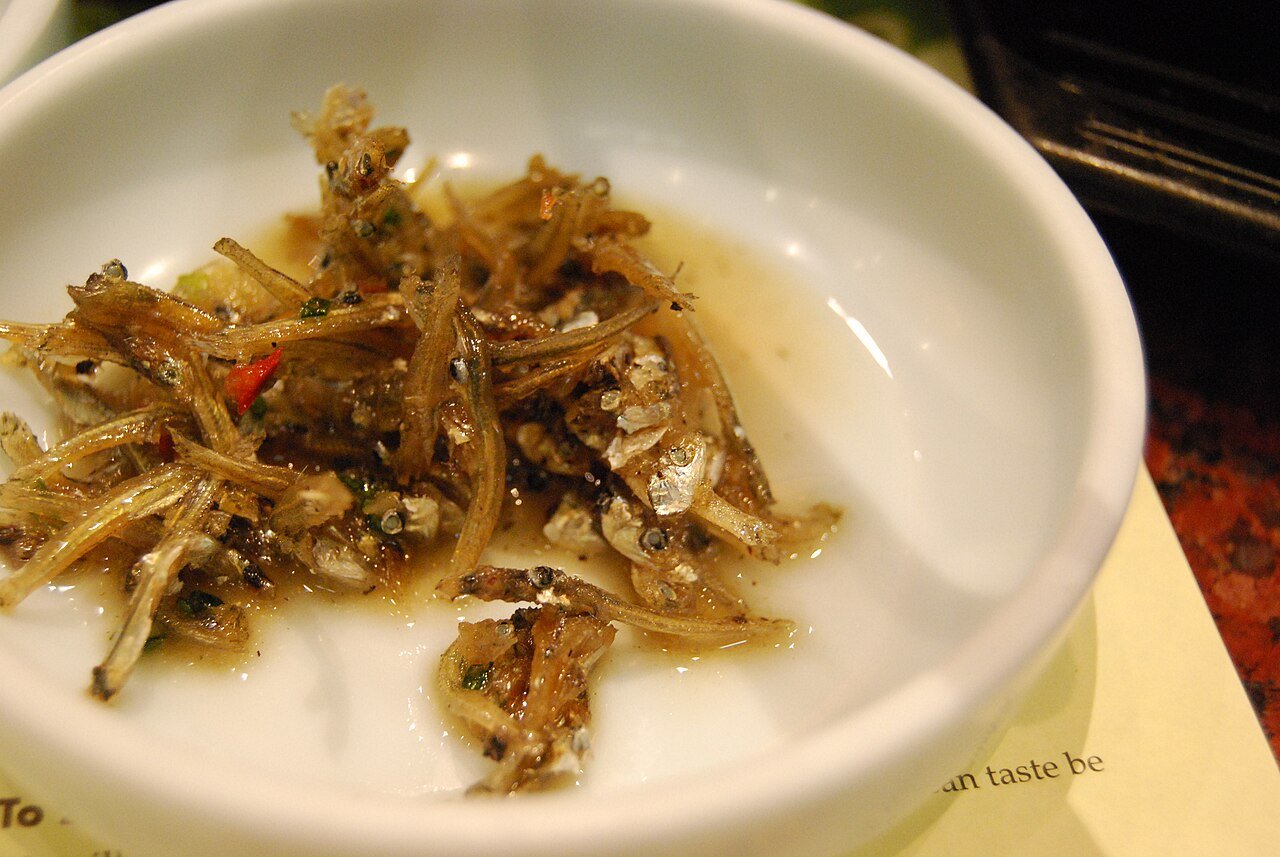
Cooled properly, this keeps two weeks in a sealed container in the fridge, and it’s the reason myeolchi bokkeum has been a lunchbox staple in Korea for generations — it doesn’t wilt, leak, or need reheating. Never seal it warm. Trapped condensation turns a crisp batch soft overnight, which is the same failure as the hot-pan pile, just slower.
On the table it belongs with plain rice and something wet. A pot of doenjang jjigae and a spoonful of this covers a whole meal. It also does well next to grilled meat, where its saltiness plays off a sharper condiment — if you’re building out a fuller side-dish spread, a small dish of Korean seasoned soy sauce alongside gives you a second, brighter note.
If it does go soft on you, spread it on a tray and toast it in a dry pan for a minute over low heat. It won’t be as good as fresh, but it comes back most of the way.
Frequently asked questions
Why is my myeolchi bokkeum chewy instead of crispy?
Almost always because the sauce was cooked together with the anchovies in the pan. Boiling sauce steams the fish from the inside and they rehydrate. Mix the sauce in a separate bowl first, add it off the heat, toss for under a minute, and spread the finished anchovies out in a thin layer instead of leaving them piled in the hot pan. The second cause is not dry-toasting the anchovies alone before anything else touches them.
Can I make myeolchi bokkeum without corn syrup?
Yes. Korean rice syrup (jocheong) is the traditional choice and behaves the same way. Honey works too, but it browns and darkens noticeably faster, so keep the heat lower and get the tossing done quickly — and the finish tastes floral rather than neutral. Sugar alone gives you flavor but not the glassy coating, so the result looks dull and clumps more.
How long does myeolchi bokkeum last in the fridge?
About two weeks in a sealed container, provided you let it cool completely, uncovered, before sealing it. It’s a make-ahead dish by design — Korean households cook a batch and pull from it all week.
One more thing worth knowing
Dried anchovies in Korea are sold the way grains are sold: by weight, out of open sacks, graded by size, with the price climbing steeply as the fish get smaller and more uniform. If you’re ever in Seoul, the dried-goods stalls tucked behind the food alleys are worth ten minutes of looking even if you’re not buying — k-trips has a walk-through of Gwangjang Market and its food alleys that covers that end of the market.
Bring a bag home, keep it in the freezer, and you’re fifteen minutes from a side dish for the rest of the month.